Maharaj 2024


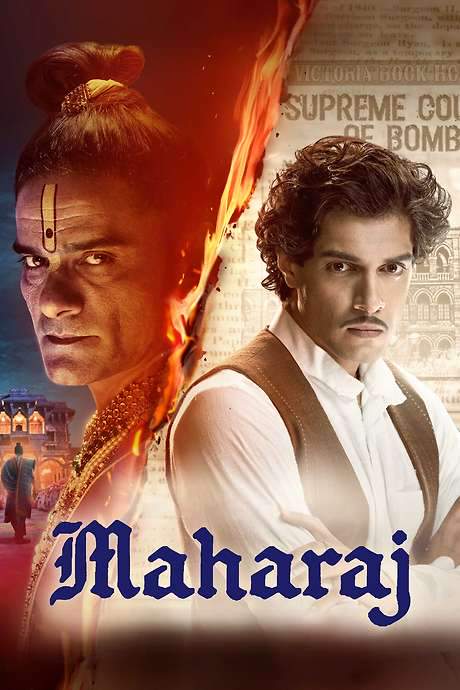
Based on a real-life historic court case, a bold journalist questions a revered leader’s immoral behavior.


Does Maharaj have end credit scenes?
No!
Maharaj does not have end credit scenes. You can leave when the credits roll.
Where to Watch Maharaj
See current US streaming, rental, and purchase options for Maharaj (2024) via JustWatch.


Streaming availability powered by 
Meet the Full Cast and Actors of Maharaj
Explore the complete cast of Maharaj, including both lead and supporting actors. Learn who plays each character, discover their past roles and achievements, and find out what makes this ensemble cast stand out in the world of film and television.

Jaideep Ahlawat
Jadunathjee Brajratanjee Maharaj
Meher Vij
Vahuji
Edward Sonnenblick
Justice Sausse
Mark Bennington
Bailey
Viraf Patel
Sohrabji
Sharvari Wagh
Viraaj
Jay Upadhyay
Giridhar Khawas
Priyal Gor
Leelavati
Shalini Pandey
Kishori
Dharmendra Gohil
Tejpal
Junaid Khan
Karsan Das Mulji
Jamie Alter
Arnsty
Sneha Desai
Bhabhu
Kamlesh Oza
Shaamji
Sanjay Goradia
Nanubhai
Francisco Raymond
Justice Arould
Sunil Gupta
Dadabhai Naoroji
External Links and Streaming Options
Discover where to watch Maharaj online, including streaming platforms, rental options, and official sources. Compare reviews, ratings, and in-depth movie information across sites like IMDb, TMDb, Wikipedia or Rotten Tomatoes.







Ratings and Reviews for Maharaj
See how Maharaj is rated across major platforms like IMDb, Metacritic, and TMDb. Compare audience scores and critic reviews to understand where Maharaj stands among top-rated movies in its genre.

The Movie Echo Score
Maharaj delivers a thoughtfully crafted historical drama that succeeds in portraying a 19th‑century legal conflict with solid production values. Direction and cinematography receive consistent praise for their period authenticity, while the narrative is lauded for relevance but hindered by uneven pacing and occasional didactic writing. Performances, especially Jaideep Ahlawat's, stand out, though the lead's impact varies among viewers. The film offers an engaging, if imperfect, viewing experience that resonates more as an informative piece than a rewatchable blockbuster.
The Movie Echo Score Breakdown for Maharaj

Art & Craft
In terms of direction and visual craft, the film is frequently described as meticulous and immersive. Reviewers commend the period‑accurate set design, costumes, and cinematography that recreate 1860s Bombay convincingly. Editing maintains narrative clarity, and the overall production quality is noted as a strong asset. The artistic execution therefore leaves a markedly positive impression.

Character & Emotion
When it comes to acting, Jaideep Ahlawat receives strong commendation for his nuanced villainy, while Junaid Khan’s debut elicits mixed reactions ranging from breakout nuance to limited screen presence. Supporting actors are generally deemed competent, with occasional criticism of chemistry. The aggregate character work is solid, though the lead performance does not uniformly satisfy expectations.

Story & Flow
The story’s foundation in a real legal case provides compelling thematic weight, yet reviewers note uneven pacing and a preachy script that dampens momentum. Originality is evident in the historical focus, but narrative execution suffers from slow sections and occasional unrealistic liberties. Consequently, the plot is viewed as moderately effective but not consistently engaging.

Sensory Experience
Sensory elements such as the soundtrack, sound design, and visual style are largely praised for period authenticity and atmospheric depth. While the musical numbers are described as average and nonessential, the overall audiovisual experience supports immersion. The sensory execution contributes positively to the film’s impact, albeit with minor reservations about the songs.

Rewatch Factor
Rewatch value is tempered by the film’s strong informational merit but hindered by its uneven emotional resonance and pacing. Some viewers find the historical insight compelling enough for a second viewing, while others cite limited narrative tension as a deterrent. Overall, the movie offers modest replay appeal, primarily for those interested in the subject matter.


29%
TOMATOMETER

78%
User Score

6.5 /10
IMDb Rating

68
%
User Score
Take the Ultimate Maharaj Movie Quiz
Challenge your knowledge of Maharaj with this fun and interactive movie quiz. Test yourself on key plot points, iconic characters, hidden details, and memorable moments to see how well you really know the film.
Maharaj (2024) Quiz: Test your knowledge of the key characters, plot points, and themes from the 2024 film Maharaj.
What is the name of the protagonist who tries to expose the haveli leader?
Full Plot Summary and Ending Explained for Maharaj
Read the complete plot summary of Maharaj, including all major events, twists, and the full ending explained in detail. Explore key characters, themes, hidden meanings, and everything you need to understand the story from beginning to end.
In pre-independence Bombay, Junaid Khan as Karsan Das Mulji and Shalini Pandey as Kishori belong to a close-knit haveli ruled by the revered Maharaj, known as JJ, portrayed by Jaideep Ahlawat. The community lives under a veneer of piety, where the ritual of charan seva is supposed to be sacred but in truth serves as JJ’s means to prey on young girls. When Kishori becomes the target of this manipulation, Karsan’s protective love clashes with the harsh reality of the system, and he breaks off their engagement, only to be cast out by his own family. Kishori, confronted with the moral ugliness she sees in JJ’s world, grapples with guilt and confusion, yet remains convinced that she has done nothing wrong. The rupture intensifies when Kishori witnesses JJ preying on her younger sister Devi, a moment that forces her to confront the depths of JJ’s exploitation. Realizing the magnitude of the harm but feeling she has already lost Karsan, Kishori makes a tragic choice, taking her own life before she can tell Karsan that there might still be a future for them. Devi carries Kishori’s final message to Karsan, urging him to expose JJ’s evil to the world and give a voice to those silenced by fear and tradition.
Powered by that final call, Karsan begins a difficult crusade to reveal JJ’s pattern of abuse. He faces relentless resistance from JJ and his devoted followers, who cling to tradition as a shield against scrutiny. Yet he finds an important ally in Viraaj, Sharvari Wagh in the role, who helps him rally supporters and publish JJ’s wrongdoings in a newspaper of his own. This publication gradually shifts public opinion and unsettles JJ’s grip on power, drawing more eyes to the truth and emboldening others who have suffered in silence.
The conflict grows thornier as JJ reacts with fury, threatening Karsan’s father in a bid to silence him and stop the spreading testimony. Despite these tactics, Karsan refuses to back down, adamant that truth must prevail even against fear and intimidation. JJ escalates the battle by filing a defamation suit against Karsan, a legal assault meant to bury the allegations beneath a veneer of doubt. The confrontation moves from alleys and homes to the courtroom, where Karsan’s resolve is tested to its limit. Even with limited public support, the message resonates with those who have felt JM’s exploitation firsthand, and Viraaj’s continued support helps remind them that the fight is about more than one man’s reputation—it’s about giving a voice to women who were coerced into a system that claimed to be holy.
In the courtroom, Karsan takes the stand to challenge JJ’s misinterpretations of scripture and the way he has used religion to justify control over women and girls. He speaks of dignity, consent, and the right to worship freely without being exploited in the name of faith. The testimony sparks a turning point: haveli followers in the courtroom begin to side with Karsan and testify against JJ, underscoring the truth of the claims he published and challenging the authority the Maharaj wielded. The atmosphere shifts from fear to courage as the community begins to see through the veneer of religiosity and recognize the harm that was inflicted.
By the end, JJ’s hold on his followers dissolves, and Karsan is acquitted of the defamation charges. The crowd’s applause marks a moral victory as the public acknowledges that the documents and testimonies were not fabrications but a call to accountability. The film closes with a sense of renewal for those who were silenced, and a newfound hope that voices—especially those of women subjected to charan seva—can demand change when truth is given space to speak.

Coming soon on iOS and Android
The Plot Explained Mobile App
From blockbusters to hidden gems — dive into movie stories anytime, anywhere. Save your favorites, discover plots faster, and never miss a twist again.
Sign up to be the first to know when we launch. Your email stays private — always.
Explore the mobile appDiscover Film Music Concerts Near You – Live Orchestras Performing Iconic Movie Soundtracks
Immerse yourself in the magic of cinema with live orchestral performances of your favorite film scores. From sweeping Hollywood blockbusters and animated classics to epic fantasy soundtracks, our curated listings connect you to upcoming film music events worldwide.
Explore concert film screenings paired with full orchestra concerts, read detailed event information, and secure your tickets for unforgettable evenings celebrating legendary composers like John Williams, Hans Zimmer, and more.


Maharaj Themes and Keywords
Discover the central themes, ideas, and keywords that define the movie’s story, tone, and message. Analyze the film’s deeper meanings, genre influences, and recurring concepts.

Unlock the World of Movies with Our Comprehensive Wiki
Dive into our Movie Wiki for in-depth film encyclopedia entries, including cast biographies, production trivia, plot synopses, behind-the-scenes facts, and thematic analyses. Whether you’re researching iconic directors, exploring genre histories, or discovering hidden easter eggs, our expertly curated movie database has everything you need to fuel your cinematic passion.
Similar Movies To Maharaj You Should Know About
Browse a curated list of movies similar in genre, tone, characters, or story structure. Discover new titles like the one you're watching, perfect for fans of related plots, vibes, or cinematic styles.








Quick Links: Summary, Cast, Ratings, More

What's After the Movie?
Not sure whether to stay after the credits? Find out!
Check out our other apps:

SAT Sphere
Build confidence for the Digital SAT.

Mori Atlas
Discover wild places worth protecting.

Luntero
Search smarter for a home in Amsterdam.

Plot Explained
Unravel movie endings and hidden clues.

Pokechamp
Dive into Pokémon data and battle logic.

Driving Theory
Get ready for your European theory test.

Movie Dust
Plan your next cinema trip with ease.

Musemap
Find art and culture as you travel.

Selkobase
Compare credentials before committing.

Local Manual
Turn an unfamiliar country into practical next steps.

Lernavi
Compare school systems before your next move.

GymRoam
Find a workout stop wherever your plans take you.
Explore Our Movie Platform
New Movie Releases (2026)
Famous Movie Actors
Top Film Production Studios
Movie Plot Summaries & Endings
Major Movie Awards & Winners
Best Concert Films & Music Documentaries
Movie Collections and Curated Lists
© 2026 What's After the Movie. All rights reserved.
Privacy Policy