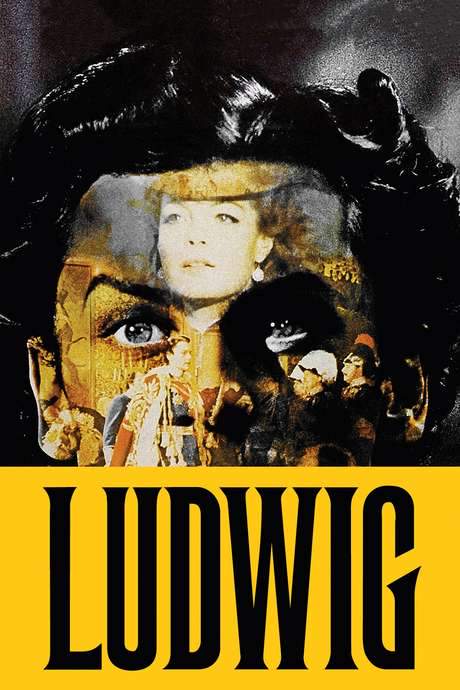
What Is Ludwig About?
The premise of Ludwig in 316 words, with nothing given away. The full story follows below.
In the opulent courts of 1860s Bavaria, a newly crowned monarch steps onto a throne heavy with tradition and expectation. At just eighteen, the young king is thrust into a world where gilded ceremonies mask a lingering sense of solitude. The kingdom’s majestic castles and bustling salons form a backdrop of grandeur, yet beneath the splendor lies a ruler who feels perpetually out of sync with the people he is meant to lead.
From the outset, the monarch’s heart is pledged to the arts, and he becomes an ardent patron of a visionary composer. Richard Wagner arrives in Munich, his ambitious operas echoing the king’s own yearning for mythic beauty. Their bond is forged in shared reverence for music’s transcendence, but the composer’s extravagant habits and private entanglements begin to test the limits of royal generosity and patience. This alliance hints at a kingdom where artistic obsession competes with the practicalities of governance.
As court life unfolds, personal desire weaves through the king’s public duties. He finds himself drawn to both men and women, a turbulent current that clashes with his Catholic upbringing and the expectations of a sovereign. A passionate encounter with his charismatic cousin, Elisabeth of Austria, offers a glimpse of intimacy that is quickly complicated by familial politics and arranged marriage schemes. These relationships illuminate a man caught between the allure of love, the pull of duty, and the haunting question of his own identity.
The film’s tone drifts between lavish spectacle and haunting introspection, painting a portrait of a ruler whose imagination builds fairy‑tale castles while his inner world teeters on the edge of darkness. Political currents swirl around him, threatening to erode the autonomy he cherishes, and his private reveries become both refuge and prison. In this richly textured portrait, the audience is invited to linger on the delicate dance between brilliance and madness that defines a king’s tragic, romantic saga.
What Happens in Ludwig?
The complete story of Ludwig, from the first scene to the last, in 693 words (about 3 minutes). Spoilers throughout. Names in the text link to 5 cast member pages.
Spoilers ahead
Munich, 1864. The 18-year-old, idealistic Ludwig II is crowned as the King of Bavaria, stepping into a role that blends youthful fervor with a burdening sense of isolation. His first official act is a lavish show of support for the gifted but financially strapped composer Richard Wagner, who has settled in Munich at Ludwig’s invitation. The king’s entourage cannot fathom the scale of Wagner’s ambitions or the expense of his artistic dreams, and they grow increasingly unsettled by the lifestyle that accompanies them. In his desire to find a steadfast friend in the music he cherishes, Ludwig clings to Wagner, yet the bond strains when Wagner’s private life intrudes: Cosima von Bülow, the wife of Wagner’s conductor Hans von Bülow, becomes entangled with the composer behind the king’s back. To avert scandal, Wagner is forced to depart Munich, and although Ludwig remains devoted to Wagner’s projects, a growing mistrust gnaws at him.
Another powerful influence in Ludwig’s life is his independent and charismatic cousin, Elisabeth of Austria. During a gathering in Bad Ischl, Elisabeth and Ludwig grow closer and share a kiss, yet Elisabeth’s true aim seems to be engineering a marriage between her cultivated sister Sophie and Ludwig, a plan the king resists. The disappointments with Wagner and Elisabeth push Ludwig toward withdrawal, and he retreats from public life into dreamlike reveries and private realms. His desire to keep Bavaria neutral in the looming conflicts of the era clashes with a cabinet that seeks stronger alignments, especially as the Austro-Prussian War of 1866 approaches.
Ludwig’s politics pale in comparison to his personal uncertainties. He remains aloof as his cabinet leans toward the Austrian side, and his younger brother Otto’s vitality wanes under pressure and scrutiny from close confidants like Count Dürckheim. Dürckheim even hints at an arranged marriage as a remedy for loneliness, steering Ludwig toward a social path that conflicts with his Catholic faith and his own self-awareness. Soon after, Ludwig confronts a new and difficult truth about himself, which leads to a dramatic shift: he announces an engagement to Sophie in January 1867, a plan that his mother and the cabinet attempt to manage by introducing a sexual liaison into his private apartments. The king reacts with anger, and the episode leaves him unsettled about his capacity to be a good husband; the engagement is postponed and ultimately canceled. He begins to form relationships with his servants, a pattern that troubles his conscience and deepens the chasm between his desires and his duties.
The political tides continue to turn. Bavaria supports the Prussian-led cause in the Franco-Prussian War of 1871, yet the subsequent unification of Germany chips away at Ludwig’s sovereignty, eroding the autonomy he cherished. The death of his younger brother Otto becomes a sobering counterpoint to the feverish pace of court life, a reminder of the fragility that shadows the king’s ambitions. In response to mounting debts and mounting eccentricities, Ludwig withdraws into his private world, financing the construction of the fairy-tale crescendos of Neuschwanstein, Linderhof, and Herrenchiemsee. A brief but intense friendship with the actor Joseph Kainz during 1881 is noted, though Kainz’s involvement is largely transactional, driven by Ludwig’s wealth as much as by affection. Elisabeth’s attempts to reconnect with her cousin do not find an easy welcome, and Ludwig remains stubbornly solitary.
As the years close in, the psychiatric verdict overshadows the dream: in 1886, Bernhard von Gudden proclaims Ludwig insane, and the cabinet agrees to have him isolated and treated. With the support of trusted aides, Ludwig briefly asserts himself, but the political machinery around him quickly reasserts control. His uncle Luitpold becomes Prince Regent, and Ludwig is moved to Berg Castle near Lake Starnberg for confinement and treatment. Two days later, Ludwig and Gudden set out on a walk that ends in tragedy, their bodies recovered from the lake, the cause of death left to history’s speculation. The king’s life story is a saga of splendor and sorrow, a portrait of a ruler whose grand designs collided with the harsh limits of reality, and whose wish to sculpt a utopian realm left behind a legacy that remains as enigmatic as it is majestic.
Ludwig Timeline: Every Key Event in Order
14 key events in the order they happen, from “Ludwig II crowned King of Bavaria” to “Regency begins as Ludwig declines”. 14 events name a place, across 6 locations.
- 1
Ludwig II crowned King of Bavaria
In Munich in 1864 Ludwig II is crowned King of Bavaria. His first official act is to lavishly support the arts by backing Richard Wagner, a composer he adores. This reckless patronage unsettles his cabinet and foreshadows the financial strains to come.
When:1864 Where:Munich
- 2
Wagner's affair and exile
Behind the King's back, Wagner begins an affair with Cosima von Bülow. When the affair becomes public pressure, Wagner leaves Munich to avoid a scandal. Ludwig's trust in his beloved composer is shaken, even as he continues to fund Wagner's projects.
When:1865 Where:Munich
- 3
Elisabeth and Ludwig's kiss
During a social gathering in Bad Ischl, Empress Elisabeth of Austria and Ludwig grow close and share a kiss. Elisabeth's ambitions center on marrying off her sister Sophie to the king, a plan Ludwig ignores. Their moment hints at personal longing clashing with political and family expectations.
When:1865 Where:Bad Ischl
- 4
Ludwig withdraws from politics
Disappointed by Wagner and Elisabeth, Ludwig withdraws from public life and retreats into dream worlds. His growing detachment alarms his cabinet, his brother Otto, and Count Dürckheim. The combination of debts and fantasies marks a turning point in his reign.
When:1865-1866 Where:Bavaria
- 5
Neutrality in the 1866 war
Bavaria faces the Austro-Prussian War in 1866; Ludwig wants neutrality, but his cabinet commits the state to the Austrian side. Ludwig ignores the fighting and stays secluded in his castle, while his brother Otto and Count Dürckheim worry about the future. The political rift deepens as the king pursues his own path.
When:1866 Where:Bavaria
- 6
Engagement to Sophie and the bathtub incident
January 1867 Ludwig announces an engagement to Sophie. His mother and cabinet respond by sending an actress into his apartments to provide sexual experience; he reacts by throwing the actress into the bathtub. The incident underscores his inner turmoil about sexuality and duty.
When:January 1867 Where:Munich
- 7
Marriage doubts and secret affairs
Ludwig doubts he can be a good husband to Sophie, who loves him, and postpones the marriage. He instead pursues relationships with his servants, despite Catholic guilt about his sexuality. The secrecy of his sexual life intensifies his estrangement from public life.
When:1867-1870 Where:Bavaria
- 8
War and loss of sovereignty
Bavaria supports the Prussian army in the Franco-Prussian War of 1871. In the wake of unification, Ludwig loses much sovereignty to Wilhelm I and Bismarck. The shift marks a major erosion of Bavarian independence within a new German empire.
When:1871 Where:Germany/Bavaria
- 9
Palace-building and political apathy
Ludwig turns away from politics and spends his wealth on building Neuschwanstein, Linderhof, and Herrenchiemsee. The cabinet grows increasingly frustrated by the eccentric, debt-laden king. His opulent palatial projects define the late years of his reign.
When:1870s-1880s Where:Bavaria
- 10
Kainz and the king's vulnerability
1881 marks a short but intense friendship with actor Josef Kainz. Kainz admires the king's Romeo performances as much as the king's money, a dynamic that reveals both admiration and exploitation. The visit highlights the king's vulnerability to flattery and financial extraction.
When:1881 Where:Munich/Bavaria
Show the other 4 events of Ludwig Hide the last 4 events
- 11
Private excesses and Elisabeth's distance
That period also sees Ludwig hosting orgies with his servants. When Elisabeth's visit is proposed later, he refuses to see her, signaling a further withdrawal from even close kin. These private excesses illustrate a ruler increasingly isolated from public duties.
When:1880s Where:Bavaria
- 12
Insanity declared and arrest
In 1886, the psychiatrist Bernhard von Gudden declares Ludwig insane, a ruling supported by the cabinet. With his loyal servants, Ludwig briefly confronts but fails to mount a defense, and he loses control.
When:1886 Where:Bavaria
- 13
Berg Castle and the walk to tragedy
Ludwig is brought to Berg Castle near Lake Starnberg under guard. Two days later, he and von Gudden leave for a walk and are found dead in the lake under mysterious circumstances.
When:1886 Where:Berg Castle, Lake Starnberg
- 14
Regency begins as Ludwig declines
Uncle Luitpold is declared Prince Regent of Bavaria as Ludwig's health and will decline. The regency marks the end of Ludwig's direct rule and the beginning of a somber chapter in Bavarian history.
When:1886 Where:Bavaria
Who Are the Main Characters in Ludwig?
7 characters, among them Ludwig II (Helmut Berger), Richard Wagner (Trevor Howard) and Cosima von Bülow (Silvana Mangano): who each one is and the part they play in the story. Every profile links to the actor’s page.
- LI
Ludwig II (Helmut Berger)
Played by Helmut Berger
An idealistic and reclusive king who seeks companionship beyond politics. He lavishes Wagner and the arts with wealth, often at the expense of governance. His struggle with sexuality and guilt drives him toward private fantasy and monumental castles. Beneath charm lies a vulnerable ruler whose dreams threaten his throne.
- 👑 Monarch
- 🌙 Dreamer
- 🏰 Reclusive
-
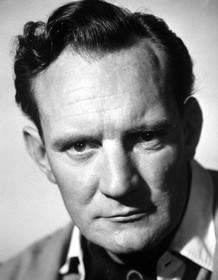
Richard Wagner (Trevor Howard)
Played by Trevor Howard
A brilliant, charismatic composer whose music defines Ludwig’s cultural world. His influence at court is deep but precarious, especially as personal scandal emerges. The relationship between patron and artist tests the limits of loyalty when art collides with passion.
- 🎼 Composer
- 🔥 Passionate
- CV
Cosima von Bülow (Silvana Mangano)
Played by Silvana Mangano
Cosima is a cultured, independent presence at the rhythm of Wagner’s circle. Her affair with Wagner and her status as Hans von Bülow’s wife place her at the center of court intrigue. She embodies the tensions between artistic life, marriage, and power within Ludwig’s orbit.
- 🎭 Aristocracy
- 🎶 Muse
- EO
Elisabeth of Austria (Romy Schneider)
Played by Romy Schneider
A charismatic cousin who wields influence over court life and Ludwig’s emotional world. She shares a kiss with Ludwig and guides dynastic marriage plans that shape the king’s personal and political life. Her presence highlights the blend of affection, ambition, and strategy at the imperial court.
- 👑 Empress
- 💫 Magnetic
- S(
Sophie (Sonia Petrovna)
Played by Sonia Petrovna
Elisabeth’s sister and Ludwig’s potential bride, she embodies dynastic expectations and the human cost of political matchmaking. Her prospects wane as Ludwig pursues other appetites, revealing the friction between duty and desire. Her role underscores how royal plans interact with personal heartbreak.
- 👸 Princess
- 💔 Unfulfilled Love
- PO
Prince Otto (John Moulder-Brown)
Played by John Moulder-Brown
Ludwig’s younger brother whose health deteriorates, echoing the family’s fragility under royal burdens. Otto’s decline contributes to the sense of a royal house under strain. He becomes a touchstone for the era’s vulnerability and the consequences of public life on private lives.
- 👑 Prince
- 🧑⚕️ Health
- CV
Count von Holnstein (Umberto Orsini)
Played by Umberto Orsini
A member of the aristocracy who watches Ludwig’s decisions with cautious interest. He embodies the political and social networks surrounding the Bavarian court. His presence highlights the external pressures and alliances shaping the king’s rule.
- 🏛️ Aristocracy
- 🗝️ Power
Where and When Is Ludwig Set?
Ludwig is set in Munich, Bavaria, Berg Castle near Lake Starnberg, Bad Ischl, Neuschwanstein… (1864-1886). Here is why the time and place matter to the story.
When
1864-1886
The narrative begins with Ludwig II’s 1864 coronation and extends to his death in 1886, spanning the mid- to late-19th century. It covers the era of German unification, including the Austro-Prussian War (1866) and the reshaping of Bavaria within a Prussian-led empire. Throughout, the king’s personal fantasies clash with political realities, shaping both his reign and his decline.
Where
Munich, Bavaria, Berg Castle near Lake Starnberg, Bad Ischl, Neuschwanstein Castle, Linderhof Palace, Herrenchiemsee, Lake Starnberg
The film is set in Munich and the surrounding royal seats of Bavaria, capturing the courtly life and artistic milieu of 19th-century Bavaria. It also moves to Alpine locales around Lake Starnberg, including Berg Castle, where private life collides with public duties. Iconic royal residences—Neuschwanstein, Linderhof, and Herrenchiemsee—appear as symbols of Ludwig II’s dream world. Bad Ischl serves as a backdrop for aristocratic gatherings that reveal political tensions beneath surface glamour.
- 🏰 Bavarian royalty
- 🎨 Arts & culture
- 🗺️ European history
What Are the Themes of Ludwig?
4 ideas the story keeps returning to, among them Art & Patronage, Identity & Isolation and Power & Politics.
-
01
Art & Patronage
Art and patronage drive Ludwig’s reign, funneling state resources into Wagner’s music and grand architectural projects. The cabinet’s resentment over expense exposes a clash between cultural idealism and political pragmatism. Wagner’s genius elevates the court’s reputation even as personal entanglements threaten scandal. The film questions whether art should steer a nation or remain a private passion.
-
02
Identity & Isolation
Ludwig isolates himself from political life, seeking refuge in fantasy and private relationships that defy court norms. The story probes his sexual identity and the guilt he feels, highlighting a ruler torn between duty and desire. Friends and advisers misread his intentions, deepening his withdrawal from public duties. The result is a poignant portrait of a sovereign whose inner life becomes both sanctuary and prison.
-
03
Power & Politics
Court politics and bureaucratic pressure constrain Ludwig, revealing the fragility of royal autonomy in a modernizing state. The plot traces tensions between monarchical symbolism and the realities of governance during Bavaria’s evolving relationship with a Prussian-led empire. Dynastic pressures, fiscal scrutiny, and public expectations push Ludwig toward increasingly isolated decisions. The dynasty’s fate underscores how power can erode when personal whim clashes with state interests.
-
04
Myth vs Reality
The castles Ludwig commissions become living symbols of a dream world colliding with harsh political necessity. Fairy-tale imagery stands in deliberate contrast to debt, scandal, and mental health concerns surrounding the king. The film toys with whether legend can sustain a throne or if truth must prevail. Landscape and architecture serve to illuminate the discrepancy between myth and reality in Ludwig’s reign.
What Kind of Film Is Ludwig?
Melancholic in tone, with slow pacing and a moderate story, going by the plot summary.
- Tone
- Melancholic
- Pacing
- Slow
- Story
- Moderate
- Intensity
- High
- Ending
- Sad
A slow-paced, heavy, and melancholic epic that follows the tragic downfall of an isolated king, characterized by dreamlike splendor, psychological turmoil, and a profound sense of loneliness and despair.
- tragic
- isolated
- melancholic
- somber
- dreamlike
- oppressive
- monarchy and duty
- mental health decline
- artistic patronage
- repressed sexuality
Content notes: mental illness, psychological distress, confinement, unexplained death.
Quiz
How well do you remember Ludwig? Test yourself on the story.
Where to Watch Ludwig
. US availability and prices from JustWatch.
Streaming availability in the US, powered by