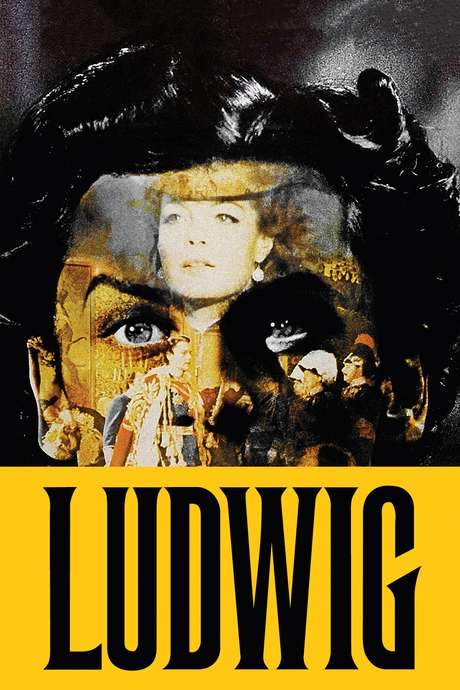
What Is Ludwig – Requiem for a Virgin King About?
The premise of Ludwig – Requiem for a Virgin King in 305 words, with nothing given away. The full story follows below.
In a dazzling, deliberately artificial realm where Wagnerian motifs collide with glossy, satirical reverberations of the early 1970s, the film re‑imagines 19th‑century Bavarian myth through a hyper‑stylized lens. Every set piece feels like a stage‑crafted tableau, a larger‑than‑life theatre that blurs the line between historic grandeur and contemporary parody. Music swells, dancers whirl, and the very air seems charged with the tension between timeless legend and the flickering neon of modern excess.
At the heart of this world sits Ludwig, a king whose crown is as much a costume of taste as it is a symbol of authority. Haunted by a whispered curse that traces back to Lola Montez, he governs as a curator of beauty, obsessively arranging his court like an ever‑changing exhibition. Yet beneath the ornate façades lies a restless yearning to leave the palace walls, to taste ordinary humanity and to balance his decadent inclinations with the pull of an industrializing world that threatens to eclipse his artistic utopia.
Supporting him are a constellation of historic figures repurposed for the film’s flamboyant tableau. Richard Wagner arrives as a fledgling composer whose future seems secured by Ludwig’s generous patronage, while Elisabeth of Austria offers quiet empathy, drawing unexpected parallels to other misunderstood icons of power. Around them, a cadre of ministers—led by Ludwig’s own uncle, Luitpold—navigate the shifting currents of progress, and surreal interludes glimpse characters such as Ernst Röhm and Adolf Hitler sharing a rumba, underscoring how art, ambition, and danger swirl together in this altered era.
The tone is simultaneously reverent and irreverent, a sumptuous pastiche that invites the viewer to contemplate the price of aesthetic obsession amid relentless change. By layering mythic grandeur with sharp contemporary commentary, the film crafts a world where power is performed, perception is mutable, and the king’s larger‑than‑life spirit lingers long after the music fades.
What Happens in Ludwig – Requiem for a Virgin King?
The complete story of Ludwig – Requiem for a Virgin King, from the first scene to the last, in 542 words (about 2 minutes). Spoilers throughout. Names in the text link to 8 cast member pages.
Spoilers ahead
Three norns foretell Ludwig II, Harry Baer as a king haunted by a curse said to come from Lola Montez, Ingrid Caven, destined to be the last king of Bavaria. He governs his court as a personal theatre of taste and image, clinging to aesthetics while resisting the pull of industrialism, progressivism, and the rising modern mass society. He nurses a toothache and conducts himself with eccentricity, yet makes a point of stepping beyond the palace walls to connect with life outside the court, choosing moments of ordinary humanity over isolation. The tension between decadence and connection threads through his days.
Early in his life he protects and funds the then-unknown composer Richard Wagner, Gerhard Maerz, a patron whose generosity is welcomed by Wagner even as others see it as a scandalous show of favoritism. Elisabeth of Austria, Monica Bleibtreu, her cousin, lends quiet sympathy to the king and draws a comparison to Sitting Bull, underscoring a shared sense of being misunderstood by a world eager to pigeonhole power and art. These personal bonds illuminate a ruler who balances mythic stature with human longing.
A cabal of ministers led by Ludwig’s uncle Luitpold, Peter Moland, plots to assassinate the king so Bavaria can accelerate industrialisation. The film threads in a Bavarian folk dance, a moment where Wagner contemplates his future, and even a playful yet unsettling scene where Ernst Röhm, Peter Kern, and Adolf Hitler, Johannes Buzalski, share a rumba, signaling how art, power, and danger swirl together in this turbulent era. Tension mounts as loyalty and conscience collide with political calculation.
Ludwig ultimately yields to Otto von Bismarck, Peter Przygodda, and allows Bavaria to be annexed into the German Empire, a concession that upends the conspirators’ plans and tests the monarchy’s viability in a changing nation. The looming question of how to handle a king who stands in opposition to industrial progress intensifies, and the circle of advisers grows more anxious about the future of the Bavarian throne. The move marks a turning point where old sovereignty confronts a new national order.
The conspirators debate how to remove Ludwig, worried that the Bavarian monarchy itself may be endangered. A fearless man from the people steps forward to oppose the plan, offering a counterweight to elite scheming and highlighting the tension between popular sentiment and royal authority. The king’s financial woes are not merely personal—they shape public perception, as the press casts him as insane even as the numbers behind his debts are questioned and reframed. Power, perception, and reality blur in the public eye.
Ludwig is found dead in an apparent suicide, and his brother Otto ascends the throne while Luitpold governs as Prince Regent due to Otto’s mental illness. It becomes clear that Ludwig’s debts were smaller than previously believed, reframing the narrative of his reign from financial ruin to a more nuanced legacy. In a stark, unsettling finale, Ludwig is taken to a guillotine and beheaded. A peasant woman promises that he will return, echoing mythic savior motifs. Surrounded by motorcycles, Ludwig stands on the guillotine and begins to yodel, leaving a haunting, defiant image of a ruler who remains larger than life even in defeat. The film closes on a note that blends tragedy, legend, and irrepressible spirit.
Ludwig – Requiem for a Virgin King Timeline: Every Key Event in Order
15 key events in the order they happen, from “The Norns' Curse on Ludwig” to “Final Beheading and Return Motif”. 13 events name a place, across 5 locations.
- 1
The Norns' Curse on Ludwig
Three norns introduce Ludwig as suffering from a curse, foretelling that he will be the last king of Bavaria. The curse casts a shadow over his reign from the outset, coloring how courtiers and rivals perceive him. It frames his life as a perpetual struggle between fate and a rapidly changing world.
When:early life
- 2
A Court Built on Infatuations and Aesthetics
Ludwig organises his court around personal infatuations and his own aesthetic preferences rather than traditional governance. He makes art and whimsy central to state life while opposing industrialization and the growth of mass society. His rule becomes a theatre of beauty more than a machine of politics.
When:early reign Where:Bavarian court
- 3
A Strange Demeanour Yet Human Connection
He complains about painful teeth and behaves eccentrically at times. Yet he seeks contact with ordinary people to stay in touch with life beyond the court.
When:early reign Where:Bavarian court
- 4
Patronage of Wagner
Early in his life he protects and finances Richard Wagner, providing crucial support. Wagner deeply appreciates the backing, even as others view the arrangement as scandalous and risky.
When:early life
- 5
Elisabeth of Austria's Affection
Elisabeth, Ludwig's cousin, sympathises with him and respects his temperament. She even compares him to Sitting Bull, highlighting his outsider status within court politics.
When:late 19th century Where:Austria
- 6
Conspirators Plot the King’s Downfall
A group of ministers led by Luitpold plot to assassinate Ludwig in order to push through industrial reforms. They discuss how to remove him without triggering wider upheaval.
When:during reign Where:Bavaria
- 7
Dance of Dissonance: Folk, Wagner, and a Choreography of Power
A Bavarian folk dance unfolds in the court as a cultural backdrop to political plans. Wagner discusses his future with the king, illustrating the composer-patron dynamic. In a jarring moment, Ernst Röhm and Adolf Hitler dance the rhumba, signaling the film's provocative juxtaposition of history.
When:late 19th/early 20th Where:Court
- 8
Annexation by the German Empire
Ludwig yields to Otto von Bismarck and agrees to Bavaria's incorporation into the German Empire. The move marks a dramatic shift away from Bavarian independence and the king’s anti-modern stance.
When:late 19th century Where:Bavaria/Germany
- 9
Conspirators Refine Their Plan
The conspirators discuss the mechanics of removing Ludwig and fear that the Bavarian monarchy itself could be jeopardized. Their dialogue reveals the tension between industrialization aims and traditional sovereignty.
When:late reign Where:Bavaria
- 10
A Voice of the People Objects
A man of the people opposes the plan to kill Ludwig, challenging the moral and political premises of the coup. His stance complicates the conspirators' resolve and highlights concerns about legitimacy and public support.
When:late reign Where:Bavaria
Show the other 5 events of Ludwig – Requiem for a Virgin King Hide the last 5 events
- 11
Debts and Insanity Label
Ludwig's financial debts are held against him and the press labels him insane. The narrative weaponizes his finances to undermine confidence in his leadership and justify opposition.
When:late reign Where:Bavaria
- 12
Ludwig Acknowledges Failure
He admits that his struggle against the progressives has failed and concedes that change is coming. He hints that others will follow him, suggesting the futility of resisting a rising modern order.
When:late reign Where:Bavaria
- 13
Drowning and Death
The king is found drowned in an apparent suicide, ending his life under mysterious circumstances. The mysterious death fuels rumors and casts a pall over his legacy.
When:end of reign Where:Bavaria
- 14
Aftermath: Otto’s Kingship and Regent
Ludwig's brother Otto becomes the new king, but Luitpold rules as Prince Regent due to Otto's mental illness. The discovery that Ludwig's debts were smaller than previously thought shifts the historical narrative around his governance.
When:immediately after death Where:Bavaria
- 15
Final Beheading and Return Motif
Ludwig is taken to a guillotine and beheaded in the film's climactic finale. A peasant woman promises that he will return, while the scene closes with Ludwig standing on the guillotine surrounded by motorcyclists as he yodels.
When:final scene Where:Bavaria
Who Are the Main Characters in Ludwig – Requiem for a Virgin King?
7 characters, among them Ludwig II of Bavaria (Harry Baer), Lola Montez (Ingrid Caven) and Richard Wagner (Gerhard Maerz): who each one is and the part they play in the story. 6 of them link to the actor’s page.
- LI
Ludwig II of Bavaria (Harry Baer)
Played by Harry Baer
The reclusive, romantically inclined king who channels his aesthetic obsessions into governance and culture, opposing industrialization. He is eccentric and melancholic, yet he seeks to stay connected with ordinary life through interactions with the people. His mounting debts and fragile health amplify paranoia, steering his decisions toward a tragic end.
- 👑 Royalty
- 🌀 Eccentricity
- 💸 Debt
- LM
Lola Montez (Ingrid Caven)
Played by Ingrid Caven
A seductive, provocative figure whose presence fuels scandal and a curse that anchors court intrigue. Her relationship with the king embodies temptation and destabilization at the center of power. Through her, the film explores how myth, desire, and rumor shape a monarch's fate.
- 💃 Seduction
- 🔮 Curse
- 🎭 Intrigue
- RW
Richard Wagner (Gerhard Maerz)
Played by Gerhard Maerz
The renowned composer whose early support from Ludwig embodies the monarchy's patronage of art. His artistic ambitions clash with the court's political games, representing a fragile artistic idealism in a shifting political landscape.
- 🎼 Music
- 🎭 Art
- 🧭 Patronage
- EO
Elisabeth of Austria (Sisi) (Monica Bleibtreu)
Played by Monica Bleibtreu
A sympathetic cousin who aligns with Ludwig, offering empathy amid power struggles. She perceives Ludwig's tragedy and contrasts his romantic ideals with the harsh realities of politics and court life.
- 👑 Royalty
- 💖 Affection
- 🕊️ Diplomacy
- O(
Otto (Sigi Graue)
Played by Sigi Graue
Ludwig's brother whose own mental illness fuels concerns about succession. He becomes a central figure in the aftermath of Ludwig's downfall, with regency dynamics shaping the early German Empire's future.
- 🧠 Mental Health
- 👥 Family
- 👑 Succession
- OV
Otto von Bismarck (Peter Przygodda)
Played by Peter Przygodda
The statesman navigating Bavaria's place within the German Empire, whose political maneuvering and diplomacy push for consolidation and broader integration.
- 🗺️ Politics
- 🧠 Statesmanship
- ⚖️ Diplomacy
- LP
Luitpold, Prince Regent
Ludwig's uncle who leads a faction of ministers plotting to assassinate the king to advance industrial reform. His role embodies political ambition and the brutal pragmatism behind state change.
- 🗡️ Conspiracy
- 🗺️ Politics
- 🧭 Power
Where and When Is Ludwig – Requiem for a Virgin King Set?
Ludwig – Requiem for a Virgin King is set in Bavaria, Munich and Bavarian Court (1864-1886). Here is why the time and place matter to the story.
When
1864-1886
The events unfold during Ludwig II's reign, spanning from 1864 to his death in 1886, with the 1871 unification of Germany shaping the backdrop. It is a period marked by royal pageantry, extravagant art patronage, and courtly intrigue amid the early stages of industrialization. The era contrasts old-world monarchy with burgeoning modern politics and public opinion.
Where
Bavaria, Munich, Bavarian Court
The tale is set in the Bavarian court of Ludwig II, a world of opulent castles and ritualized power. It portrays Bavaria as a realm steeped in tradition and aesthetic glamour, separate from the encroaching modern mass society. The political climate shows a crossroad between monarchic grandeur and the rising push for industrial reform.
- 🏰 Royal Court
- 🗺️ Bavaria
- 🏞️ Munich
What Are the Themes of Ludwig – Requiem for a Virgin King?
3 ideas the story keeps returning to, among them Monarchy vs Modernity, Betrayal and Conspiracy and Fate and Legend.
-
01
Monarchy vs Modernity
The film centers on a clash between a traditional royal court and the forces of modernization pushing for industrial progress. Ludwig resists the changes sweeping through society, clinging to aesthetic ideals and ceremonial power. This tension drives political maneuvering, public perception, and ultimately the king's fragile hold on his throne.
-
02
Betrayal and Conspiracy
A group of ministers led by Ludwig's uncle Luitpold schemes to remove the king so Bavaria can industrialize. The plot reveals how power structures inside the court justify ruthless methods in the name of progress. Personal loyalties erode as ambition and state interests collide, culminating in a dramatic downfall.
-
03
Fate and Legend
Three norns introduce a curse over Ludwig, framing his reign as doomed from the start. The narrative leans on myth and prophecy to explain the king's decisions and his isolation from a changing world. The cursed fate mirrors the inevitable collapse of a monarchy outpaced by history.
What Kind of Film Is Ludwig – Requiem for a Virgin King?
Melancholic in tone, with variable pacing and a complex story, going by the plot summary.
- Tone
- Melancholic
- Pacing
- Variable
- Story
- Complex
- Intensity
- High
- Ending
- Bleak
A stylized and melancholic historical drama that unfolds within an artificial, theatrical world, chronicling the tragic downfall of an eccentric king torn between aesthetic ideals and political reality amidst a swirl of conspiracy and cultural satire.
- melancholic
- stylized
- dreamlike
- oppressive
- mythic
- satirical
- monarchy in decline
- artistic patronage
- political conspiracy
- historical revisionism
Content notes: suicide, political assassination, beheading, mental illness.
Quiz
How well do you remember Ludwig – Requiem for a Virgin King? Test yourself on the story.