

What Is Love Torn in a Dream About?
The premise of Love Torn in a Dream in 277 words, with nothing given away. The full story follows below.
In a world that feels simultaneously timeless and oddly modern, the film glides through a series of interwoven vignettes that shimmer with a fairy‑tale glow while probing deeper philosophical questions. The visual palette shifts between stark, almost theatrical compositions and lush, dream‑like tableaux, creating a tone that is both reverent and playfully subversive. Every scene seems to whisper that stories themselves are mutable, inviting the audience to linger on the space between myth and reality.
At the heart of the tapestry is Sebatol, a free‑spirited and earnest young man whose surrounding society pressures him to accumulate wealth by any means. His internal struggle, caught between youthful idealism and the relentless drive of his environment, sets a compelling counterpoint to the film’s broader meditation on desire and moral compromise. Though the narrative never settles into a single era, his journey feels like a thread that ties together the disparate realms the story explores.
Running parallel to Sebatol’s quest are two equally striking collectives: a group of blind children who devote themselves to opening the eyes of sceptics to the Christian faith, and a band of retired nuns who have turned to operating a discreet brothel to fund their convent. These paradoxical circumstances lend the tale its magical‑realist veneer, underscoring how faith, survival, and compassion can collide in unexpected ways. The ensemble cast, often re‑appearing in new guises, reinforces the film’s fascination with identity’s fluidity, while the deliberate, lyrical pacing encourages viewers to contemplate the ethical dimensions of storytelling itself. The result is an immersive, thought‑provoking experience that feels like a living fable, beckoning the audience to follow its many winding paths without ever revealing where they ultimately lead.
What Happens in Love Torn in a Dream?
The complete story of Love Torn in a Dream, from the first scene to the last, in 593 words (about 3 minutes). Spoilers throughout. Names in the text link to 1 cast member page.
Spoilers ahead
The film opens in stark black-and-white with a self-aware prologue around Love Torn Within a Dream, where Lambert Wilson as Sebatol steps into the frame alongside a curiously ceremonial sense of arrival, setting a tone that asks the audience to watch closely as stories begin to braid together. What follows is a bold, layered meditation on narrative itself, a movie that insists there are nine interwoven stories shown across different centuries, gradually revealing that those threads might amount to twelve separate tales rather than a straightforward sequence. This complex sculpting of time and perspective is visually hinted at by an illustrated chalkboard that lays out the connections, a striking nod to Ramon Lull’s ars combinatoria—a structural impulse that Ruiz repeatedly turns into artful puzzles, inviting viewers to trace patterns and meanings across eras.
Within this intricate tapestry, the same actors repeatedly slip into markedly different roles, underscoring the film’s fascination with the mutability of identity and the power of storytelling to rewrite a person’s fate. In one of the clearest throughlines, Elsa Zylberstein [elsa-zylberstein] plays Lucrezia, a nun who becomes a mystical nymph, and also serves as Jessica in a contemporary strand, where she moves through a world shadowed by a website that forecasts Paul’s future. This dual arc anchors the film’s exploration of belief, desire, and the way history folds into present-day anxieties. Likewise, Melvil Poupaud [melvil-poupaud] embodies Paul, a troubled Catholic who learns he is Jewish, and also takes on Jacques, a Protestant theologian, highlighting how personal revelations collide with inherited ideologies and institutional certainties.
The narrative also braids more intimate, character-driven moments into its grand design. Lambert Wilson’s Sebatol anchors the pirate thread, a figure whose presence ties the historical and fantastical elements of the film into a single, shimmering motif. Across the shifting centuries and moral landscapes, other performers drift between identities as well, creating a mosaic where piracy, enchanted objects, and maps become agents that shape the destinies of those who encounter them. The film glimpses the perilous charm of objects that seem to speak or exert influence over their bearers, an idea that runs parallel to the broader meditation on power—how stories themselves can intoxicate, endanger, or liberate.
Themes of doubt and authority run just beneath the surface: a young theology student wrestles with doubts about established ideologies and the hypocrisies of the institutions meant to guard truth; the dangers and seductive lure of tales—the way narratives can entrench bias or liberate the imagination—are laid bare through constantly shifting identities. The film also toys with more unsettling motifs—piracy, cannibalism, and the notion of a map that may lead not only across oceans but into the heart of human desire and fear—pulling these elements into Ruiz’s characteristic mix of the uncanny, the poetic, and the philosophically provocative. The result is a dense, deliberately puzzling tapestry that rewards patient viewing and careful reflection, inviting audiences to trace the threads, compare the versions of each character, and consider how the act of retelling might alter what is true.
In the end, the work presents a dreamlike meditation on existence, memory, and the ethics of storytelling. It refuses a tidy, linear take and instead offers a richly textured experience where a single frame can harbor a dozen possible meanings, and where the boundary between past and present, fiction and reality, remains tantalizingly porous. The film’s mood—a careful balance of formal rigor and lyrical ambiguity—asks to be revisited, with every viewing promising new connections, revised readings, and a deeper appreciation for Ruiz’s fascination with how identity, desire, and myth continually reinvent themselves.
Love Torn in a Dream Timeline: Every Key Event in Order
13 key events in the order they happen, from “Opening black-and-white narration and welcome” to “The mosaic deepens: nine stories become twelve”.
- 1
Opening black-and-white narration and welcome
The film opens in black and white with a self-aware narration that introduces Love Torn Within a Dream. Producer Paulo Branco welcomes the cast at a celebratory ceremony, grounding the work in meta-theatrical commentary. This opening sets the stage for a mosaic of stories that will unfold through interconnected voices.
When:Opening sequence Where:Celebratory ceremony
- 2
Nine interwoven stories introduced
Early on, the film declares that nine interwoven stories will be depicted. It signals that these threads will cross and echo each other, forming a single, sprawling mosaic. Audiences are invited to trace the connections as the narrative moves between different characters and eras.
When:Early in the film
- 3
Chalkboard diagram of ars combinatoria
An illustrated configuration on a chalkboard explicitly references Ramon Lull's ars combinatoria. The diagram serves as an intellectual spine for Ruiz's structure, suggesting that stories can be combined and recombined. This visual motif foreshadows the film's synthetic, puzzle-like approach.
When:Early to mid
- 4
Overlapping threads and exchanged objects
The nine stories begin to overlap as objects circulate between threads. These exchanges hint that the stories are not isolated but parts of a larger, shifting system. As items move, new connections emerge, spiraling the narrative into greater complexity.
When:Throughout
- 5
Actors play multiple characters across eras
Several actors portray different characters across various storylines and centuries. This device blurs identity and challenges viewers to track who is who. The same performer becomes a different person in another era, yet echoes of each role linger.
When:Across centuries
- 6
Elsa Zylberstein's dual roles: Lucrezia and Jessica
Elsa Zylberstein embodies Lucrezia, a nun-turned mystical nymph, and Jessica, a modern-day figure. Jessica interacts with Paul, a student troubled by a website that predicts his future. The juxtaposition of sacred and contemporary identities emphasizes transformation and ambiguity.
When:Modern day
- 7
Melvil Poupaud's dual roles: Paul and Jacques
Melvil Poupaud plays both Paul, a troubled Catholic who discovers he is Jewish, and Jacques, a Protestant theologian. These dual roles illuminate themes of faith, identity, and how personal history can collide with belief. The actor's shifting personas drive a thread that threads religious doubt through centuries.
When:Across centuries
- 8
A young theology student questions institutional ideology
One thread follows a young theology student grappling with doubts about institutional ideologies and hypocrisy. The student's crisis challenges the comforts of doctrinal certainty and pushes toward critical inquiry. Ruiz uses this character to explore how belief systems shape perception and action.
When:Modern day
- 9
The dangerous power of storytelling
The film foregrounds the dangerous power of storytelling. Narratives can manipulate reality and influence people's choices. The meta-commentary on authorship highlights how voices construct meaning within and beyond the screen.
When:Throughout
- 10
Shifting and denial of identities
The narrative repeatedly presents characters who deny or morph their own identities. Disguises and role-switching emphasize the instability of the self. This motif aligns with Ruiz's interest in voice, mask, and performance.
When:Across centuries
Show the other 3 events of Love Torn in a Dream Hide the last 3 events
- 11
Piracy and enchanted objects
Motifs of piracy and charmed objects recur, with objects acting upon their bearers. These enchanted items influence destinies and deepen the interwoven structure. The exchange of belongings amplifies the film's puzzle-like quality.
When:Throughout
- 12
Maps and cannibalism as recurring motifs
Maps guide characters through shifting storylines and landscapes. Cannibalism appears as a recurring image, underscoring themes of consumption and transformation. Together, these motifs contribute to the film's ritual, mysterious atmosphere.
When:Throughout
- 13
The mosaic deepens: nine stories become twelve
As the film progresses, the nine stories multiply into twelve, and connections multiply. The structure becomes increasingly convoluted, challenging coherence. Ruiz's puzzle invites viewers to continually reassemble meaning as the film unfolds.
When:Mid to late
Who Are the Main Characters in Love Torn in a Dream?
8 characters, among them Lucrezia, Jessica and Paul: who each one is and the part they play in the story. Every profile links to the actor’s page.
-

Lucrezia
Played by Elsa Zylberstein
A nun who becomes a mystical nymph, embodying a bridge between sacred vow and uncanny power. Her shifting role tests the boundaries of devotion and desire. Through her presence, the film explores how faith can mingle with sensual or otherworldly forces.
- 🕊️ Nun
- 🎭 Dual role
- 🧭 Time-spanning
-
Jessica
Played by Elsa Zylberstein
A modern woman who interacts with Paul and embodies the film's contemporary layer. Her role intersects tech-age prophecy with mythic undertones. She mirrors the same actress's other character, highlighting Ruiz's fluid casting.
- 🧭 Modern woman
- 🔄 Identity
- 🗝️ Mystique
-
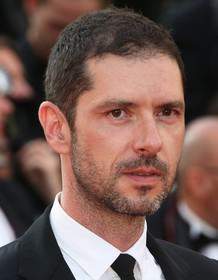
Paul
Played by Melvil Poupaud
A troubled student who discovers a possible future predicted by a website, hinting at a self-fulfilling fate. His Catholic background clashes with new discoveries about his Jewish identity, fueling internal turmoil. He represents the collision of belief systems within the narrative.
- 🎓 Student
- 🧭 Identity
- 🔮 Future-prediction
-
Jacques
Played by Melvil Poupaud
A Protestant theologian portrayed by the same actor, navigating questions of faith in a shifting religious landscape. His perspective adds another layer to the film's meditation on belief and institutional power. The role underlines Ruiz's interest in doctrinal doubt.
- 🎓 Theologian
- 🧭 Faith
- 🌀 Doubt
-

Sebatol
Played by Lambert Wilson
A pirate figure who travels across times, embodying rebellion and danger. His presence ties the maritime and adventurous strands of the narrative. The character foregrounds the film's fascination with piracy and transit of stories.
- 🧭 Pirate
- ⚓ Sea
- 🗺️ Adventure
- LC
Le Capitaine
Played by David Almeida
A central pirate captain figure whose leadership drives the maritime threads. He embodies authority on the high seas and the moral ambiguities of treasure and conquest. His scenes emphasize risk and command.
- ⚓ Captain
- 🗺️ Sea
- 🗡️ Authority
- B
Baniel
Played by Rogério Samora
A pirate associated character who appears in the pirate strand, contributing to the film's sense of danger and layered storytelling. His presence adds another voice to the roaming, rule-breaking spirit of the tales.
- 🗡️ Pirate
- 🏴☠️ Outlaw
- 🧭 Voyage
- L
L'inconnue
Played by Marie-France Pisier
The Unknown Woman, a figure who can symbolize chance encounters, hidden identities, or the gaps between stories. Her presence hints at the mystery at the heart of Ruiz's mosaic. She embodies the enigma central to the film's structure.
- ❓ Unknown
- 🧭 Enigma
- 🪄 Mystery
Where and When Is Love Torn in a Dream Set?
Love Torn in a Dream is set in Monasteries, university halls, pirate shores and modern cities (Across centuries (medieval to modern era)). Here is why the time and place matter to the story.
When
Across centuries (medieval to modern era)
Narrative threads span multiple eras, using time as a structural material rather than a fixed clock. Characters inhabit different centuries and roles, revealing how identities and beliefs endure or transform with time. The tempo shifts between sacred and secular, old world and new, underscoring the film's kaleidoscopic approach to time.
Where
Monasteries, university halls, pirate shores, modern cities
The film travels through diverse settings across time, from sacred monasteries to bustling contemporary spaces, and from coastal pirate outposts to quiet academic rooms. Each locale acts as a stage for overlapping stories that Ruiz interlinks with symbolic objects and recurring motifs. The chalkboard schematic of ars combinatoria and exchanged objects bind disparate places into one mosaic. The settings emphasize the film's experimental structure rather than a single geographic locale.
- 🎭 Surreal
- 🧭 Multi-epoch
- 📚 Meta-narrative
What Are the Themes of Love Torn in a Dream?
4 ideas the story keeps returning to, among them Storytelling, Identity and Institutions.
-
01
Storytelling
Stories wield power over characters and fate, often shaping reality as much as they reflect it. Objects and plots migrate between tales, creating a dangerous, mesmerizing web. The film warns of storytelling's ability to manipulate perception and blur truth.
-
02
Identity
Characters inhabit multiple roles across centuries, challenging fixed identities. The film plays with self-perception and proclaimed denials of who someone is, suggesting identity is porous and performative. This mutable self drives much of the narrative tension.
-
03
Institutions
A theology student questions orthodox doctrine and institutional hypocrisy, highlighting gaps between belief and practice. The story probes how institutions shape identity, morality, and truth. Doubt becomes a core engine for narrative evolution.
-
04
Piracy & Mystery
Piracy, maps, and enchanted objects propel the plot into adventurous and ominous terrain. The motifs of journey and appetite echo Ruiz's transgressive sensibilities, including cannibalism and desire. The motif links disparate stories through shared symbols and peril.
What Kind of Film Is Love Torn in a Dream?
Whimsical in tone, with variable pacing and a very complex story, going by the plot summary.
- Tone
- Whimsical
- Pacing
- Variable
- Story
- Very complex
- Intensity
- Medium
- Ending
- Ambiguous
A whimsical and structurally complex philosophical fable with a dreamlike atmosphere, weaving together paradoxical characters and themes to create an enigmatic and reflective viewing experience.
- dreamlike
- philosophical
- enigmatic
- reflective
- magical
- convoluted
- identity crisis
- storytelling power
- religious hypocrisy
- cannibalism
Content notes: cannibalism.


