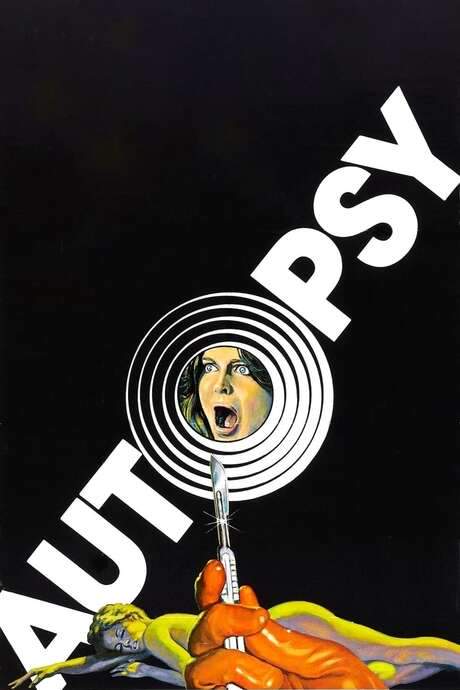
What Is Illustrious Corpses About?
The premise of Illustrious Corpses in 308 words, with nothing given away. The full story follows below.
In a city awash with clashing banners, street protests and whispered deals, the balance of power feels as fragile as the cobblestones beneath hurried feet. The government’s Christian‑Democratic leadership and an emboldened leftist movement stare each other down, while the corridors of the Supreme Court glow with a stale, exhausted authority. Within this volatile tableau, the ordinary rhythm of law enforcement is suddenly disrupted by a series of unsettling murders that strike at the very heart of the judiciary.
Enter Rogas, a seasoned detective whose methodical mind and quiet determination set him apart in a precinct eager for quick answers. Tasked with untangling the mystery behind the slain judges, he finds himself pulled between competing demands: the pressure to follow a convenient narrative and his own instinct that something far more intricate is at play. The investigation forces him to navigate a labyrinth of official directives, political overtones, and the ever‑present threat of being used as a pawn in a larger game.
Amid the turmoil, Cusan, an old schoolmate turned journalist for a radical newspaper, reappears. Their friendship, forged in youth but now split by divergent ideologies, becomes a tentative bridge between the world of police procedure and the fervor of activist discourse. Their uneasy alliance hints at a shared commitment to uncovering truth, even as the city’s streets pulse with uncertainty and the shadows of power grow longer.
Surrounding them are figures who embody the intersecting forces of state and dissent: the stern Minister of Justice, the aloof president of the Supreme Court, and the discreet operatives who whisper behind closed doors. The atmosphere is thick with suspicion, and every conversation feels like a chess move. As Rogas pushes deeper into the case, the line between justice and politics blurs, promising a tension‑laden pursuit that tests both his resolve and the fragile equilibrium of the city itself.
What Happens in Illustrious Corpses?
The complete story of Illustrious Corpses, from the first scene to the last, in 644 words (about 3 minutes). Spoilers throughout. Names in the text link to 3 cast member pages.
Spoilers ahead
The film opens in a Palermo tense with demonstrations, strikes, and a broader clash between the Left and the Christian Democratic government. The first victim is Varga, an investigating judge whose death rattles the city. The police assign Rogas to lead the case, but almost as soon as he begins, two more judges are killed. All three victims had collaborated on previous cases, suggesting a link beyond random violence. Rogas’s superiors urge him to abandon rumors and instead chase a tangible suspect, the “crazy lunatic who for no reason whatever is going about murdering judges,” a directive that only deepens the sense of a political trap around him.
Rogas probes into three men who were wrongfully convicted by the murdered judges and narrows in on Cres, a pharmacist accused of poisoning his wife. Rogas concludes Cres was likely framed, yet Cres has vanished and even his portraits are defaced, with faces cut from the photographs. Through this investigation a fourth judge is killed, and Rogas unexpectedly crosses paths with Cusan, his old school friend who writes for a far-left newspaper. Although their politics diverge, Cusan earnestly respects the rigor and integrity of Rogas’s inquiry, and the two rekindle a wary trust amid mounting danger.
After a fifth killing outside the Justice Building, two eyewitnesses—one a policeman and the other a prostitute—claim to have seen two young revolutionaries flee the scene and a car speeding away. Yet the testimonies diverge on the car’s direction, complicating the police narrative. Rogas is quickly demoted and ordered to work with the political division, the aim being to pin the murders on the revolutionary Left. Despite the setback, Rogas presses on and seeks out the [Riches], the Supreme Court president, to warn him that he may be next in the killers’ crosshairs.
At a party held in a courthouse salon, Rogas discovers a tangle of power: the Minister of Justice mingling with prominent Left figures and the editor of a revolutionary paper that Cusan edits. In this charged atmosphere, the scheming figure of Galano emerges as a central player, signaling that the Christian Democratic side might eventually have to form a coalition with the Communist Party. Rogas also thinks he spots Cres, but the man vanishes again before Rogas can confront him. The sense of being watched grows stronger, and Rogas’s sense of a larger conspiracy deepens.
Back at the precinct, Rogas has a colleague wiretap the Chief of Police’s office. One recording captures a chilling instruction to “take it easy on the judges,” hinting that someone high up is shaping events. Rogas theorizes that the early murders were designed to justify prosecuting far-left groups and intends to bring this theory to light through allies he can trust. He shares his suspicions with Cusan, who, after initial doubts, agrees to connect him with Amar, the Communist Party’s secretary-general. Unbeknownst to them, Riches has been listening in, and that conversation will have fatal consequences as the order of killings closes in on Rogas.
Rogas discovers that his own phone line is tapped. He meets Amar in a museum, planning to expose the manipulation behind the killings, but both men are killed in a sudden, brutal confrontation. In the chaos that follows, the Chief of Police issues a statement blaming Amar’s death on Rogas, painting Rogas as mentally unstable and claiming he committed suicide after the murder. The official narrative tightens its grip as the city teeters between street clashes and a fragile, controlled order.
In the closing act, a somber dialogue between Cusan and the Communist Party’s vice-secretary exposes the grim calculus behind political power. The vice-secretary concedes that the government may accept the official line to avert open conflict, but the exchange lingers on a pointed question about truth. Cusan presses, and the vice-secretary delivers a stark, unsettling answer: truth is not always revolutionary.
Truth is not always revolutionary.
Illustrious Corpses Timeline: Every Key Event in Order
14 key events in the order they happen, from “Vargas murdered in Palermo amid protests” to “Amar and Rogas killed; official version and ending”. 14 events name a place, across 12 locations.
- 1
Vargas murdered in Palermo amid protests
The film opens with the murder of Investigating Judge Vargas in Palermo, as demonstrations flare around a climate of political tension. The city is polarized between the Left and the Christian Democratic government, creating a charged backdrop for the investigation. Inspector Rogas is promptly assigned to the case and begins to gather initial clues.
When:Opening Where:Palermo
- 2
Rogas takes charge and probes initial clues
Inspector Rogas is tasked with solving Vargas's murder and begins his initial probe. As he starts, two more judges are killed, heightening the sense of a broader conspiracy. The cases suggest corruption and influence at the highest levels.
When:Early investigation Where:Palermo Police HQ
- 3
Pattern of murders linked by shared work on cases
The victims had all worked together on several cases, signaling a pattern rather than isolated crimes. Rogas begins to suspect institutional corruption and political interference. The investigation tightens around the judiciary and government ties.
Where:Palermo
- 4
Uncovered corruption and official warning
Rogas uncovers evidence of corruption surrounding three government officials tied to the murders. His superiors counsel him not to chase gossip and to focus on a so-called 'crazy lunatic' instead. The pressure shows how politics can steer a murder investigation.
When:Mid-early Where:Police HQ
- 5
Cres identified as a suspect; disappears and erases his image
Rogas identifies Cres, a pharmacist previously convicted of poisoning his wife, as the likely suspect. Cres vanishes and all photographs of him are cut from public records, signaling a deliberate effort to erase him. The search for Cres intensifies as the truth remains elusive.
When:Mid Where:Cres's house
- 6
A fourth judge is killed; Rogas meets Cusan
A fourth investigating judge is murdered, increasing the danger surrounding the case. Rogas runs into Cusan, a schoolmate who writes for a far-left newspaper and respects Rogas's commitment to investigation. The personal and political lines blur as tensions rise.
When:Mid Where:Street near crime scene
- 7
Fifth murder outside Justice Building; conflicting testimonies
A fifth murder occurs in front of the Justice Building. The policeman and a prostitute give conflicting narratives about two young revolutionaries and a car fleeing the scene, suggesting manipulation and the masking of motives. The case grows more contentious and murky.
When:Mid Where:Justice Building, Palermo
- 8
Rogas demoted to the political division
Rogas is demoted and reassigned to help pin the crimes on revolutionary Leftist groups. This shift illustrates how investigations are increasingly filtered through political agendas rather than evidence alone. Rogas braces for a tougher, more constrained pursuit of truth.
When:Mid-late Where:Police HQ
- 9
Warning to Riches; philosophy of justice discussed
Rogas seeks out Riches, the President of the Supreme Court, to warn him that he might be targeted next. Riches offers a stark philosophy of justice, claiming the court is incapable of error by definition. The exchange foreshadows how legal structures can be used to shield political power.
When:Mid-late Where:Supreme Court building
- 10
Pattos party gathering; Cres spotted
At a party hosted by Pattos, Rogas sees Cres but the suspect vanishes again. The gathering involves high-ranking government and Left figures, underscoring the collision of politics and justice. Cres's presence hints at deeper links between the murders and political maneuvering.
When:Mid-late Where:Pattos's building
Show the other 4 events of Illustrious Corpses Hide the last 4 events
- 11
Bugging the Chief of Police; recording reveals pressure
Rogas arranges to bug the Chief of Police's office to uncover hidden influences. A subsequent recording reveals officials telling the anonymous listener to 'take it easy on the judges' while Rogas's investigation continues. The conspiracy extends into the very heart of law enforcement.
When:Mid-late Where:Chief of Police's office
- 12
Cres's role and Amar's planned contact
Rogas theorizes Cres carried out the early murders to justify a crackdown on leftist groups. He arranges a contact with Amar, the Communist Party's Secretary-General, and Cusan proposes the plan; Riches secretly records the conversation. The stage is set for a pivotal intersection of justice, politics, and propaganda.
When:Late Where:Rogas's location / museum
- 13
Riches is shot after overhearing the conversation
Riches, who overheard the Amar–Rogas–Cusan conversation, is shot like the other judges. The assassination underscores the reach of the conspiracy and the peril facing those who pursue truth. The legal establishment is enveloped in fear and silence.
When:Late Where:Supreme Court area
- 14
Amar and Rogas killed; official version and ending
Rogas and Amar are killed during a museum meeting, marking a dramatic culmination of the plot. The Chief of Police later issues a statement blaming Amar's death on a mentally unstable Rogas and claims Rogas himself committed suicide. In the final scene, Cusan discusses with the Communist Party vice-secretary, who says the party will accept the government's version to avoid open conflict, declaring that truth is not always revolutionary.
When:Ending Where:Museum / Police HQ
Who Are the Main Characters in Illustrious Corpses?
8 characters, among them Inspector Amerigo Rogas (Lino Ventura), Galano (Paolo Graziosi) and Supreme Court President Riches: who each one is and the part they play in the story. 7 of them link to the actor’s page.
- IA
Inspector Amerigo Rogas (Lino Ventura)
Played by Lino Ventura
A relentless and principled inspector who pursues the truth despite political pressure. He exposes systemic corruption and faces demotion as he navigates a tangled network of powerful actors. His dedication to investigation and integrity puts him at odds with the state’s attempts to control the narrative.
- 🕵️ Investigation
- ⚖️ Justice
- G(
Galano (Paolo Graziosi)
Played by Paolo Graziosi
A journalist and editor connected to a revolutionary paper, he embodies the power of media in a polarized era. His conversations reveal the overlaps between leftist activism and state manipulation. Loyalty to a cause complicates his relationship with Rogas and the unfolding conspiracy.
- 🗞️ Media
- 📢 Propaganda
-
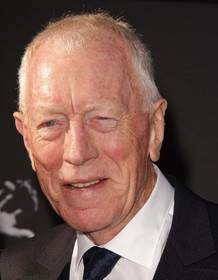
Supreme Court President Riches
Played by Max von Sydow
A high court figure who articulates a philosophy of justice that the system is infallible by definition. He embodies the judiciary’s vulnerability to political pressure and helps drive the conspiracy forward. His presence signals how law can be co-opted by those in power.
- 🏛️ Justice
- ⚖️ Institutions
-
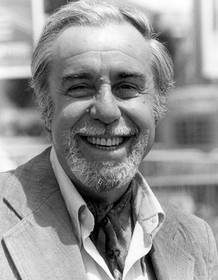
Security Minister
Played by Fernando Rey
A powerful government figure who shapes investigations and public narratives. He coordinates the state’s response to unrest and influences how the murders are framed. His involvement underscores the top-level manipulation behind the conspiracy.
- 🏢 Government
- 🧭 Power
- CO
Chief of Police
Played by Tino Carraro
Head of the police who directs how investigations are managed and how information is controlled. He advises a cautious approach toward the judges and oversees surveillance measures. He represents authority that can both protect and obstruct the pursuit of truth.
- 🚓 Law Enforcement
- 🧭 Control
- TP
The Prostitute
Played by Tina Aumont
A key eyewitness whose testimony captures street-level volatility and the ambiguities of credibility in a charged political climate. Her account contributes to the unsettled sense of truth in a landscape where factions claim legitimacy. She embodies the vulnerable voices caught between power and protest.
- 👁️ Witness
- 🗝️ Truth
- C
Cres
A pharmacist whose alleged involvement becomes a focal point in Rogas’s pursuit of the truth. The disappearance of Cres and the removal of his image hint at an organized effort to erase a suspect from the public record. The case illustrates how individuals can be crushed under the weight of political machinations.
- 💊 Medicine
- 🧭 Mystery
- SM
Sospettato mafioso
Played by Corrado Gaipa
A mafioso suspect whose status highlights the blurred lines between criminal activity and political maneuvering in the murders. The figure underscores how crime, media, and state power intertwine in a broader scheme to shape political outcomes.
- 🕶️ Crime
- 🗂️ Conspiracy
Where and When Is Illustrious Corpses Set?
Illustrious Corpses is set in Palermo, Sicily and Italy (1970s). Here is why the time and place matter to the story.
When
1970s
The story unfolds in a turbulent era of Italian politics, marked by demonstrations, strikes, and deepening polarization between the Left and the Christian Democrats. Institutions struggle under pressure while independent investigators push against political constraints. The period’s conspiratorial atmosphere shapes every murder and investigation.
Where
Palermo, Sicily, Italy
Palermo provides a grim backdrop for a clash between a reform-minded judiciary and a politically charged government. The city blends grand institutions with chaotic street demonstrations and a tense public mood. Its corridors of power sit alongside crowded squares where unrest and discourse intertwine.
- 🏙️ City of Palermo
- 🗺️ Sicily
What Are the Themes of Illustrious Corpses?
3 ideas the story keeps returning to, among them Justice & Power, Corruption and Surveillance.
-
01
Justice & Power
The murders and investigations reveal a justice system bent to political ends. Judges are sacrificed to steer policy, and legal duty collides with state interests. Rogas operates under intense pressure, illustrating how truth can be manipulated to maintain the status quo.
-
02
Corruption
The plot exposes a network of political figures coordinating to manufacture a narrative that serves their interests. The investigation intersects with party politics, silencing witnesses and eroding public trust. Money and influence drive the drive to justify a preordained outcome.
-
03
Surveillance
Phone taps and office bugs reveal pervasive state surveillance of officials and investigators alike. Information is weaponized, and truth is negotiated within a web of power. The final acts show how surveillance can distort justice and shape public perception.
What Kind of Film Is Illustrious Corpses?
Tense in tone, with steady pacing and a complex story, going by the plot summary.
- Tone
- Tense
- Pacing
- Steady
- Story
- Complex
- Intensity
- High
- Ending
- Bleak
A tense and gloomy political thriller that plunges the viewer into a paranoid world of state-level conspiracy, where an investigator's quest for truth is systematically crushed by an oppressive and corrupt system, creating a deeply anxious and claustrophobic viewing experience.
- gloomy
- paranoid
- claustrophobic
- anxious
- oppressive
- somber
- political corruption
- crime investigation
- miscarriage of justice
- deep state conspiracy
Content notes: political assassination, murder, miscarriage of justice.
Quiz
How well do you remember Illustrious Corpses? Test yourself on the story.