What Is The Verdict About?
The premise of The Verdict in 285 words, with nothing given away. The full story follows below.
In the dim, fog‑laden streets of 1890 London, the weight of the law hangs heavy over the city’s soot‑blackened alleys. A recent execution, carried out on shaky grounds, has left the public uneasy and the corridors of Scotland Yard humming with whispered doubt. The film opens against this backdrop of Victorian severity, where the pursuit of order collides with the lingering scent of injustice, setting a tone that is both atmospheric and tautly restrained.
George Grodman, a veteran superintendent whose career has been defined by meticulous prosecution, finds himself drawn back into the heart of the controversy. When the key witness linked to the condemned man meets an enigmatic end, Grodman’s sense of duty compels him to revisit the case that haunts his conscience. Standing beside him is the newly appointed John R. Buckley, whose brash confidence contrasts sharply with Grodman’s measured deliberation, creating a dynamic tension that underscores the differing philosophies within the force. Around them swirl figures such as Arthur Kendall, the victim’s determined nephew; Victor Emmric, a sensitive artist enlisted to document the morbid details; and Clive Russell, a politically savvy opponent whose ambitions add layers of complexity to the unfolding inquiry.
The world of the film feels like a living tapestry of soot‑streaked rooftops, gas‑lit chambers, and the austere interiors of courtroom and prison alike. Its mood is a blend of gritty realism and haunting introspection, inviting the audience to question how far the quest for truth can stretch before it is torn apart by personal motives and institutional pressures. As the investigation deepens, the characters navigate a maze of loyalty, reputation, and moral ambiguity, each step drawing them closer to a revelation that could reshape their understanding of justice itself.
What Happens in The Verdict?
The complete story of The Verdict, from the first scene to the last, in 598 words (about 3 minutes). Spoilers throughout. Names in the text link to 9 cast member pages.
Spoilers ahead
In 1890, a grim scene unfolds at London’s Newgate Prison: a man is executed for murder based on a tightly argued but circumstantial case. George Grodman is the Scotland Yard superintendent who built the prosecution, pinning the crime to the defendant largely on an alibi that placed him with a Reverend Hoffman at the moment of the murder. When the alibi witness’s whereabouts become murky—a supposed departure for Wales that later turns out to be a journey to New South Wales—the case begins to unravel, and Grodman is soon shown the door. His replacement is the abrasive and gleefully confident John R. Buckley, whose页面 presence signals a tougher, more public face of justice.
Enter the inner circle around the doomed man: Arthur Kendall, the victim’s nephew; Victor Emmric, an artist who will be asked to illustrate the crime and its aftermath; and Clive Russell, the political opponent who becomes entangled in the web of motives and opportunities. The three men visit Grodman, who shares plans to publish a memoir about his career and even accepts Emmric’s offer to contribute drawings of bodies and scenes. Tensions flare as Kendall and Russell clash with each other, revealing fault lines that will later complicate the truth.
The very next day, Kendall’s landlady, Mrs. Benson, wakes to a silence and discovers that Kendall has been stabbed to death inside a locked room. Buckley, now at the helm, starts by probing seemingly ordinary leads: a burglar, Barney Cole, who is consulted about the locks but cannot crack the mystery; and afterward a music-hall singer, Lottie Rawson, who had quarried with Kendall but is ultimately cleared of suspicion. Meanwhile, Buckley’s eyes turn toward Kendall’s political ally, Russell. The detective finds an unused Brockton-bound ticket in Russell’s home, and the murder weapon is also found there, leading to Russell’s arrest, trial, and conviction.
Awaiting execution, Russell offers a new, more personal alibi: he had been involved in an affair with a married woman, not traveling to Brockton as he claimed. He begs Grodman to keep this admission secret, but the truth remains elusive, especially after the woman dies before any reconciliation can occur.
The turning point arrives when Grodman, driven by a sense of justice beyond the letter of the law, teams up with Emmric to revisit the case. He confesses to Emmric that he himself committed the murder, but his motive is stark and principled: Kendall, the man who murdered his aunt, had corrupted the justice system by allowing an innocent man to be condemned. Grodman explains how he staged the locked-room illusion by manipulating Mrs. Benson’s reactions, drugging Kendall so he would not wake, and then stabbing the sleeping man during a supposed routine “investigation.” He also admits to breaking into Russell’s home and planting the murder weapon to secure an exoneration that would expose the miscarriage of justice.
With the truth finally laid bare, Russell is exonerated, and the manuscript Grodman prepared—his memoir of a career scarred by a grave error—becomes the key to the case’s real ending. Emmric is entrusted with ensuring the manuscript is published, while Buckley’s reputation is left in tatters; the very system that sought to elevate him is forced to confront its own failings.
In the end, what emerges is a harrowing meditation on justice, culpability, and the womanly and menacing complexities that can tip a city’s fate. The characters’ intertwined fates—George Grodman, John R. Buckley, Arthur Kendall, Victor Emmric, Clive Russell, Lottie Rawson, Mrs. Benson, Barney Cole, and Rev. Holbrook—reveal how truth can be both elusive and inescapable, depending on who finally dares to tell it.
The Verdict Timeline: Every Key Event in Order
12 key events in the order they happen, from “The execution at Newgate” to “Memoir handed to Emmric”. 12 events name a place, across 11 locations.
- 1
The execution at Newgate
In 1890, a man convicted of murder is executed at Newgate Prison based on a circumstantial case Grodman assembled. The defendant maintains an alibi with Reverend Hoffman, but Hoffman cannot be located. It later emerges that Hoffman had actually gone to New South Wales, undermining the alibi.
When:1890 Where:Newgate Prison, London
- 2
Hoffman's alibi unravels
Following the execution, Hoffman, the alibi witness, cannot be traced back to Wales. It later turns out he had traveled to New South Wales, not staying in Wales as claimed. The missing alibi hints at a miscarriage of justice.
When:1890 Where:London/Wales/New South Wales
- 3
Buckley takes over the investigation
Grodman is fired for the miscarriage of justice, and Buckley becomes the new superintendent. Buckley adopts a harsher, more aggressive approach to pursuing Kendall's murder. The stage is set for a renewed push to find the real killer.
When:Shortly after execution, 1890 Where:Scotland Yard, London
- 4
A memo and a plan to memoir
Grodman, Kendall, Emmric, and Clive Russell visit Grodman. Grodman reveals plans to write a memoir of his career and hires Emmric to illustrate the dossiers of bodies. Kendall and Russell nearly come to blows, highlighting the tensions among them.
When:Soon after Buckley's appointment, 1890 Where:Grodman's home, London
- 5
Kendall is murdered in a locked room
The next day, Kendall is found stabbed to death inside a locked room; Mrs. Benson, his landlady, calls Grodman to break down the door. The locked-room detail becomes a central puzzle for the investigators. Buckley begins the forensic inquiry into the crime's mechanics.
When:The next day Where:Kendall's residence, London
- 6
Initial leads and an arrest
Buckley consults a burglar about the locks, but cannot explain how the crime was committed. He arrests Lottie Rawson, a music-hall singer who argued with Kendall, but she is eventually freed as the lovers’ quarrel is clarified. The investigation narrows but the truth remains elusive.
When:Shortly after murder Where:London
- 7
Russell’s alibi collapses
The unused ticket to Brockton and the murder weapon are found in Clive Russell’s home, casting doubt on his travel alibi. Russell is arrested, tried, and convicted for Kendall’s murder. The defense collapses as new evidence emerges.
When:After murder Where:Russell's home, London
- 8
A new alibi surfaces
Awaiting execution, Russell confesses a new alibi: he was having an affair with a married woman during the time of the murder. He asks Grodman to keep the affair secret, but Grodman traces the woman anyway. It turns out she has just died, complicating any exonerating effort.
When:Before execution Where:Russell's prison
- 9
Grodman confesses at Newgate
At the last moment, Grodman asks Emmric to accompany him to Newgate, where Grodman confesses to the murder. He explains that Kendall was murdered to obtain justice for his aunt and to expose the miscarriage of justice. The locked-room ruse is laid bare, revealing the depths of the deceit.
When:The last moment before the condemned’s fate Where:Newgate Prison
- 10
The crime method revealed
Grodman reveals that he drugged Kendall so he would not wake, then stabbed him during Grodman’s investigation. He then broke into Russell’s home and planted the murder weapon to frame him. The true scope of the deception becomes clear, exposing the real killer and the flawed conviction.
When:During confession Where:Newgate
- 11
Exoneration of Russell
With Grodman’s confession, Russell is exonerated of Kendall’s murder. The planted weapon is revealed, and the public learns the truth behind the original conviction. The miscarriage of justice is finally acknowledged.
When:After confession Where:London
- 12
Memoir handed to Emmric
Grodman hands Emmric the manuscript of his memoir, detailing the entire crime so it can be published after the police finish their work. Buckley’s authority is undermined by the exposure of the truth. Emmric is tasked with ensuring the memoir’s publication.
When:After confession Where:Newgate/ Grodman's vicinity
Who Are the Main Characters in The Verdict?
8 characters, among them George Edward Grodman (Sydney Greenstreet), Supt. John R. Buckley and Victor Emmric (Peter Lorre): who each one is and the part they play in the story. Every profile links to the actor’s page.
- GE
George Edward Grodman (Sydney Greenstreet)
Played by Sydney Greenstreet
A diligent, principled superintendent who questions a verdict and pursues the truth at any cost. He orchestrates the investigation, writes a memoir to preserve the truth, and ultimately confesses to the murder to demonstrate the real killer's identity. His resolve is tempered by a sense of justice for Kendall and the innocent man wrongly executed. He embodies the tension between official duty and moral responsibility.
- ⚖️ Justice
- 🕵️ Investigation
- 🧭 Integrity
-
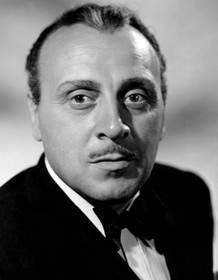
Supt. John R. Buckley
Played by George Coulouris
The obnoxious, gloating replacement superintendent who leads the prosecution with swagger and a blunt approach. He fixates on a straightforward trail and is quick to convict Russell, showcasing the dangers of arrogance within law enforcement. His downfall comes as the truth behind the alibis and the real sequence of events is laid bare.
- ⚖️ Authority
- 🔎 Prosecution
- 🕵️ Bureaucracy
-
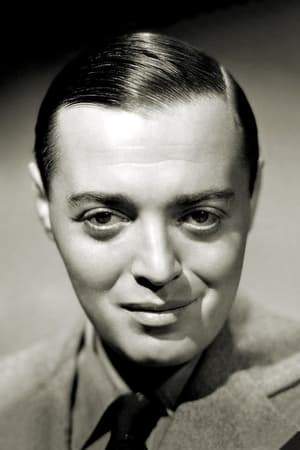
Victor Emmric (Peter Lorre)
Played by Peter Lorre
An artist and Kendall’s ally who provides a cultured lens on the case. He collaborates with Grodman to illustrate the bodies and events for the memoir, helping to interpret the evidence from a perceptive, artistic angle. His friendship with Kendall adds a human dimension to the investigation and its stakes.
- 🎨 Art
- 🕵️ Investigation
- 🧠 Insight
- AK
Arthur Kendall
Played by Morton Lowry
The murder victim whose death catalyzes the investigation. As the victim’s nephew, his murder exposes networks of alibis, political pressure, and hidden motives. Kendall’s role is pivotal as the case unfolds around the attempt to hide and reveal truth surrounding his death.
- 🕵️ Investigation
- 🧩 Motive
- ⚖️ Justice
- CR
Clive Russell
Played by Paul Cavanagh
The MP from Brockton whose travel alibi is scrutinized and ultimately challenged. The discovery of an unused ticket and the murder weapon ties him to the crime, leading to his conviction. His arc illustrates how political figures can be ensnared by the same web of evidence that ensnares others.
- 🏛️ Politics
- 🔎 Investigation
- ⚖️ Justice
- LR
Lottie Rawson
Played by Joan Lorring
A music-hall singer who becomes entangled in Kendall’s murder after a quarrel with him. She is briefly questioned and released, showing how many ordinary people become part of the case's orbit. Her involvement highlights the broad net of suspicion cast by a high-profile crime.
- 🎤 Entertainment
- 🕵️ Investigation
- 🗝️ Secrets
- MV
Mrs. Vicky Benson
Played by Rosalind Ivan
Kendall’s landlady who witnesses events and accidentally becomes a linchpin in Grodman’s locked-room manipulation. Her reactions provide crucial clues to the method of the crime. She embodies the ordinary citizen drawn into the mechanisms of a sensational investigation.
- 🏠 Landlord
- 🔍 Witness
- 🧩 Clue
-
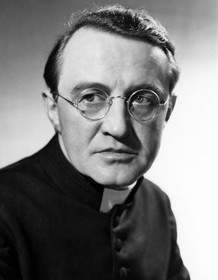
Rev. Holbrook
Played by Arthur Shields
A Reverend connected to the alibi network around the murder. His movements and credibility are examined as the investigation reorders itself around the pursuit of truth. He represents the moral weight of community voices in a case of alleged justice.
- ⛪ Spiritual
- 🕵️ Investigation
- 🧭 Alibi
Where and When Is The Verdict Set?
The Verdict is set in Newgate Prison and London (1890). Here is why the time and place matter to the story.
When
1890
Set in 1890, the film situates its drama in late Victorian London, a time of rigid social hierarchies and muscular law enforcement. The era's reliance on circumstantial evidence and public opinion shapes how the case unfolds. The mood and institutions reflect the period's appetite for sensational justice and newspaper-driven narratives.
Where
Newgate Prison, London
The story unfolds at Newgate Prison in London, providing a grim, institutional backdrop for a high-stakes murder investigation. The setting underscores the Victorian era's brutal justice system and the public spectacle surrounding trials. The claustrophobic environment amplifies the tension as secrets and alibis collide.
- ⚖️ Crime
- 🔎 Mystery
- 🏛️ London
What Are the Themes of The Verdict?
3 ideas the story keeps returning to, among them Justice, Truth and Power.
-
01
Justice
A miscarriage of justice triggers the entire case, with an innocent man executed on circumstantial proof. Grodman maneuvers through a flawed system, seeking to uncover the truth beyond official narratives. The narrative culminates in a confession that reveals how truth can be obscured by power and procedure. The memoir frame emphasizes lasting accountability over convenient verdicts.
-
02
Truth
Secrets, alibis, and manipulated evidence create a dense web the investigators must untangle. The locked-room setup serves as a device to test perception against reality. Characters wrestle with what to reveal and what to protect, ultimately exposing the real culprit. The resolution argues that truth, even when costly, must prevail over reputation.
-
03
Power
The clash between the pomp and pressure of authority and the slow grind of forensic truth drives the plot. Buckley embodies brute, showy power, while Grodman represents principled persistence in the service of justice. The story shows how institutions can be bent by ambition, yet are forced to confront their own fragility. In the end, power without integrity collapses under scrutiny.
What Kind of Film Is The Verdict?
Dark in tone, with steady pacing and a complex story, going by the plot summary.
- Tone
- Dark
- Pacing
- Steady
- Story
- Complex
- Intensity
- High
- Ending
- Bittersweet
A grim and methodical crime thriller that builds tense moral dread around a wrongful execution and a detective's obsessive pursuit of a twisted form of justice.
- suspenseful
- grim
- moral conflict
- methodical
- sombre
- tense
- wrongful execution
- miscarriage of justice
- crime investigation
- revenge
Content notes: capital punishment, wrongful execution, stabbing, murder.
Quiz
How well do you remember The Verdict? Test yourself on the story.
Where to Watch The Verdict
. US availability and prices from JustWatch.
Streaming availability in the US, powered by