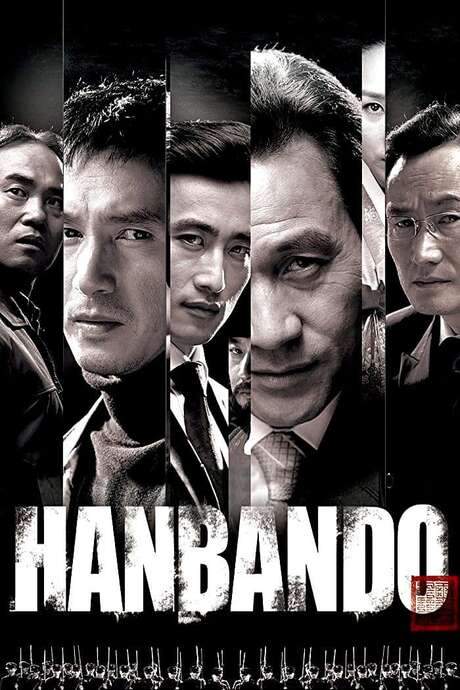
What Is Hanbando About?
The premise of Hanbando in 328 words, with nothing given away. The full story follows below.
In a peninsula still feeling the echo of division, the prospect of reopening the historic Kyungui Railroad hangs like a fragile promise over the South‑and‑North Korean governments. The iron track, once a conduit for commerce, now symbolizes a possible bridge toward reunification, yet its future is tangled in a diplomatic knot with Japan, which clings to documents supposedly sealed by the late Emperor Gojong. The atmosphere crackles with the tension of history being wielded as a bargaining chip, and every diplomatic overture feels weighted by the shadows of past occupations.
Amid this high‑stakes environment, the South Korean president finds a nation’s pride and a continent’s hope racing against the clock. Convinced that the imperial seal backing Japan’s claim may be a forgery, the leader launches a covert effort to verify its authenticity, knowing that the truth could either cement a path to cooperation or deepen the chasm of mistrust. The urgency is palpable, and the political theater becomes a delicate dance of secrecy, strategy, and national honor.
The president’s chosen operatives bring complementary strengths to the mission. Choi Min-jae, a forthright historian whose reputation for cutting through myth makes him both respected and contentious, is summoned for his scholarly rigor. By his side is Kim Yu‑shik, a descendant of Joseon’s royal lineage whose personal connection to the seal adds an intimate layer of conviction. Overseeing their coordination is Cho Il‑hwa, the director of national intelligence, whose behind‑the‑scenes maneuvering ensures that information flows securely even as rival interests press from every angle. Their collaboration is as much about intellectual rigor as it is about navigating a maze of political intrigue.
Together, they stand at the intersection of academia, lineage, and statecraft, tasked with untangling a centuries‑old mystery before it reshapes the future of a region yearning for unity. The film’s tone remains taut and contemplative, inviting the audience to feel the weight of history while watching a quiet, relentless pursuit of truth unfold against a backdrop of diplomatic tension.
What Happens in Hanbando?
The complete story of Hanbando, from the first scene to the last, in 362 words (about 2 minutes). Spoilers throughout. Names in the text link to 5 cast member pages.
Spoilers ahead
The North and South Korean governments stand on the brink of reopening the Kyungui Railroad, a historic link that could symbolize a new chapter in reunification. The South Korean President Ahn Sung-ki steers a delicate path, aiming to advance dialogue while facing Japan’s firm refusal to concede rights to the railway lines, citing documents stamped with the imperial seal of Emperor Gojong of Joseon — Kim Sang-joong. This tension between sovereignty, memory, and the hope for reconciliation threads through every negotiation and public statement as the protagonists weigh the future of a divided peninsula.
As the plot unfolds, an age-old conspiracy surfaces: the imperial seal used to validate those documents may be a forgery. In response, the President mobilizes two key figures to sift truth from legend: the outspoken historian Choi Min-jae, Cho Jae-hyun, and the descendant of the Joseon royal bloodline Kim Yu-shik, Kang Shin-il. Together they embark on a high-stakes quest to locate the authentic seal and prevent a repeat of the occupation’s dark history. Their mission takes them through political corridors, underground networks, and tense impromptu negotiations, all while the clock ticks and competing agendas press in from every direction.
The pressure outside the palace thickens as Japan enforces economic sanctions that fracture the South Korean government and drive elements of its armed forces to the border, presenting a direct threat to sovereignty. Within this volatile landscape, the hunt for the genuine seal becomes a test of resolve, integrity, and the ability to read the lingering shadows of a painful past. Behind the scenes, figures from the security and intelligence spheres maneuver to balance competing interests and keep the search on track, including the Director of National Intelligence Cho Il-hwa, whose role is to coordinate information and strategy as the crisis deepens.
Ultimately, the revelation comes: the authentic royal seal is uncovered, and Japan issues an apology for its occupation. The narrative moves toward a hopeful denouement, where diplomatic ingenuity and concrete historical truth converge to alter a fraught legacy. The film closes on a quiet note that even after years of tension, accountability and dialogue can open pathways toward greater cooperation and a more stable future for Korea.
Hanbando Timeline: Every Key Event in Order
12 key events in the order they happen, from “Plans to reopen Kyungui Railroad” to “Path toward reunification advances”. 12 events name a place, across 9 locations.
- 1
Plans to reopen Kyungui Railroad
The South and North Korean governments begin discussions to reopen the Kyungui Railroad as a symbolic step toward reunification. Officials frame it as a practical linkage for people and economies, while wary factions monitor the political landscape. The move sets the stage for a test of trust between the two Koreas.
Where:Kyungui region, Korean Peninsula
- 2
Japan rejects the decision citing imperial seal documents
Japan refuses to accept the decision and asserts rights to the railway lines based on documents stamped with the imperial seal. Tokyo pressures Seoul and its allies, arguing that control of the routes is non-negotiable. The clash signals a deeper struggle over history and sovereignty.
Where:Tokyo, Japan
- 3
Questioning authenticity of the imperial seal
An age-old conspiracy emerges when the imperial seal used in the documents is suspected to be forged. Historians and intelligence circles try to verify the seal's authenticity, fearing that a forgery could ignite a fresh cycle of occupation-style manipulation. The revelation shifts the political stakes from recency to legitimacy.
Where:Seoul, South Korea
- 4
President enlists historian Choi Min-jae
Facing a constitutional crisis, the South Korean president tasks the outspoken historian Choi Min-jae to uncover the truth. Choi begins collecting testimonies, archival records, and artifact clues to prove or disprove the seal's authenticity. The assignment positions him at the heart of a national debate about identity and memory.
Where:Blue House, Seoul
- 5
Descendant Kim Yu-shik joins the mission
The descendant of the Joseon royal bloodline, Kim Yu-shik, joins the mission to access royal archives and intimate knowledge about the seal's provenance. His lineage provides legitimacy and unique access to places others cannot reach. Together with Choi, he helps bridge academic insight and political urgency.
Where:Seoul
- 6
Team embarks on search for authentic seal
The team travels across archives, temples, and government repositories in pursuit of the authentic seal. Each clue advances the narrative, revealing layers of history, politics, and potential fraud. The pursuit becomes a test of public interest against powerful opponents.
Where:Various locations across Korea
- 7
Hidden agendas surface as the search intensifies
Hidden agendas surface as rival factions seek to control the outcome for their own ends. Leaks and misdirections complicate the quest, forcing the team to navigate political intrigue. The race against time intensifies as the truth could rewrite recent history.
Where:Seoul
- 8
Economic sanctions deepen domestic divides
Japan's economic sanctions deepen divisions within the South Korean government. Coalition partners clash over how to respond, while national security advisers warn of rising tensions at the border. Domestic politics threaten to derail the search for the seal's authenticity.
Where:Seoul, South Korea
- 9
South Korea's border tensions escalate
Armed forces appear on the border, signaling sovereignty at stake. Military posturing raises the temperature of the standoff and tests civilian leadership. The situation underscores how history and power intertwine with national security.
Where:Korean border region
- 10
Authentic royal seal is located
The authentic royal seal is finally located and subjected to rigorous verification. Its authenticity reshapes the ongoing debate and provides a historical anchor for reconciliation. Officials prepare to present the finding to domestic and international audiences.
Where:Seoul, National Archives
- 11
Japan apologizes for occupation
Japan formally apologizes for its occupation, acknowledging past wrongs and offering a path toward healing. The apology helps defuse the crisis and restores a measure of trust between Seoul and Tokyo. The gesture marks a turning point in the historical dispute over sovereignty.
Where:Tokyo, Japan
- 12
Path toward reunification advances
With the seal validated and the apology issued, progress toward reunification resumes, though work remains to address economic and political tensions. The two Koreas advance practical cooperation while learning from the contested past. The timeline moves toward a future built on legitimacy, accountability, and dialogue.
Where:Korean Peninsula
Who Are the Main Characters in Hanbando?
6 characters, among them Choi Min-jae (Cho Jae-hyun), President of South Korea (Ahn Sung-ki) and Kim Yoo-sik (Kim Yu-shik) (Kang Shin-il): who each one is and the part they play in the story. Every profile links to the actor’s page.
- CM
Choi Min-jae (Cho Jae-hyun)
Played by Cho Jae-hyun
A brilliant but outspoken historian whose research into Joseon-era documents becomes the key to exposing a counterfeit imperial seal. He works behind the scenes, challenging official narratives and urging government officials to verify the seal's authenticity. He embodies skepticism toward political power and the responsibility of history to prevent repeating past mistakes.
- 🎓 Historian
- 🧭 Investigator
- PO
President of South Korea (Ahn Sung-ki)
Played by Ahn Sung-ki
The president pushes to reopen the Kyungui Railroad as a symbol of reunification while balancing pressure from Japan and domestic factions. He relies on advice from intelligence and security leaders to navigate a delicate diplomatic moment. He becomes a focal point for the political stakes, where decisions could avert or spark escalation.
- 🗳️ Politician
- 🌐 Diplomat
- KY
Kim Yoo-sik (Kim Yu-shik) (Kang Shin-il)
Played by Kang Shin-il
Descendant of the Joseon royal line who inherits a personal stake in the authenticity of the imperial seal. He partners with Choi Min-jae to locate the genuine seal, bridging historical memory and modern politics. His lineage identity complicates loyalties, making him a symbol of national memory and legitimacy.
- 👑 Royalty
- 🧭 Heir
- EG
Emperor Gojong (Kim Sang-joong)
Played by Kim Sang-joong
Historically, the emperor's seal becomes the central artifact around which the plot revolves. In the film, his legacy is invoked to question authenticity, sovereignty, and the scars of occupation. The character embodies the tension between memory and political reality.
- 🏛️ Emperor
- 🗺️ History
- AO
Ambassador Oyama (Kim Eung-soo)
Played by Kim Eung-soo
Japanese ambassador representing Tokyo's interests, opposing the decision to reopen the Kyungui Railroad. He embodies the international dimension of the dispute and the risk of renewed tensions. His actions reveal how diplomacy can be shaped by archival claims and historical grievances.
- 🤝 Diplomat
- 🗺️ International relations
- JK
Japanese Killer (Jo Min-jun)
Played by Jo Min-jun
An operative involved in the covert efforts connected to the imperial seal dispute. The character adds a sense of danger and urgency to national-security stakes. His presence underscores the murky boundaries between politics and violence.
- 🕵️♂️ Assassin
- 🗡️ Covert Operative
Where and When Is Hanbando Set?
Hanbando is set in South Korea and Kyungui Railroad region (Contemporary (early 21st century)). Here is why the time and place matter to the story.
When
Contemporary (early 21st century)
The story unfolds in the present-day Korean peninsula, where reunification talks and economic sanctions frame the political climate. A century-old imperial seal and contested Joseon legacy provide a historical counterpoint to current events. As deadlines loom, diplomatic maneuvering intensifies, shaping the timeline of decisions.
Where
South Korea, Kyungui Railroad region
The action centers in contemporary South Korea, with the Kyungui Railroad as a focal point of inter-Korean diplomacy. Scenes span government headquarters in Seoul to tense border outposts along the inter-Korean frontier. Historical threads surface through Joseon-era artifacts and the contested imperial seal. The setting blends modern diplomacy with a struggle over national memory.
- 🌍 geopolitics
- 🧭 espionage
- 🏛️ history
What Are the Themes of Hanbando?
3 ideas the story keeps returning to, among them Diplomacy, Authenticity and Conspiracy.
-
01
Diplomacy
Diplomacy drives the plot as leaders, historians, and diplomats negotiate the fate of the Kyungui Railroad and inter-Korean relations. The film shows how fragile negotiations hinge on trust, public pressure, and contested artifacts. It highlights the leverage of economic sanctions and international diplomacy in a reunification context. The outcome depends on choices made behind closed doors.
-
02
Authenticity
The hunt for the authentic imperial seal anchors the mystery, tying national legitimacy to an object from a bygone era. Characters debate what counts as truth when documents can be forged or misread. The pursuit reveals how memory and artifacts influence present-day policy and identity.
-
03
Conspiracy
Factions race to control the provenance and implications of the seal, exposing hidden agendas within government and foreign interests. The plot exposes timelines and denials that complicate straightforward diplomacy. As clues emerge, trust frays and security risks rise.
What Kind of Film Is Hanbando?
Tense in tone, with fast pacing and a moderate story, going by the plot summary.
- Tone
- Tense
- Pacing
- Fast
- Story
- Moderate
- Intensity
- High
- Ending
- Happy
A high-stakes political thriller that creates a tense and urgent atmosphere as characters race against time to uncover a historical conspiracy, with moments of national crisis and triumphant resolution.
- urgent
- suspenseful
- political
- historic
- patriotic
- anxious
- political thriller
- historical investigation
- national identity
- international conflict
Content notes: political tension, threats of war.