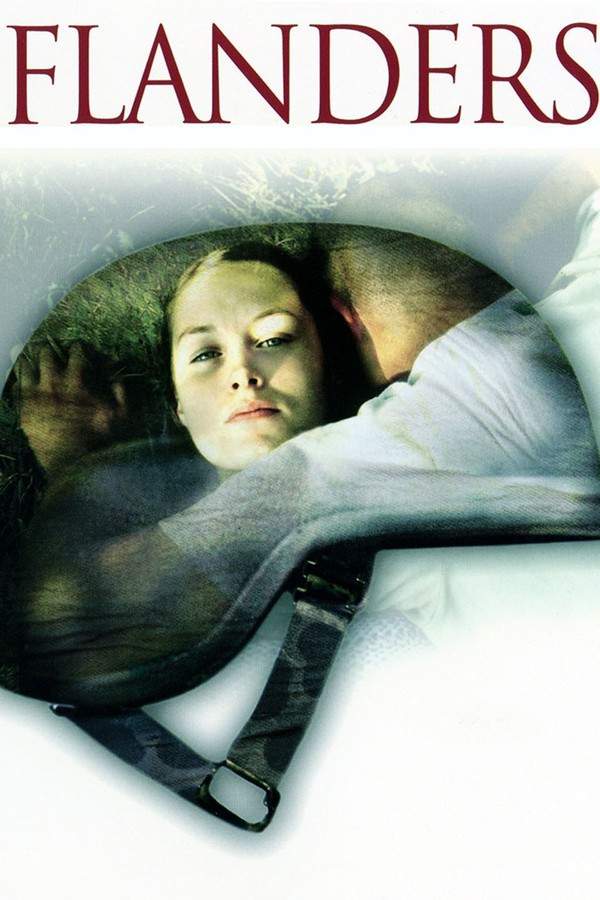
What Is Flanders About?
The premise of Flanders in 327 words, with nothing given away. The full story follows below.
In a landscape scarred by distant conflict, the film opens on a cracked, wind‑blown farm that clings to the rhythm of seasons and solitude. The earth‑brown fields and the quiet of a small, rural community stand in stark contrast to the distant rumble of war, creating a mood that feels both intimate and ominously expansive. The world feels lived‑in, its textures rendered with a restrained, almost literary realism that invites the viewer to linger over the lingering scent of hay and the distant echo of artillery.
André Demester is a taciturn man whose daily grind is marked by the relentless upkeep of the dilapidated farm. His life, though rough, is softened by the occasional visits of his childhood sweetheart, Barbe, whose presence adds a flicker of tenderness to his otherwise solitary existence. Their bond is simple and unspoken, built on shared histories and quiet moments in a nearby copse, hinting at deep affection that has never been fully articulated.
When the call to arms arrives, the pastoral peace is shattered, and André is thrust from his fields into a foreign theater of conflict. The narrative shifts tone, moving from the slow‑burning melancholy of rural life to a tense, foreboding atmosphere that reflects the disorienting transformation of a farmer into a soldier. The looming question becomes whether the man who once tended soil can navigate the moral and emotional turbulence of war without losing the core of who he is.
Back home, Barbe waits with a mixture of hope and anxiety, her days defined by the quiet anticipation of his return. The film lingers on the fragile thread that ties their lives across battle‑scarred horizons, exploring how love endures, evolves, or perhaps unravels when stretched between the safety of home and the chaos of the front. This delicate interplay of longing, duty, and the relentless march of time sets the stage for a story that feels as much about inner landscapes as it is about the external world.
What Happens in Flanders?
The complete story of Flanders, from the first scene to the last, in 470 words (about 2 minutes). Spoilers throughout.
Spoilers ahead
On a dilapidated farm, the taciturn André carries a life of hard work and quiet isolation, his days circumscribed by routine and the occasional, fleeting moments of companionship with Barbe, a neighbor’s young daughter. Their relationship is marked by a practical, almost hurried intimacy in a nearby copse, reflecting André’s guarded nature and Barbe’s restless longing. Barbe’s growing resentment about the emotional distance between them surfaces, especially after she meets Blondel in a bar and brings him into a noisy, impulsive encounter outside in a car. The two men are soon called to serve in a conflict overseas, and Barbe’s surprise news of pregnancy hangs over their departure, a weight that will cast a longer shadow than either expects.
In the mountains that stretch around the mission of service, André and Blondel join a long patrol that pushes through barren terrain and exposed routes where fear and danger mix with exhaustion. The soldiers encounter threats that go beyond combat—shooting, the presence of children in the line of fire, and a brutal, harrowing encounter with a woman who is assaulted. Their unit is soon overrun by insurgents, and the violence escalates quickly: an act of emasculation, followed by executions that thin the line between hunter and hunted. As helicopters appear on the horizon, the two survivors seize the chance to flee, but the escape is chaotic and costly. Blondel sustains a leg injury, and André presses on alone, driven by a need to find safety and an internal resolve he struggles to name.
Back home, Barbe undergoes an abortion and sinks into a period of depression, ultimately being confined to a psychiatric hospital as the full weight of the war’s toll settles in. When André finally returns to the farm, she is released, and they meet again in the place where they first found each other. Their next encounters carry an eerie, restrained sexuality, a deliberate distance that mirrors the emotional gap between them. Barbe seeks to pry open the parts of André that remain locked away, inviting a friend to help coax out the truth of what he has endured. Through these conversations, André begins to acknowledge the horror of both what he saw and what he participated in, and he allows himself to cry for the dead on all sides.
In time, a breakthrough occurs. After a sincere exchange, André admits that he loves Barbe, and she responds with a compassionate, affirming presence. The film resolves not with a simple reprise of a shared happiness, but with a renewed sense of humanity—the recognition that love, however fragile, can emerge from the deepest wounds if vulnerability and honesty are allowed to take root. The story lingers on the ethical and emotional aftermath of war and trauma, emphasizing the complexity of memory, guilt, and the possibility of connection after devastating experience.
Flanders Timeline: Every Key Event in Order
13 key events in the order they happen, from “André's lonely farm life” to “Love confessed”. 11 events name a place, across 10 locations.
- 1
André's lonely farm life
André runs a dilapidated farm and leads a hard, isolated existence. His days are punctuated only by the occasional visits of Barbe, the neighbor's young daughter, whose visits end in quick, physical encounters in a copse.
When:pre-war Where:farm
- 2
Barbe meets Blondel and a secret affair begins
Barbe meets Blondel in a bar and the two share a wild night outside in his car. The encounter introduces Barbe's tension and the possibility of future consequences.
When:pre-war Where:bar and roadside
- 3
Barbe's pregnancy
Barbe becomes pregnant amid the unsettled lives she leads with André and Blondel. The news casts a shadow over the looming departure and intensifies the looming separation.
When:pre-war
- 4
Deployment to the Middle East
Both André and Blondel are called up to fight in a Middle Eastern country, forcing Barbe to face a future without them. The sudden mobilization leaves Barbe pregnant and uncertain.
When:start of deployment Where:Middle East
- 5
Barbe's abortion and despair
During the conflict, Barbe undergoes an abortion and sinks into depression. The separation from the men in her life deepens her emotional strain.
When:during deployment
- 6
Barbe's psychiatric confinement
She is confined in a psychiatric hospital as the emotional toll of events takes its toll. The isolation deepens her sense of fault and loss, echoing the disruptions in their lives.
When:during/after deployment Where:psychiatric hospital
- 7
André and Blondel in the mountains
Meanwhile, André and Blondel's platoon undertakes a long patrol through bare mountains, where they encounter and kill combatants and witness abuses against civilians.
When:during combat Where:bare mountains
- 8
Capture by insurgents
The two soldiers are captured by insurgents. The insurgents emasculate the rapist before shooting him and execute most of the others, leaving only André and Blondel alive when a helicopter arrives.
When:during captivity Where:insurgent camp
- 9
Escape and separation
A helicopter appears and the soldiers seize the chance to flee. Blondel is hit in the leg, and André runs on, leaving his partner behind.
When:escape moment Where:mountains
- 10
André returns to the farm
Barbe is released from psychiatric care, and André returns home to work the farm. Their reunion is restrained and the emotional wounds remain.
When:post-conflict return Where:farm
Show the other 3 events of Flanders Hide the last 3 events
- 11
Cold reunion and avoidance
They attempt sex in their old meeting place, but the passion is missing and André cannot open up about the horrors he faced or Blondel's fate.
When:post-return Where:copse near the farm
- 12
Therapy and tears
Barbe invites a friend to coax out André's feelings, and after they talk, he allows himself to cry for the victims on both sides.
When:post-return Where:farm/meeting place
- 13
Love confessed
In the next visit, André finally confesses that he loves Barbe, and she responds, marking a fragile, hopeful turn after all the turmoil.
When:post-talk Where:farm/Barbe's residence
Who Are the Main Characters in Flanders?
3 characters, among them André, Barbe and Blondel: who each one is and the part they play in the story.
- A
André
A taciturn farmer who endures a hard, lonely life on a dilapidated farm. His experiences in the war leave him emotionally closed off, struggling to connect with Barbe and process the violence he witnessed and participated in. Throughout the story, he wrestles with guilt and a growing, fragile capacity for vulnerability that surfaces only after therapy from his loved ones and himself.
- 🧭 taciturn
- 🪖 war-weary
- 💔 emotionally distant
- 💬 reluctant to open up
- B
Barbe
A neighbor's young daughter who becomes involved with André and then faces pregnancy and hardship. Her subsequent abortion, depression, and psychiatric care reflect the personal fallout of war-time relationships. She seeks emotional closeness from André, enlisting a friend to coax his feelings out, and her persistence ultimately helps him confront his past.
- 💗 longing
- 🫂 supportive
- 🧠 troubled
- 🏥 trauma survivor
- B
Blondel
André's comrade in arms, whose actions and fate underscore the brutalities of war. Captured by insurgents, Blondel endures violence and injury alongside André, and his experiences help drive the narrative about survival, guilt, and the costs of violence. His presence in the escape sequence contrasts with André's later emotional retreat back home.
- 🪖 soldier
- 🩸 violence
- 🤝 loyalty
- 🕳 trauma
Where and When Is Flanders Set?
Flanders is set in Flanders countryside, Barbe's village bar, Middle Eastern battlefield and… (Contemporary (early 2000s)). Here is why the time and place matter to the story.
When
Contemporary (early 2000s)
The narrative unfolds in modern times, juxtaposing rural life with current-style warfare. Scenes shift from quiet domestic spaces to brutal frontline moments, reflecting a present-day sensibility. As violence intrudes, memory and trauma shape how the characters live after the war. The timeframe anchors the film’s exploration of guilt, healing, and reconciliation in a recognizable, recent world.
Where
Flanders countryside, Barbe's village bar, Middle Eastern battlefield, psychiatric hospital
Set in the rural Flanders countryside around a dilapidated farm, the film contrasts quiet provincial life with the brutalities of war. It travels through Barbe's village bar, a remote Middle Eastern battlefield, and a psychiatric hospital, expanding the emotional landscape of the story. The settings emphasize isolation, moral ambiguity, and the distance between home life and violence.
- 🏡 Rural life
- 🚧 War-torn landscape
- 🧠 Psychological aftermath
What Are the Themes of Flanders?
3 ideas the story keeps returning to, among them War & Trauma, Loneliness & Connection and Guilt & Redemption.
-
01
War & Trauma
War shatters the ordinary rhythms of life and leaves marks that linger long after the fighting ends. André and Blondel experience the dehumanizing brutality of combat as they move from patrol to capture, witnessing violence against others and themselves. The film does not offer clear heroes; it presents trauma as a shared wound, visible in memory and behavior. The explicit brutality—mass violence, captivity, and emasculation—forces the characters to confront what it means to survive. The result is a restrained, ambiguous portrayal of post-conflict healing.
-
02
Loneliness & Connection
Barbe's longing confronts André's emotional vacancy; their encounters highlight a desire for connection in a world of violence. Barbe's abortion and subsequent depression show how personal choices intersect with trauma. Their later, passionless intimacy underscores André's inability to open up, while Barbe searches for someone to unseal his feelings. A friend helps pry open the silence, enabling André to cry for the victims on both sides. The film suggests that healing requires honesty and mutual vulnerability, not just physical closeness.
-
03
Guilt & Redemption
André's return to the farm marks a fragile rebirth; he must face the consequences of his past actions in war and with Barbe. The shared trauma with Blondel and the casualties create a moral tension that neither protagonist fully resolves. The turning point comes when a friend helps reveal his buried sorrow, allowing him to grieve for both sides' victims. The confession of love to Barbe emerges as a form of redemption, a fragile hope that human warmth can endure violence. The ending suggests redemption is imperfect and earned through openness, not denial.
What Kind of Film Is Flanders?
Bleak in tone, with variable pacing and a moderate story, going by the plot summary.
- Tone
- Bleak
- Pacing
- Variable
- Story
- Moderate
- Intensity
- High
- Ending
- Bittersweet
A brutally realistic and emotionally draining journey through wartime atrocities and psychological trauma, where brief moments of connection struggle to pierce through an overwhelmingly bleak and oppressive atmosphere.
- bleak
- brutal
- harrowing
- melancholic
- oppressive
- traumatic
- war trauma
- psychological breakdown
- loveless relationships
- survival guilt
Content notes: war violence, sexual assault, execution, castration, abortion, mental health crisis.
Quiz
How well do you remember Flanders? Test yourself on the story.