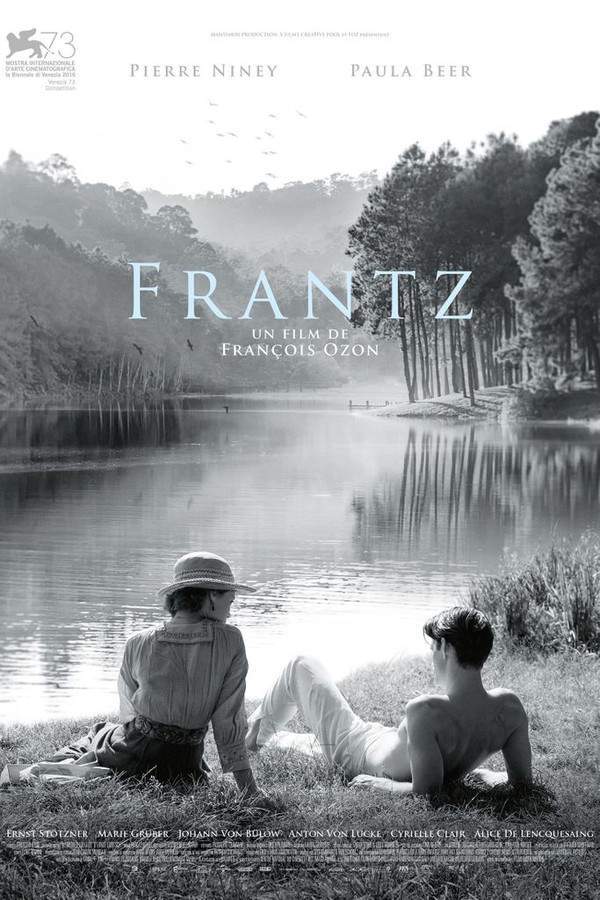
What Is Frantz About?
The premise of Frantz in 314 words, with nothing given away. The full story follows below.
In the quiet aftermath of the Great War, a small German town awakens each spring to the lingering chill of loss. The streets are lined with half‑grown blossoms and the air carries the faint echo of distant artillery, reminding every resident that peace is still a fragile promise. Within this muted landscape, daily life moves at a languid pace, allowing grief to settle like dust on the old stone façades while the world beyond seems to hurry on unnoticed.
Anna is a young woman whose life has been hollowed by the disappearance of her beloved fiancé, Frantz. She tends his grave with a ritualistic tenderness, arranging fresh flowers and whispering memories into the cool earth. Her sorrow is both a private sanctuary and a visible reminder of the war’s personal toll, and it colors every interaction she has with the townspeople, who share in her quiet mourning while also trying to rebuild their own shattered routines.
Across the former front line, Adrien arrives— a French soldier carrying his own bundle of memories and unspoken regrets. Drawn to the same modest cemetery, he begins to leave his own modest tributes, a gesture that feels both alien and oddly familiar in this shared space of remembrance. His presence unsettles the town’s cautious equilibrium, yet it also introduces a subtle ripple of curiosity, as his foreign demeanor contrasts with the German rhythms of life that surround him.
As the two souls linger near the same stone, a tentative connection forms, bridging language, nationality, and the chasm left by conflict. Their interactions are framed by a contemplative, almost poetic tone, inviting viewers to linger on moments of quiet understanding rather than dramatic confrontation. The film gently explores how strangers can become mirrors for each other’s grief, suggesting that even amidst the wreckage of war, the possibility of healing and human intimacy remains a glimmering, if fragile, path forward.
What Happens in Frantz?
The complete story of Frantz, from the first scene to the last, in 1,028 words (about 4 minutes). Spoilers throughout.
Spoilers ahead
In the quiet town of Quedlinburg, Germany, in 1919, the first stirrings of spring bring a heavy memory to Anna, a young German woman still mourning her fiancé, Frantz Hoffmeister, who fell during World War I. She tends Frantz’s grave with care and sorrow, laying fresh flowers each day. One morning she notices that the blossoms are new—clearly placed by someone else. It is Adrien, a young Frenchman she has never met, who keeps returning to the grave. His presence unsettles the town and unsettles Anna, who would rather forget the war’s ruin than confront the possibility of reconciliation across a boundary that still aches.
Hans Hoffmeister, Frantz’s father, and Magda Hoffmeister, his mother, are shaken by Adrien’s arrival. When Hans learns Adrien is French, his grief hardens into suspicion and blame, and he throws Adrien out with the painful charge that France took his son’s life. Adrien accepts the insult with quiet dignity and declares, “You are right. I am a murderer,” an admission that shatters the already delicate façade of peace. The scene establishes a tense atmosphere where memory and guilt mingle, casting a long shadow over every future encounter.
Anna, meanwhile, resists the advances of an older suitor, Mr. Kreutz, clinging to the memory of Frantz even as she begins to see Adrien at the grave and, cautiously, invites him into the Hoffmeister home. She confesses that Adrien was leaving flowers, and the family loosens its stern stance. Adrien explains that he and Frantz were students together in Paris before the war, a revelation that starts to reconstruct the vanished life Anna once shared with Frantz. He recounts their last day together, including a visit to the Louvre, and Anna leads him to the places they once frequented—the mountaintop where Frantz had proposed—and the memories begin to recover their grip on the present.
Adrien’s demeanor—a mix of gentleness and a weariness born of war—brings a surprising uplift to the Hoffmeisters as they search for a way to hold onto Frantz’s memory. They learn that Adrien used to be a violinist, and though his hearing was damaged in the war, he is asked to play Frantz’s violin for them, a moment that becomes a fragile bridge between past and present. The family slowly allows Adrien to become part of their world, and he accepts their invitation to accompany Anna to a local ball. The sight of a Frenchman at the dance triggers uneasy reactions among the locals, especially Kreutz, who embodies the bitterness that lingers after the war.
As the circle of trust around Adrien widens, the weight of the lie grows heavier. Adrien confesses to Anna that his story was not true: he and Frantz had not been friends in Paris before the war. In fact, they had met as enemies on the battlefield, facing one another in a trench where Adrien killed Frantz. Frantz’s death remains a seal of peace that never quite closes, for his gun was unloaded and his pacifist beliefs stood in stark contrast to the violence around them. Adrien found Frantz’s last letter to Anna on his body and, tormented by guilt, came to Germany seeking forgiveness. The revelation shatters the fragile trust that Anna had begun to place in him, and she grapples with the choice of whether to reveal the truth to the Hoffmeister parents or protect Adrien by keeping the lie alive.
Anna’s dilemma tests the boundaries between truth and mercy. She chooses to shield Adrien for a time, collaborating with Magda to preserve the fragile bond they have formed. Adrien returns to Paris, and Anna’s heart sinks into despair as he leaves. She ignores his letters and even destroys one that would have confessed his true role to the Hoffmeisters. In a dramatic shift, Anna is gently revived by the Hoffmeisters’ tenderness, and slowly a resolve begins to take root: to reclaim her life and to find some measure of healing beyond the memory of Frantz.
Months pass, and Anna eventually musters the courage to seek Adrien again. She writes to him, and her letter is answered—only to be returned with no forwarding address. Magda Hoffmeister, whose quiet warmth had once stoked a rumor of romance between Anna and Adrien, encourages her to go to Paris and search for him. The journey is more than a physical trek; it becomes a test of hope, forgiveness, and the possibility of new beginnings.
In Paris, Anna finds Adrien at his mother’s estate. She forgives him, though he carries a heavy burden of guilt and says he will never forgive himself. Yet the truth of Adrien’s life extends beyond their clash of memories: he is about to enter an arranged marriage with a childhood friend, Fanny. Anna realizes that what she imagined as a future romance with Adrien existed primarily in her own heart and memories; he did not want what she wanted in the way she hoped. He had come to seek forgiveness, and that was all he could offer to their shared past. The moment is tender and painful, as she understands that their love was more a reflection of her own longing than a shared present.
With a final kiss at the railway station, Anna says goodbye to Adrien and accepts a new path. She continues to write to the Hoffmeisters as if she and Adrien are together, but in truth she is beginning to live again, choosing to make a life for herself in Paris—an existence that Frantz once urged her to pursue in his last letter. The narrative arc closes on a note of quiet resilience: Anna has learned to carry grief without letting it define every choice, and she moves forward with a sense that life, even after loss, can still be meaningful and hopeful.
In the end, the story remains a delicate meditation on memory, forgiveness, and the ways love can help heal wounds that history cannot erase. The characters navigate a yard-wide boundary between truth and mercy, between what is spoken and what must be left unsaid, and they discover that living fully sometimes means choosing one’s own path even when it diverges from the memories that once held them together.
Frantz Timeline: Every Key Event in Order
13 key events in the order they happen, from “Anna mourns at Frantz's grave” to “Anna moves on in Paris, keeping the memory alive”. 13 events name a place, across 11 locations.
- 1
Anna mourns at Frantz's grave
In 1919, Anna visits Frantz Hoffmeister's grave in Quedlinburg to mourn him. She notices fresh flowers and realizes they came from Adrien, the enigmatic French visitor. The moment hints at a connection between the two men that will unfold.
When:1919 Where:Frantz Hoffmeister's grave, Quedlinburg
- 2
Adrien confronted by the Hoffmeister family
Adrien goes to the Hoffmeister home and is met with hostility when Hans denounces all French as murderers. He acknowledges his own guilt, admitting that he is a murderer in the eyes of the family. The scene establishes tension between memory, guilt, and the possibility of forgiveness.
When:1919 Where:Hoffmeister home, Quedlinburg
- 3
Anna invites Adrien into the Hoffmeister circle
Anna invites Adrien to visit the Hoffmeister home and explains that Adrien has been leaving flowers at Frantz's grave. The Hoffmeisters, moved by Anna's insistence and Adrien's quiet sincerity, begin to soften their stance. The meeting marks a fragile opening toward reconciliation.
When:1919 Where:Hoffmeister home, Quedlinburg
- 4
Adrien reveals his pre-war connection with Frantz
Adrien explains that he and Frantz were students together in Paris before the war and recounts their last day in the Louvre. The memory softens the initial hostility in the Hoffmeisters. The revelation shifts the narrative from accusation toward shared history.
When:Pre-war Where:Paris (Louvre)
- 5
Memories of Frantz deepen the bonds
Anna takes Adrien to places she and Frantz used to visit, including the mountaintop where Frantz proposed. Adrien's presence begins to lift the Hoffmeisters out of despair as they sense Frantz's spirit in him. The scenes of memory deepen the emotional ties between the families.
When:1919 Where:Various locations including mountaintop, Quedlinburg
- 6
Adrien plays Frantz's violin
The Hoffmeisters ask Adrien, a former violinist whose hearing was damaged in the war, to play Frantz's violin. His performance provides a living link to Frantz and brings a moment of peace to the room. The act strengthens Adrien's place within the family despite the complicated past.
When:1919 Where:Hoffmeister home
- 7
The ball and rising tensions
Adrien asks Anna to accompany him to the local ball, and she agrees. The appearance of a French man at the ball draws hostile reactions from the locals, especially Kreutz. The social climate highlights the fragility of Anna's growing connection to Adrien.
When:1919 Where:Local ball, Quedlinburg
- 8
Adrien confesses the truth about Frantz
Adrien finally confesses that he lied about being Frantz's friend and reveals that they met as enemy soldiers on the battlefield. He explains that Frantz was a pacifist and that Adrien killed him in the war, a revelation that shatters the present illusion. He also recounts finding Frantz's last letter on his body and the guilt that drives him to seek forgiveness in Germany.
When:WWI Where:Battlefield (WWI) and later Germany
- 9
Anna shields the Hoffmeisters from the truth
Heartbroken, Anna tells Adrien that she would tell the Hoffmeisters about his role, but she chooses to let them remain ignorant instead. She wants them to continue believing in a person they have come to love, even if the truth would hurt them. The decision deepens her internal conflict between truth and compassion.
When:1919 Where:Hoffmeister home
- 10
Anna's suicide attempt and withdrawal
Adrien returns to Paris, and Anna sinks into despair, attempting to drown herself. She stops replying to Adrien’s letters and destroys a letter he had enclosed for the Hoffmeisters confessing his true role. The crisis marks a turning point in her grief and her resolve to move on.
When:Shortly after 1919 Where:Quedlinburg and Anna's home
Show the other 3 events of Frantz Hide the last 3 events
- 11
Magda encourages a Paris journey
After being cared for by the Hoffmeisters, Magda encourages Anna to go to Paris to find Adrien. The suggestion plants a new arc in Anna's healing, reframing her pursuit of closure as a path to living again. The family remains a touchstone even as their stories diverge.
When:Months after 1919 Where:Hoffmeister home; Paris suggested
- 12
Anna finds Adrien in Paris and learns of his engagement
Anna travels to Paris and tracks Adrien to his mother's estate, where she forgives him. He says he will never forgive himself. She then learns he is about to marry a childhood friend named Fanny, revealing that their romance was imagined by Anna; she kisses him goodbye at the railway station and leaves.
When:Early 1920s Where:Adrien's mother's estate, Paris; railway station
- 13
Anna moves on in Paris, keeping the memory alive
Anna continues writing to the Hoffmeisters as if she and Adrien are together, but in reality she is living her life in Paris. She has begun to move forward, carrying the memory of Frantz as he urged in his last letter.
When:Post-1920 Where:Paris
Who Are the Main Characters in Frantz?
7 characters, among them Anna Hoffmeister, Adrien and Frantz Hoffmeister: who each one is and the part they play in the story.
- AH
Anna Hoffmeister
A young German woman grieving the death of her fiancé Frantz. She exhibits deep longing and moral complexity as she invites Adrien into the Hoffmeister household and weighs the truth against protecting those she loves. Over the course of the story, she shifts from despair toward a cautious, renewed sense of life.
- 🫂 Grief
- ❤️ Love
- 🤔 Moral Dilemma
- A
Adrien
A French violinist whose hearing was damaged in the war. He forms a close bond with Anna while concealing his true role in Frantz’s death, seeking forgiveness from the Hoffmeisters and from himself. His guilt drives the conflict and ultimately shapes his fate between Paris and the German town.
- 🎻 Music
- 💔 Guilt
- 🤝 Forgiveness
- FH
Frantz Hoffmeister
Anna’s fiancé who was killed in World War I and is remembered as a pacifist. His memory guides the living through letters and reminiscences, shaping their quest for forgiveness and meaning after his death.
- 🕊️ Memory
- 💌 Love
- 🕯️ Remembrance
- DH
Dr. Hans Hoffmeister
Frantz’s father, initially wary of Adrien due to nationalist bitterness. His later tempered stance allows him to share in the healing process and to support Anna’s emotional journey.
- 🧑⚕️ Fatherly
- 🛡️ Guarded
- 🇩🇪 German
- MH
Magda Hoffmeister
Frantz’s mother, who fosters a hopeful connection between Anna and Adrien and encourages considering forgiveness, even as she recognizes the complexities of truth.
- 👩👦 Family
- 💖 Compassion
- 🧭 Guidance
- MK
Mr. Kreutz
An older suitor in the town who embodies anti-French sentiment and resists Adrien’s presence, adding social tension and a barrier to potential reconciliation.
- 🗣️ Social tension
- 🧭 Obstruction
- 🧓 Snobbery
- F
Fanny
Adrien’s childhood friend who is arranged to marry him in Paris. Her presence foreshadows Adrien’s future and adds a parallel tension to Anna’s aspirations.
- 💍 Arranged marriage
- 👰 Love triangle
- 🗺️ Paris
Where and When Is Frantz Set?
Frantz is set in Quedlinburg, Germany, Paris and France (1919). Here is why the time and place matter to the story.
When
1919
The story unfolds in the immediate post–World War I period, specifically in 1919. Germany faces grief, suspicion, and the challenge of rebuilding social trust after the war. The fragile peace allows personal reckonings—between memory and truth—while families navigate loss and the lure of forgiveness.
Where
Quedlinburg, Germany, Paris, France
Quedlinburg serves as the quiet, historic German backdrop to Anna’s grieving process in 1919. The city’s medieval streets and old-world atmosphere mirror memory and the longing for connection after the war. Paris is recalled as Frantz’s past and the place where his friend Adrien once studied with him, adding a layer of contrast between the two nations. The setting shifts between German and French locations, highlighting the postwar tension and the possibility of reconciliation.
- 🏰 Historic German town
- 🗼 Romantic Paris
- 🗺️ Postwar setting
What Are the Themes of Frantz?
4 ideas the story keeps returning to, among them Forgiveness, Grief & Memory and Deception.
-
01
Forgiveness
Forgiveness acts as a healing force that crosses national boundaries and family loyalties. Anna learns to balance truth with mercy as she grows close to Adrien, even as his secret burdens her. Adrien seeks redemption for his role in Frantz's death, while the Hoffmeisters learn to accept a new link to their lost son. The narrative suggests that letting go of vengeance can open the door to living again.
-
02
Grief & Memory
Grief shapes every choice and memory anchors the characters to their past. Anna’s ritual at Frantz’s grave and the memory of their lost future drive her actions. Adrien’s confession disrupts memory, forcing a reassessment of who Frantz was and what he stood for. In truth-telling and remembrance, memory becomes a bridge to healing rather than a barrier.
-
03
Deception
Adrien hides his true role in Frantz’s death behind a fragile facade of friendship. Anna and the Hoffmeisters are all swept up in appearances and the wish to regain what they lost. The deception creates parallel lives of longing and guilt, testing the characters’ capacity for forgiveness. The eventual unveiling of the truth becomes a turning point for their moral choices.
-
04
Aftermath & Reconciliation
The postwar setting presses the characters to redefine love, loyalty, and identity. Surviving individuals craft new lives while carrying memories that threaten to overwhelm them. Reconciliation comes through personal growth, selective truth-telling, and the determination to move forward. The story ultimately favors a hopeful recommencement rather than a return to the past.
What Kind of Film Is Frantz?
Melancholic in tone, with slow pacing and a moderate story, going by the plot summary.
- Tone
- Melancholic
- Pacing
- Slow
- Story
- Moderate
- Intensity
- Medium
- Ending
- Bittersweet
A slow, quiet, and deeply melancholic film that explores the heavy burden of grief and guilt in the aftermath of war, where moments of fragile connection offer a path toward bittersweet healing rather than complete resolution.
- melancholic
- contemplative
- grieving
- somber
- quiet
- resilient
- grief and loss
- post-war trauma
- guilt and redemption
- cross-cultural understanding
Content notes: war veteran trauma, death of a loved one, survivor's guilt.
Quiz
How well do you remember Frantz? Test yourself on the story.