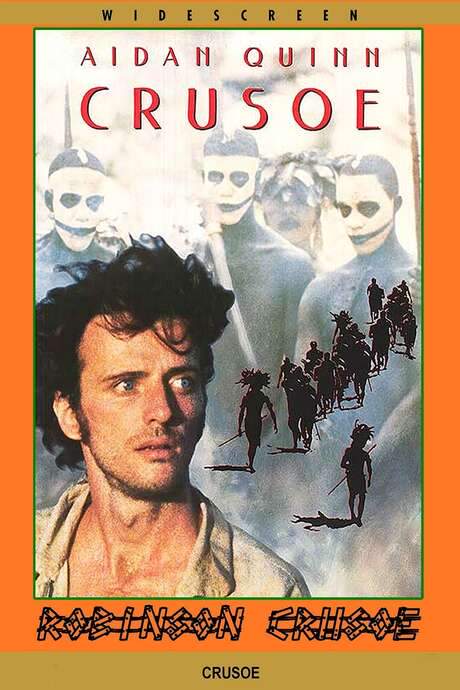
What Is Crusoe About?
The premise of Crusoe in 281 words, with nothing given away. The full story follows below.
In the early 19th century a restless sea‑farer named Crusoe sets out from Virginia, driven by duty and a yearning for purpose. A sudden, ferocious storm tears his vessel apart, leaving him the lone survivor floating toward an unknown shore. The opening of the story places him, and the audience, at the edge of civilization, where the raw power of the ocean meets the quiet mystery of an untouched world.
Stranded on a lush tropical island, Crusoe is forced to confront the elemental demands of survival. With only a handful of salvaged tools, he must fashion shelter, secure food and water, and keep a fire alive against the relentless humidity. Early companions emerge in the form of a loyal dog, Scamp, and a small flock of geese—brief, comforting signs of life that soften the harshness of isolation. The island itself is a character of its own: dense vegetation, echoing cliffs, and an ever‑present rhythm of tides that shape every decision.
The tone balances stark practicality with quiet contemplation. As days stretch into weeks, Crusoe wrestles with the psychological weight of solitude, the echo of his own thoughts becoming both a burden and a guide. The contrast between the island’s abundant beauty and its unforgiving demands creates a tension that drives his ingenuity, forcing him to learn the language of the land and to find resilience in routine.
Through resourcefulness, quiet determination, and the simple companionship of Scamp and the island’s wildlife, Crusoe carves a fragile foothold in a world that is both a sanctuary and a test. Beneath the surface of each sunrise lies a lingering hope—a promise that, however distant, the path back to humanity may one day be found.
What Happens in Crusoe?
The complete story of Crusoe, from the first scene to the last, in 677 words (about 3 minutes). Spoilers throughout. Names in the text link to 2 cast member pages.
Spoilers ahead
In Tidewater, Virginia, 1808, Crusoe sets sail for Africa to retrieve slaves, driven by duty and ambition. A violent storm erupts, and the ship is torn apart, leaving him as the sole survivor. He drifts to a lush tropical island where he is forced to adapt to a harsh, solitary life. He soon befriends a loyal dog named Scamp and, later, discovers a small flock of geese—small signs of life that keep him company as days turn into months. With the wrecked hull for shelter and a rifle found among the debris, he begins to explore the island, learning to read the land and to protect himself from the unknown dangers that lurk there.
The island reveals a surprising and perilous reality: indigenous tribesmen who practice cannibalism, a discovery that unsettles Crusoe and tests his will to survive. He chops trees to fashion a boat and to carve out a safer living space, turning a natural cavern into a rudimentary home that offers him some shelter from the elements. Yet tragedy strikes when Scamp falls ill and dies, leaving Crusoe to confront a deep, aching loneliness that gnaws at his resolve. The emotional weight of loss expands as the tribesmen arrive on the shore for a ritual cremation of their chief, accompanied by the sacrifice of two others. The chief sits in a great branch armchair and is burned, while the would‑be sacrifices are slaughtered one by one.
Crusoe’s cautious vigilance pays off when the last planned victim escapes, and he is able to fire his rifle to distract the would‑be killers. The escaped man, who becomes Crusoe’s unexpected ally, is known to the tribes as Lucky, and their paths cross in the forest with a mixture of fear and curiosity. The two form a fragile bond; Crusoe brings Lucky back to his cave, but he does not permit him to sleep inside, instead keeping him chained outside in a line of trust that is constantly tested. When Crusoe awakens to the sight of smoke rising from the place of the sacrifices, he investigates and discovers Lucky’s severed head—a brutal reminder of the island’s danger and the price of safety.
Crusoe then encounters another cannibal, a formidable figure known as The Warrior, who binds him to a tree near the cave. The pursuit that follows is tense and dangerous, and in their struggle Crusoe nearly loses his life in quicksand. The Warrior slips away, leaving Crusoe to sink, but the situation takes an unexpected turn when the two men meet again and begin to negotiate survival in a shared language. Through this wary collaboration, they work toward a larger goal: building a small boat to return home, and later, a second boat that would enable a more assured escape. The partnership slowly evolves from mistrust to mutual purpose, driven by a shared longing for freedom and safety on their own terms.
A turning tide arrives when a ship appears off the horizon, its sails catching the wind and drawing closer to the island. Crusoe understands that the vessel could be a route back to civilization, but he discovers that the crew harbors their own agenda. Among the sailors is Dr Martin, a scientist who has studied cannibals and intends to bring his captive ally back to London. Crusoe, unwilling to let his new friend be taken, stows away on the ship and works to free The Warrior without drawing attention to himself. The tension aboard builds as Crusoe covertly observes Dr Martin’s plan to transport his counterpart to a life far from the island.
Crusoe’s gamble pays off as he finds a way to slip free from the ship’s notice and reclaim a sense of liberty. The experience on the island, the friendships forged, and the constant threat of danger collectively teach Crusoe that life’s true value lies in freedom, resilience, and the courage to pursue one’s own path—even when the cost is steep. In the end, the journey reinforces a core truth: liberty and life are precious, and they demand both caution and bravery to safeguard.
Crusoe Timeline: Every Key Event in Order
13 key events in the order they happen, from “Crusoe Set Sail for Africa” to “Crusoe Stows Away; Escape Realized”. 13 events name a place, across 13 locations.
- 1
Crusoe Set Sail for Africa
In 1808, Crusoe leaves Tidewater, Virginia, bound for Africa to retrieve slaves. A violent storm sinks the vessel, killing the crew except Crusoe. Crusoe washes ashore on a tropical island, utterly alone.
When:1808, voyage from Tidewater, Virginia Where:Atlantic Ocean
- 2
Crusoe Discovers Scamp and Geese
On the shore, Crusoe finds a dog named Scamp and a small flock of geese that survived the wreck. They become loyal companions and practical helpers as he learns to live off the land. This wildlife marks the beginning of his solitary routine on the island.
When:soon after landfall Where:Tropical island
- 3
Crusoe Finds a Rifle and Explores
Crusoe scavenges a rifle from the wreck and begins exploring the island with Scamp by his side. The weapon gives him protection and confidence as he charts the terrain. He starts establishing routines of shelter, resource gathering, and daily exploration.
When:early days after landfall Where:Island ruins / shore
- 4
First Contact with Cannibals
Crusoe soon discovers a group of indigenous people who are cannibals and realize the danger they pose. He witnesses their rituals and the threat to his life remains ever-present. The island's loneliness is punctured by the looming danger.
When:mid-stay Where:Jungle edge
- 5
Escape Plans and Cave Life Begin
Crusoe chops down trees to build a boat and escape. When that plan stalls, he converts a cavern into a makeshift homestead for shelter. He keeps Scamp close as a lifeline to companionship in the harsh isolation.
When:later on island Where:Beach and cave
- 6
Scamp Falls Ill and Dies
Scamp falls sick, and Crusoe's attempts to cure him fail. The dog dies the following morning, leaving Crusoe in crushing loneliness. The island's serenity is broken by grief and a renewed sense of isolation.
When:shortly after Where:Cave / island
- 7
Cannibal Rituals and a Narrow Escape
Natives arrive to perform a chief's cremation and sacrifice others. Crusoe shoots his rifle to distract the would-be sacrificers, allowing Hepburn Graham to escape. The encounter marks a turning point in Crusoe's view of the island's inhabitants.
When:the ritual moment Where:Beach / jungle edge
- 8
Lucky Earns Crusoe’s Trust
The tribesman Lucky begins to trust Crusoe after their meeting. Crusoe brings Lucky back to his cave but keeps him chained by the ankle outside the cave, a precaution born of caution and loneliness. The bond between them remains tense and fragile.
When:shortly after Where:Cave entrance
- 9
Lucky Escapes; Lucky’s Head is Found
The following morning Crusoe finds Lucky has escaped and follows smoke to the site of the sacrifices. There he discovers Lucky's head, a grim reminder of the island's danger. At the same time, Ade Sapara traps Crusoe and ties him to a tree.
When:the following morning Where:Sacrifice site / near cave
- 10
Quicksand Confrontation and Clemeny
Crusoe is drawn into a tense pursuit by the cannibal Ade Sapara, and they fall into quicksand. The cannibal escapes, leaving Crusoe to sink, but he is saved when the cannibal shows mercy and lowers him a tree branch. This act shifts their dynamic toward reluctant cooperation.
When:a few days after capture Where:Quicksand area near cave
Show the other 3 events of Crusoe Hide the last 3 events
- 11
A Plan to Return Home Forms
Crusoe and the cannibal begin to work together, using a shared language to plan escape. They decide to manufacture a small boat to return home, marking a rare alliance born of necessity. The promise of rescue shifts the island from a prison to a possible departure point.
When:days after capture Where:Beach / shore
- 12
A Ship Arrives; Dr. Martin Aboard
A ship carrying European sailors arrives, intending to capture the inhabitants of the island. Crusoe climbs to high ground to catch their attention, and among the crew is Dr. Martin, a scientist who has studied cannibals and plans to bring his friend back to London. The encounter raises the stakes for everyone on the island.
When:late Where:Beach and ship
- 13
Crusoe Stows Away; Escape Realized
Crusoe stows away on the ship to secure a ride home while attempting to free his friend. He learns more about Dr. Martin's plan and confronts the crew as they depart. The journey ends with Crusoe escaping the island, a realization that liberty and life are precious.
When:final escape Where:Onboard ship / island
Who Are the Main Characters in Crusoe?
5 characters, among them Crusoe (Aidan Quinn), Lucky (Hepburn Graham) and Dr. Martin (Michael Higgins): who each one is and the part they play in the story. Every profile links to the actor’s page.
-

Crusoe (Aidan Quinn)
Played by Aidan Quinn
The shipwreck survivor who becomes a resourceful, stoic loner on a tropical island. He evolves from fear and isolation toward partnership, as he fights for his life and learns to translate danger into action.
- 🧭 Protagonist
- 🏝️ Survivor
- L(
Lucky (Hepburn Graham)
Played by Hepburn Graham
A tribesman initially feared as a cannibal who gradually earns Crusoe's trust. He embodies the tension between survival and tribal ritual, and his presence forces Crusoe to reassess what it means to live freely.
- 🪶 Ally
- 🗡️ Survivor
- DM
Dr. Martin (Michael Higgins)
Played by Michael Higgins
A scientist aboard the rescuing ship who seeks to study cannibals and bring his friend back to London. His approach contrasts with Crusoe's intimate knowledge of the island and his protective instincts.
- 🔬 Scientist
- 🧭 Explorer
- TW
The Warrior (Ade Sapara)
Played by Ade Sapara
A cannibal tribesman who resists Crusoe's self-made alliances but ultimately participates in the struggle for survival on the island. He embodies danger and power dynamics among island inhabitants.
- ⚔️ Warrior
- 🪵 Survivor
- CH
Captain Harding (James Kennedy)
Played by James Kennedy
A ship captain encountered later who represents the outside reach of civilization and the threat of exploitation. His crew's actions complicate Crusoe's longing to return home.
- ⛵ Captain
- 🧭 Explorer
Where and When Is Crusoe Set?
Crusoe is set in Tidewater, Virginia and Tropical Island (1808). Here is why the time and place matter to the story.
When
1808
The action unfolds in the early 19th century, a time of long ocean voyages and colonial encounters. Maritime travel, shipwrecks, and the looming shadow of slavery frame Crusoe's quest for survival. The year 1808 anchors a narrative about freedom, fate, and the thin line between civilization and wilderness.
Where
Tidewater, Virginia, Tropical Island
Set in Tidewater, Virginia in 1808, the story opens with Crusoe at sea before a devastating storm. He is wrecked and drifts to a remote tropical island where he must survive on his own. The juxtaposition of the mainland coast and the lush island underscores the isolation and danger of exploration in this era.
- 🏝 Coastal setting
- 🌊 Sea
- 🗺️ Adventure
What Are the Themes of Crusoe?
3 ideas the story keeps returning to, among them Survival, Freedom and Cultural Encounter.
-
01
Survival
Crusoe must improvise shelter, food, and safety after the shipwreck. The island tests his resilience as he learns to read the terrain, fashion tools, and hunt for sustenance. His bond with Scamp and his gradual adaptation highlight the human drive to endure in adverse conditions.
-
02
Freedom
The pursuit of liberty drives Crusoe to escape the island and resist being used as a specimen by outsiders. Alliances with Lucky open a path to mutual survival and a redefinition of home beyond the ships and plantations he left behind.
-
03
Cultural Encounter
Crusoe encounters indigenous tribes whose presence challenges his assumptions about civilization and savagery. The cannibal tribe's rituals and their cautious cooperation with Crusoe reveal complexities in cross-cultural interaction and survival ethics on the island.
What Kind of Film Is Crusoe?
Tense in tone, with steady pacing and a straightforward story, going by the plot summary.
- Tone
- Tense
- Pacing
- Steady
- Story
- Straightforward
- Intensity
- High
- Ending
- Bittersweet
A tense and grim survival story that immerses the viewer in the brutal solitude of a castaway, punctuated by moments of friendship and loss against a backdrop of constant danger and moral complexity.
- lonely
- tense
- grim
- cautionary
- introspective
- survivalist
- survival
- shipwreck
- cannibalism
- colonialism
Content notes: animal death, cannibalism, ritual sacrifice, graphic violence.
Quiz
How well do you remember Crusoe? Test yourself on the story.