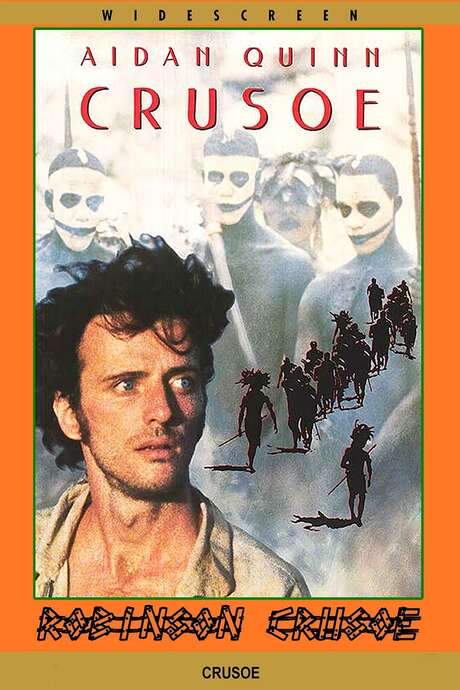
What Is Robinson Crusoe About?
The premise of Robinson Crusoe in 271 words, with nothing given away. The full story follows below.
In the mid‑17th century a chance of adventure leads Robinson Crusoe, an English seaman, away from the expectations of his family and into the open sea. A violent storm forces his vessel to abandon ship, and he drifts to an uncharted tropical island far from any known shore. The film opens on this stark premise: a man alone, stripped of civilization and forced to confront the raw forces of nature. The tone is intimate and rugged—a study of how an ordinary individual copes when civilization is reduced to a distant memory.
The island itself becomes a character of its own, its dense foliage, endless horizon and rhythmic tides forming a living backdrop for survival. Sun‑baked cliffs, hidden coves and a chorus of wildlife provide both sustenance and constant reminder of isolation. Robinson fashions shelter from driftwood and salvaged wreckage, teaches himself to hunt, tend goats, and fashion clothing from the resources he can coax from the land. Small companions—a loyal dog, a wandering cat, even a bright‑plumed parrot—offer fleeting moments of connection, underscoring the thin line between companionship and solitude.
As days turn into months, the film delves into the psychological terrain as much as the physical one. Robinson wrestles with the crushing silence of exile, his thoughts alternating between pragmatic ingenuity and haunting longing for the world he left behind. The mood oscillates between quiet contemplation and the tense urgency of each new challenge, creating a palpable sense of introspection. Through patient determination and quiet perseverance, he begins to carve out a rhythm that defines his existence on the island, hinting at a deeper transformation that lies beyond mere survival.
What Happens in Robinson Crusoe?
The complete story of Robinson Crusoe, from the first scene to the last, in 469 words (about 2 minutes). Spoilers throughout. Names in the text link to 2 cast member pages.
Spoilers ahead
Robinson Crusoe, Dan O’Herlihy, the third son of his parents with few prospects, goes to sea against his father’s wishes. On a voyage from Brazil to Africa to purchase slaves, a storm forces him to abandon ship. He manages to swim to a deserted island somewhere in the Atlantic Ocean on September 30, 1659.
An abandoned ship turns up on an offshore rock, allowing Crusoe to salvage food, tools, firearms and other items before it sinks. He builds a life from scratch: he herds goats, hunts, makes clothes, and constructs a home, with only the company of a dog, Rex, and a cat, Sam, as his companions; he later captures a parrot which he names Paul and teaches it to speak. Crusoe lets Sam and her kittens run wild. When Rex dies of old age in 1673, Crusoe nearly goes insane from loneliness.
In 1677, Crusoe discovers that cannibals visit his island with their victims. The next time he spots them with his telescope, he sees a prisoner make a break for it, pursued by two cannibals. He knocks out one and shoots the other; when the first one regains consciousness, the escapee kills him with Crusoe’s sword. Crusoe takes the man back to his stockade. He names him Friday (Friday, Jaime Fernández after the day of the week they met). Crusoe teaches him English and Western customs and turns Friday into a servant. Crusoe does not trust him at first, believing Friday to also be a cannibal who would kill him if given the chance. He builds a door to the cave in which he takes to sleeping. When Friday enters without permission late one night to sneak some tobacco, Crusoe puts leg irons on him. The next day, however, Crusoe relents and takes them off. He comes to trust his new companion completely.
In 1687, Friday saves Crusoe from a cannibal sneaking up behind him. Seeing a large group, they flee back to their stockade. The cannibals, however, are driven off by white men with guns. Captain Oberzo [Felipe de Alba] and his bosun [Chel López] are the victims of a mutiny; Crusoe and Friday rescue the men and get away undetected. Friday then goes to the leader of the mutiny, offering him a basket of fruit, but the mutineers are more interested in the necklace of gold coins (salvaged from Crusoe’s ship) he is wearing. Friday leads the greedy men to the stockade. There, Crusoe, Friday, Oberzo, and the bosun capture them. Oberzo regains control of his ship. At Crusoe’s suggestion, Oberzo allows the mutineers to remain on the island rather than being sent to the gallows. Crusoe leaves them his tools and instructions on how to survive.
Crusoe leaves for home with Friday, having spent 28 years, two months, and 19 days on the island.
Robinson Crusoe Timeline: Every Key Event in Order
12 key events in the order they happen, from “Shipwreck and isolation begin” to “Crusoe and Friday depart for home”. 12 events name a place, across 4 locations.
- 1
Shipwreck and isolation begin
A violent storm forces Crusoe to abandon his voyage and he washes ashore on a deserted island in the Atlantic on September 30, 1659. He survives the wreck and surveys the surroundings, realizing he is utterly alone. This marks the start of a life of solitude and self-reliance.
When:September 30, 1659 Where:Deserted island in the Atlantic Ocean
- 2
Salvage and shelter from the wreck
Crusoe salvages food, tools, firearms and other items from the wrecked ship before it sinks. He uses these supplies to build a home, stockpile resources, and begin farming and hunting on the island. He also begins life with only his dog Rex and cat Sam for companionship.
When:1659 Where:Deserted island, Atlantic Ocean
- 3
Companions join Crusoe
Crusoe keeps Rex the dog and Sam the cat, and later a parrot named Paul joins the solitary life. These animal companions become his only social company for years as he adapts to island living.
When:1659-1660 Where:Deserted island
- 4
Loneliness deepens as Rex dies
In 1673, Rex dies of old age, leaving Crusoe with crushing loneliness and a growing sense of isolation. He struggles to maintain his sanity without any human contact for years.
When:1673 Where:Deserted island
- 5
Cannibal visit and the breakthrough prisoner
In 1677 Crusoe encounters cannibals visiting the island. He knocks out one and shoots the other; the escapee then kills the first cannibal with Crusoe's sword, and Crusoe brings the survivor back to his stockade.
When:1677 Where:Deserted island
- 6
Crusoe meets Friday
The prisoner Crusoe rescued is named Friday, after the day they met. Crusoe begins teaching him English and Western customs, and initially distrusts him as a potential cannibal. He even tries to restrain Friday with leg irons after a nighttime tobacco raid.
When:1677 Where:Deserted island
- 7
Trust grows and discipline loosens
Crusoe loosens his strict control as Friday proves loyal and capable. The two establish a working partnership, and Crusoe's confidence in Friday steadily grows as they learn to live together.
When:1677 Where:Deserted island
- 8
Friday saves Crusoe from a cannibal attack
In 1687, Friday saves Crusoe from a cannibal sneaking up behind him. They flee to the stockade, and a larger group of white men with guns drives the cannibals away, changing the balance of danger on the island.
When:1687 Where:Deserted island
- 9
Mutiny strikes Oberzo's ship
Captain Oberzo and his bosun become victims of a mutiny; the mutineers maroon them on the island. Crusoe and Friday rescue the stranded officers and slip away unseen.
When:1687 Where:Deserted island
- 10
Friday lures mutineers to the stockade
Friday approaches the mutineers with a basket of fruit, but they fixate on a necklace of gold coins salvaged from Crusoe's ship. He leads the greedy men toward Crusoe's stockade, signaling danger and opportunity.
When:1687 Where:Deserted island
- 11
Mutineers captured and allowed to stay
Crusoe, Friday, Oberzo, and the bosun capture the mutineers in the stockade. Oberzo regains control of his ship and, at Crusoe's suggestion, allows the mutineers to remain on the island rather than facing the gallows. Crusoe leaves them his tools and survival instructions.
When:1687 Where:Deserted island
- 12
Crusoe and Friday depart for home
After 28 years, 2 months, and 19 days on the island, Crusoe leaves with Friday to return home, carrying memories of a long, solitary life and the beginnings of a new companionship.
When:1687 Where:Island
Who Are the Main Characters in Robinson Crusoe?
6 characters, among them Robinson Crusoe (Dan O'Herlihy), Friday (Jaime Fernández) and Captain Oberzo (Felipe de Alba): who each one is and the part they play in the story. Every profile links to the actor’s page.
- RC
Robinson Crusoe (Dan O'Herlihy)
Played by Dan O'Herlihy
A shipwreck survivor who uses ingenuity and stubborn perseverance to carve out a life on the island. He salvages goods from the wreck, constructs a home, and maintains strict control over his domain. Over years, he negotiates loneliness, fear, and moral choices, while slowly forming a cautious bond with Friday.
- 🧭 Resourceful
- 🪵 Survivalist
- 🗺️ Self-sufficient
- F(
Friday (Jaime Fernández)
Played by Jaime Fernández
Rescued from captivity, Friday becomes Crusoe's companion and student, learning English and Western ways. Initially treated as a servant, he gradually earns Crusoe's trust and proves himself a capable ally in survival tasks. Their partnership deepens into mutual reliance.
- 🤝 Companion
- 🧭 Student
- 🗝️ Trust
- CO
Captain Oberzo (Felipe de Alba)
Played by Felipe de Alba
Captain of Crusoe's ship who becomes a key figure during the mutiny and subsequent rescue. He regains leadership after the mutineers are confronted, and he negotiates the future fate of the mutineers with Crusoe and Friday.
- ⚔️ Authority
- 🛡️ Leadership
- LO
Leader of the Mutiny (Emilio Garibay)
Played by Emilio Garibay
The ambitious mutineer who lusts for gold and power. He leads the mutiny that maroons Oberzo and the bosun, and his greed drives much of the conflict until Crusoe and Friday confront him.
- 🏴☠️ Mutiny
- 💰 Greed
- B(
Bosun (Chel López)
Played by Chel López
A ship’s bosun who becomes a casualty of the mutiny and is captured alongside Oberzo. He survives the island encounter with Crusoe and Friday and remains part of the tense balance of power on the wrecked voyage.
- ⚓ Duty
- 🛡️ Loyalty
- P(
Pirate (José Chávez)
Played by José Chávez
A pirate figure listed in the cast, representing the broader maritime dangers of Crusoe's world. The character underscores the perilous nature of 17th-century sea travel and the unpredictable threats that can accompany exploration and trade.
- ⚓ Maritime danger
- 🏴☠️ Pirate
Where and When Is Robinson Crusoe Set?
Robinson Crusoe is set in Deserted island in the Atlantic Ocean (1659–1687). Here is why the time and place matter to the story.
When
1659–1687
The story unfolds in the mid-to-late 17th century, beginning with Crusoe's shipwreck in 1659 and spanning nearly three decades. Maritime dangers, storms, and travel hardships define the era, while tools, weapons, and basic governance dominate his isolated existence. Cannibal sightings occur in 1677, adding a tense external threat, as do later mutiny and rescue events in 1687.
Where
Deserted island in the Atlantic Ocean
Crusoe finds himself stranded on a secluded island in the Atlantic after a devastating shipwreck. The island serves as his entire world, offering goats, game, and a cave that becomes a shelter and workshop. Surrounded by sea with only Rex the dog, Sam the cat, and later Paul the parrot for company, the place shapes his daily life, routines, and survival.
- 🏝️ Deserted island
- 🌊 Atlantic setting
What Are the Themes of Robinson Crusoe?
3 ideas the story keeps returning to, among them Survival, Colonial Encounters and Loneliness & Companionship.
-
01
Survival
Survival is the engine of the plot, pushing Crusoe to salvage supplies, hunt, and improvise shelter and tools from wreckage. The island becomes a laboratory for self-reliance, as he learns to live off the land and manage scarce resources. The presence of Rex, Sam, and Paul shows that companionship—even from animals and a parrot—helps sustain him through long isolation.
-
02
Colonial Encounters
Crusoe's encounter with Friday introduces a painful but transformative dynamic of power, language, and cultural exchange. He teaches Friday English and Western customs, gradually shifting from suspicion to trust. The mutiny and the decision to spare the mutineers reveal the fraught moral choices that accompany leadership in a small, isolated world.
-
03
Loneliness & Companionship
Loneliness drives much of Crusoe's initial behavior, but companionship slowly takes shape through Friday and animal friends. The relationship with Friday evolves from dominion to collaboration, highlighting the human need for connection. The story uses these bonds to explore resilience, empathy, and the redefining of family in isolation.
What Kind of Film Is Robinson Crusoe?
Melancholic in tone, with slow pacing and a straightforward story, going by the plot summary.
- Tone
- Melancholic
- Pacing
- Slow
- Story
- Straightforward
- Intensity
- Medium
- Ending
- Happy
A slow-paced, melancholic survival epic that immerses the viewer in the profound loneliness and resilient spirit of a man mastering his environment over decades, culminating in a hopeful rescue.
- lonely
- reflective
- hopeful
- isolated
- survivalist
- resilient
- survival
- master servant relationship
- friendship
- loneliness
Content notes: cannibalism, animal death, isolation.
Quiz
How well do you remember Robinson Crusoe? Test yourself on the story.