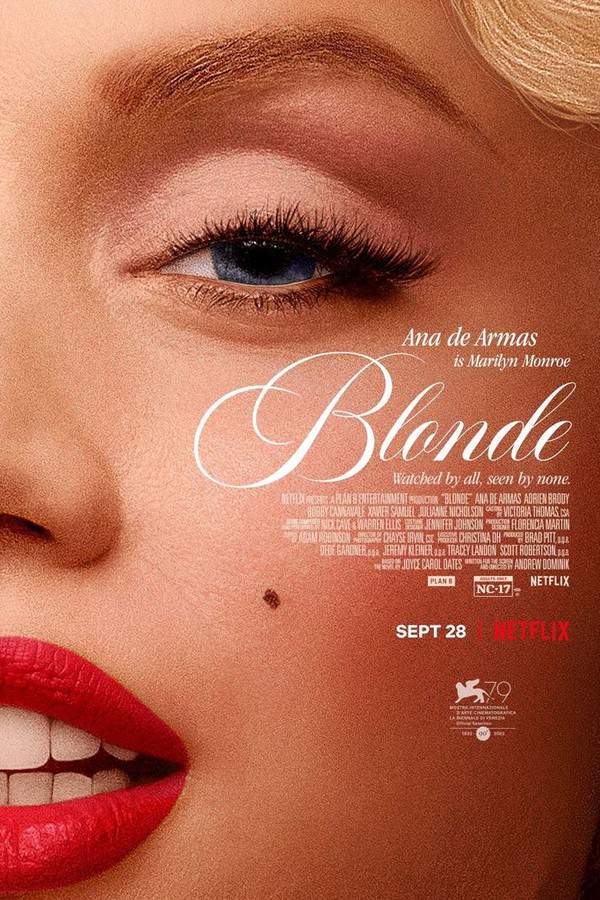
What Is Blonde About?
The premise of Blonde in 300 words, with nothing given away. The full story follows below.
In a Hollywood that dazzles and devours in equal measure, the film follows a young girl born into uncertainty and raised by a mother whose fragile grip on reality shapes her earliest world. From the cramped rooms of a 1930s Los Angeles orphanage to the glittering‑bright sets of a post‑war film studio, the story paints a portrait of an era where fame is both promise and peril. The tone is intimate yet sweeping, blending the mythic shine of silver‑screen glamour with the stark shadows of a life constantly in flux.
As she steps into the spotlight, Norma Jeane Mortenson transforms into the iconic figure known worldwide for her impossible beauty and magnetic charisma. The narrative lingers on the tension between the crafted persona that the public adores and the private self that struggles beneath layers of makeup and expectation. The atmosphere is a study in contrasts—bright colors and elegant costumes set against a muted, introspective inner landscape that hints at the costs of constant performance.
Navigating a circle of admirers, collaborators, and lovers—including the charismatic Charles “Cass” Chaplin Jr., the steady‑minded Edward G. “Eddy” Robinson Jr., and the legendary athlete Joe DiMaggio—the protagonist seeks connection while wrestling with the weight of her own legend. Later, a partnership with the celebrated playwright Arthur Miller suggests a yearning for deeper artistic fulfillment beyond the cinema’s flashbulbs. Each relationship offers a mirror, reflecting both the allure and the loneliness that accompany her meteoric rise.
The film’s mood is lush and melancholic, a visual ode to an era of classic glamour tinged with modern introspection. It invites the audience to glimpse the paradox of a woman forever caught between the spotlight’s heat and the quiet yearning for authenticity, leaving us to wonder how far a star can shine before the light begins to fade.
What Happens in Blonde?
The complete story of Blonde, from the first scene to the last, in 722 words (about 3 minutes). Spoilers throughout. Names in the text link to 5 cast member pages.
Spoilers ahead
Six-year-old Norma Jeane Mortenson Poppy Montgomery is raised by her mentally unstable mother, Gladys Pearl Baker Patricia Richardson. On her seventh birthday in 1933, Norma Jeane is given a framed picture of a man that Gladys claims was her father. That night, a fire breaks out in the Hollywood Hills. Gladys tries to drive Norma Jeane toward a fire-proof mansion she claims is inhabited by a friend, but police orders force her to turn back. Norma asks why her father left them, which enrages Gladys, who bursts into tears, shouts, and strikes Norma. Back home, Gladys runs a bath and forces Norma to bathe, despite her protests that it’s too hot. While giving Norma Jeane a bath, an enraged Gladys tries to drown her. Norma Jeane flees to the neighbor Miss Flynn, who promises she will be safe. Days later, Norma Jeane is sent to an orphanage while Gladys is admitted to a mental hospital, declared unfit to raise a child.
In the 1940s, Norma Jeane has become a pin-up model under the stage name Marilyn Monroe, gracing magazine covers and calendars. While chasing a break in acting, she is raped by film studio president Mr. Z. In 1951, she auditions for the role of Nell in Don’t Bother to Knock; the audition goes awry when she breaks down and leaves in tears, but the casting director is impressed enough to give her the part. As her career rises, she meets Charles “Cass” Chaplin Jr. Patrick Dempsey and Edward G. “Eddy” Robinson Jr. Jensen Ackles, and becomes involved with both. Norma Jeane lands her breakout film in 1953 with Niagara, but public sightings with Cass and Eddy prompt her agent to ask that she limit appearances with them in public, upsetting her because she feels that her Marilyn Monroe persona is only a role, not her true self.
Norma Jeane becomes pregnant by Cass, but decides to have an abortion out of fear that the child might inherit her mother’s mental illness. Cass supports her decision. On the day of the appointment, she changes her mind, but her pleas to cancel are ignored. Afterward, she ends things with Cass and Eddy. She later meets Joe DiMaggio, a retired athlete who sympathizes with her desire to leave Hollywood and pursue serious acting in New York City. As Norma Jeane begins Gentlemen Prefer Blondes, she receives a letter from a man claiming to be her father. She feels detached from her onscreen performance at the premiere, saying it’s not her. Returning to her hotel room, she finds DiMaggio instead, who proposes, and she accepts reluctantly.
Her marriage to DiMaggio falters when Cass and Eddy feed Joe nude publicity photographs of her, enraging him to the point of violence and forcing her to stop making The Seven Year Itch. She still completes the iconic dress sequence, but at home a drunken DiMaggio yells and escalates the abuse, leading to a divorce. In 1955, Norma Jeane auditions for Magda, a Broadway play by the renowned Playwright Griffin Dunne. The reading earns praise from most, and Norma Jeane eventually marries Arthur Miller, moving with him to Maine in search of happiness and a second pregnancy. A beachside miscarriage shatters that dream, sending her back toward acting.
Back on screen, while filming Some Like It Hot, Norma Jeane grows more unstable under the relentless press, feeling increasingly like a joke, unleashing outbursts on set—especially toward director Billy Wilder—and drifting further from Arthur Miller. To cope, she turns to pills. By 1962, she is deeply dependent on drugs and alcohol. Secret Service agents take an intoxicated Norma Jeane to a hotel to meet President John F. Kennedy—who rapes her—and have her removed after she vomits in his bed. Dizzy and dazed, she wonders if this is what being Marilyn Monroe has led to, and she hallucinates another abortion before being sent back to Los Angeles. She learns from Eddy, over the phone, that Cass has died and left something for her; when she finally opens the package, she discovers the stuffed tiger she once shared with them and a letter from Cass confessing that the letters she’s been receiving from her father were actually written by him.
Shattered by the revelation, Norma Jeane overdoses on barbiturates. As she lies dying, she envisions her father welcoming her to the afterlife.
Blonde Timeline: Every Key Event in Order
12 key events in the order they happen, from “Childhood trauma begins” to “Kennedy encounter, Cass memory, and final overdose”. 12 events name a place, across 7 locations.
- 1
Childhood trauma begins
On her seventh birthday, Gladys gives Norma a framed picture of a man who claims to be her father. A fire erupts in the Hollywood Hills that night, and Gladys tries to drive Norma toward a fireproof mansion. Police intervene and order them back, and Norma endures Gladys's violent outbursts in the bath. Norma is left in a precarious state that leads to her later placement in care.
When:1933 Where:Hollywood Hills, California
- 2
Child placed in care
Gladys is admitted to a mental hospital, and Norma is sent to an orphanage. The instability of her early life continues to shape her sense of belonging and self through the years. The experience of living in care while her mother is away informs her later longing for authentic connection beneath the Marilyn Monroe persona.
When:1933-1934 Where:Los Angeles, California
- 3
Becomes Marilyn Monroe; pin-up model and abuse
In the 1940s, Norma Jeane becomes Marilyn Monroe, a rising pin-up model featured on magazine covers and calendars. She experiences exploitation when film studio president Mr. Z rapes her, an act she endures within the industry.
When:1940s Where:Los Angeles
- 4
Audition for Nell in Dont Bother to Knock
In 1951, she auditions for Nell and loses her composure during the take, breaking down in tears, yet the casting director is impressed enough to offer the part. The moment marks a turning point as she blends vulnerability with star potential. The role helps launch her ascent in Hollywood.
When:1951 Where:Los Angeles
- 5
Meets Cass Chaplin Jr. and Eddy Robinson Jr.
As her career grows, Norma meets Charles Cass Chaplin Jr. and Edward G. Eddy Robinson Jr., becoming romantically involved with both. The relationships create emotional complexity and public intrigue, threatening to blur the line between her real self and Marilyn Monroe persona. The dynamic foreshadows the pressures of fame that she will face.
When:Early 1950s Where:Los Angeles
- 6
Breakthrough Niagara and public scrutiny
1953 brings the breakout film Niagara, which propels Norma to global stardom. Public appearances with Cass and Eddy intensify scrutiny and lead her agent to urge limits on their joint appearances to protect her image. The event cements her status while exposing the concessions required for public fame.
When:1953 Where:New York
- 7
Pregnancy, abortion decision, and break with Cass and Eddy
Norma becomes pregnant by Cass and initially contemplates keeping the child, but chooses abortion out of fear of passing on her mother's illness. Cass supports her, yet she ultimately ends the relationship and withdraws from both men. The turmoil deepens her struggle with identity behind the public Marilyn persona.
When:1953-1954 Where:Los Angeles
- 8
Meeting Joe DiMaggio; marriage proposal
Norma meets Joe DiMaggio, a former athlete who empathizes with her wish to pursue serious acting in New York. He proposes after she returns to acting, and she accepts reluctantly, beginning a marriage that fuses glamour with volatility. The relationship marks a shift toward a more private, yet equally turbulent, phase of her life.
When:1954-1955 Where:New York / Los Angeles
- 9
Marriage to Joe DiMaggio; filming The Seven Year Itch
Marriage to DiMaggio becomes strained as nude publicity photos spark jealousy and violence; he hits Norma and demands she stop filming The Seven Year Itch. She continues with the iconic white dress scene, defying control while paying a personal cost. The marriage ends in divorce amid public scrutiny and emotional strain.
When:1954-1955 Where:Los Angeles
- 10
Arthur Miller marriage in Maine; miscarriage
Norma marries playwright Arthur Miller and moves to Maine, where she experiences a relatively happy time and becomes pregnant again. A beach walk ends in a miscarriage, shattering that brief dream and pushing her back toward acting and fame.
When:1955-1956 Where:Maine, United States
- 11
Some Like It Hot; increasing pressure
During the filming of Some Like It Hot, Norma grows more troubled by press attention and feels she is becoming a joke in the public eye. Her on set outbursts intensify, particularly toward director Billy Wilder, and she relies more on prescription pills to cope with the strain.
When:1958-1959 Where:Los Angeles
- 12
Kennedy encounter, Cass memory, and final overdose
By 1962 Norma is dependent on drugs and alcohol. Secret Service agents take her to a hotel to meet President John F. Kennedy, who rapes her before she is drugged and returned home. Later that year, Cass Chaplin's death is revealed through a package containing the tiger and a letter confessing that he wrote the father letters; Norma is devastated, overdoses on barbiturates, and envisions her father welcoming her to the afterlife.
When:1962 Where:Los Angeles / Hotel
Who Are the Main Characters in Blonde?
4 characters, among them Norma Jeane Mortenson / Marilyn Monroe (Poppy Montgomery), Charles 'Cass' Chaplin Jr. (Patrick Dempsey) and Playwright Arthur Miller (Griffin Dunne): who each one is and the part they play in the story. 3 of them link to the actor’s page.
- NJ
Norma Jeane Mortenson / Marilyn Monroe (Poppy Montgomery)
Played by Poppy Montgomery
From a traumatized childhood to a global icon, she grapples with a manufactured public image that masks her private struggles. The pressure of fame, public scrutiny, and drug use shapes her choices and relationships across decades. Her life is marked by volatile romances, abortion decisions, and a longing for authentic self-expression beyond Marilyn Monroe.
- 🎭 Actress
- 🌟 Icon
- 💔 Trauma
- 🧠 Addiction
-

Charles 'Cass' Chaplin Jr. (Patrick Dempsey)
Played by Patrick Dempsey
Norma Jeane's lover who becomes entangled with her career and personal life. Their relationship leads to pregnancy, contested choices, and a rupture as fame and personal safety pressures push them apart. He ultimately reveals aspects of their relationship and his influence on Norma's life, including the letters that shape her understanding of paternity.
- ❤️ Romance
- 🎬 Industry
- 💔 Relationship
-

Playwright Arthur Miller (Griffin Dunne)
Played by Griffin Dunne
The famed playwright who marries Norma during the 1950s, moving to Maine; his bond with Norma reflects the tension between literary ambition and Hollywood's demands. He witnesses Norma's growth and the erosion of their relationship as fame encroaches on their private life.
- 🎭 Playwright
- 🏛️ Literature
- 💔 Marriage
- JD
Joe DiMaggio
A retired athlete who admires Norma but struggles with the relationship's public scrutiny and Norma's spiraling personal life. Their marriage deteriorates under pressure, jealousy, and Norma's ongoing battles with addiction and media intrusion.
- ❤️ Relationships
- 💔 Turmoil
- 🧠 Mental health
Where and When Is Blonde Set?
Blonde is set in Hollywood, Los Angeles, Maine and New York City (1930s–1962). Here is why the time and place matter to the story.
When
1930s–1962
Set across four turbulent decades, from the 1930s Depression-era beginnings to the early 1960s Kennedys era. The timeline traces Norma Jeane's childhood, the postwar rise to stardom in the 1940s and 1950s, and the personal and professional turmoil that culminates in the early 1960s. It depicts the evolving Hollywood landscape, shifting cultural norms, and changing attitudes toward fame and power.
Where
Hollywood, Los Angeles, Maine, New York City
The narrative moves through key locations of mid-20th-century America. It begins in the perilous environment around Hollywood Hills and the film industry, shifts to Maine during a marriage, and returns to the West Coast and New York as Norma Jeane rises to fame. The settings span glamorous studios, private homes, and the pressures of public life that defined the era.
- 🎬 Hollywood
- 🏙️ City Life
- 🧒 Orphanage Era
What Are the Themes of Blonde?
4 ideas the story keeps returning to, among them Identity, Exploitation and Mental Health.
-
01
Identity
Norma Jeane wrestles with a private self and a public Marilyn Monroe persona crafted by Hollywood. The film probes how fame can redefine a person, blurring the line between authenticity and image. The tension shapes her choices, relationships, and sense of self throughout the decades.
-
02
Exploitation
The narrative portrays the film industry as a powerful machine that profits from a star's image and private life. Norma's experiences reveal coercion, manipulation, and the pressure to perform for publicity. Publicity, paparazzi, and studio control threaten personal autonomy and safety.
-
03
Mental Health
Trauma from childhood, a relentless public spotlight, and dependence on substances frame Norma's mental health journey. The story highlights isolation, anxiety, and the toll of constant scrutiny on well-being. It portrays the struggle to maintain sanity within a culture built on spectacle.
-
04
Love and Relationships
Romantic entanglements with Cass, Eddy, and Joe DiMaggio reveal how love becomes entangled with ambition and public life. The relationships are marked by passion, control, and heartbreak as fame complicates trust and privacy. The film charts a quest for connection amid the pressures of stardom.
What Kind of Film Is Blonde?
Bleak in tone, with steady pacing and a moderate story, going by the plot summary.
- Tone
- Bleak
- Pacing
- Steady
- Story
- Moderate
- Intensity
- High
- Ending
- Bleak
A relentlessly bleak and emotionally devastating drama that traces the tragic descent of a woman plagued by exploitation, abuse, and mental anguish, offering little respite from its oppressive sorrow.
- melancholic
- oppressive
- heartbreaking
- lonely
- anxious
- dark
- fictional biography
- celebrity exploitation
- mental health decline
- addiction
Content notes: child abuse, sexual assault, domestic violence, abortion, miscarriage, drug overdose.