What Is Blonde About?
The premise of Blonde in 326 words, with nothing given away. The full story and the ending follow below.
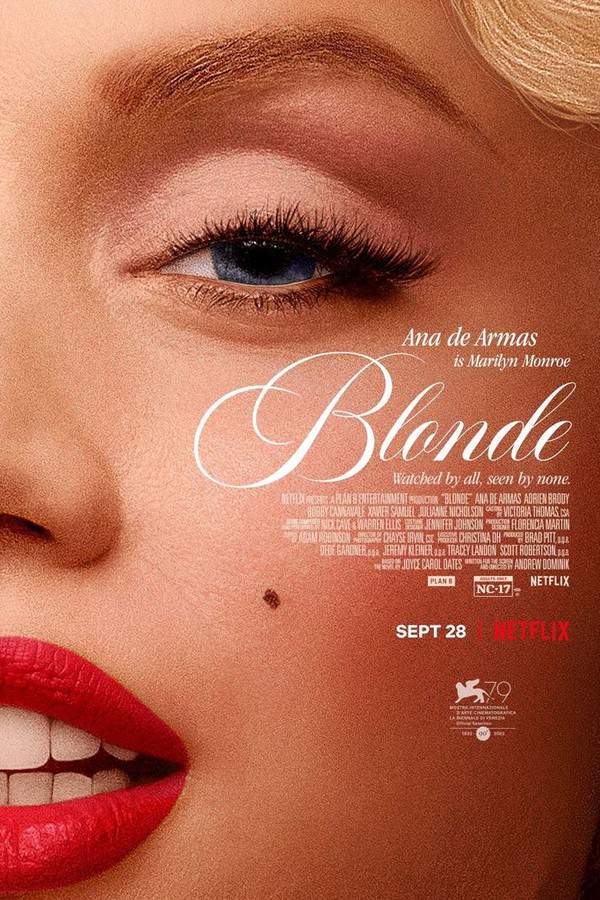
In a glossily stylized Hollywood of the 1950s, Norma Jeane Mortenson walks a thin line between a fragile childhood and a dazzling public persona that the world will forever know as a legendary icon. The film paints a world where glimmering lights and glossy magazine covers conceal the shadows of a life shaped by loss, longing, and the relentless quest for identity. Its tone blends elegant period detail with an almost dream‑like haze, allowing the audience to feel both the allure of stardom and the quiet ache that lingers behind every smile.
At the heart of the story is a woman who transforms herself into a symbol of beauty, sex appeal, and vulnerability, yet constantly battles the dissonance between that manufactured image and the person hidden beneath. The narrative leans into a poetic, sometimes surreal, exploration of how fame can magnify personal wounds, turning private pain into public spectacle. Through careful visual storytelling, the film hints at the cost of becoming a cultural myth while keeping the focus on the interior landscape of a star trying to claim her own voice.
Surrounding her are a handful of intimate connections that both uplift and unsettled her, from passionate, unconventional romances to mentorships that promise artistic legitimacy. A seasoned athlete turned confidant, Joe DiMaggio, offers a glimpse of a quieter life beyond the studio lot, while a celebrated playwright, Arthur Miller, beckons her toward deeper, more serious work. These relationships underscore the clash between commercial expectation and personal fulfillment, suggesting that love and creative ambition can be both sanctuary and source of tension.
The film moves with a rhythm that feels part reverie, part stark reality, inviting viewers to contemplate the delicate balance between the glittering façade of a Hollywood legend and the human heart that beats beneath. It leaves the audience with lingering questions about the true cost of becoming an icon and the quiet resilience required to survive in a world that constantly rewrites one’s story.
What Happens in Blonde?
The complete story of Blonde, from the first scene to the last, in 896 words (about 4 minutes). Spoilers throughout. Names in the text link to 5 cast member pages.
Spoilers ahead
As a young girl, Norma Jeane Mortenson (Ana de Armas) grows up under the care of her mentally unstable mother, Gladys (Julianne Nicholson). On her seventh birthday in 1933, she receives a framed photo of a man who her mother claims is her father. That very night, a fire erupts in the Hollywood Hills, prompting Gladys to take Norma Jeane there, insisting that her father resides nearby. However, their visit is cut short by police intervention, forcing them back home. In a fit of rage, Gladys nearly drowns Norma Jeane in the bathtub after she inquires about her father, but ultimately lets her go. Gladys chillingly states that her father abandoned them because he didn’t want Norma Jeane to be born.
Seeking refuge, Norma Jeane escapes to a neighbor’s house, where she finds solace. A few days pass before she is placed in a foster home while Gladys is committed to a mental institution, deemed unfit for parenting. Though she insists she is not an orphan, Norma Jeane is forced into the foster care system.
By the 1940s, she adopts the persona of “Marilyn Monroe,” becoming a celebrated pin-up girl as her image graces magazine covers and calendars. However, her aspirations to break into acting come at a high cost; she is sexually assaulted by the president of a film studio, a man known as Mr. Z (David Warshofsky). This traumatic experience leaves her deeply scarred, leading her to cope by dissociating herself from the pain, allowing her character, Marilyn, to absorb the harsh realities of the industry.
In 1950, Norma Jeane auditions for a role in Don’t Bother to Knock, but her performance crumbles as she breaks down in tears. Despite her emotional turmoil, the casting director recognizes her potential and grants her the role. A decade later, she visits her mother in the hospital, but Gladys fails to recognize her. Eager to uncover the truth about her past, Norma Jeane searches for any information regarding her father in studio records but finds nothing substantial.
As her career takes off, she develops intimate relationships with Charles “Cass” Chaplin Jr. (Xavier Samuel) and Edward G. “Eddy” Robinson Jr. (Evan Williams), with whom she engages in a polyamorous arrangement. Her breakout moment comes with the 1953 film Niagara. However, when spotted in public with Cass and Eddy, the studio head admonishes her to limit her public appearances with them, intensifying her internal struggle between the public persona of Marilyn and her true self.
Joyfully discovering she is pregnant, Norma Jeane grapples with the fear that her child could inherit her mother’s mental struggles and opts for an abortion. Yet, on the day of the procedure, she has a change of heart, but tragically, it is too late. While she becomes a household name, earning a fraction of what her male co-stars earn—$5,000 per film compared to their $100,000—her sense of worth diminishes.
Her path crosses with Joe DiMaggio (Patrick Brennan), a retired athlete who resonates with her desire to transcend Hollywood’s superficiality for more serious roles in New York City. While she films Gentlemen Prefer Blondes, she receives a letter from a man claiming to be her father, Tygh Runyan. Exuding intense disconnection during the film’s premiere, she expresses that the portrayal is not truly her. Later, she encounters Joe again at her hotel, where he proposes, and she reluctantly accepts.
However, their marriage rapidly deteriorates after Joe’s anger erupts when he receives nude publicity photos of Norma Jeane from Cass and Eddy. Following a violent confrontation, she moves forward with filming her most iconic scene in The Seven Year Itch, yet domestic turmoil looms large. Soon after, she divorces Joe.
In 1955, she auditions for a Broadway play written by the illustrious Arthur Miller. While her performance captivates most, Arthur initially seems unimpressed. He gradually softens as she provides profound insights about the character Magda, who parallels her own troubled existence, reviving a spark within him. They marry and move to Maine, as Norma Jeane relishes the joys of domesticity and awaits a child. Unfortunately, she suffers a miscarriage, thrusting her back into the chaotic world of acting.
As the years wear on, particularly during the filming of Some Like It Hot, Norma Jeane spirals into uncontrollable breakdowns and feels increasingly isolated from Arthur. The relentless media scrutiny plagues her, triggering frequent outbursts, especially towards director Billy Wilder (Ravil Isyanov). To manage her escalating stress, she turns to substance abuse.
By 1962, the weight of fame takes a toll as she becomes mired in a dependency on drugs and alcohol. During a troubling encounter with President John F. Kennedy (Caspar Phillipson), she is manipulated into compromising situations, all while grappling with the reality of her existence as “Marilyn Monroe.” Overwhelmed, she hallucinates, reliving moments of her past, including another abortion, before returning home to Los Angeles.
As she receives a call from Eddy informing her of Cass’s death, she resists confronting the truth he left behind. Ultimately, she opens a package from him revealing a beloved childhood stuffed tiger and a heart-wrenching letter confessing that the letters she thought were from her father were actually sent by him.
Devastated by the unveiling of this secret, Norma Jeane tragically succumbs to an overdose of barbiturates. In her final moments, she envisions her father, who welcomes her to the afterlife, leaving behind the confounding legacy of Marilyn Monroe.
Blonde Timeline: Every Key Event in Order
15 key events in the order they happen, from “Norma Jeane's Early Life” to “Tragic Conclusion”. 2 events name a place, across 2 locations.
- 1
Norma Jeane's Early Life
Norma Jeane Mortenson, also known as Marilyn Monroe, experiences a tumultuous upbringing under the care of her mentally unstable mother, Gladys. On her seventh birthday in 1933, she receives a photo of a man purported to be her father, igniting her curiosity about her origins.
When:1933
- 2
The Fire in Hollywood Hills
That same night after receiving the photo, a fire erupts in the Hollywood Hills. Gladys insists on taking Norma Jeane there to find her father, but their quest is interrupted by police intervention, forcing them to return home.
When:1933 Where:Hollywood Hills
- 3
Escape from an Abusive Situation
In a fit of rage concerning her father's absence, Gladys nearly drowns Norma Jeane during a bathing incident. This traumatic experience propels Norma Jeane to seek refuge in a neighbor's house, illustrating the extent of her chaotic home life.
- 4
Foster Care
A few days later, Gladys is committed to a mental institution, leaving Norma Jeane to navigate the foster care system. Despite insisting she is not an orphan, she is forced into a new reality as she becomes part of the system.
- 5
Becoming Marilyn Monroe
Transitioning into the 1940s, Norma Jeane adopts the persona of Marilyn Monroe and gains fame as a pin-up girl, featured on magazine covers. However, her rise to stardom is marred by a harrowing assault from a prominent film studio executive.
When:1940s
- 6
The Audition for 'Don't Bother to Knock'
In 1950, Norma Jeane auditions for the film 'Don't Bother to Knock' but suffers an emotional breakdown during her performance. Despite this setback, her talent shines through, leading the casting director to still cast her in the role.
When:1950
- 7
Searching for Her Father
A decade after rising to stardom, Norma Jeane visits her mother in a hospital but finds that Gladys does not recognize her. Driven by a yearning to understand her roots, she delves into studio records to search for information about her father, but finds no answers.
When:1960
- 8
Relationships with Cass and Eddy
As her career flourishes, Norma Jeane engages in a polyamorous relationship with Charles 'Cass' Chaplin Jr. and Edward G. Robinson Jr. Despite sharing a fulfilling bond, the pressure from her studio limits her public appearances with them, highlighting her struggle to balance her public and private life.
- 9
Pregnancy and Abortion
While joyfully discovering her pregnancy, Norma Jeane is plagued by fears that her child could inherit her mother's mental illness. In a tragic twist, she hesitates on the day of her scheduled abortion, only to find it's too late to reclaim her pregnancy, deepening her sense of loss.
- 10
Marriage to Joe DiMaggio
Norma Jeane's life takes a new turn when she marries Joe DiMaggio, a retired athlete who understands her struggles. However, their relationship quickly deteriorates amid jealousy and domestic violence, leading to her decision to divorce him soon after.
When:1954
Show the other 5 events of Blonde Hide the last 5 events
- 11
Meeting Arthur Miller
In 1955, Norma Jeane auditions for a Broadway play written by Arthur Miller. Initially unimpressed, he transitions as her captivating performance awakens chemistry between them, ultimately leading to their marriage and a shared hope for a brighter future.
When:1955
- 12
Miscarriage and Return to Acting
After embracing life in Maine, Norma Jeane suffers a miscarriage that propels her back into the tumultuous world of acting. The loss rekindles the chaos in her life, forcing her to confront the persistent pressures of her career.
Where:Maine
- 13
Struggles During 'Some Like It Hot'
While filming 'Some Like It Hot', Norma Jeane spirals into emotional breakdowns due to media scrutiny and personal isolation from Arthur. Her reliance on substances intensifies, as she finds it increasingly difficult to juggle fame and personal turmoil.
When:1960
- 14
Dependency and Compromised Situations
By 1962, Norma Jeane battles an overwhelming dependency on drugs and encounters troubling situations involving powerful figures like President John F. Kennedy. Each experience leaves her feeling more detached from her real self and deepens her existing psychological struggles.
When:1962
- 15
Tragic Conclusion
After learning of Cass's death, Norma Jeane uncovers painful truths about her past and the injustices she suffered. Heartbroken, she ultimately succumbs to an overdose of barbiturates, marking a tragic end to her life story and leaving behind the complex legacy of Marilyn Monroe.
Who Are the Main Characters in Blonde?
4 characters, among them Norma Jeane Mortenson / Marilyn Monroe, Gladys and Joe DiMaggio: who each one is and the part they play in the story. Every profile links to the actor’s page.
-

Norma Jeane Mortenson / Marilyn Monroe
Played by Ana de Armas
Norma Jeane is portrayed as a complex character marked by vulnerability and resilience. Growing up in a tumultuous environment, she struggles with her identity, oscillating between the expectations of society and her true self. Her experiences in the film industry lead her to become a tragic figure, embodying both dreams and despair.
- 👩🎤 Protagonist
- 🌹 Tragic Figure
-
Gladys
Played by Julianne Nicholson
Gladys, Norma Jeane's mother, is depicted as mentally unstable and emotionally volatile. Her inability to provide a safe environment for her daughter shapes Norma's early experiences and instills a lifelong fear of abandonment. Despite her flaws, Gladys' fierce love for her daughter complicates her character, showcasing the challenges of mental illness.
- 👩👧母親
- 💔 Complicated Relationship
-

Joe DiMaggio
Played by Patrick Brennan
Joe DiMaggio is introduced as a retired athlete who connects with Norma Jeane's desire for authenticity. His relationship with her begins with love, but quickly spirals into jealousy and violence, symbolizing the challenges faced by those who find themselves entangled with a public figure. His character adds depth to the exploration of identity and acceptance within the narrative.
- 🏆 Athlete
- 🔥 Jealousy
-

Cass Chaplin
Played by Xavier Samuel
Cass Chaplin is depicted as one of Norma Jeane's romantic interests, representing freedom and authenticity in her chaotic life. Their relationship showcases the struggles of maintaining intimacy in the face of public scrutiny and the demands of fame. His character embodies the complexities and challenges of love within the celebrity world.
- 🎨 Artist
- 💑 Romantic Interest
Where and When Is Blonde Set?
Blonde is set in Hollywood Hills, New York City and Los Angeles (1933-1962). Here is why the time and place matter to the story.
When
1933-1962
The movie spans from the early 1930s to the early 1960s, a period marked by significant cultural shifts in American society. It captures the rise of the film industry and the challenges faced by women, particularly in navigating fame and personal trauma. The 1950s, in particular, saw a growing interest in celebrity culture, but also highlighted the darker aspects, such as mental health issues and exploitation.
Where
Hollywood Hills, New York City, Los Angeles
The Hollywood Hills is a storied area known for its stunning views and celebrity homes, serving as a significant setting for the early life of Norma Jeane. New York City represents a hub of cultural expression and serious theater, where she sought to expand her acting career beyond the confines of Hollywood. Los Angeles, with its glitz and glamour, became the backdrop for Norma's rise and fall as a symbol of celebrity and fame.
- 🌄 Location
- 🎬 Film Industry
What Are the Themes of Blonde?
3 ideas the story keeps returning to, among them Tragedy, Identity and Injustice.
-
01
Tragedy
The theme of tragedy permeates Norma Jeane's life story, emphasizing the emotional scars left by her tumultuous upbringing and the pressures of fame. Her journey reveals the loneliness and despair that often accompany public adoration, as she struggles to reconcile her true self with the persona of Marilyn Monroe. Ultimately, these tragic elements culminate in her heartbreaking end, encapsulating the cost of celebrity.
-
02
Identity
Exploration of identity is central to the narrative, as Norma Jeane strives to define herself amid conflicting expectations. The transition from Norma Jeane to Marilyn Monroe illustrates the struggle between her personal reality and public façade. This theme is further emphasized through her relationships and the quest for love and acceptance, showcasing the fragility of self-identity in the spotlight.
-
03
Injustice
The film portrays significant themes of injustice, particularly regarding women's rights and the exploitation within the film industry. Norma Jeane's experiences reflect a broader commentary on gender inequality, as she faces sexual assault and is underpaid compared to her male counterparts. This theme highlights the systemic issues prevalent in Hollywood that continue to resonate today.
How Does Blonde End?
The last act of Blonde and what it means, in 266 words. The ending lands as bleak. Big spoilers: read the plot summary first if you have not seen it.
The final act, in full
In the film’s climax, Norma Monroe’s fragile mental state has deteriorated significantly, blurring the lines between reality and her hallucinations. Her encounters with powerful men like Kennedy have left her feeling manipulated and betrayed. She believes she is being watched and controlled, which fuels her paranoia and despair. Her relationship with Cass and Ed, which was passionate but tumultuous, ultimately ends with her choosing to have an abortion—an act driven by her fears for her child’s future and her own mental health, though the film hints at deeper influences behind her decision.
Her tragic descent culminates in her overdose, a shocking and heartbreaking moment that signifies her loss of agency and her physical and emotional collapse. The film suggests that her death was orchestrated by external forces—the idea that government agencies or powerful figures may have deliberately facilitated her overdose to silence her or destroy evidence of her relationship with JFK remains ambiguous. Instead, the movie leaves viewers with a haunting sense of how systems of power and societal exploitation contributed to her downfall.
The ending is deeply contemplative, emphasizing how Monroe’s talent and humanity were consumed by the relentless pressure of fame, industry exploitation, and political machinations. It challenges us to consider the human cost behind the glamorous exterior, prompting a reflection on the way society values its stars and whether we have learned to treat them with the dignity and respect they deserve. Marilyn Monroe’s tragic story in “Blonde” ends with her alone, broken, and lost in a world that monetized her suffering—her death a stark reminder of the costs of fame and exploitation.
What Kind of Film Is Blonde?
Dark in tone, with steady pacing and a moderate story, going by the plot summary.
- Tone
- Dark
- Pacing
- Steady
- Story
- Moderate
- Intensity
- High
- Ending
- Bleak
A harrowing and psychologically intense descent into the fractured identity of a legendary icon, blurring reality and fantasy to portray a life defined by trauma, exploitation, and the crushing weight of fame.
- traumatic
- melancholic
- oppressive
- psychological
- dissociative
- lonely
- fame and identity
- mental health
- sexual exploitation
- childhood trauma
Content notes: sexual assault, domestic abuse, abortion, mental illness, substance abuse, suicide.
Quiz
How well do you remember Blonde? Test yourself on the story.