What Is Beach Red About?
The premise of Beach Red in 318 words, with nothing given away. The full story follows below.
The film opens on a hostile, windswept island seized by Japanese forces, where American troops steel themselves for a brutal beach landing. The setting is rendered with unflinching realism: sand churned by artillery, the relentless roar of gunfire, and the stark, oppressive heat that presses down on every soldier. From the outset, the story signals that this is less a conventional war epic than a meditation on the psychological weight each combatant carries, as memories of home flicker against the backdrop of relentless combat.
At the heart of the narrative is Ben Honeywell, a hard‑edged company gunnery sergeant whose stern demeanor anchors the opening sequence. Honeywell’s voice, gravelly and matter‑of‑fact, guides viewers through the chaos, while his inner thoughts—revealed through a stream‑of‑consciousness narration—hint at the lingering doubts and personal ghosts that haunt him. Around him, a diverse cast of Marines and Japanese soldiers is introduced not through exposition but through fleeting flashbacks and intimate voice‑overs that blend present danger with past lives, underscoring the universal yearning for a lost world beyond the front lines.
Stylistically, the film weaves together gritty combat footage with still photographs of wives, families, and quiet moments that punctuate the relentless action. The decision to leave Japanese dialogue unsubtitled forces the audience to experience the same disorientation felt by the characters, heightening the sense of alienation and emphasizing the human connection that can surface amid incomprehensible violence. This visual and auditory collage creates a mood that hovers between stark brutality and tender melancholy, inviting viewers to feel the war’s impact on both body and spirit.
The overall tone is unapologetically raw, balancing the visceral immediacy of a 30‑minute beach assault with a compassionate—if morally ambiguous—view of the enemy. Through Honeywell’s steady presence and the film’s relentless focus on memory, loss, and the quiet terror that lingers after each gunshot, the story promises a haunting exploration of what it means to fight, survive, and remember.
What Happens in Beach Red?
The complete story of Beach Red, from the first scene to the last, in 392 words (about 2 minutes). Spoilers throughout. Names in the text link to 3 cast member pages.
Spoilers ahead
Rip Torn plays the company gunnery sergeant Ben Honeywell, providing a blunt, hard-edged presence that anchors a brutal opening sequence. The 30-minute beach landing is depicted with graphic intensity, offering a raw snapshot of war’s violence and savagery that would later echo in Steven Spielberg’s Saving Private Ryan. In a stark moment during the assault, a Marine’s arm is blown off, a image that hammers home the ferocity of combat and echoes the starkness found in Thomas C. Lea III’s 1944 painting The Price.
As American troops consolidate their gains, the film shifts to flashbacks that illuminate the lives of both American and Japanese combatants. The narrative unfurls through shifting first-person voice-over in a stream-of-consciousness style, giving intimate glimpses into the thoughts and fears of a wide cast of characters. Like Cornel Wilde’s previous The Naked Prey (1965), the film does not provide subtitles for Japanese dialogue, forcing the viewer to experience communication as a direct, unfiltered exchange.
The storytelling is heavily driven by voice-over, often juxtaposed with still photographs that punctuate the narrative with scenes of wives and family. Among these visuals is Julie MacDonald Jean Wallace, captured in photographs that feel antiquated yet pivotal to the lives that veterans carry with them off the battlefield. The combination of moving narration and static images creates a mood that lingers between memory and reality, tenderness and brutality, empathy and detachment.
The film maintains a striking level of sympathy for the enemy, a choice that adds moral ambiguity to the war drama. It invites viewers to feel the sorrow and humanity on both sides, not merely the thrill of combat. In one poignant moment, Pvt. Joseph Joshua Cliff [Patrick Wolfe] lies beside an injured Japanese soldier; the brief bond between them mirrors a scene from All Quiet on the Western Front, before fellow Marines arrive and kill the Japanese soldier, leaving Cliff shaken by the toll of the encounter.
Directorially, the project is anchored by Wilde in multiple roles—director, producer, and co-writer—who also appears on screen as a Marine captain, the company commander, adding another layer of where the story comes from and how it is presented. The film’s tagline is delivered with blunt honesty by the on-screen leadership: “That’s what we’re here for. To kill. The rest is all crap!”
That’s what we’re here for. To kill. The rest is all crap!
Beach Red Timeline: Every Key Event in Order
12 key events in the order they happen, from “Opening beach landing” to “Parallels to other works”.
- 1
Opening beach landing
The film opens with a 30-minute sequence depicting a brutal, opposed beach landing. The violence and savagery of war are shown in graphic terms, setting a brutal tone. A Marine is seen with his arm blown off during the assault.
When:Opening sequence Where:Beachhead
- 2
Marine loses arm
During the landing, a Marine's arm is blown off, illustrating the immediate cost of the assault. The moment emphasizes the war's brutality and personal risk. It anchors the film's unflinching depiction of combat.
When:During landing
- 3
Consolidation on the beach
As American troops consolidate their gains on the beach, the film shifts to broader perspectives and regrouping after the initial assault.
When:After initial landings
- 4
Flashbacks to soldiers' lives
Flashbacks illustrate the lives of American and Japanese combatants, giving depth to both sides and highlighting what is at stake for each character.
- 5
First-person voice-over
The film employs shifting first-person voice-over in a stream-of-consciousness style. This technique exposes many characters' thoughts and perspectives in a non-linear fashion.
- 6
No subtitles for Japanese dialogue
Like Wilde's Naked Prey, the film does not use subtitles when Japanese is spoken. This forces audiences to infer meaning from context and emotion. It reinforces immersion and a sense of alienation.
- 7
Voice-over with photographs of wives
Large portions of voice-over narration are juxtaposed with still photographs, including wives shown in 1967 attire. The editing contrasts intimate domestic imagery with the brutality of war, creating memory and distance within the narrative.
- 8
Tears and sympathy for the enemy
Many soldiers shed tears, and the narrative shows unusual sympathy for the enemy. The storytelling humanizes both sides and complicates typical war-film perspectives.
- 9
Cliff and the wounded soldier
In a pivotal moment, an injured Cliff lies beside a wounded Japanese soldier and the two bond. When other Marines appear, they kill the Japanese soldier, distressing Cliff. The scene echoes parallels to All Quiet on the Western Front.
When:During a lull in fighting
- 10
The gunnery sergeant's tagline
Rip Torn portrays the company gunnery sergeant, who delivers the film's brutal tagline: That's what we're here for. To kill. The rest is all crap! The line crystallizes the unit's hard-edged pragmatism.
When:During early battles
- 11
Wilde appears on screen as captain
The director, producer, and co-writer Wilde appears on screen as a Marine captain who commands the company, adding a meta-textual moment to the film's storytelling.
- 12
Parallels to other works
The film draws parallels to Wilde's Naked Prey (1965) and to All Quiet on the Western Front, using similar approaches to perspective, pacing, and anti-subtitling techniques to shape its war narrative.
Who Are the Main Characters in Beach Red?
16 characters, among them Gunnery Sgt. Ben Honeywell (Rip Torn), Sgt. Lindstrom (Michael Parsons) and Pvt. Egan (Burr DeBenning): who each one is and the part they play in the story. 15 of them link to the actor’s page.
-
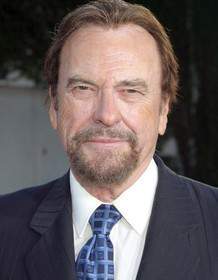
Gunnery Sgt. Ben Honeywell (Rip Torn)
Played by Rip Torn
A grizzled company gunnery sergeant who embodies blunt discipline and rugged leadership. He pushes his men through the assault, balancing harsh instruction with a protective impulse toward the troops. His hard-edged philosophy—"That’s what we’re here for. To kill. The rest is all crap!"—frames the film’s blunt view of war, while glimpses of loyalty toward his unit reveal underlying care. He represents the brutal pragmatism that war often manufactures in leaders.
- 🎖️ Leadership
- 🪖 Discipline
- 💥 Brutality
- SL
Sgt. Lindstrom (Michael Parsons)
Played by Michael Parsons
A steadfast Marine who shares the burden of combat with his unit and respects authority while grappling with the moral weight of killing. He remains loyal to his comrades even as he questions the cost of war. His perspective helps ground the violence in human loyalty and duty. He embodies resilience under fire and the emotional toll of sustained conflict.
- 🪖 Loyalty
- ⚔️ Duty
- 💥 Courage
- PE
Pvt. Egan (Burr DeBenning)
Played by Burr DeBenning
A private soldier who confronts fear and the fragility of his own life under fire. He experiences the landing's chaos up close, illustrating the rank-and-file perspective of warfare. His reactions reveal how raw emotions influence decisions in high-stakes moments. He serves as a conduit for the audience’s vulnerability in the face of violence.
- 🪖 Fear
- 🧭 Duty
- 💥 Violence
- JM
Julie MacDonald (Jean Wallace)
Played by Jean Wallace
A civilian wife whose presence is felt through flashbacks and memories, providing a human anchor to the soldiers’ lives off the battlefield. She embodies longing, resilience, and the home front’s emotional horizon. Her memories contrast with the immediacy of combat, highlighting the personal stakes behind the fighting.
- 💞 Love
- 🏠 Homefront
- 🕊️ Memory
- CM
Capt. MacDonald / Narrator (Cornel Wilde)
Played by Cornel Wilde
Captain MacDonald serves as the company commander and the film’s voice, guiding the stream-of-consciousness narrative. He contemplates leadership, duty, and the moral ambiguities of command in war. As narrator, he frames events with a soldier’s perspective, shaping how viewers interpret both action and emotion. His dual role anchors the film’s philosophical thread.
- 🎙️ Narration
- 🧭 Leadership
- 🗣️ Perspective
- CT
Capt. Tanaka (Dale Ishimoto)
Played by Dale Ishimoto
A Japanese captain depicted with strategic poise, offering a counterpoint to the American officers. His presence emphasizes the enemy’s rationality and humanity, challenging simplistic portrayals of combatants. The depiction invites reflection on war from the other side of the line without demeaning either side. He embodies tactical acumen amidst the broader chaos.
- 🎖️ Strategy
- 🗡️ Honor
- 🤝 Enmity
- CK
Captain Kondo (Michio Hazama)
Played by Michio Hazama
Another Japanese officer whose presence foregrounds the island’s multi-sided conflict. He contributes to the film’s nuanced portrayal of enemy leadership and the pressures of combat on all sides. His interactions underscore the shared humanity even amid fierce hostility. He helps expand the scope of the narrative beyond a single opposing force.
- 🎖️ Strategy
- 🗡️ Duty
- 🤝 Enmity
- TG
Tall Girl (Linda Albertano)
Played by Linda Albertano
A minor but symbolic presence, Tall Girl stands as a reminder of the world beyond the battlefield. Her character provides a contrast to the soldiers’ brutality and offers a human touchstone connected to civilian life. She represents innocence and the personal stakes of those waiting at home. Her role reinforces the film’s focus on memory and the home front.
- 💞 Love
- 🏡 Homefront
- 🕊️ Memory
- G(
Goldberg (Gene Blakely)
Played by Gene Blakely
A seasoned Marine who contributes to the ensemble dynamic of the unit. He embodies the everyday, steady presence that supports the group under stress. His role helps depict the collective experience of soldiers rather than focusing on a single protagonist. He stands as part of the war’s broader social fabric within the platoon.
- 🎭 Ensemble
- 🛡️ Stability
- 🪖 Duty
- PC
Pvt. Colombo (Jaime Sánchez)
A member of the Marine contingent who adds to the mosaic of backgrounds within the unit. He participates in the landing and shared struggles, illustrating how individuals from different paths converge in battle. His presence contributes to the film’s human-scale portrayal of war’s social dynamics.
- 🧑✈️ Diversity
- 🪖 Solidarity
- 💥 Violence
- CS
Col. Sugiyama (Genki Koyama)
Played by Genki Koyama
A Japanese officer whose leadership on the island reflects the organized, strategic aspect of enemy forces. His role helps create a fuller picture of the island’s conflict and the tactical considerations at play. He interacts with the broader narrative about leadership under pressure.
- 🎖️ Leadership
- 🗡️ Strategy
- 🤝 Enmity
- PM
Pvt. Mishio (Hiroshi Kiyama)
Played by Hiroshi Kiyama
A private soldier whose experiences on the ground highlight the fear and resilience of junior troops. He contributes to the film’s portrayal of frontline humanity and the personal stakes of each skirmish. His perspective adds to the ensemble effect and the sense of-colors of war on individuals.
- 🪖 Fear
- 💪 Resilience
- 🧭 Duty
- PJ
Pvt. Joseph Joshua Cliff (Patrick Wolfe)
Played by Patrick Wolfe
A Marine private whose arc underscores the fear and camaraderie that arise under fire. Cliff’s interactions reflect moments of vulnerability and bond among soldiers amid the island’s brutal conditions. His experiences illustrate how individuals navigate loyalty, fear, and connection in combat.
- 🪖 Bonding
- 💥 Trauma
- 🛡️ Loyalty
- PN
Pvt. Nakano (Norman Pak)
Played by Norman Pak
A private on the front lines whose presence contributes to the cultural mosaic of the unit. His moments in the firefight highlight the universality of fear and courage across backgrounds. He helps depict how war compresses diverse lives into a single shared ordeal.
- 🪖 Diversity
- 🧭 Courage
- 💥 Violence
- PM
Pvt. Mouse (Dewey Stringer)
Played by Dewey Stringer
A Marine private whose small-scale actions illuminate everyday endurance under bombardment. He embodies the ordinary soldier whose quiet persistence keeps the unit moving forward. His experiences contribute to the film’s focus on the human scale of war.
- 🪖 Endurance
- 🙌 Resilience
- 💥 Chaos
- LD
Lt. Domingo (Fred Galang)
Played by Fred Galang
A lieutenant who represents the younger leadership cohort under fire. His decisions and reactions illuminate the tensions between command and improvisation in combat. His presence adds depth to the portrayal of wartime leadership at the frontline.
- 🧭 Leadership
- 🪖 Duty
- ⚔️ Conflict
Where and When Is Beach Red Set?
Beach Red is set in Pacific island and World War II (World War II era (1940s)). Here is why the time and place matter to the story.
When
World War II era (1940s)
The action unfolds in the Pacific Theater of World War II, featuring an intense amphibious assault. Marines contend with hostile defenses, harsh conditions, and the constant pressure of advancing through contested terrain. The narrative uses flashbacks and first-person narration to explore how memories of home and loved ones intersect with the immediacy of battle.
Where
Pacific island, World War II
The setting is a Pacific island during World War II, centering on a brutal amphibious landing and the Marines' advance inland. The landscape blends hot beaches with dense interior terrain, illustrating both the chaos of combat and the logistical grind of securing a beachhead. The scene underscores the savagery and cost of war as soldiers face graphic injuries and emotional strain.
- 🌊 War zone
- 🧭 Pacific theater
What Are the Themes of Beach Red?
3 ideas the story keeps returning to, among them Brutality, Empathy and Memory.
-
01
Brutality
The film foregrounds the graphic violence and savage realism of a beachhead assault. It portrays how Marine discipline collides with chaos, forcing soldiers to act quickly in life-and-death situations. The tagline spoken by the gunnery sergeant crystallizes war’s blunt logic: kill, and everything else is dismissed as irrelevant. Through these moments, the movie examines the moral numbness that can accompany sustained combat.
-
02
Empathy
Despite enemy lines, the narrative reveals moments of humanity toward the Japanese soldiers, complicating the binary of friend and foe. A notable scene shows a bond formed between a wounded Marine and a Japanese soldier, only to be shattered by surrounding violence. The film deliberately avoids subtitles for Japanese dialogue, inviting viewers to feel rather than translate the enemy’s humanity. This empathy extends to the home front, as glimpses of wives and families humanize the cost of war.
-
03
Memory
The storytelling relies heavily on stream-of-consciousness narration and voice-overs to reveal inner thoughts. Flashbacks juxtapose soldiers’ lives with the present conflict, creating a meditation on memory and grief. Still photographs of loved ones intercut with current events emphasize how memory functions as a refuge and a burden. The film’s structure invites viewers to consider how war is remembered long after the battles end.
What Kind of Film Is Beach Red?
Bleak in tone, with variable pacing and a moderate story, going by the plot summary.
- Tone
- Bleak
- Pacing
- Variable
- Story
- Moderate
- Intensity
- High
A graphically brutal and psychologically intense war film that juxtaposes visceral combat with melancholic flashbacks, creating a deeply somber and unsettling viewing experience focused on the shared trauma of soldiers.
- brutal
- graphic
- melancholic
- somber
- anxious
- psychological
- psychological toll of war
- war violence
- survival
- grief and loss
Content notes: graphic war violence, suicide (hara kiri), dismemberment, psychological trauma.
Where to Watch Beach Red
Stream it on fuboTV and MGM Plus, or rent or buy it from Amazon Video and Apple TV Store. US availability and prices from JustWatch.
Stream 10
 fuboTV
  MGM Plus
  MGM Plus Roku Premium Channel
  MGM+ Amazon Channel
  Philo
Philo  ScreenPix Amazon Channel
  ScreenPix Apple TV channel
  The Roku Channel
  Tubi TV
  YouTube Free




Streaming availability in the US, powered by