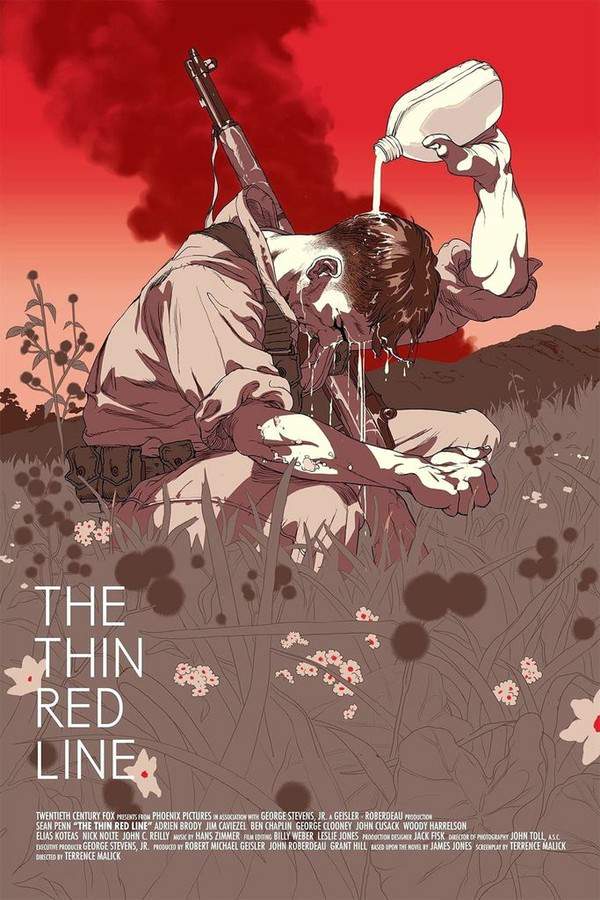
The Thin Red Line 1999

Directed by

Terrence Malick

Where to Watch The Thin Red Line
See current US streaming, rental, and purchase options for The Thin Red Line (1999) via JustWatch.






The Thin Red Line Plot Summary
Read the complete plot summary and ending explained for The Thin Red Line (1999). From turning points to emotional moments, uncover what really happened and why it matters.
In the summer of 1942, against the backdrop of the South Pacific, two American Army privates find themselves stranded on an island in Micronesia, living among the Melanesian natives. Both are AWOL from their unit, C Company. One fateful morning, an American naval vessel arrives, leading to their capture. Among these soldiers is Private Witt, who encounters his sergeant, Welsh. Welsh expresses concern that Witt’s laissez-faire approach will not contribute positively to the Army’s struggle against the advancing Imperial Japanese Army, which poses a significant threat to Australia. Welsh informs Witt that he will be reassigned to a stretcher-bearer’s unit ahead of the impending invasion of Guadalcanal—a pivotal move that underscores the strained relationship between the two men.
Onboard a Navy cruiser, Lt. Colonel Tall discusses the upcoming assault on Guadalcanal with Brigadier General Quintard. Through Tall’s voiceover, we learn about his long-standing service in the Army and the frustration of being overlooked for promotion to colonel. The impending battle may finally yield the recognition he has sought, as securing an airfield on the island is crucial. Meanwhile, the personnel of C Company wait anxiously for orders, with tensions running high as they prepare for the mission ahead. Pvt. Doll steals a .45 caliber pistol from a fellow soldier, while Pvt. Train philosophizes about death as an unchanging certainty in life.
As the invasion commences, the soldiers descend into the amphibious landing vehicles, landing on the beach to find no immediate resistance. After initial reports indicating the absence of Japanese troops inland, the battalion embarks on a strenuous trek towards Hill 210, a key strategic position held by the Japanese forces. The valley below reveals a fortified bunker brimming with enemy machine guns, making any direct attempt to seize the hill a dangerous venture.
The morning begins with an artillery bombardment ordered by Tall, who believes it will bolster the soldiers’ morale. However, the troopers, hiding from the barrage and on edge, remain filled with dread. One of the men, Seco, unable to cope with his anxiety, is replaced by Welsh, who recognizes that Seco’s emotional distress could negatively affect the morale of the unit. Once the shelling subsides, Welsh’s unit is ordered by Staros to charge at the hill’s peak, but they are met with fierce resistance, leading to devastating casualties. A desperate scene unfolds when Pvt. Tella, severely wounded, is left behind in the field, forcing Welsh to make troubling choices as he grapples with the chaotic aftermath.
Amid escalating conflict, C Company’s luck begins to shift when satisfaction is drawn from a flanking maneuver, and Lt. Colonel Tall orders a five-man team to infiltrate the enemy bunker discreetly. Leading this operation is Private Bell, who successfully exposes the hidden Japanese gunner positions, allowing for the victory that Tall so desperately seeks. Following a climactic engagement at the bunker, the soldiers of Charlie Company manage to subdue the enemy position and capture several prisoners, marking a significant achievement for the unit.
In the following days, Charlie Company makes headway into the Japanese encampment, easily overpowering an enemy weakened by starvation and thus gaining control of their territory. However, the brutal reality of war begins to take its toll as the psychological strain of combat weighs heavily on the men. Private Dale, caught in a moment of moral conflict, apprehensively steals gold teeth from deceased Japanese soldiers, reflecting the dehumanizing effects of war. The personal cost of survival becomes evident as Private Bell faces a heart-wrenching divorce notice from his wife, while Witt questions Welsh about feelings of isolation amidst camaraderie.
As the reconnaissance mission unfolds, the stakes continue to rise when Witt, Fife, and another soldier uncover a vast number of Japanese troops readying to attack C Company. In a selfless act, Witt distracts the enemy to ensure that vital communication reaches their commanding officer. Ultimately, Witt meets his tragic end—shot while defying capture—his sacrifice highlighting the courage embodied within the chaos of war.
The narrative concludes as the surviving members of C Company return to camp and are introduced to their new commanding officer, Capt. Bosche. As the remnants of Charlie Company board the Navy ships, they reflect on their harrowing experiences, having completed their grueling tour, leaving behind a path marked by both tragedy and resilience.
The Thin Red Line Timeline
Follow the complete movie timeline of The Thin Red Line (1999) with every major event in chronological order. Great for understanding complex plots and story progression.
The Arrival of American Soldiers
In the summer of 1942, two American Army privates living on a remote island in Micronesia are suddenly taken into custody by an American naval ship. This moment marks a significant turning point for the privates, who have been living AWOL among the Melanesian natives.
Sergeant Welsh's Warning
Private Witt engages in a conversation with his sergeant, Welsh, who expresses concern about Witt's carefree attitude. Welsh informs Witt that he will be reassigned to a stretcher-bearer's unit ahead of the invasion of Guadalcanal, and their adversarial relationship is highlighted.
Plans for Guadalcanal
On the deck of a Navy cruiser, Lt. Colonel Tall discusses the upcoming invasion of Guadalcanal with Brigadier General Quintard. The strategic importance of securing an airfield on the island, which the Japanese are rapidly constructing, is underscored.
Beginning the Invasion
C Company begins its invasion of Guadalcanal using amphibious landing vehicles. The initial beach landing is met with no resistance, giving the soldiers a false sense of security before they trek inland to confront the enemy.
Encounters at Hill 210
The battalion reaches Hill 210, which is heavily fortified by Japanese machine guns. They realize that a direct assault will result in high casualties, and the necessity for a tactical approach becomes clear as they assess the situation.
Artillery Bombardment
An artillery bombardment commences, intended to bolster morale and prepare for the assault. However, many soldiers remain terrified, and the uncertainty of war weighs heavily on them as the shelling creates confusion on the battlefield.
The Frontal Assault
Captain Staros is ordered to charge Hill 210 despite the evident dangers. The result is catastrophic, as the soldiers are quickly mowed down by the entrenched Japanese soldiers, illustrating the grim realities of war.
The Sacrifice of Sergeant Keck
During a fierce encounter, Sergeant Keck heroically throws himself against a grenade to save his men. His bravery leads to his death shortly thereafter, as he insists they contact his wife with news of his sacrifice.
A Tactical Change
Captain Staros defies Lt. Colonel Tall's orders for a frontal attack and suggests a flanking maneuver instead. Tensions rise as Tall struggles with insubordination and the ongoing danger to his men.
Commando Unit's Mission
A small commando unit led by Private Bell is tasked with sneaking back up to the Japanese bunker to assess the situation. This mission highlights the shift towards more strategic and covert actions as the battle continues.
The Commando Assault
The commando unit successfully executes their plan, leading to a fierce battle at the Japanese bunker. Private Doll courageously assaults the enemy position, allowing his comrades to secure the bunker despite heavy fire.
Taking the Japanese Encampment
Charlie Company advances to the nearby Japanese encampment, finding the soldiers demoralized and starved. The battle is swift, leading to an easy capture of enemy soldiers and a morale boost for the American troops.
Consequences of War
Private Dale's morally ambiguous act of stealing gold teeth from the deceased Japanese soldiers exposes the dark human instincts that war can provoke. This moment mirrors the psychological toll the conflict takes on the soldiers.
Reinforcement and Change in Command
Welsh and the remnants of C Company meet their new commanding officer, Captain Bosche. This transition signifies a change in leadership amidst the ongoing chaos of war, leaving the men to grapple with their experiences.
Return to Navy Ships
As their tour comes to an end, Charlie Company prepares to head back to the Navy ships. This conclusion brings a sense of closure but also reflects on the heavy costs of their experiences during the grueling conflict.
The Thin Red Line Characters
Explore all characters from The Thin Red Line (1999). Get detailed profiles with their roles, arcs, and key relationships explained.
Private Witt
Private Witt is portrayed as a contemplative soldier who grapples with his place in the war and life. His carefree demeanor and philosophical musings often contrast with the harsh realities of combat, prompting questions about duty and self-preservation. Witt's journey offers insights into the human condition and the impact of war on an individual's psyche.
Sergeant Welsh
Sergeant Welsh serves as a pragmatic and jaded leader, struggling to maintain morale amid the chaos and loss of war. His relationship with Witt reflects the tension between idealism and the harsh truths of military life. Welsh's complex character showcases the burden of leadership and the emotional toll of witnessing suffering.
Lt. Colonel Tall
Lt. Colonel Tall is an ambitious officer whose desire for promotion illustrates the pressures of military hierarchy. His strategies often embody the tension between military objectives and the realities of combat. Tall's character highlights themes of ambition and the personal sacrifices made in pursuit of success within the war.
The Thin Red Line Settings
Learn where and when The Thin Red Line (1999) takes place. Explore the film’s settings, era, and how they shape the narrative.
Time period
Summer, 1942
The film is set during the summer of 1942, a critical period in World War II marked by significant battles between the Allied forces and Japan in the Pacific. This era reflects intense military strategy and human struggle as soldiers faced the harsh realities of war and their own internal conflicts. The events are centered around the Battle of Guadalcanal, which aimed to halt Japanese advances toward Australia.
Location
Guadalcanal, Micronesia, Solomon Islands
The movie takes place primarily on Guadalcanal, a significant island in the Solomon Islands, known for its strategic importance during World War II. This lush, tropical environment becomes a battleground where American soldiers confront their enemy in a brutal conflict. The surrounding ocean adds to the isolated yet volatile atmosphere of military engagement.
The Thin Red Line Themes
Discover the main themes in The Thin Red Line (1999). Analyze the deeper meanings, emotional layers, and social commentary behind the film.
🪖
War
The theme of war underscores the entire narrative, portraying the brutality and chaos experienced by the soldiers. It explores the physical and psychological impacts of combat, showcasing moments of heroism and the tragic loss of life on both sides. The film invites viewers to contemplate the cost of war on humanity and the nature of courage.
🌅
Nature vs. Humanity
This theme highlights the stark contrast between the beautiful, serene landscapes of Guadalcanal and the horrific violence of war. It emphasizes how nature remains indifferent to human conflict while also providing a backdrop for deeply personal and existential reflections of the characters. The serenity of the island is juxtaposed with the soldiers' inner turmoil, prompting reflection on life and death.
🤝
Brotherhood
The film delves into the bonds formed between soldiers amidst the chaos of war, illustrating the complexities of camaraderie and conflict. Characters like Witt and Welsh demonstrate how their relationships evolve under pressure, revealing both solidarity and adversities. This theme highlights the importance of connection and humanity in the darkest of times.

Coming soon on iOS and Android
The Plot Explained Mobile App
From blockbusters to hidden gems — dive into movie stories anytime, anywhere. Save your favorites, discover plots faster, and never miss a twist again.
Sign up to be the first to know when we launch. Your email stays private — always.
Explore the mobile appThe Thin Red Line Spoiler-Free Summary
Discover the spoiler-free summary of The Thin Red Line (1999). Get a concise overview without any spoilers.
In the summer of 1942, the quiet, humid landscape of a South‑Pacific island becomes the stage for a clash of humanity and conflict. The lush jungle, swaying palms and distant surf conceal a looming war of larger forces, while the island itself feels both isolated and inexorably bound to the tide of history. The film’s tone balances the stark realism of combat with a meditative, almost lyrical contemplation of nature’s indifference, inviting the viewer to feel the weight of every breath taken under a relentless sun.
Central to this tableau is Witt, a private whose inner world is as solitary as the island’s hidden coves. Once drawn away from the front lines by circumstance, he now faces the pressing demand to rejoin his comrades. His relationship with Welsh, the seasoned sergeant who represents both authority and the uneasy camaraderie of the squad, highlights the tension between individual detachment and collective responsibility. As the men prepare for what lies ahead, their varied reactions—ranging from quiet dread to restless curiosity—paint a portrait of soldiers wrestling with the very essence of courage and fear.
Overhead, the strategic minds of Tall and Quintard deliberate the significance of the upcoming assault, underscoring the broader stakes of the Pacific campaign. Their presence adds a layer of institutional pressure that contrasts with the raw, personal experiences of the infantry. The film dwells on the psychological terrain as much as the physical one, probing how ordinary people confront the specter of death and the search for meaning amid chaos. In this richly textured world, the audience is invited to contemplate not only the brutal reality of war but also the enduring, fragile threads of humanity that persist behind every rifle and whisper of the jungle wind.
Movies with Similar Twists and Themes
Uncover films that echo the narrative beats, emotional arcs, or dramatic twists of the one you're exploring. These recommendations are handpicked based on story depth, thematic resonance, and spoiler-worthy moments — perfect for fans who crave more of the same intrigue.




Featured on this page

What's After the Movie?
Not sure whether to stay after the credits? Find out!
Check out our other apps:

SAT Sphere
Build confidence for the Digital SAT.

Mori Atlas
Discover wild places worth protecting.

Luntero
Search smarter for a home in Amsterdam.

Plot Explained
Unravel movie endings and hidden clues.

Pokechamp
Dive into Pokémon data and battle logic.

Driving Theory
Get ready for your European theory test.

Movie Dust
Plan your next cinema trip with ease.

Musemap
Find art and culture as you travel.

Selkobase
Compare credentials before committing.

Local Manual
Turn an unfamiliar country into practical next steps.

Lernavi
Compare school systems before your next move.

GymRoam
Find a workout stop wherever your plans take you.
Explore Our Movie Platform
New Movie Releases (2026)
Famous Movie Actors
Top Film Production Studios
Movie Plot Summaries & Endings
Major Movie Awards & Winners
Best Concert Films & Music Documentaries
Movie Collections and Curated Lists
© 2026 What's After the Movie. All rights reserved.
Privacy Policy