

What Is A Matter of Life and Death About?
The premise of A Matter of Life and Death in 288 words, with nothing given away. The full story follows below.
In the waning days of World War II, a lone RAF Lancaster is crippled over the English Channel, forcing its pilot to abandon the aircraft without a parachute. Defying the expected final plunge, the young officer finds himself washed ashore, alive against all odds. The film opens with the stark, rain‑slick skies of war‑torn Britain, a place where danger lurks in every cloud and the ordinary is constantly eclipsed by the extraordinary.
On the very beach where he regains consciousness, the pilot encounters an American radio operator stationed at a nearby air base. Their meeting is sudden and electric, a spark of tenderness that cuts through the grim backdrop of conflict. The chemistry between Peter Carter and June feels both fragile and inevitable, suggesting a love that might transcend the harsh realities of a world still at war and the unseen rules that govern the afterlife.
Yet the universe has its own bureaucracy. An ethereal guide—known simply as Conductor 71—has been assigned to escort the pilot’s soul to a realm beyond mortal reach. When the pilot clings to his newfound romance, the celestial authorities step in, proposing a celestial hearing that would decide whether his destiny lies among the living or the dead. This otherworldly courtroom, populated by timeless judges and an eclectic jury, introduces a whimsical yet solemn contest of law, fate, and emotion.
The tone balances the starkness of wartime Britain with the airy, almost fantastical qualities of the spiritual realm. Lighthearted banter intertwines with solemn reflection, and the visual palette shifts from smoky, grounded grays to luminous, dream‑like colors whenever the afterlife looms. Within this richly textured world, the story invites viewers to wonder whether love can truly challenge the immutable statutes of the cosmos.
What Happens in A Matter of Life and Death?
The complete story of A Matter of Life and Death, from the first scene to the last, in 613 words (about 3 minutes). Spoilers throughout. Names in the text link to 2 cast member pages.
Spoilers ahead
In May 1945, Squadron Leader Peter Carter, David Niven, a Royal Air Force pilot, pilots a badly damaged and burning Lancaster bomber over the English Channel after a mission over Germany. With his crew ordered to bail out and his own parachute destroyed, Carter faces a death he believes is certain, but his only radio contact is June, Kim Hunter, at a United States Army Air Forces base along the English coast. After he jumps from the aircraft, Carter expects oblivion, yet a thick fog over the Channel thwarts a timely arrival to the afterlife. He awakens on a beach near June’s base, surprised to learn that he is still alive when a low-flying de Havilland Mosquito passes overhead.
Peter Carter soon encounters June again and experiences an unexpected and growing romance. Conductor 71, [Marius Goring], the guide charged with escorting souls to the Other World, briefly freezes time to explain the situation and urges Carter to accept his death and move on. Yet Carter refuses and presses for an appeal. While Conductor 71 consults his superiors, Carter clings to the possibility that his life can continue on Earth, and his fight to remain grows even as doctors on the living side of the world prepare to intervene.
Doctor Reeves, [Roger Livesey], becomes involved as Carter’s visions are diagnosed as a brain injury—adhesive arachnoiditis from a concussion suffered two years earlier. Reeves is killed in a motorcycle accident while searching for the ambulance that would take Carter to the hospital, but his death ironically frees Reeves to act as Carter’s counsel in the ensuing celestial hearing. Reeves argues that Carter, through no fault of his own, was granted extra time on Earth and has since formed a real earthly commitment with June that should take precedence over any afterlife claim.
The case moves toward a celestial court trial that unfolds in parallel with Carter’s brain surgery. The prosecutor, Abraham Farlan, [Raymond Massey], an American Minuteman who resents the British for making him one of the first casualties of the American Revolution, faces Reeves in a debate about justice and loyalty. Reeves challenges the jury’s makeup, insisting that it be free of prejudice, and the panel is ultimately replaced by a diverse group of modern Americans whose backgrounds are varied and contemporary. Throughout the proceedings, Reeves and Farlan trade jabs comparing their respective nationalities, each insisting that their side deserves a ruling in their favor.
A turning point comes when Reeves puts June on the stand and reveals the depth of her love for Carter. She explains that the only way to save Carter is for her to take his place in the afterlife, and she steps onto the stairway to the Other World without hesitation, only to be carried away by the same force she chose to confront. Carter’s plea intensifies as love and duty collide, and Reeves pauses long enough to acknowledge that love has the power to override even the strongest legal arguments. > nothing is stronger than the law in the universe, but on Earth, nothing is stronger than love.
The celestial jury eventually rules in Carter’s favor, and the Judge reveals a newly extended lifespan granted to him, a decision Reeves characterizes as generous, while Farlan, good-hnaturedly frustrated, concedes the point. The courtroom banter shifts to a lighter tone as the Chief Recorder protests the breach of legal procedure, and the story moves to the operating room, where the masked surgeon—the Judge in disguise—confirms the procedure’s success. Carter’s restoration becomes possible not merely through legal technicalities but through the enduring power of love and the stubborn hope of two people who would rather live together than accept a predetermined fate.
A Matter of Life and Death Timeline: Every Key Event in Order
12 key events in the order they happen, from “Carter's doomed mission and bailout” to “Life continues on Earth”. 12 events name a place, across 12 locations.
- 1
Carter's doomed mission and bailout
In May 1945, Squadron Leader Peter Carter flies a badly damaged Lancaster over the English Channel after a mission over Germany. With his parachute destroyed, he orders his crew to bail out and braces for death as his radio operator June at a U.S. base on the English coast receives his distress. He jumps from the burning aircraft, believing he will die.
When:May 1945 Where:English Channel
- 2
Waking on a beach near June's base
Carter awakens on a sandy shore near June's base, surprised to find himself alive after the jump. He initially mistakes the experience for an afterlife until a Mosquito flies low overhead, hinting he is still on Earth. The reality of his survival begins to dawn as the situation becomes clear.
When:Immediately after the jump Where:Beach near June's base, English coast
- 3
Carter and June fall in love
Carter meets June while she cycles home from her night shift and they quickly fall in love. Their growing bond complicates Carter's belief that he must return to the Other World. The romance becomes a central force driving the forthcoming appeal and moral questions about life on Earth.
When:Soon after awakening Where:Near June's base, on a road by the coast
- 4
Conductor 71 offers the case for appeal
Conductor 71 stops time to explain Carter's predicament and urges him to accept death and travel to the Other World. Carter refuses and demands an appeal, initiating a formal, otherworldly review of his fate. The stage is set for a celestial court to decide whether earthly life can continue.
When:Shortly after meeting June Where:Afterlife/Guidance chamber
- 5
Three-day window granted to prepare the appeal
Conductor 71 consults higher powers and returns to tell Carter that he has been granted an appeal and three days to prepare his case. He can choose a defense counsel from among all who have ever died, a daunting task. Carter is left weighing his options as the clock ticks.
When:Three days before hearing Where:Guidance chamber / time-appeal room
- 6
Visions diagnosed as brain injury; surgery scheduled
Carter's visions are examined by Doctor Reeves, who diagnoses a brain injury—adhesive arachnoiditis from a slight concussion two years earlier—and arranges for surgery. The medical crisis runs in parallel with the legal drama, linking the fates of body and soul. The hospital scene foreshadows the gravity of the case.
When:During the three-day window Where:June's base hospital
- 7
Reeves dies while seeking the ambulance, becoming counsel
As Reeves darts to find the ambulance, a motorcycle accident ends his life, yet his spirit persists to assist Carter as counsel. His untimely death adds urgency and personal stake to the appeal. This unlikely advocate becomes the bridge between medicine, law, and the afterlife.
When:During the three-day window Where:Road near hospital
- 8
Celestial court debate: life, love, and earthly time
Reeves argues that Carter's earthly life was extended through no fault of his own and his love for June creates a genuine earthly commitment that should take precedence. American prosecutor Abraham Farlan counters, and the celestial court considers whether a supernatural rule should bend for human emotion. The jury is initially arranged with British prejudices, prompting a change to a diverse, modern American jury.
When:During the hearing Where:Celestial court
- 9
June's stand: love as the saving argument
June is brought to testify and reveals the depth of her love for Carter. She declares that the only way to save him is for her to take his place, stepping onto the stairway toward the Other World. The stairway halts and she returns to Carter's arms, testifying to the power of love over law.
When:During the trial Where:Celestial court / staircase to the Other World
- 10
Verdict and the gift of life
The jury rules in Carter's favor, recognizing his earthly ties and Reeves's persuasive arguments. The Judge reveals Carter's new lifespan, a generous extension granted to him, and the two combatants—Reeves and Farlan—exchange supportive banter in a rare moment of humor amid the legal drama.
When:Moment of verdict Where:Celestial courtroom
- 11
The operation and the Judge's face
In the operating room, the masked surgeon—revealed to be the Judge—performs the critical procedure and declares the operation a success. The revelation ties the fates of life and law together, underscoring the film's message that divine justice can accommodate human love.
When:Post-verdict Where:Operating room
- 12
Life continues on Earth
With life extended, Carter remains on Earth and the story closes on a note that love has prevailed over the rigidity of fate. The film ends on the idea that love is stronger than any law, even in the universe's order, leaving Carter with a future alongside June.
When:After verdict Where:Earth / June's base vicinity
Who Are the Main Characters in A Matter of Life and Death?
6 characters, among them Peter Carter (David Niven), June (Kim Hunter) and Conductor 71 (Marius Goring): who each one is and the part they play in the story. Every profile links to the actor’s page.
-
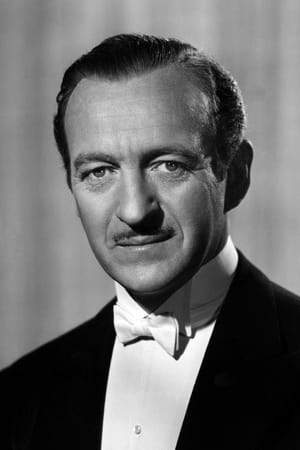
Peter Carter (David Niven)
Played by David Niven
Royal Air Force pilot who survives a fatal mission and fights to live long enough to prove his case. He remains calm under pressure, balancing duty to his crew with a growing commitment to June and his own earthly life.
- 🎖️ RAF pilot
- 💗 Survivor
- J(
June (Kim Hunter)
Played by Kim Hunter
Nurse at the US base who falls in love with Peter and becomes a catalyst for his fight to remain alive. She demonstrates steadfast courage, ultimately offering herself to save him.
- 💞 Lover
- 🏥 Nurse
-

Conductor 71 (Marius Goring)
Played by Marius Goring
The guide charged with escorting Peter to the Other World, who intervenes when Peter challenges death. He enforces the rules of the afterlife and navigates Peter’s persistent appeal.
- 🧭 Guide
- 🌀 Celestial guardian
-

Doctor Reeves (Roger Livesey)
Played by Roger Livesey
June’s friend and physician who diagnoses Peter’s brain injury in a surreal vision. He acts as Peter’s counsel after dying in a motorcycle accident while pursuing the ambulance.
- 🩺 Doctor
- 💬 Counsel
- AF
Abraham Farlan (Raymond Massey)
Played by Raymond Massey
American prosecutor who represents the celestial cause against British life, adding a cross-cultural dimension to the courtroom drama.
- ⚖️ Prosecutor
- 🇺🇸 Nationality
- TJ
The Judge (Abraham Sofaer)
Played by Abraham Sofaer
The masked surgeon who appears as the Judge in the operating room, revealing the new lifespan and guiding the final resolutions of the case.
- 🧑⚖️ Judge
- 🩺 Medical figure
Where and When Is A Matter of Life and Death Set?
A Matter of Life and Death is set in English Channel, English coast (England), United States Army Air Forces base on… (May 1945). Here is why the time and place matter to the story.
When
May 1945
The events occur in the final months of World War II, during Allied air operations over Europe. The narrative juxtaposes urgent wartime danger with a metaphysical legal drama that unfolds after a near-death experience. The period is defined by sacrifice, rapid decisions, and the question of destiny.
Where
English Channel, English coast (England), United States Army Air Forces base on the English coast, beach near the base
The story unfolds along the wartime English Channel and a coastal airbase on the English shore. Action shifts from a burning Lancaster bomber over the Channel to a nearby base and its beach, where the surviving pilot regains consciousness and confronts his fate. The setting blends frontline military life with the surreal journey into the afterlife that follows.
- 🗺️ WWII setting
- 🏖️ English coast
- 🛫 US Air Forces base
What Are the Themes of A Matter of Life and Death?
3 ideas the story keeps returning to, among them Love vs Duty, Time & Fate and Justice & Law.
-
01
Love vs Duty
Love becomes Peter’s strongest claim to life, challenging a rigid fate dictated by celestial law. The romance with June anchors the human stakes of the story and prompts the court to weigh earthly bonds against abstract duty. The resolution hinges on whether earthly commitments can override cosmic decrees.
-
02
Time & Fate
Time is manipulated by celestial forces, offering Peter a reprieve and granting him an appeal. The film toys with the idea that time on Earth has value separate from an inevitable afterlife. The three-day window pushes characters to decide quickly, intensifying emotional and moral pressure.
-
03
Justice & Law
A celestial courtroom ponders whether mercy can override mortality, blending British loyalty with American perspectives. The prosecutor and counsel debate the limits of law when love and life are at stake. The climax affirms life while acknowledging that love can alter legal outcomes.
What Kind of Film Is A Matter of Life and Death?
Hopeful in tone, with steady pacing and a moderate story, going by the plot summary.
- Tone
- Hopeful
- Pacing
- Steady
- Story
- Moderate
- Intensity
- Medium
- Ending
- Happy
A whimsical and hopeful romantic fantasy that gently explores profound themes of life, death, and cosmic justice through a steady-paced story balancing celestial intrigue with earthly tenderness.
- whimsical
- romantic
- hopeful
- fantastical
- philosophical
- dreamlike
- life and death
- cosmic justice
- instant romance
- celestial bureaucracy
Quiz
How well do you remember A Matter of Life and Death? Test yourself on the story.


