The End 2024

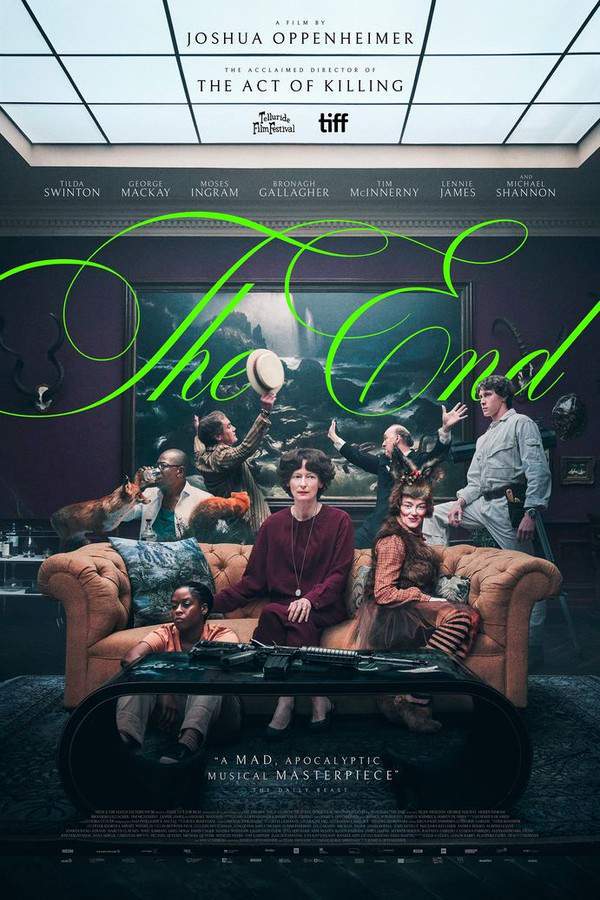
After an environmental collapse renders the Earth uninhabitable, a family—Mother, Father, and Son—lives in a luxurious underground bunker, striving to preserve a sense of normalcy through daily rituals. Their carefully constructed world is disrupted by the arrival of a young woman named Girl, who sparks fascination in the sheltered Son. This encounter exposes underlying tensions and long-hidden feelings, threatening the family's fragile optimism and revealing a need for acceptance and change.


Does The End have end credit scenes?
No!
The End does not have end credit scenes. You can leave when the credits roll.
Meet the Full Cast and Actors of The End
Explore the complete cast of The End, including both lead and supporting actors. Learn who plays each character, discover their past roles and achievements, and find out what makes this ensemble cast stand out in the world of film and television.






External Links and Streaming Options
Discover where to watch The End online, including streaming platforms, rental options, and official sources. Compare reviews, ratings, and in-depth movie information across sites like IMDb, TMDb, Wikipedia or Rotten Tomatoes.











Ratings and Reviews for The End
See how The End is rated across major platforms like IMDb, Metacritic, and TMDb. Compare audience scores and critic reviews to understand where The End stands among top-rated movies in its genre.

The Movie Echo Score
The End delivers a thematically rich exploration of guilt and societal collapse, anchored by incisive performances but hampered by uneven musical elements. Critics applaud its subtle tonal shifts and moral depth while noting moments of airiness and protracted pacing. The film’s direction garners mixed reactions, balancing daring creativity against a sense of theatrical stasis. Though its apocalyptic vision resonates, the heavy-handed melodrama and lacklustre songs temper its overall impact.
The Movie Echo Score Breakdown for The End

Art & Craft
In terms of direction and visual execution, The End exhibits both ambition and restraint. Some reviewers highlight daring conceptual staging and a chamber-play aesthetic, while others note prolonged static shots that undermine momentum. The production design evokes an apocalyptic mood, but pacing issues in the editing occasionally disrupt immersion. Overall, the artistic execution feels uneven.

Character & Emotion
When it comes to acting and emotional depth, The End offers a blend of nuanced performances and moments of theatrical restraint. Several actors convey buried guilt and complex dynamics effectively, particularly in the central relationship. However, some ensemble members deliver flatter portrayals that limit emotional resonance. The overall character work remains uneven but occasionally compelling.

Story & Flow
In terms of plot coherence and narrative flow, The End presents a thought-provoking meditation on societal collapse and self-delusion. The depiction of guilt and moral complexity earns consistent praise, and thematic originality sets it apart. Yet extended sequences of everyday banality and occasional heavy-handed melodrama slow momentum. Overall, the story remains engaging but uneven in pacing.

Sensory Experience
When assessing the soundtrack and visual style, The End features a striking apocalyptic aesthetic and occasional melodic motifs. Many find the musical numbers lacklustre and unevenly integrated despite sound design that underscores a chamber atmosphere. The visual cohesion at times feels deliberate yet cold. Overall, uneven song and dance sequences reduce the film’s sensory impact.

Rewatch Factor
Regarding replay value, The End’s thematic depth and moral inquiry encourage further reflection, suggesting potential for cult status among dedicated viewers. However, its deliberate pacing, airiness in certain scenes, and uneven musical elements may limit broad rewatch appeal. Overall, the film offers lasting conceptual interest but uneven enjoyment on subsequent viewings.

65
Metascore
6.2
User Score


%
TOMATOMETER

0%
User Score

5.4 /10
IMDb Rating

/5
Take the Ultimate The End Movie Quiz
Challenge your knowledge of The End with this fun and interactive movie quiz. Test yourself on key plot points, iconic characters, hidden details, and memorable moments to see how well you really know the film.
The End Quiz: Test your knowledge of the 2024 film *The End* with these 10 questions ranging from easy to challenging. Each question includes a hint and an explanation.
What type of underground facility do the main family live in?
Full Plot Summary and Ending Explained for The End
Read the complete plot summary of The End, including all major events, twists, and the full ending explained in detail. Explore key characters, themes, hidden meanings, and everything you need to understand the story from beginning to end.
Set two decades after an environmental catastrophe renders Earth’s surface uninhabitable, the narrative centers on a wealthy family—Tilda Swinton as Mother, Michael Shannon as Father, and their 20-year-old George MacKay as Son—who have sealed themselves inside a luxurious bunker carved from a converted salt mine, living with a small circle of companions: Bronagh Gallagher as Friend, Tim McInnerny as Butler, and Lennie James as Doctor. The Son, raised underground, longs to see the surface and fills his days by building scale models of historical events and places, a quiet, imaginative rebellion against the world they’ve chosen to inhabit.
Inside, the family follows a strict routine that gives order to their claustrophobic life: safety emergency drills, indoor pool workouts, ongoing duties to keep the bunker running, and a carefully curated collection of art Mother had brought with them. The bunker is dressed to mirror changing seasons, a deliberate effort by Mother to craft perfection in their isolated existence. The Father assists in maintaining this fragile illusion while the Son collaborates on a memoir, describing his past in the energy industry in broader, sometimes embellished terms and recounting philanthropy in a way that blurs fact and memory.
The Friend describes to the Son how her own son was sick with cancer and would not have survived in the bunker, a candid, painful memory that deepens the sense of isolation and loss surrounding the group. The Son begins to feel keen loneliness, a longing to experience the outside world that has become mythic to him. Their quiet routine is interrupted when they discover a Moses Ingram as Girl unconscious in the mines, and they bring her inside to question her about how she found them and what she might know about the surface. The Girl paints a bleak picture of an uninhabitable exterior and reveals that her family died trying to cross a river, leaving her alone with her trauma. Although they debate whether to keep her, the group casts her back out, but the Girl escapes and runs through the bunker, evading capture until the Son pleads for her to stay.
The Girl struggles to adapt to life underground. Mother grows suspicious and voices concerns to the Father while attempting to teach the Girl about their world and to probe her motives. The Mother also pursues her relationship with the Father, a tension that surprises him. Over time, the Girl and the Son form a slow bond. The Son confesses his growing feelings for the Girl to his parents, triggering a debate about love, naivety, and the ethics of their covert existence. He gives the Girl a watch as a sign of trust, and she accepts, though with lingering hesitation. The Girl challenges the Son’s obsession with his scale models of the outside world, especially when he defends the brutal history of the first transcontinental railroad as a necessary step in civilization.
Meanwhile, the Mother and Friend grapple with sleeplessness and nightmares, which Doctor tends to with sleeping pills and reassurance. During a writing session, the Son seeks to understand more about their lives before the bunker and how his Father met his Mother. The Butler and the Father discuss love and longing, and the Son later writes a flowery, embellished version of how the Father met the Mother, which he then shares with the Mother, folding their memories into the present. As winter arrives, the family stages a New Year’s Eve with homemade costumes and a program of skits, even a soft-shoe dance by the Butler and the Father, a moment of fragile joy amid their confinement.
During the New Year dinner, the Girl appeals to the Mother about abandoning the rest of humanity, arguing for a more permanent retreat from the world; the Father halts the conversation, and the Mother wrestles with survivor’s guilt, ultimately justifying their choice as a life they too helped create. The Father continues to rationalize his actions while working on the memoir with the Son, even trying to persuade the Girl of his innocence by insisting that other corporations were worse and, at least, >cared<. The Father’s reflections turn toward mortality and aging, and the Son questions why they left everyone else behind, a debate that underscores the ethical weight of their isolation. The Friend reveals a painful truth: her son did not die of cancer but was lost to addiction, and she chose to leave him behind to seek safety in the bunker. She later overdoses on sleeping pills prescribed by the Doctor, leaving the Son distraught and inflaming a confrontation with the Girl about responsibility and guilt.
Time passes, and a troubling quiet settles over the bunker until, in a future that feels both distant and intimate, the Son and the Girl have a baby together. The family gathers to celebrate the Girl’s birthday and captures a family photo, a fragile record of a life that refuses to be erased. The Mother and the Girl both contemplate what lies ahead for them, and the final moments leave a quiet echo of hope and uncertainty about the future beneath the surface they have chosen to inhabit.

Coming soon on iOS and Android
The Plot Explained Mobile App
From blockbusters to hidden gems — dive into movie stories anytime, anywhere. Save your favorites, discover plots faster, and never miss a twist again.
Sign up to be the first to know when we launch. Your email stays private — always.
Explore the mobile appDiscover Film Music Concerts Near You – Live Orchestras Performing Iconic Movie Soundtracks
Immerse yourself in the magic of cinema with live orchestral performances of your favorite film scores. From sweeping Hollywood blockbusters and animated classics to epic fantasy soundtracks, our curated listings connect you to upcoming film music events worldwide.
Explore concert film screenings paired with full orchestra concerts, read detailed event information, and secure your tickets for unforgettable evenings celebrating legendary composers like John Williams, Hans Zimmer, and more.


Cars Featured in The End
Explore all cars featured in The End, including their makes, models, scenes they appear in, and their significance to the plot. A must-read for car enthusiasts and movie buffs alike.
The End Themes and Keywords
Discover the central themes, ideas, and keywords that define the movie’s story, tone, and message. Analyze the film’s deeper meanings, genre influences, and recurring concepts.
The End Other Names and Titles
Explore the various alternative titles, translations, and other names used for The End across different regions and languages. Understand how the film is marketed and recognized worldwide.
Articles, Reviews & Explainers About The End
Stay updated on The End with in-depth articles, critical reviews, and ending explainers. Explore hidden meanings, major themes, and expert insights into the film’s story and impact.
Similar Movies To The End You Should Know About
Browse a curated list of movies similar in genre, tone, characters, or story structure. Discover new titles like the one you're watching, perfect for fans of related plots, vibes, or cinematic styles.



-UVZYxLE_O890yA.jpg)
Quick Links: Summary, Cast, Ratings, More

What's After the Movie?
Not sure whether to stay after the credits? Find out!
Check out our other apps:

SAT Sphere
Build confidence for the Digital SAT.

Mori Atlas
Discover wild places worth protecting.

Luntero
Search smarter for a home in Amsterdam.

Plot Explained
Unravel movie endings and hidden clues.

Pokechamp
Dive into Pokémon data and battle logic.

Driving Theory
Get ready for your European theory test.

Movie Dust
Plan your next cinema trip with ease.

Musemap
Find art and culture as you travel.

Selkobase
Compare credentials before committing.

Local Manual
Turn an unfamiliar country into practical next steps.

Lernavi
Compare school systems before your next move.

GymRoam
Find a workout stop wherever your plans take you.
Explore Our Movie Platform
New Movie Releases (2026)
Famous Movie Actors
Top Film Production Studios
Movie Plot Summaries & Endings
Major Movie Awards & Winners
Best Concert Films & Music Documentaries
Movie Collections and Curated Lists
© 2026 What's After the Movie. All rights reserved.
Privacy Policy