The Electrical Life of Louis Wain 2021


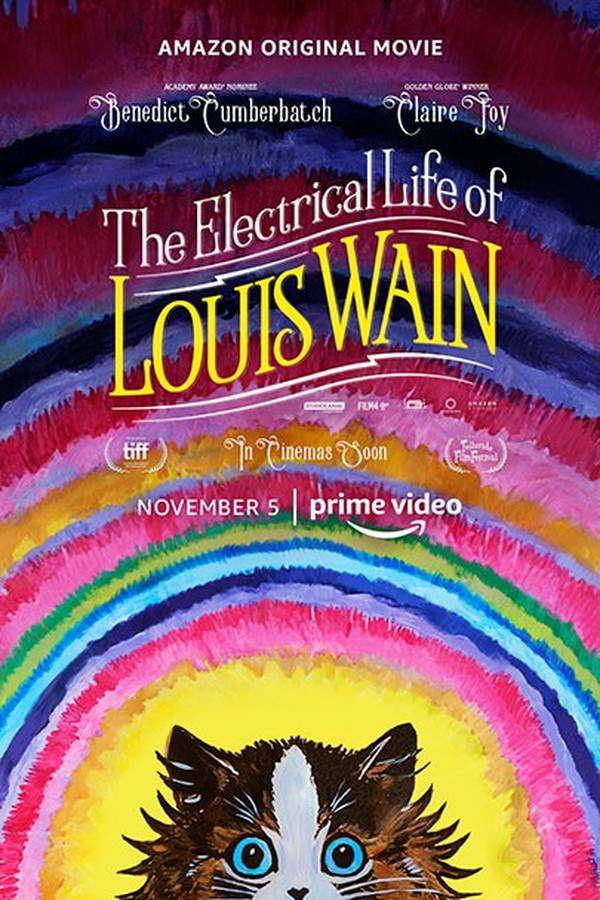
During the late 1800s in Britain, eccentric artist Louis Wain gains recognition for his unique and playful depictions of cats. The film follows his life through the Victorian era and into the 1930s, exploring his artistic evolution and his relationship with his wife, Emily Richardson. It reveals the story of an unconventional man whose work profoundly changed how cats were perceived and celebrated.


Does The Electrical Life of Louis Wain have end credit scenes?
No!
The Electrical Life of Louis Wain does not have end credit scenes. You can leave when the credits roll.
Where to Watch The Electrical Life of Louis Wain
See current US streaming, rental, and purchase options for The Electrical Life of Louis Wain (2021) via JustWatch.


Streaming availability powered by 
Meet the Full Cast and Actors of The Electrical Life of Louis Wain
Explore the complete cast of The Electrical Life of Louis Wain, including both lead and supporting actors. Learn who plays each character, discover their past roles and achievements, and find out what makes this ensemble cast stand out in the world of film and television.

Toby Jones
Sir William Ingram

Benedict Cumberbatch
Louis Wain

Taika Waititi
Max Kase

Olivier Richters

Adeel Akhtar
Dan Rider

Olivia Colman
Narrator

Andrea Riseborough
Caroline Wain

Aimee Lou Wood
Claire Wain

Claire Foy
Emily Richardson-Wain

Jamie Demetriou

Stacy Martin
Felicie Wain

Sophia Di Martino
External Links and Streaming Options
Discover where to watch The Electrical Life of Louis Wain online, including streaming platforms, rental options, and official sources. Compare reviews, ratings, and in-depth movie information across sites like IMDb, TMDb, Wikipedia or Rotten Tomatoes.










Ratings and Reviews for The Electrical Life of Louis Wain
See how The Electrical Life of Louis Wain is rated across major platforms like IMDb, Metacritic, and TMDb. Compare audience scores and critic reviews to understand where The Electrical Life of Louis Wain stands among top-rated movies in its genre.

The Movie Echo Score
The Electrical Life of Louis Wain offers a visually engaging biopic anchored by strong lead performances, though its narrative coherence falters at times. Critics and viewers alike note the film's striking aesthetic and heartfelt moments, while also pointing to uneven pacing and occasional contrivance. The overall impression is one of a commendable but imperfect tribute to its subject, delivering more than modest enjoyment for most audiences.
The Movie Echo Score Breakdown for The Electrical Life of Louis Wain

Art & Craft
In terms of art and craft, the film showcases a vivid visual palette and meticulous production design. Reviewers commend the cinematography’s painterly quality and the end‑credit sequence that reflects Wain’s aesthetic. Some criticisms target the occasional contrived tone and a restrictive aspect‑ratio choice that feels cramped. Overall, the craftsmanship largely enhances the period atmosphere despite minor missteps.

Character & Emotion
Character and emotion receive strong support from Benedict Cumberbatch’s layered portrayal and Claire Foy’s grounded performance. Critics highlight the nuanced chemistry and emotional resonance of the leads, and many viewers describe the acting as a central strength. A few dissenting voices note moments of over‑familiarity in Cumberbatch’s repertoire. On balance, the performances elevate the film’s emotional core.

Story & Flow
The story and flow are a blend of engaging biographical beats and uneven narrative pacing. Positive remarks cite an affable early act and respectful handling of Wain’s life, while criticism points to a convoluted opening and a final third that loses momentum. Some viewers find the plot unpredictable and moving, yet others describe it as pretentious and padded. Consequently, the narrative impact is mixed.

Sensory Experience
Sensory experience stands out through a beautiful score and striking visual composition. Reviewers repeatedly mention the gorgeous cinematography that mirrors Wain’s paintings and a memorable Theremin‑based soundtrack. The sound design and musical choices are described as exemplary, adding depth to the period setting. Few negative comments arise, making the sensory elements a clear highlight of the film.

Rewatch Factor
Rewatch factor is moderate, with many appreciating the film’s charm and unique artistic angle enough to consider a second viewing. Viewers note lasting appeal in the performances and visual style, though some question its long‑term memorability due to narrative unevenness. The consensus suggests the film offers decent replay value for those interested in its subject, but it may not compel repeated viewings for all audiences.

63
Metascore
7.1
User Score


68%
TOMATOMETER

70%
User Score

6.8 /10
IMDb Rating

70
%
User Score

3.6
From 445 fan ratings

4.22/5
From 9 fan ratings
Take the Ultimate The Electrical Life of Louis Wain Movie Quiz
Challenge your knowledge of The Electrical Life of Louis Wain with this fun and interactive movie quiz. Test yourself on key plot points, iconic characters, hidden details, and memorable moments to see how well you really know the film.
The Electrical Life of Louis Wain Quiz: Test your knowledge about the life and artistic journey of Louis Wain as depicted in the movie.
In what year does Louis Wain become the primary breadwinner for his family?
Full Plot Summary and Ending Explained for The Electrical Life of Louis Wain
Read the complete plot summary of The Electrical Life of Louis Wain, including all major events, twists, and the full ending explained in detail. Explore key characters, themes, hidden meanings, and everything you need to understand the story from beginning to end.
In the year 1881, just 18 months following the death of his father, Louis Wain, portrayed by the talented Benedict Cumberbatch, becomes the primary provider for his family, which includes his five sisters and their mother. Taking on the role of the family’s sole male figure, he secures a position as an illustrator for The Illustrated London News under the guidance of Sir William Ingram. Initially, Ingram offers him a full-time position, but Louis, with hopes of finding success in both music and playwriting, decides to turn it down, seeking avenues that, unfortunately, yield no fruitful results.
To support his sisters, Louis hires Emily Richardson, played by the charming Claire Foy. The moment they meet, their chemistry ignites a spark of attraction, much to the displeasure of the eldest sister, Caroline (played by Andrea Riseborough). In a bid to keep Emily close, Louis eventually accepts the full-time role, hoping to retain her as the governess. An educational theater outing to see The Tempest takes an unexpected turn when Louis’s panic over a recurring nightmare causes Emily to comfort him in a men’s restroom, igniting gossip from the ever-curious neighbor, Mrs. DuFrane. Embarrassed by her dismissal following the incident, Caroline soon fires Emily. In a twist of fate, before she departs, Louis declares his feelings for her, leading to a budding romance.
Fast forward to 1884, and the couple happily marries, yet their union triggers yet another scandal within the Wain family due to the significant age difference—Emily being ten years his senior—and her status as a governess. Settling into their new home in Hampstead, Louis begins to freelance as an illustrator to help support his family. However, tragedy befalls them when Emily receives a grim diagnosis of breast cancer. To alleviate their sorrows, they adopt a stray kitten named Peter—a notable pet choice during the rigid era of Victorian society. Louis starts painting Peter, transforming his artwork into whimsical representations, as he infuses more anthropomorphic qualities into the cats, reflecting the emotional turmoil stemming from Emily’s declining health.
As England faces a financial crisis, the newspaper cuts down on staff, leading Sir William Ingram to advise Louis to cherish more time with his wife. Following his encouragement, Louis presents his imaginative illustrations to Sir William, and miraculously, they make their way into the Christmas edition, drawing in significant attention. Unfortunately, the joy is short-lived as Emily passes away a few months later. Grieving, Louis immerses himself in creating a variety of cat illustrations, ultimately forming fanciful societies of feline characters, though his work increasingly reveals his detachment from reality.
By 1891, the popularity of Louis’s delightful cat depictions skyrockets, gracing postcards and greeting cards, thereby altering public perception about keeping cats as pets. Louis gains notoriety and even becomes chairman of The National Cat Society. However, the family’s financial struggles compound. With Louis’s failure to copyright his art, they remain in a constant state of debt, leading to their eviction from the Sussex home. The youngest sister, Marie, begins to show signs of mental illness, adding further strain to their familial bonds.
In a twist of fortune, Sir William offers a temporary refuge for the family at one of his properties, but darkness looms as Marie is institutionalized, and following the death of Peter, Louis spirals into his own mental decline. In 1907, he embarks on a trip to New York, courtesy of newspaper magnate William Randolph Hearst, with aspirations to foster a thriving career in America that could alleviate his debts. Upon meeting Max Kase, played by Taika Waititi, Louis learns of the widespread admiration for his artwork. However, tragedy strikes again as he receives news of his mother’s death from influenza shortly after arriving in the city. Though he finds temporary success in New York, he returns to England in 1914 at Caroline’s urging.
Upon his return, the grim news unfolds; Marie has also succumbed to influenza, and Sir William passes away due to gout complications. Following the family’s eviction, they relocate to a modest flat in London. Louis continues to illustrate amidst the backdrop of World War I, and in an unfortunate accident, he falls and hits his head while attempting to jump off a double-decker bus, descending into a coma that gifts him a vision of the year 1999. Awakening from the coma, he draws inspiration to design avant-garde cat toys, which are produced, seemingly heralding a change in fortunes, only for hope to be sunk when a German U-boat destroys the ship carrying these toys.
The year 1917 sees more loss with Caroline’s death. The cumulative grief of losing Emily, his mother, Marie, Peter, and Sir William plunges Louis into profound mental breakdowns. In 1924, his sisters feel compelled to admit him to the Springfield Mental Hospital in Tooting. During an inspection, Dan Rider (played by Adeel Akhtar), recognizes Louis from a moment in their shared past and launches a campaign to secure funding for Louis to move to a more humane facility that welcomes cats and offers patients access to nature.
The response to this campaign is overwhelming, with contributions pouring in from thousands of Louis’s admirers, including contributions from renowned author H.G. Wells and other prominent British figures. The funds successfully lead to Louis’s transfer to Bethlem Royal Hospital in Southwark, where he is granted the companionship of a cat. By 1930, he finds himself in Napsbury Hospital in St. Albans, and as he navigates this new chapter, he finds solace in the spirit of Emily. With his journal and a remnant of Emily’s old scarf, he sets out into the painted countryside, the very place where Emily prophesied he would eventually find her, echoing the profound blend of love, loss, and the enduring connection they once shared.

Coming soon on iOS and Android
The Plot Explained Mobile App
From blockbusters to hidden gems — dive into movie stories anytime, anywhere. Save your favorites, discover plots faster, and never miss a twist again.
Sign up to be the first to know when we launch. Your email stays private — always.
Explore the mobile appWatch Trailers, Clips & Behind-the-Scenes for The Electrical Life of Louis Wain
Watch official trailers, exclusive clips, cast interviews, and behind-the-scenes footage from The Electrical Life of Louis Wain. Dive deeper into the making of the film, its standout moments, and key production insights.
The Electrical Life of Louis Wain Themes and Keywords
Discover the central themes, ideas, and keywords that define the movie’s story, tone, and message. Analyze the film’s deeper meanings, genre influences, and recurring concepts.
The Electrical Life of Louis Wain Other Names and Titles
Explore the various alternative titles, translations, and other names used for The Electrical Life of Louis Wain across different regions and languages. Understand how the film is marketed and recognized worldwide.
Similar Movies To The Electrical Life of Louis Wain You Should Know About
Browse a curated list of movies similar in genre, tone, characters, or story structure. Discover new titles like the one you're watching, perfect for fans of related plots, vibes, or cinematic styles.








Quick Links: Summary, Cast, Ratings, More

What's After the Movie?
Not sure whether to stay after the credits? Find out!
Check out our other apps:

SAT Sphere
Build confidence for the Digital SAT.

Mori Atlas
Discover wild places worth protecting.

Luntero
Search smarter for a home in Amsterdam.

Plot Explained
Unravel movie endings and hidden clues.

Pokechamp
Dive into Pokémon data and battle logic.

Driving Theory
Get ready for your European theory test.

Movie Dust
Plan your next cinema trip with ease.

Musemap
Find art and culture as you travel.

Selkobase
Compare credentials before committing.

Local Manual
Turn an unfamiliar country into practical next steps.

Lernavi
Compare school systems before your next move.

GymRoam
Find a workout stop wherever your plans take you.
Explore Our Movie Platform
New Movie Releases (2026)
Famous Movie Actors
Top Film Production Studios
Movie Plot Summaries & Endings
Major Movie Awards & Winners
Best Concert Films & Music Documentaries
Movie Collections and Curated Lists
© 2026 What's After the Movie. All rights reserved.
Privacy Policy