Tchaikovsky 1970

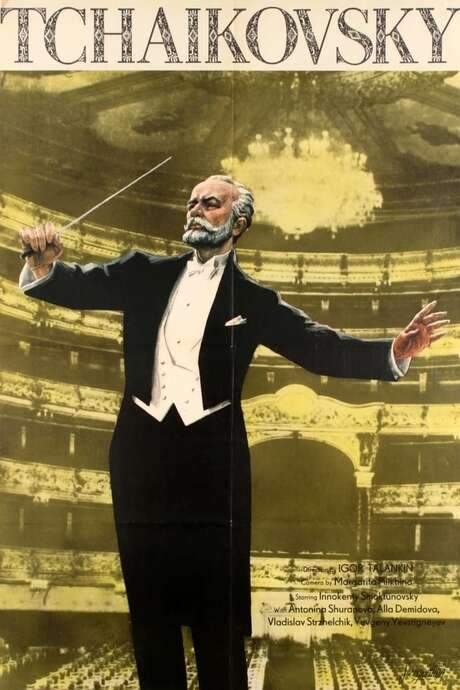
The film honors Russian composer Pyotr Tchaikovsky (1840‑1893), focusing on the last twenty years of his life and his close friendship with patron Baroness Nadezhda von Meck. It also glances at his childhood and adolescence, set against excerpts from his operas and ballets performed by top Russian musicians.


Does Tchaikovsky have end credit scenes?
No!
Tchaikovsky does not have end credit scenes. You can leave when the credits roll.
Meet the Full Cast and Actors of Tchaikovsky
Explore the complete cast of Tchaikovsky, including both lead and supporting actors. Learn who plays each character, discover their past roles and achievements, and find out what makes this ensemble cast stand out in the world of film and television.
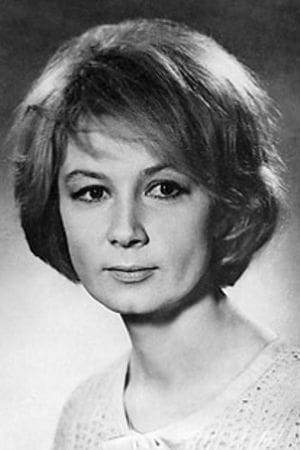
Alla Demidova
Yulia von Meck

Innokentiy Smoktunovskiy
Pyotr Ilyich Tchaikovsky (Chaikovsky)
Kirill Lavrov
Pahulsky
Antonina Shuranova
Natalia von Meck
Nina Agapova
Gostya
Evgeni Leonov
Aliosha
Nikolay Trofimov
Chief of Police
Bruno Frejndlikh
Turgenev
Mariya Vinogradova
Woman Call the Police
Evgeniy Evstigneev
Laroche
Yakov Nayshuler
эпизод (нет в титрах)
Vladislav Strzhelchik
Nicholas Rubinstein
Ervin Knausmyuller
Butler
Aleftina Evdokimova
Singer
Arkadi Trusov
Agathon
Maya Plisetskaya
Desire
Liliya Yudina
Milyukova
Tatyana Strukova
Queen of Spades
Natalya Klimova
Vladimir Maslatsov
Tramp
Liliya Evstigneeva
Gostya na priyeme
Gerasim Voronkov
Petja Tchaikovsky (Chaikovsky)
Nikolai Afanasyev
Gostya
Luiza Koshukova
Mother Tchaikovsky (Chaikovsky)
External Links and Streaming Options
Discover where to watch Tchaikovsky online, including streaming platforms, rental options, and official sources. Compare reviews, ratings, and in-depth movie information across sites like IMDb, TMDb, Wikipedia or Rotten Tomatoes.






Full Plot Summary and Ending Explained for Tchaikovsky
Read the complete plot summary of Tchaikovsky, including all major events, twists, and the full ending explained in detail. Explore key characters, themes, hidden meanings, and everything you need to understand the story from beginning to end.
Tchaikovsky, Innokentiy Smoktunovskiy, sits at the center of a film that threads his dazzling music with intimate longing, personal struggle, and the weight of public expectation. In the opening chapters, as he wrestles with the craft of his First Piano Concerto, his friend Nikolai Grigoryevich Rubinstein Vladislav Strzhelchik bluntly refuses to perform it at the premiere, a setback that casts a long shadow over the young composer’s confidence. The disappointment mirrors a larger pattern: art that bursts forth under scrutiny, often at the expense of warmth and ease.
Following the misfire of the premiere, the narrative moves through a sequence of pivotal moments that push his music and his life in new directions. After the heavy blow of the Swan Lake setback, the wealthy widow Nadezhda Filaretowna von Meck provides crucial financial support, steering the artist through turbulent times without fully smoothing the rough edges of his reality. Later, as he turns to Eugene Onegin, a correspondence from a student named Antonina Ivanovna pulls him toward a personal crossroads; an attempt to meet her leads to a brief arrest, underscoring how proximity to affection and connection can collide with society’s boundaries. In the wake of these emotional storms, he dedicates his Fourth Symphony to von Meck, a gesture that signals hope—hope that marriage and stability might finally bring him peace.
Yet the road remains rocky. The film does not shy away from the darker chapters: a crisis in his married life pushes him toward despair, and in a moment of surrender he attempts suicide. Von Meck steps in once more, offering financial aid in the hope that he can secure a divorce and salvage what remains of his life and career. The world around him is restless, too; Rubinstein’s Paris debut brings renewed attention to the concerto, but the arc abruptly turns when Rubinstein dies, a turning point that echoes through the rest of Tchaikovsky’s choices. The composer declines an opportunity to assume leadership of the Moscow Conservatory, choosing instead to follow his own unpredictable path.
Back in Russia, the film places Tchaikovsky under the lens of public critique—especially for a controversial staging of The Maid of Orleans. As he grapples with reputational scrutiny, von Meck’s influence shifts dramatically when she hostingly throws a party in his honor and then abruptly severs the relationship. Despite concerted efforts to tarnish his name, the composer’s resilience shines through as he achieves a notable triumph with Queen of Spades, a moment that reaffirms his stature even as personal ties fray. In a striking interlude, the legendary dancer Maya Plisetskaya appears as Desire, a brief but memorable motif that bridges the stage world with the film’s portrait of a life saturated by performance and emotion.
The film’s emotional peak comes as von Meck’s illness looms large. Learning of her illness, Tchaikovsky writes what becomes his final symphony, Pathétique, a work that crystallizes the sense of farewell and reflection that threads his later years. The closing pages of the story are heavy with inevitability: not long after the premiere of Pathétique, the composer succumbs to cholera, his prolific career ending as dramatically as it began, leaving behind a legacy of some of classical music’s most enduring themes and melodies.
Across these episodes, the film maintains a clear, steady focus on the tension between genius and vulnerability. It presents how Tchaikovsky’s music is inseparable from his life—how his melodies arise from love and loneliness, from triumph and humiliation, from the friendships that sustain him and the patrons who propel him forward. The narrative keeps a careful balance between biographical detail and the universal human questions that his life embodies: how to endure public scrutiny, how to seek personal happiness, and how to translate inner tumult into art that can outlive the man who created it. The result is a richly textured portrait that stays faithful to the spirit of its subject while expanding the emotional landscape beyond what a straightforward chronology might offer.

Coming soon on iOS and Android
The Plot Explained Mobile App
From blockbusters to hidden gems — dive into movie stories anytime, anywhere. Save your favorites, discover plots faster, and never miss a twist again.
Sign up to be the first to know when we launch. Your email stays private — always.
Explore the mobile appDiscover Film Music Concerts Near You – Live Orchestras Performing Iconic Movie Soundtracks
Immerse yourself in the magic of cinema with live orchestral performances of your favorite film scores. From sweeping Hollywood blockbusters and animated classics to epic fantasy soundtracks, our curated listings connect you to upcoming film music events worldwide.
Explore concert film screenings paired with full orchestra concerts, read detailed event information, and secure your tickets for unforgettable evenings celebrating legendary composers like John Williams, Hans Zimmer, and more.


Tchaikovsky Themes and Keywords
Discover the central themes, ideas, and keywords that define the movie’s story, tone, and message. Analyze the film’s deeper meanings, genre influences, and recurring concepts.

Unlock the World of Movies with Our Comprehensive Wiki
Dive into our Movie Wiki for in-depth film encyclopedia entries, including cast biographies, production trivia, plot synopses, behind-the-scenes facts, and thematic analyses. Whether you’re researching iconic directors, exploring genre histories, or discovering hidden easter eggs, our expertly curated movie database has everything you need to fuel your cinematic passion.
Similar Movies To Tchaikovsky You Should Know About
Browse a curated list of movies similar in genre, tone, characters, or story structure. Discover new titles like the one you're watching, perfect for fans of related plots, vibes, or cinematic styles.



Quick Links: Summary, Cast, Ratings, More

What's After the Movie?
Not sure whether to stay after the credits? Find out!
Check out our other apps:

SAT Sphere
Build confidence for the Digital SAT.

Mori Atlas
Discover wild places worth protecting.

Luntero
Search smarter for a home in Amsterdam.

Plot Explained
Unravel movie endings and hidden clues.

Pokechamp
Dive into Pokémon data and battle logic.

Driving Theory
Get ready for your European theory test.

Movie Dust
Plan your next cinema trip with ease.

Musemap
Find art and culture as you travel.

Selkobase
Compare credentials before committing.

Local Manual
Turn an unfamiliar country into practical next steps.

Lernavi
Compare school systems before your next move.

GymRoam
Find a workout stop wherever your plans take you.
Explore Our Movie Platform
New Movie Releases (2026)
Famous Movie Actors
Top Film Production Studios
Movie Plot Summaries & Endings
Major Movie Awards & Winners
Best Concert Films & Music Documentaries
Movie Collections and Curated Lists
© 2026 What's After the Movie. All rights reserved.
Privacy Policy