The Blue Trail (2026) Reviews & Reception: Critical Consensus, Audience Reactions, and Is It Worth Watching?
When The Blue Trail (also known by its original Portuguese title O Último Azul) received its wide theatrical release on April 3, 2026, it arrived already carrying the weight of significant festival buzz and contentious critical debate. This Brazilian dystopian drama, directed by Gabriel Mascaro and featuring a commanding lead performance from Denise Weinberg, has positioned itself as one of the most visually striking and thematically challenging films of the year. But beyond the stunning Amazonian cinematography lies a deeper conversation about aging, autonomy, and the value society places on its elderly citizens—a conversation that has polarized viewers and critics alike.
For audiences searching for a spoiler-free review of The Blue Trail or wondering about the critical consensus surrounding this unique entry in contemporary world cinema, understanding the landscape of reception is crucial. Unlike typical blockbuster fare that generates uniform reactions, Mascaro’s film has inspired deeply personal interpretations, with some hailing it as a masterpiece of magical realism while others grapple with its narrative pacing and structural choices. Whether you’re browsing What’s After the Movie for detailed film summaries or checking our movie wiki for background information, understanding how The Blue Trail has been received by both professional critics and everyday moviegoers will help determine if this challenging, ultimately hopeful film deserves your attention.
Critical Consensus on The Blue Trail (2026): What Do Film Critics Say?
The critical reception of The Blue Trail presents a fascinating case study in how modern film criticism evaluates ambition versus execution. With scores ranging from a disappointing 60/100 at Next Best Picture to a soaring 90/100 from both The Hollywood Reporter and Screen Daily, the film analysis reveals a picture that critics admire more for its emotional resonance and visual poetry than for its narrative tightness.
Next Best Picture offered one of the more reserved assessments, noting that “The Blue Trail, despite its many narrative flaws, stands out for a striking visual style and ability to ask uncomfortable questions about aging and autonomy.” This sentiment—that the film occasionally sacrifices plot coherence for thematic depth—recurs throughout several major publications. Critics consistently praise Mascaro’s direction and the film’s conceptual bravery while acknowledging that its picaresque structure may test viewers expecting traditional dystopian thriller beats.
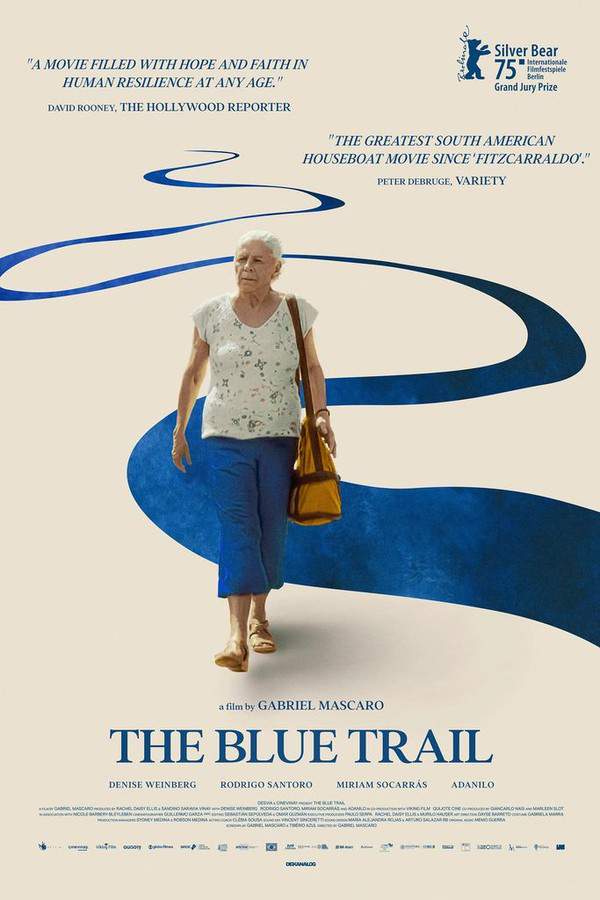
However, the critic reviews from industry heavyweights tell a different, more celebratory story. The Hollywood Reporter delivered one of the most effusive pieces of film reception coverage, declaring: “What’s remarkable about The Blue Trail and makes it such a delight is that despite all the oppression in the air, it’s a movie filled with hope and faith in human resilience at any age. The closing image will make your heart soar. And no, it’s not the one you were expecting.” This emphasis on the film’s emotional payoff and anti-cynical worldview has become a cornerstone of positive critical consensus, distinguishing it from bleaker entries in the dystopian genre.
Variety, awarding the film 80/100, contextualized Mascaro’s growth as a filmmaker, observing that “the ‘Neon Bull’ director has always had an incredible visual sense, though his plots tend to lack focus. Not this one.” This represents significant validation for the director, suggesting that The Blue Trail succeeds where previous works struggled. Meanwhile, Screen Daily described the film as “entrancingly unpredictable in its picaresque unravelling, tinged with magical realist touches,” highlighting the surreal, dreamlike quality that has captivated art-house audiences.
For readers exploring actor profiles and wondering about award season potential, the critical aggregation suggests that while The Blue Trail may not achieve universal acclaim, its champions are passionate and influential. The film sits comfortably in the “recommended with reservations” category for most serious film publications, making it essential viewing for fans of world cinema and challenging dramatic storytelling. Those interested in how this reception compares to other award contenders can explore our comprehensive coverage of the 2026 cinematic landscape.
Audience Reactions and Viewer Sentiment: Is The Blue Trail Worth Watching?
While critics debate the film’s structural merits, audience reactions to The Blue Trail have skewed overwhelmingly positive, particularly among Brazilian viewers and festival attendees who connect with the film’s cultural specificity and emotional authenticity. This divergence between critic reviews and viewer reactions offers valuable insight into who will most appreciate Mascaro’s vision.
User Robson C. provided one of the most detailed spoiler-free reviews available, analyzing the film’s dystopian mechanics: “In a dystopian future, the Brazilian government sends all citizens aged 75 to the Colony. Tereza, at 77, refuses to accept the imposed fate and flees through the Amazon rivers in search of her dreams.” This reviewer highlighted the film’s subtle critique of ageism, noting how “affectionate” treatments reveal prejudice—such as mandatory questionnaires and forced diaper-wearing on buses—demonstrating how the film exposes institutional elder care as often dehumanizing rather than supportive.
The fan opinions consistently emphasize empowerment and representation. User Pedro R. succinctly declared it “one of the best films of the year!” while Luciana O. celebrated it as “a beautiful and enchanting film that celebrates national cinema, filmed in the Brazilian Amazon, showing the beauty of this place in a unique way.” This pride in Brazilian filmmaking quality represents a significant segment of the audience reception, with many viewers appreciating the authentic Amazonian setting and local crew involvement.
International audiences have responded similarly enthusiastically. Bogdan D. praised the “visually stimulating” nature and “great pacing,” appreciating that “the world presented in the movie is left mostly ambiguous. Is there something sinister happening in those colonies? Maybe. Our protagonist surely thinks her freedom is worth more and goes to extreme lengths to avoid this fate.” This ambiguity—resisting the urge to over-explain its dystopian mechanics—has resonated with viewers who prefer thoughtful science fiction over exposition-heavy narratives.
Perhaps most telling is the reaction from Runa R., who noted: “What a delight to see this kind of film reaching commercial cinemas — where I saw it — outside the usual festival circuits, where it’s more common to come across such gems.” This speaks to the film reception dynamics of 2026, where challenging international cinema occasionally breaks through to mainstream theatrical distribution, finding audiences hungry for substance over spectacle.
For those wondering “Is The Blue Trail worth watching?” based on viewer reactions, the answer appears to be a resounding yes for viewers who value emotional depth, stunning cinematography, and performances that prioritize authenticity over showiness. Test your knowledge of similar films with our movie quizzes and games, or explore our movie collections featuring other powerful female-led dramas.
Visual Storytelling and Cinematic Reception: Amazonian Aesthetics and Magical Realism
One aspect of The Blue Trail that generates near-universal critical consensus is its breathtaking visual language. The film analysis consistently returns to Mascaro’s background in documentary filmmaking and his previous work on Neon Bull, noting how the director transforms the Amazon into a character unto itself—simultaneously threatening and liberating, natural and surreal.
The Film Stage specifically highlighted a sequence that has become touchstone for film reception discussions: “Credit to both Weinberg’s no-nonsense performance and the director’s surrealist instincts. There is a late sequence in this film, wherein Tereza visits a floating casino, that contains some of the most vividly beautiful images I’ve seen so far this year.” This marriage of grounded reality and dreamlike fantasy exemplifies the magical realist tradition in Latin American cinema, positioning The Blue Trail within a prestigious lineage while updating it for contemporary dystopian concerns.
Critics have noted that the visual splendor serves a thematic purpose beyond mere aesthetics. The Observer, awarding the film 88/100, declared that “Few films this year have been as soulful or as quietly defiant,” connecting the lush imagery to the film’s emotional core. The contrast between the oppressive, bureaucratic “Colony” (never fully shown, only implied through institutional violence) and the untamed, mysterious Amazon creates a visual dialectic about freedom and control that resonates throughout audience reactions.
This visual approach has drawn comparisons to other concert films and visually-driven cinematic experiences, though The Blue Trail uses its imagery in service of narrative rather than pure spectacle. The dystopian elements are rendered through small details—medical questionnaires, pastel-colored uniforms, bureaucratic indifference—rather than CGI-heavy futuristic cityscapes, creating a “near-future” aesthetic that feels disturbingly plausible.
Slant Magazine captured this duality in their review, describing it as “An empowering narrative of one woman who refuses to see age as a ceiling, the film serves as a potent warning for viewers about the marginalization of the elderly.” The visual language reinforces this warning through juxtaposition: the natural beauty of the Amazon against the clinical ugliness of ageist policies, Weinberg’s weathered, expressive face against the blank institutional surfaces she flees from.
For cinephiles interested in film analysis and visual storytelling, The Blue Trail represents a masterclass in location shooting and atmospheric tension. Check out our movie lists featuring other visually stunning international films, or visit the movie page for additional context on the production’s approach to capturing the Amazon on film.
Performance Analysis: Denise Weinberg and the Cast Reception
At the center of The Blue Trail’s critical reception stands Denise Weinberg’s performance as Tereza—a role that has generated some of the most passionate fan opinions and critic reviews of the 2026 film year. At 77 herself (mirroring her character’s age), Weinberg brings an authenticity and physical presence that anchors the film’s more surreal flourishes in genuine human experience.
User Pedro H. provided an extensive review calling Weinberg’s turn “a masterclass direct,” explaining that “she gives us a quiet, but fierce protagonist who shows that age does not mean weakness.” This assessment aligns with critical consensus: Tereza is not portrayed as a superhuman action hero or a helpless victim, but as a complex woman making difficult choices based on her own values and desires. The performance rejects both ageist stereotypes—the helpless elder and the miraculously spry senior—opting instead for granular realism.
Rodrigo Santoro’s supporting role has also garnered positive mentions in audience reactions, with César C. noting “a beautiful performance from Denise and Rodrigo” alongside praise for the cinematography. The ensemble—including Miriam Socarrás and Adanito—creates a community of fellow travelers and obstacles that feel specific to the Brazilian cultural context while maintaining universal relatability.
The Hollywood Reporter’s observation that the film builds to “a closing image [that] will make your heart soar” depends entirely on Weinberg’s ability to convey complex emotions through minimal dialogue and physical action. This restraint has been interpreted by some critics as “no-nonsense” (The Film Stage) and by others as quietly devastating (The Observer).
Critics have compared Weinberg’s work to other late-career triumphs by actresses who finally received leading roles after decades in the industry. The film reception positions Tereza as an iconic character in contemporary Brazilian cinema—a symbol of resistance not through grand speeches or violent action, but through the radical act of refusing to disappear, of insisting on visibility and agency in a culture eager to warehouse its elders.
For those interested in exploring more about the cast and their other works, visit our profiles page to discover other films featuring Weinberg and Santoro. You can also find detailed cast information on the movie page.
Thematic Deep Dive: Ageism, Autonomy, and Hope in The Blue Trail Reviews
Beyond its surface-level dystopian premise, The Blue Trail has generated significant film analysis regarding its treatment of ageism, bodily autonomy, and the societal value placed on human life as it extends into old age. This thematic richness explains why viewer reactions often describe the film as “a statement” rather than mere entertainment.
Robson C.’s detailed user review highlighted how the film critiques “affectionate” ageism—the well-meaning but dehumanizing treatment of elderly individuals as problems to be managed rather than people to be respected. The mandatory diapers, the condescending questionnaires, the assumption that dreams expire at 75: these elements resonate with viewers who recognize similar tendencies in real-world discussions about healthcare, retirement, and elder rights. As one fan opinion noted, the film “challenges stereotypes and paints a beautiful picture of rebellion at any age.”
The concept of “The Colony” itself—never shown but constantly threatened—has become a focal point for critical reception. By keeping the destination abstract, Mascaro transforms it from a literal place into a metaphor for societal abandonment of the elderly. Screen Daily’s observation that the film is “entrancingly unpredictable” stems partly from this refusal to deliver the expected dystopian tropes; instead of Logan’s Run-style action sequences or Soylent Green revelations, The Blue Trail offers something more introspective and ultimately more hopeful.
This hopefulness distinguishes the film from bleaker entries in the genre. The Hollywood Reporter emphasized that despite “all the oppression in the air, it’s a movie filled with hope and faith in human resilience at any age.” This critical consensus suggests that The Blue Trail uses its dystopian framework not to warn of inevitable doom, but to celebrate the possibility of resistance and self-determination. The film asks not “How do we survive the apocalypse?” but rather “How do we maintain our humanity when society tries to strip it away?”
The Amazon setting amplifies these themes, presenting nature as both threat and sanctuary—a place where Tereza must navigate physical dangers (alligators, rivers, isolation) that are ultimately less frightening than the bureaucratic violence she flees. User Pedro H. captured this duality, describing the film as “a celebration of age, freedom, and self-discovery.”
For readers interested in exploring similar themes across cinema history, our movie collections feature curated selections of films dealing with aging, autonomy, and dystopian futures. You can also track the film’s performance in theaters on our box office page.
Genre Expectations and Festival Circuit Reception: Where Does The Blue Trail Fit?
Understanding The Blue Trail’s place within the broader cinematic landscape requires examining how it navigates and subverts genre expectations. Premiering on the festival circuit before its April 2026 theatrical release, the film occupies a unique space between art-house magical realism and accessible dystopian drama—a positioning that has influenced both critic reviews and audience reactions significantly.
The film enters a marketplace saturated with dystopian content, yet distinguishes itself through cultural specificity and tonal restraint. Unlike Hollywood blockbusters that treat aging as either comedy fodder or horror premise, The Blue Trail approaches its subject with the gravity and nuance typical of Brazilian Cinema Novo traditions while maintaining the speculative elements that appeal to science fiction audiences. This hybrid identity has delighted festival attendees—Runa R. expressed joy at seeing “this kind of film reaching commercial cinemas… outside the usual festival circuits”—while potentially confusing viewers expecting more conventional thriller pacing.
The critical reception reflects this genre complexity. Next Best Picture’s critique of “narrative flaws” likely stems from expectations shaped by Western three-act structures, while Screen Daily’s praise for “entrancingly unpredictable” storytelling celebrates the film’s resistance to such formulas. The film analysis suggests that The Blue Trail demands to be evaluated on its own terms, as a work that prioritizes emotional truth over plot mechanics.
Comparisons to Mascaro’s previous work, particularly Neon Bull (2015), have dominated film reception discussions. Variety’s observation that the director has finally matched his visual sense with narrative focus suggests that The Blue Trail represents a maturation of his artistic vision—one that might serve as an entry point for viewers unfamiliar with contemporary Brazilian cinema. For those looking to explore similar works, our movie lists provide curated pathways into Latin American film and dystopian cinema.
The film’s festival pedigree—evidenced by the high-profile critics covering it and the passionate fan opinions from early screenings—positions it as a potential awards contender. Its combination of social relevance (addressing global aging populations and healthcare ethics), visual splendor, and standout central performance gives it the credentials typically favored by international film competitions. Track its journey through awards season on our awards page, or dive deeper into the production details on the movie wiki.
Ultimately, The Blue Trail succeeds by refusing easy categorization. It is simultaneously a road movie, a dystopian thriller, a character study, and a visual poem—demanding that audiences meet it on its own unique wavelength.
Conclusion: Final Thoughts on The Blue Trail Reception and Viewer Takeaways
As the discourse surrounding The Blue Trail (2026) continues to evolve beyond its initial release, the critical consensus and audience reactions have coalesced around a clear verdict: this is a film of significant ambition and rare emotional power, even if its narrative approach occasionally frustrates viewers seeking more conventional storytelling. The divergence between the mixed-but-respectful critical scores (ranging from 60 to 90) and the overwhelmingly enthusiastic user reviews suggests that The Blue Trail connects most deeply with viewers willing to surrender to its rhythm and trust its vision.
The film reception landscape reveals that Mascaro has created something genuinely distinct in the current cinematic marketplace—a dystopian film that chooses hope over cynicism, a road movie centered on a septuagenarian woman, a Brazilian production that achieves international relevance without compromising its cultural specificity. Whether you encounter it through spoiler-free reviews recommending it as essential viewing or stumble upon it while browsing What’s After the Movie for your next watch, the film offers a rewarding experience for patient, open-minded audiences.
For those still asking “Is The Blue Trail worth watching?” consider what you value in cinema. If you prioritize stunning visuals that serve emotional truth, performances that honor the complexity of aging, and stories that challenge societal assumptions about worth and autonomy, then the viewer reactions suggest you will find much to admire. If you require tight plotting and clear resolution, you may find yourself aligned with the more critical reviews—but even detractors acknowledge the film’s visual mastery and thematic importance.
As The Blue Trail continues its theatrical run and eventually moves to streaming platforms, its reputation as a cult classic in formation seems assured. The film has already sparked conversations about ageism, healthcare, and human dignity that extend far beyond cinema into urgent real-world policy discussions. That a film can entertain, move, and provoke such thought represents the highest achievement of the medium.
Explore the complete details, cast information, and additional resources for this compelling film on the movie page, and discover more curated content across our platform including summaries, box office data, and interactive features designed to enhance your movie-watching experience.
External Links and Resources
| Site | Link |
|---|---|
| Wikipedia | The Blue Trail Wikipedia |
| Rotten Tomatoes | The Blue Trail Rotten Tomatoes |
| Metacritic | The Blue Trail Metacritic |
| JustWatch | The Blue Trail JustWatch |
| Box Office Mojo | The Blue Trail Box Office Mojo |