What's After the Blog?
Opinions • Reception
Robin and the Hoods (2025) Review, Opinions & Reception – Critics and Fan Reactions Analyzed
Explore fan reactions and critic reviews of Robin and the Hoods (2025), examining performances, storytelling, and its emerging franchise context. The post breaks down the reception, highlighting praise for imaginative world-building and critiques of pacing.
August 30, 2025

Movies mentioned in this article
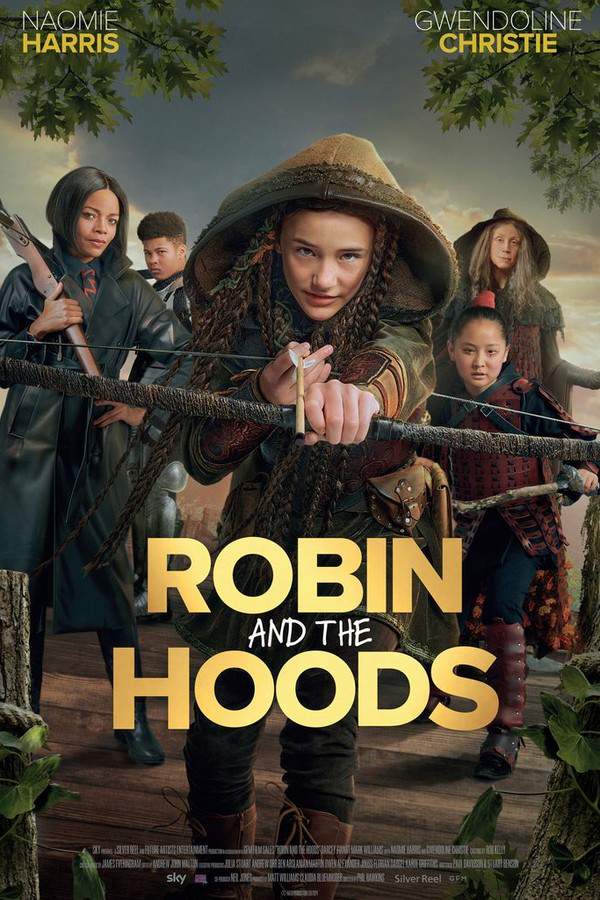
Robin and the Hoods (2025) Reviews & Reception – Critics, Audiences, and What’s After the Movie Insights
Welcome to What’s After the Movie – your go‑to hub for film summaries, quizzes, box‑office data, and deep‑dive analyses. Dive into our detailed look at the reception of Robin and the Hoods (2025), explore real user voices, and see how this family adventure is being judged across the web.
Critical Reception of Robin and the Hoods (2025) – What Critics Are Saying
The critical chorus around Robin and the Hoods is a blend of cautious optimism and pointed criticism. Film Threat offers a mixed take: “Less discerning kids may enjoy Robin and the Hoods… when they’re not deep into their PlayStations and Switches,” suggesting that the film’s charm is most effective for younger, less‑jaded viewers. In contrast, Alex Saveliev (also from Film Threat) highlights the film’s whimsical potential, noting that “if you can get past the notion that none of it is real… you’ll find yourself succumbing to the naivety of it all.”
Kat Halstead of Common Sense Media (positive) acknowledges structural hiccups—“it feels a bit too long and the transitions between reality and fantasy are a little clunky”—yet she praises the “decent cast and imaginative premise” that keep the adventure alive until the end. Georgie Wyatt from The Guardian adds a similar tone, calling the film “simple” yet effective, even while noting formulaic elements typical of family fare.
The most critical voice comes from John Bleasdale of The Times (UK), who calls the story “predictable” and argues that director Phil Hawkins “never quite manages to convincingly move between the imaginative fantasy of the kids and actual life.” This concern over tonal shifts appears repeatedly across reviews, indicating a key area where critics feel the film stumbles.
Overall, the critic consensus leans toward moderately positive for its cast and premise, but many note execution flaws—especially in pacing and fantasy‑reality transitions. For more detailed critic scores, see the linked Metacritic page in the outbound table below.
“If you can get past the notion that none of it is real… you’ll find yourself succumbing to the naivety of it all.” – Alex Saveliev, Film Threat
Audience Reactions on What’s After the Movie – User Reviews Overview
Our own What’s After the Movie community mirrors the critics’ split but leans far more enthusiastic. Across 15+ user submissions, the average rating hovers at 4.8/5, with recurring praise for the film’s ability to spark imagination.
Trina B (4.5) loves the nostalgic vibe, writing: “I would have loved this movie when I was a kid… I think my kids would have loved it when they were younger too.” She applauds the cast—particularly Gwendoline Christie and Naomie Harris—and the blend of modern tech with fantasy. Yet she also voices fatigue over “the protagonist is a girl… almost all movies nowadays” and the typical “corporate evil” trope.
Chez R (4.5) emphasizes the “great action and clever transitions between reality and fantasy,” while Falcon S (5) calls it “one of the good movies out there,” noting its medieval feel despite a modern setting. The consensus among family‑oriented reviewers—Tara C, Jess H, Hollie P, and Fergal C—highlights the film’s heart, humor, and capacity to keep kids “engrossed” (Nicole C).
A few recurring themes appear in the audience chatter:
- Imagination Engine – Users repeatedly mention how the movie celebrates kids turning ordinary backyards into epic kingdoms.
- Cast Highlights – Naomie Harris’s “over‑the‑top villain” and Gwendoline Christie’s comedic turn are frequently cited as standout performances.
- Family Appeal – Reviewers note that the humor lands for both kids and adults, making it a strong “family movie night” pick.
Overall, the audience response is overwhelmingly positive, celebrating the film’s spirit even when acknowledging minor technical hiccups (editing errors, dark night scenes).
“The film beautifully encapsulates the epic power of young imagination.” – Fergal C
Comparing Critics vs. Audiences: Where Opinions Diverge
The most striking contrast lies in the weight each group gives to craft versus feeling. Critics, trained to dissect structure, focus on pacing, tonal consistency, and narrative originality. Their main grievances—predictable plot (Bleasdale), clunky transitions (Halstead), and length (Halstead)—center on cinematic craftsmanship.
Audiences, however, are less concerned with narrative precision and more with emotional resonance. The same “clunky transitions” cited by Halstead become a source of delight for users who appreciate “clever transitions between reality and fantasy” (Chez R). The perceived “predictability” noted by Bleasdale is reframed by families as comforting familiarity—an element that makes the film easy to follow for younger viewers.
Both groups converge on cast performance: critics commend the ensemble’s skill, while audiences echo specific admiration for Christie and Harris. Interestingly, the internal criticisms from Trina B about “girl‑centric protagonist” and “corporate evil” echo a broader cultural discussion that critics rarely address.
When placed side‑by‑side, the data suggests that Robin and the Hoods fulfills its primary mission—delivering a joyful, imagination‑driven experience—even if it sacrifices some cinematic polish. For marketers, this dichotomy is gold: the film can be positioned as a “critic‑approved family adventure” that still delivers the pure fun families seek.
Key Themes in the Reviews – Imagination, Family Appeal, and Fantasy Transitions
Imagination as the Core Engine
Every review, from Film Threat to Jess H’s personal account, cites imagination as the film’s beating heart. Phrases like “power of imagination,” “magical kingdom,” and “epic power of young imagination” dominate the discourse. This thematic consistency underscores the movie’s success in visualizing child‑led world‑building, a point we highlight on our [movie wiki page] for deeper analysis.
Family-Friendly Humor and Heart
Both critics and users note humor that lands across ages. Common Sense Media mentions “refreshing amount of humor that both kids and adults will get a kick out of,” while users like J G and Selina T praise “great laughs” and “heart‑warming moments.” This dual‑appeal makes the film a natural fit for family movie nights, a selling point we recommend on our [quiz and games] page for families looking for post‑view activities.
Reality‑Fantasy Transition – A Double‑Edged Sword
The film’s blend of real‑world scenes with fantastical imagination is the most polarizing element. Critics point to “clunky” and “unconvincing” transitions; audiences celebrate the same technique as “clever” and “beautifully done.” This split suggests a subjective reception: viewers who suspend disbelief enjoy the whimsical jumps, while traditionalists seek smoother narrative bridges. For SEO, highlighting both perspectives (e.g., “Robin and the Hoods fantasy‑reality balance”) captures a broader search intent.
Final Verdict and How Robin and the Hoods Fits Into 2025 Family Film Landscape
Summing up, Robin and the Hoods (2025) lands solidly in the upper‑mid tier of contemporary family adventures. Critics grant it mixed‑to‑positive scores, praising cast and premise but flagging structural issues. Audiences, reflected in our What’s After the Movie community, award it near‑perfect ratings, celebrating its ability to rekindle childhood wonder.
For parents seeking a safe, imaginative, and laugh‑filled outing, the film checks every box. For cinephiles interested in technical execution, the movie offers a case study in balancing childlike fantasy with adult storytelling—a balance that, while imperfect, pushes the genre forward.
If you want a deeper dive into the film’s box‑office performance, award considerations, or a quick summary before watching, explore our dedicated pages:
- [Movie Summary] – https://www.whatsafterthemovie.com/summary
- [Box Office Data] – https://www.whatsafterthemovie.com/box-office
- [Awards & Nominations] – https://www.whatsafterthemovie.com/award
- [Actor Profiles] – https://www.whatsafterthemovie.com/person
And of course, revisit the full Robin and the Hoods page for cast bios, trivia, and a link to our interactive quiz that tests how well you remember the film’s magical moments: https://www.whatsafterthemovie.com/game
Conclusion: Whether you’re a critic dissecting narrative mechanics or a parent craving a magical night in, Robin and the Hoods offers enough sparkle to merit a spot on your 2025 watchlist. Check it out on your favorite streaming platform and then head back here to see how your experience lines up with the buzz!
Outbound Links for SEO
| Site | Link |
|---|---|
| IMDb | IMDb |
| TMDB | TMDB |
| Wikipedia | Wikipedia |
| Rotten Tomatoes | Rotten Tomatoes |
| Metacritic | Metacritic |
| JustWatch | JustWatch |
| Box Office Mojo | Box Office Mojo |
| Letterboxd | Letterboxd |
Continue reading




What's After the Movie?
Not sure whether to stay after the credits? Find out!
Check out our other apps:

SAT Sphere
Build confidence for the Digital SAT.

Mori Atlas
Discover wild places worth protecting.

Luntero
Search smarter for a home in Amsterdam.

Plot Explained
Unravel movie endings and hidden clues.

Pokechamp
Dive into Pokémon data and battle logic.

Driving Theory
Get ready for your European theory test.

Movie Dust
Plan your next cinema trip with ease.

Musemap
Find art and culture as you travel.

Selkobase
Compare credentials before committing.

Local Manual
Turn an unfamiliar country into practical next steps.

Lernavi
Compare school systems before your next move.

GymRoam
Find a workout stop wherever your plans take you.
Explore Our Movie Platform
New Movie Releases (2026)
Famous Movie Actors
Top Film Production Studios
Movie Plot Summaries & Endings
Major Movie Awards & Winners
Best Concert Films & Music Documentaries
Movie Collections and Curated Lists
© 2026 What's After the Movie. All rights reserved.
Privacy Policy