What's After the Blog?
Opinions • Reception
Our Hero, Balthazar (2026) Review & Critics Opinions – Audience Reception, Performance & Storytelling Analysis
Explore fan reactions and critic reviews of Our Hero, Balthazar (2026), focusing on the lead performance, storytelling choices, and how the film fits within its franchise context. This post breaks down reception trends, highlights standout moments, and examines the overall critical consensus.
April 6, 2026

Movies mentioned in this article
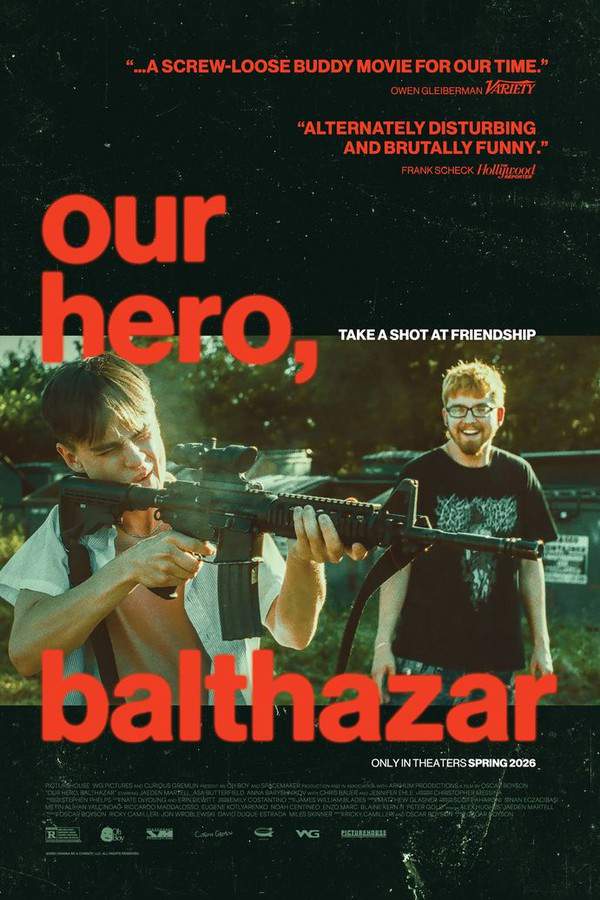
Our Hero, Balthazar (2026) Reviews: Critical Consensus, Audience Reactions & Is It Worth Watching?
When Oscar Boyson’s directorial debut Our Hero, Balthazar premiered on March 27, 2026, it arrived not with the bombastic fanfare of franchise blockbusters, but with the sharp, unsettling buzz of a film that dares to confront uncomfortable truths. This audacious dark comedy has rapidly become one of the most discussed indie releases of the year, generating polarizing reactions that split critics between admiration for its boldness and hesitation regarding its confrontational methods. For moviegoers searching for authentic Our Hero, Balthazar reviews, discerning whether this film deserves a spot on your watchlist requires navigating a complex landscape of critical appraisals and impassioned viewer reactions. At What’s After the Movie, we’ve analyzed the full spectrum of critic reviews and audience reactions to provide you with a comprehensive film reception analysis. Whether you’re seeking a spoiler-free review before committing your evening or looking for in-depth film analysis to contextualize the discourse surrounding zoomer isolation and modern masculinity, this examination of Our Hero, Balthazar (2026) synthesizes the essential opinions you need. From its limited theatrical footprint to its explosive word-of-mouth potential, discover why this provocative entry has critics calling it both “dismayingly performative” and “utterly astonishing.”
Critical Reception and Metacritic Scores: Navigating the Divisive Reviews of Our Hero, Balthazar
The critical consensus surrounding Our Hero, Balthazar reveals a film that refuses easy categorization, earning a bifurcated response that spans from measured appreciation to enthusiastic endorsement. On Metacritic, the film has settled into a mixed-to-positive range, with individual outlets scoring between 60 and 80, reflecting the movie’s challenging material and uncompromising vision. The New York Times offered a qualified reception, noting that while “so many details in this comedy-drama are meant to provoke,” the execution ultimately renders the effect “dismayingly performative,” suggesting that the film’s emotional beats feel calculated rather than organic. This critique stands in stark contrast to Variety’s assessment, which hailed the work as “a cutting, audacious, and at times astonishing movie,” demonstrating how Our Hero, Balthazar functions as a Rorschach test for viewers’ tolerance for cinematic provocation.
The Hollywood Reporter and The Wall Street Journal aligned more closely with Variety’s enthusiasm, both awarding the film strong scores and emphasizing its diagnostic precision regarding contemporary malaise. The WSJ particularly noted that while the film “may not propose a solution to any of our maladies, it’s a bitterly convincing diagnosis,” positioning Our Hero, Balthazar as essential viewing for those seeking cinema that grapples with societal dysfunction without offering easy catharsis. This thematic complexity has generated significant discussion on our Movie Wiki pages, where users debate whether the film’s nihilism serves a greater purpose or merely wallows in generational despair. Meanwhile, IndieWire’s critique that the result comes off as “more ethnographic in tone than the in-your-face bravado of the approach would suggest” highlights a central tension in the film reception: the disconnect between the marketing’s promise of confrontational dark comedy and the observational, almost clinical distance the camera maintains from its subjects.
Next Best Picture and The Film Stage offered some of the most insightful critic reviews, contextualizing the work within the broader canon of films addressing young male isolation. Next Best Picture described it as “a riotous dark comedy that manages to push all the right buttons in its curiosity about an isolation that is currently plaguing young male zoomers,” while The Film Stage emphasized its importance as “an effective entry point into a crisis that truly needs more coverage in both documentary and narrative cinema.” These assessments suggest that despite any reservations about execution, Our Hero, Balthazar (2026) has successfully initiated vital conversations about demographics often overlooked by mainstream cinema. For those tracking how debut features perform during awards season, our Awards section provides updated information on potential recognition for Oscar Boyson’s direction and the film’s provocative screenplay. When comparing these reactions to similar boundary-pushing indie darlings from recent years, Our Hero, Balthazar appears positioned to develop a significant cult following even if it eludes universal critical acclaim, particularly among viewers who value in-depth summaries that unpack complex thematic content.
Audience Reactions and Viewer Receptions: Why Fans Call Our Hero, Balthazar a “One Way Thrill Ride to Hell”
While critics remain divided, audience reactions have trended overwhelmingly positive, with early viewers awarding Our Hero, Balthazar near-perfect scores across major platforms. This disparity between critical hesitation and viewer enthusiasm creates a fascinating case study in contemporary film reception, suggesting that the movie’s confrontational style resonates more deeply with general audiences seeking authentic emotional experiences than with critics trained to analyze formal execution. User Amy summarized this sentiment perfectly, describing the experience as a “roller coaster ride” that is “thought provoking, edgy, uncomfortable, confrontational,” and ultimately “definitely worth checking out.” This pattern of visceral, physical reactions permeates the user review landscape, with multiple viewers noting the film’s rare ability to generate genuine physiological responses to psychological tension.
The intensity of viewer reactions cannot be overstated. Brad W’s assessment that the film is “brilliant, makes your palms sweat” and constitutes “one of a kind genius” echoes similar sentiments from Ricky C, who characterized the experience as “a one way thrill ride to hell with a lot of laughs to boot.” These descriptions align with Peter G’s bold declaration that this is the “greatest film since Freeway,” drawing comparisons to Matthew Bright’s 1996 cult classic in terms of its electric, darkly comic energy and transgressive narrative momentum. For those building Movie Lists of essential modern dark comedies, these user endorsements place Our Hero, Balthazar in prestigious company, suggesting it may achieve similar long-term cult status. The repeated emphasis on physical discomfort—sweating palms, edge-of-seat tension—indicates a level of immersive engagement that transcends passive viewing, transforming the film into a corporeal experience that lingers long after the credits roll.
Valentina S’s observation that the film remains “disturbingly funny but extremely thought provoking” while managing to feel “new and different” upon multiple viewings speaks to the layered storytelling that rewards repeat engagement. This quality of revealing “layered meanings” upon subsequent watches, as noted by Nancy G, positions Our Hero, Balthazar as a text that demands active interpretation rather than passive consumption. Nancy’s detailed review particularly stands out for its recognition of the film’s “disturbing but realistic view of today’s manosphere and the loneliness that leaves young people with on-line ‘friends’ only,” praising the “shocking storyline with effective twist” and the “outstanding cast” portraying “deeply troubled individuals perfectly.” These fan opinions suggest that while critics may debate the film’s tonal consistency, audiences are connecting deeply with its emotional authenticity and sociological observations. Visitors to our Quizzes and Games section can test their knowledge of the film’s intricate details and memorable quotes, including Silke S’s highlighted moment where “Balthazar really said ‘thoughts and prayers aren’t enough’ and then packed a personal item”—a line that has already generated significant discussion regarding the film’s satirical stance on performative allyship and genuine crisis intervention.
Oscar Boyson’s Directorial Debut: Analyzing the Audacious Tone and Storytelling Approach
The film analysis of Our Hero, Balthazar inevitably centers on Oscar Boyson’s distinctive directorial voice, which The Hollywood Reporter described as marking “an auspicious directorial debut” that manages to be “alternately disturbing and brutally funny.” Boyson’s approach appears to deliberately court discomfort, utilizing what IndieWire identified as an “ethnographic” observational style that maintains clinical distance while exploring emotionally volatile subject matter. This technique creates a fascinating tension with the film’s marketing and certain critical expectations of “in-your-face bravado,” resulting in a viewing experience that is simultaneously intimate and alienating. For those interested in exploring the careers of emerging filmmakers, our Profiles section offers detailed information on Boyson’s previous work and development as an auteur.
The storytelling quality of Our Hero, Balthazar reveals itself through its refusal to provide narrative comfort or moral clarity. As The Wall Street Journal noted, the film offers no solutions to the maladies it diagnoses, instead functioning as a mirror reflecting the isolation and ideological entrapment of its characters. This narrative choice has polarized critic reviews, with some praising the honesty of this nihilistic approach while others, like The New York Times, find the protagonist’s emotional displays—the specifically mentioned tears—to be “performative” in a way that undermines the film’s authenticity. However, user reviewers like David counter this interpretation by calling the film “brilliant, hilarious and makes you think,” suggesting that what reads as performative to some critics registers as genuine psychological complexity to general audiences. The distinction may lie in the viewer’s familiarity with the specific subcultures and online spaces the film depicts, with those “in the know” recognizing the performative aspects as intentional character commentary rather than directorial failure.
Visually and tonally, Our Hero, Balthazar (2026) occupies a unique space within the dark comedy genre, resisting the quippy, fast-paced conventions of modern satire in favor of a more meditative, anxiety-inducing rhythm. The Film Stage’s emphasis on the film’s status as an “effective entry point” into documentary-worthy crises suggests that Boyson’s narrative cinema approach successfully bridges the gap between fiction and sociological observation. This hybrid quality makes the film particularly suited for our Movie Collections of boundary-pushing independent cinema that challenges genre expectations. When considering is Our Hero, Balthazar worth watching, potential viewers should assess their tolerance for films that prioritize intellectual and emotional challenge over entertainment value—a calculation that explains the disparity between the film’s limited box office performance (noted by user Stephen C as a modest $33,277.00 worldwide gross) and its passionate fanbase. Despite these modest theatrical returns, or perhaps because of them, the film has found its audience through word-of-mouth and digital platforms, proving that critical consensus is not always predictive of a film’s ultimate cultural impact or its ability to find its intended viewership.
Generational Anxiety and Cultural Commentary: Zoomer Isolation and the Manosphere in Critical Discourse
Perhaps no aspect of Our Hero, Balthazar has generated more film analysis than its unflinching examination of young male isolation and the so-called “manosphere”—the collection of online communities focused on men’s rights, anti-feminism, and isolationist ideology. Next Best Picture’s observation that the film explores “an isolation that is currently plaguing young male zoomers” positions Our Hero, Balthazar as a generational document, capturing a specific moment in digital culture where algorithms radicalize lonely young men and online parasocial relationships replace physical community. Nancy G’s user review amplifies this interpretation, praising the film’s “realistic view of today’s manosphere and the loneliness that leaves young people with on-line ‘friends’ only,” suggesting that the film succeeds where documentaries often fail by humanizing the statistics without excusing the toxicity.
The reception of these themes varies significantly based on the reviewer’s generational and ideological perspective. Older critics sometimes approach the material with anthropological detachment, as evidenced by IndieWire’s “ethnographic” descriptor, while younger viewers recognize the film’s depiction of Discord servers, red-pill forums, and performative masculinity as immediate lived reality rather than exotic subculture. This divide explains why audience reactions skew significantly more positive than critic reviews—the film speaks directly to a demographic experiencing these phenomena in real-time, validating their experiences with a level of specificity rarely achieved in mainstream cinema. For viewers seeking concert films or other alternative content that captures specific cultural moments, Our Hero, Balthazar offers a similar ethnographic value, documenting the soundscape and visual language of internet-native youth culture.
Silke S’s highlighted quote—“thoughts and prayers aren’t enough” followed by Balthazar packing “a personal item”—suggests a narrative arc involving direct action or perhaps violent escalation, interpreted by fans as a critique of passive liberal responses to systemic crises. This reading positions the film as politically charged, potentially explaining the intensity of the viewer reactions and the film’s ability to generate “palms sweat” levels of tension. The line implies a rejection of empty sentiment in favor of material intervention, a theme that resonates with zoomer audiences often characterized as preferring pragmatic action over symbolic gestures. As fan opinions continue to coalesce on platforms like Letterboxd and IMDB, Our Hero, Balthazar (2026) is increasingly discussed not merely as entertainment but as a cultural artifact documenting the psychological toll of late-stage capitalism and digital alienation. Those interested in how contemporary cinema addresses these sociological issues can explore our detailed movie page for related films and contextual information about the production’s approach to these sensitive topics.
Final Verdict: Is Our Hero, Balthazar (2026) Worth Watching? Synthesizing Critical Consensus and Viewer Takeaways
Synthesizing the diverse array of Our Hero, Balthazar reviews reveals a film that defies simple recommendation—it is neither universally accessible crowd-pleaser nor inaccessible experimental exercise, but rather a precisely calibrated provocation designed to resonate with viewers attuned to its specific frequency. The critical consensus suggests a work of substantial ambition and occasional formal unevenness, with Metacritic and Rotten Tomatoes scores reflecting genuine disagreement about the film’s ultimate merit rather than the bland consensus of forgettable mediocrity. For audiences wondering is Our Hero, Balthazar worth watching, the answer depends largely on your cinematic preferences: if you value films that generate physical reactions, spark intellectual debate, and refuse to provide comforting resolution, this dark comedy represents essential viewing. However, those seeking escapist entertainment or traditional narrative closure may find the “dismayingly performative” elements noted by detractors too alienating to overcome.
The disparity between the film’s modest theatrical performance (as documented by user Stephen C’s observation of the $33,277.00 worldwide gross) and its passionate critical and audience advocates suggests Our Hero, Balthazar will find its true audience through streaming and digital platforms, where niche content thrives through algorithmic recommendation and social media discourse. This distribution pattern mirrors that of other cult classics mentioned in user reviews, particularly the comparison to Freeway, which similarly underperformed theatrically before achieving beloved status. The film reception trajectory indicates that Our Hero, Balthazar possesses significant rewatch value, with Valentina S’s observation that “each time feels new and different” suggesting layers of detail and meaning that reward attentive viewing and community discussion.
Ultimately, the spoiler-free review consensus suggests approaching this film with open eyes and a strong constitution. It is “electric, dark and funny,” “thought provoking,” and “confrontational”—adjectives that signal a work of art rather than a product of entertainment. The viewer reactions demonstrate that those who connect with the film do so deeply, often elevating it to “6 stars if RT allowed it” levels of enthusiasm, while those who bounce off it tend to do so quickly and decisively. For definitive information on where to watch, including streaming availability and physical media options, visit the movie page on What’s After the Movie, where we provide continuously updated access information. Whether you ultimately love or hate Our Hero, Balthazar (2026), it is unlikely you will forget it—a rare quality in an era of algorithmic content designed for passive consumption rather than active engagement.
Conclusion: The Lasting Impact of Our Hero, Balthazar’s Reception and Cultural Significance
As the discourse surrounding Our Hero, Balthazar continues to evolve beyond its March 27, 2026 release date, the film reception landscape reveals a work that has successfully inserted itself into vital cultural conversations about masculinity, isolation, and the psychological toll of digital existence. While the critical consensus may remain divided on questions of tonal execution and performative excess, the unified enthusiasm of audience reactions suggests that Oscar Boyson has tapped into a vein of generational anxiety that demands cinematic expression. From the “bitterly convincing diagnosis” praised by The Wall Street Journal to the “one way thrill ride to hell” celebrated by viewers, Our Hero, Balthazar proves that challenging cinema still finds its audience even when traditional metrics like box office returns suggest limited commercial appeal. For those constructing Movie Lists of the decade’s most provocative indie releases or seeking in-depth summaries that unpack complex narratives, this film demands inclusion as a document of contemporary zeitgeist.
The legacy of Our Hero, Balthazar (2026) will likely depend not on its opening weekend numbers or initial Metacritic scores, but on its ability to sustain discussion and reward repeat viewings over the coming years. As noted by multiple reviewers, the film’s layered meanings emerge through subsequent watches, suggesting a longevity that transcends opening-month hype cycles. Whether you encounter it through our Movie Wiki recommendations, discover it while browsing Movie Collections of dark comedies, or stumble upon it while testing your knowledge in our Quizzes and Games section, Our Hero, Balthazar offers a viewing experience that challenges, provokes, and ultimately validates the search for cinema that takes genuine risks. Visit the Our Hero, Balthazar movie page on What’s After the Movie to join the conversation, explore detailed Profiles of the cast and crew, and determine whether this divisive, audacious film deserves a place in your personal canon of essential 2026 cinema.
External Resources and Reference Links
For additional information about Our Hero, Balthazar (2026), including detailed cast information, technical specifications, and aggregated scores, visit these trusted movie database resources:
| Platform | Link |
|---|---|
| Our Hero, Balthazar IMDB | IMDB |
| Our Hero, Balthazar TMDB | TMDB |
| Our Hero, Balthazar Wikipedia | Wikipedia |
| Our Hero, Balthazar Rotten Tomatoes | Rotten Tomatoes |
| Our Hero, Balthazar Metacritic | Metacritic |
| Our Hero, Balthazar JustWatch | JustWatch |
| Our Hero, Balthazar Box Office Mojo | Box Office Mojo |
| Our Hero, Balthazar Letterboxd | Letterboxd |
Continue reading




What's After the Movie?
Not sure whether to stay after the credits? Find out!
Check out our other apps:

SAT Sphere
Build confidence for the Digital SAT.

Mori Atlas
Discover wild places worth protecting.

Luntero
Search smarter for a home in Amsterdam.

Plot Explained
Unravel movie endings and hidden clues.

Pokechamp
Dive into Pokémon data and battle logic.

Driving Theory
Get ready for your European theory test.

Movie Dust
Plan your next cinema trip with ease.

Musemap
Find art and culture as you travel.

Selkobase
Compare credentials before committing.

Local Manual
Turn an unfamiliar country into practical next steps.

Lernavi
Compare school systems before your next move.

GymRoam
Find a workout stop wherever your plans take you.
Explore Our Movie Platform
New Movie Releases (2026)
Famous Movie Actors
Top Film Production Studios
Movie Plot Summaries & Endings
Major Movie Awards & Winners
Best Concert Films & Music Documentaries
Movie Collections and Curated Lists
© 2026 What's After the Movie. All rights reserved.
Privacy Policy