Other Mommy Powers Explained: The Horror Film’s Demon Decoded
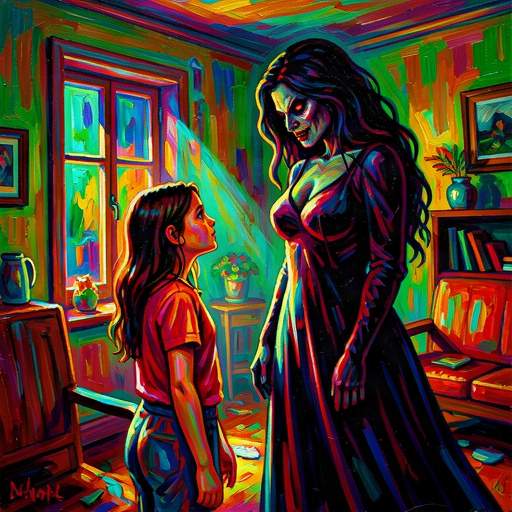
The new horror film “Other Mommy,” adapted from Josh Malerman’s 2024 novel “Incidents Around the House,” places a reality-warping demon at the center of a haunted-house story told through a child’s eyes. Director Rob Savage and screenwriter Nathan Elston keep the perspective of eight-year-old protagonist Bela, played by Arabella Olivia Clark, while Jessica Chastain pulls double duty as the demon and as the girl’s mother Ursula. With the film now in theaters, viewers are sorting through the demon’s abilities — and the deliberate gaps in the script that leave many of them open to interpretation. Here is a breakdown of Other Mommy’s strange powers, the rules she follows, and how she fits into modern horror.
From Novel to Screen: How the Source Shapes the Mystery
Malerman’s “Incidents Around the House” was narrated entirely from the first-person viewpoint of an eight-year-old named Bela. Because readers only ever saw the world filtered through her understanding, the demonic threat she referred to as “Other Mommy” came with built-in ambiguity — a child naming an invisible terror in her own home. The film adaptation preserves that framework: the action is still anchored to Bela’s perspective, even as the camera occasionally grants adults a clearer view of what’s unfolding.
Savage loosens the source material just enough to make the demon visible to grown-ups, but the spellings of supernatural rules remain patched together from a child’s scattered observations. That structural choice explains why Other Mommy can sometimes feel “a little inexplicable.” Apparitions, conditions, and capabilities appear and disappear with the rhythm of a frightened child’s recollection, and the screenplay deliberately leaves gaps rather than clarifying them. The result is a creature whose design leans on implication as much as exposition.
A Demon the Adults Can See
The most immediate surprise in “Other Mommy” — and the element the production most openly highlights — is that Other Mommy is not a private hallucination. From the opening scene onward, multiple characters witness the demon and the bizarre phenomena she generates. Ursula and Russ (Jay Duplass) cannot rationalize away the sightings or fall back on the familiar horror cliché of dismissing their child’s fears as overactive imagination. They are forced to engage with a supernatural problem in real time.
This break from the standard template — where a child begs disbelieving adults to acknowledge the danger — is treated as one of the film’s most exciting storytelling moves. Because credibility is no longer in question, the screenplay can spend its energy on what the family does about the threat instead of arguing that it exists. The shift also reframes Other Mommy from a possible psychological projection into something that can no longer be waved off.
What Other Mommy Actually Wants
Unlike chaotic horror antagonists who simply sow discord, Other Mommy appears to operate with something close to a transactional motive. Her stated goal is to possess Bela — and crucially, possession is something the child has to agree to first. That precondition pushes the creature into the tradition of fairy-tale bargains and changeling folklore, where a powerful being can act only once it has been invited in.
The way she earns that consent borrows heavily from two of the most recognizable monsters in modern horror. Like Pennywise in “It” and Freddy Krueger in “A Nightmare on Elm Street,” Other Mommy terrorizes and psychologically manipulates her target, steadily lowering defenses until assent becomes possible. The film treats this manipulation as a sustained campaign rather than a single haunting event, giving the demon an agenda that audiences can map across the runtime.
Teleportation and the Reality-Breaking Toolkit
Beyond coercion, Other Mommy is shown wielding a specific supernatural toolkit that the script outlines clearly enough to track. The demon’s defined capabilities include:
- Targeted teleportation into a nightmare realm: Other Mommy can pull victims into a self-controlled domain where normal physics break down, with bystanders unaware the victim has vanished.
- Reality bleed: Physical residue from the nightmare realm — such as ball-pit balls that appear in the family home — spills into the real world, confirming the trips genuinely occurred.
- Psychological manipulation: A sustained campaign of terror designed to lower a target’s defenses, echoing the tactics of established horror villains.
- Inherently contradictory powers: Abilities that defy consistent logic but are nonetheless treated as literal events within the film’s universe.
That final contradiction is intentional. The movie insists that both the dreamlike realm and the real-world fallout are simultaneously real, generating a creature whose powers operate on the same plane as the everyday world while still being able to produce phenomena — defying gravity, collapsing geometry — that mundane reality cannot accommodate. For audiences trying to decode what they saw on screen, the takeaway is that Other Mommy’s rules are written to feel unstable on purpose.
Innocence Versus Adulthood: The Thematic Stakes
Because the script repeatedly confirms that Other Mommy is a tangible entity and not a metaphor, the film rejects the more crowd-pleasing reading that she is simply a manifestation of Bela’s unresolved trauma. The young character does carry real grievances tied to her mother, her (eventually revealed) adoptive father, and the layers of deception the family has built around her — yet the film never lets the audience retreat into psychological allegory. Other Mommy preys on these tensions precisely because the household is already fractured.
Stripped of symbolic readings, the demon’s plan becomes clearer: she needs innocence to become human. Stopping her requires that Bela’s heart be metaphorically broken, after which the creature loses the fuel it needs to birth itself into the physical world. The story ultimately reframes itself around the messy ethics of human creation and belonging. Other Mommy can only become human if someone chooses her; Bela is already human, even though her own mother initially does not seem to want her. That inversion — an inhuman being needing to be wanted, while a human child fears she is not — gives the creature’s strange powers their emotional charge.
A New Horror Figure Worth Watching
The blend of persuasion tactics, forced consent, teleportation, and reality distortion puts Other Mommy in conversation with established horror icons while still leaving her room to stand on her own. The film’s willingness to let her powers feel inconsistent — yet declared unambiguously real — gives the creature an unsettling flexibility that more rigid boogeymen lack. For audiences leaving the theater with more questions than answers, the ambiguity is part of the design: a demon whose power depends on being wanted is only as strong as the people around her.
“Other Mommy” is in theaters now.
About What’s After the Movie
What’s After the Movie is an all-around film site offering movie information, box office data, plot summaries, endings explained, spoiler-free recaps, trailers, reviews, and industry news. Readers tracking the latest horror releases and novel adaptations can browse the movie news hub for updates or explore the full movies catalog for additional recommendations.