What's After the Blog?
casting • analysis • feature
Gil Birmingham's Forge Deserves Bigger Role in X-Men '97
Gil Birmingham, known for Yellowstone's Chief Thomas Rainwater, has voiced Forge on X-Men '97 since 2024 in a casting choice that restored Native representation after years of miscasting. With Seasons 3 and 4 on the horizon, the Marvel animated series has room to give the mutant inventor a more prominent place in the lineup.
September 3, 2026
Gil Birmingham’s Forge Deserves Bigger Role in X-Men ‘97
Gil Birmingham — best known to television audiences as Chief Thomas Rainwater on Yellowstone — joined the Marvel animation roster in 2024 as the voice of Forge on X-Men ‘97. The casting is meaningful on multiple levels: it places a Native American actor in one of Marvel’s most enduring Indigenous roles, a rare occurrence across the comic book adaptation landscape. Birmingham’s performance has also helped restore a character that earlier animated outings had repeatedly miscast.
That said, the actor’s screen time within X-Men ‘97 itself has been limited. With Season 2 now wrapped and Seasons 3 and 4 already in development, there is a clear opening for the series to give Forge a more prominent place in its storytelling lineup.
From Hell or High Water to the X-Mansion: Birmingham’s Career Arc
Birmingham built much of his reputation through a long-running creative partnership with writer-director Taylor Sheridan. That collaboration began with the 2016 neo-Western Hell or High Water, where he played Texas Ranger Alberto Parker — a role reflecting his Mexican heritage alongside his Native background. Sheridan later cast him in Wind River, a film centered on the missing and murdered Indigenous women crisis, as grieving father Martin Hanson.
The partnership reached its widest audience on Yellowstone, where Birmingham portrayed Chief Thomas Rainwater, the wealthy casino-owning chairman of the fictional Confederated Tribes of Broken Rock. Introduced as an antagonist pursuing the Dutton Ranch, Rainwater evolved into an uneasy ally over the course of the series. He continues to appear on the Yellowstone spin-off Marshals, where his presence has prompted calls from fans for a Rainwater-centered series of his own.
Outside of Sheridan’s orbit, Birmingham has expanded into Marvel animation, lending his voice to Forge on X-Men ‘97. The crossover from contemporary Western drama to comic book science fiction is notable — and the role itself fits Birmingham’s on-screen profile as a Native actor playing Native characters.
Who Is Forge? A Marvel Character Built Around Technology
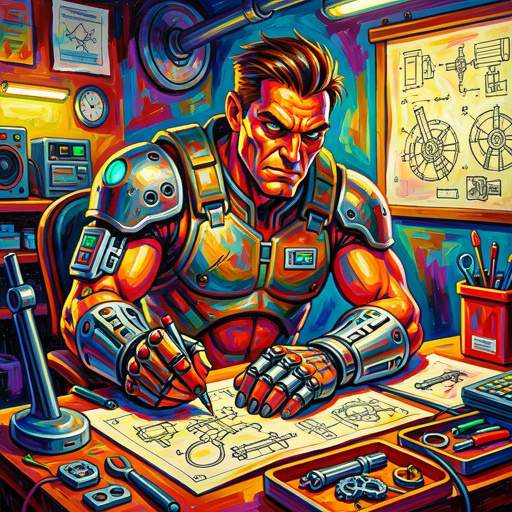
Forge is a mutant whose defining trait is an intuitive, almost preternatural grasp of mechanical and electronic systems. Within Marvel continuity, he can conceptualize inventions as complex as a temporal displacement device and troubleshoot a jet engine with equal ease. He is also one of the publisher’s most prominent Native American characters, which makes him a natural fit for Birmingham.
The character was created by writer Chris Claremont and artist John Romita Jr., debuting in Uncanny X-Men #184 in 1984. His most celebrated early storyline ran in Uncanny X-Men #186 — the issue widely referred to as “Lifedeath,” drawn by Barry Windsor-Smith — which paired Forge with Ororo Munroe, better known as Storm. After Storm loses her powers, the two begin a romance that collapses when Ororo learns Forge built the very technology that stripped her abilities.
Forge’s comic history is also dotted with other key relationships. He has a long-running dynamic with Mystique — a thread the X-Men ‘97 Season 2 finale has begun to set up for potential future exploration — and has led the government-sponsored team X-Factor in the source material.
Forge’s Animated Track Record
Forge has appeared in nearly every X-Men animated series, but rarely as a lead. His track record across the franchise includes:
- X-Men (1992): Debuted in the show’s adaptation of “Days of Future Past,” voiced by Marc Strange. Forge designed the time-travel apparatus that sends Bishop into the past to prevent the Sentinel-dominated future, and later appeared in the present day as the leader of X-Factor.
- X-Men: Evolution (2000s): Featured as a guest character in a limited capacity.
- Wolverine and the X-Men (2009): Reimagined as the X-Men’s tech support. The version was widely criticized for whitewashing — designed with Caucasian features and voiced by white actor Roger Craig Smith, the depiction was seen as a casting misstep for a Native character.
Original 1990s voice actor Marc Strange passed away in 2012, making recasting inevitable for any revival. X-Men ‘97 has explicitly positioned Birmingham’s casting as restorative, placing an Indigenous actor in a role previous animated outings had mishandled. The series has also canonized Chris Claremont’s intended but never-used birth name for Forge: Daniel Lone Eagle.
Birmingham as Forge: Where X-Men ‘97 Stands Now
X-Men ‘97 functions as a direct sequel to the 1990s animated series. Season 1 adapted the “Lifedeath” arc with a notable adjustment — it left Forge and Storm together at the end, rather than letting Ororo discover Forge’s role in her power loss. Season 1 concluded with most of the X-Men scattered across time, setting up the core premise for Season 2.
Season 2 picks up from that cliffhanger. Forge, alongside Bishop (voiced by Isaac Robinson-Smith), works to retrieve the team. The premiere episode, “Days of Past Future,” sends Forge 2000 years into the future to rescue Storm and the others. After that reunion, however, Forge recedes into the background — he does receive a title card in the updated opening credits sequence acknowledging him as a member of the team, but his role in subsequent episodes is largely supporting.
The constraints are largely structural. Season 2 expanded the series’ ensemble but ran for only nine episodes, leaving limited room to develop each member of the cast. Forge and Storm both fell into supporting roles, taking over Xavier’s School for Gifted Youngsters after Professor X departs to found a new international nonprofit called X-Corp. The school headmaster dynamic between the two gets its deepest exploration in Episode 6, “Danger.exe” — though even there the central focus is on Polaris (voiced by Carolina Ravassa).
Why More Screen Time Matters
The argument for more Forge screen time is both representational and narrative. Birmingham’s casting gave the show a chance to portray an Indigenous character without the whitewashing problems of past animated versions — a fact that carries weight given how few A-list Native actors Hollywood has historically employed.
Narratively, Forge offers rich material. His technology expertise, his partnership with Storm, his history with Mystique, and his comic-book role as a leader of X-Factor all provide storylines the series could lean into. The Season 2 finale hinted at Mystique’s return — with the character voiced by Randall Carpenter — and Mystique has long had a complicated history with Forge in the source material.
There is also a broader MCU angle. Forge has never appeared in any of the live-action X-Men films, but as Marvel Studios eventually integrates the mutants into the wider cinematic universe, casting decisions for a live-action version will inevitably draw comparisons to X-Men ‘97. Birmingham’s performance provides a clear and authentic template that future live-action adaptations would have to weigh against.
What’s Ahead for Forge in X-Men ‘97
X-Men ‘97 Seasons 3 and 4 have been confirmed in development. The series has runway to expand Forge’s role in several directions: deeper exploration of his and Storm’s partnership running Xavier’s School, his history with Mystique, or a return to his X-Factor leadership roots. For a character who has waited decades for the kind of consistent, well-cast portrayal Birmingham brings, the next two seasons represent a chance to fully deliver on the character’s potential.
Explore More on What’s After the Movie
For readers tracking casting news, character histories, and what’s next across film and television, What’s After the Movie is an all-around destination for entertainment coverage. Browse the full movie database, check out box office data and industry news, or dive into summaries and endings explained for the films and series shaping today’s headlines.
Continue reading




What's After the Movie?
Not sure whether to stay after the credits? Find out!
Check out our other apps:

SAT Sphere
Build confidence for the Digital SAT.

Mori Atlas
Discover wild places worth protecting.

Luntero
Search smarter for a home in Amsterdam.

Plot Explained
Unravel movie endings and hidden clues.

Pokechamp
Dive into Pokémon data and battle logic.

Driving Theory
Get ready for your European theory test.

Movie Dust
Plan your next cinema trip with ease.

Musemap
Find art and culture as you travel.

Selkobase
Compare credentials before committing.

Local Manual
Turn an unfamiliar country into practical next steps.

Lernavi
Compare school systems before your next move.

GymRoam
Find a workout stop wherever your plans take you.
Explore Our Movie Platform
New Movie Releases (2026)
Famous Movie Actors
Top Film Production Studios
Movie Plot Summaries & Endings
Major Movie Awards & Winners
Best Concert Films & Music Documentaries
Movie Collections and Curated Lists
© 2026 What's After the Movie. All rights reserved.
Privacy Policy