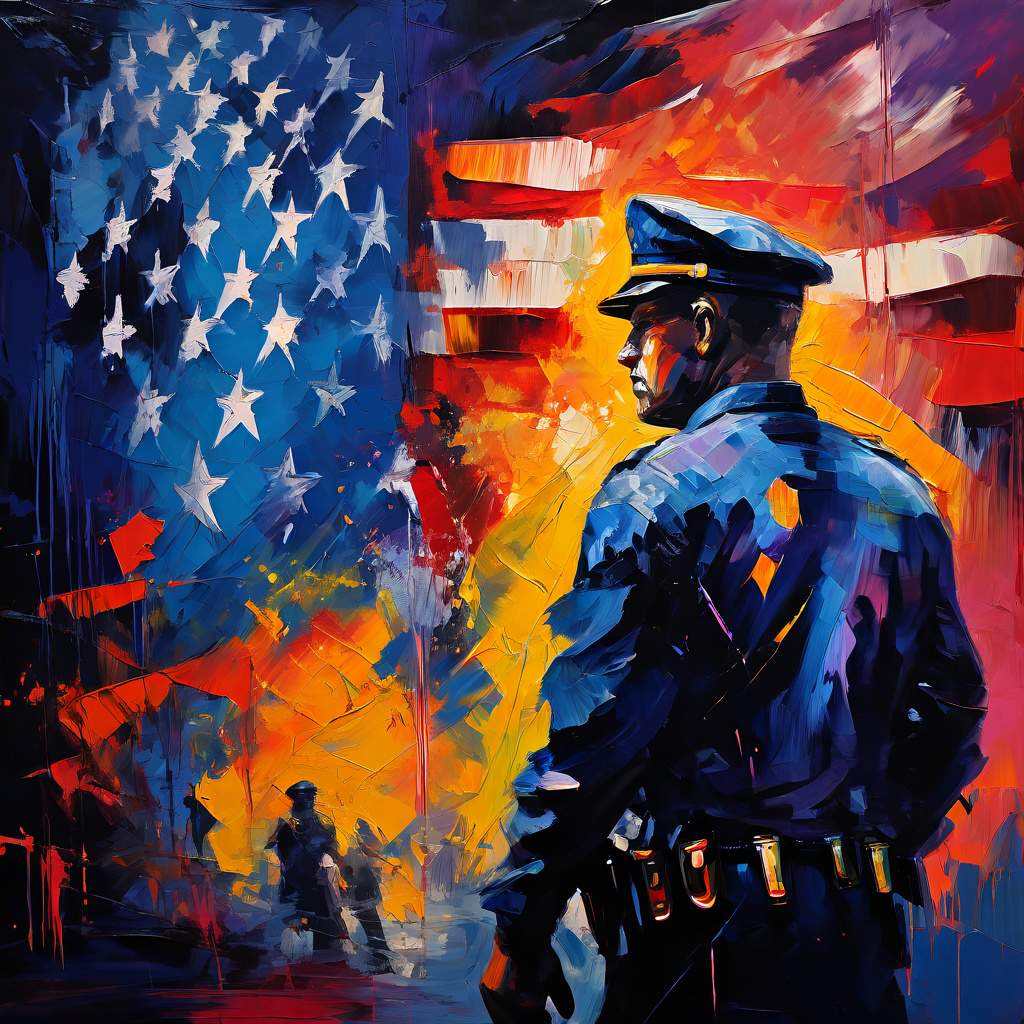
Why The Purge: Election Year Is the Ultimate Fourth of July Horror Film
When James DeMonaco unleashed the franchise starter “The Purge” in 2013, audiences encountered a frustrating dichotomy: a dystopian premise of extraordinary scope trapped within the physical constraints of a standard home invasion thriller. While the original entry restricted its narrative largely to the interior of a single fortified mansion, the central concept—a near-future America where an authoritarian government sanctions an annual 12-hour period of legalized crime and murder—possessed far greater potential than its execution initially suggested. By the time the series reached its 2016 installment, “The Purge: Election Year,” DeMonaco had successfully expanded the scope into a vehicle for sharp political satire, creating what many consider the definitive patriotic horror film for Independence Day viewing.
From Intimate Horror to National Politics
The evolution of the Purge franchise mirrors the expansion of its fictional universe’s ambitions. The 2013 original established the basic mythology: by 2022, the United States had fallen under the control of the New Founding Fathers of America, an extreme right-wing Christian nationalist organization that institutionalized the Purge as an annual tradition. The official justification maintained that citizens harbored deep violent impulses requiring annual release, and that legalizing crime for 12 hours would create a healthier, more peaceful society for the remaining 8,748 hours of the year.
This premise, while compelling, initially served merely as backdrop for a straightforward siege narrative. However, the concept proved too rich for such limited application. As the franchise progressed through its five theatrical films and television series, storytellers increasingly focused on the political machinery behind the Purge rather than the violence itself. Issues of class stratification, racial targeting, and economic predation emerged as central themes, with each installment peeling back layers of the New Founding Fathers’ ideology.
Key elements that distinguish the franchise’s progression include:
- Expansion from single-location settings to city-wide narratives
- Increasing emphasis on systemic political critique over jump scares
- Development of the New Founding Fathers as recognizable authoritarian archetypes
- Integration of real-world economic anxieties into horror tropes
“Election Year,” set in 2040, represents the culmination of this narrative expansion. Rather than depicting ordinary citizens defending against random attackers, the film transforms the Purge into an active tool of political suppression. This shift elevates the material beyond simple horror into the realm of political thriller, allowing the franchise to examine how authoritarian systems weaponize chaos to maintain control.
The 2016 Campaign and Its Eerie Resonance
The third installment arrived in theaters during one of the most consequential election years in modern American history, and its marketing materials deliberately courted this connection. The film utilized the provocative tagline “Keep America Great,” positioning its narrative within recognizable political discourse while twisting patriotic rhetoric into something more sinister.
At the narrative’s center stands Senator Charlie Roan, portrayed by Elizabeth Mitchell as a presidential candidate running on an explicit anti-Purge platform. Roan’s opposition to the annual ritual stems from personal trauma: decades earlier, she witnessed her parents’ brutal murder during a Purge night, an experience that transformed her into the New Founding Fathers’ most dangerous political enemy. As her polling numbers improve against the organization’s chosen candidate, Edwidge Owens (Kyle Secor), the ruling cabal faces a legitimate threat to their power structure.
The film’s central conflict emerges when Owens and his allies identify a loophole in Purge regulations. Long-standing rules had granted politicians immunity from the annual violence, ensuring that the political class remained protected while ordinary citizens slaughtered each other. In a calculated move to eliminate Roan while maintaining plausible deniability, the New Founding Fathers announce the temporary suspension of these protections. The strategy proves devastatingly elegant: if Roan flees the country to survive, voters will view her as a coward unfit for leadership; if she remains, paramilitary death squads await her elimination.
This narrative mechanism illuminates the film’s core thesis regarding the relationship between state violence and political power. By making politicians vulnerable to the very system they created, the film exposes the Purge not as a national pressure valve, but as a carefully managed instrument of demographic and political control.
Economic Violence and the Insurance Metaphor
While the presidential campaign provides the film’s primary thrust, “Election Year” grounds its horror in economic reality through the character of Joe Dixon, played by Mykelti Williamson. Operating a small neighborhood deli, Joe faces the annual event not as an abstract political concept, but as a direct threat to his survival and livelihood. The narrative introduces the concept of “Purge insurance”—corporate policies that financially protect businesses against destruction during the dangerous night—with devastating specificity.
Joe discovers that his policy has expired, priced out by wealthy insurance companies more interested in collecting premiums from large corporations than protecting small independent operations. This subplot transforms the Purge from a night of random criminal chaos into a structured economic weapon, where the destruction of working-class businesses serves as gentrification by other means. The wealthy, secured behind expensive private security systems, watch comfortably as market competition literally burns.
The film populates its streets with heavily armed paramilitary units whose equipment and coordination suggest professional backing rather than spontaneous citizen violence. These groups function as unofficial enforcement arms of the state, targeting minority neighborhoods and poor communities with systematic precision. The narrative repeatedly asks who funds these operations, delivering answers that confirm viewer suspicions about the Purge’s true purpose: not the management of human aggression, but the elimination of economically “undesirable” populations.
Satirical Precision and Patriotic Subversion
“Election Year” channels the cynical energy of John Carpenter’s “They Live,” presenting a world where the rhetoric of morality, law, and order masks institutional corruption. The film’s satire proves particularly effective in its treatment of American political pageantry—the flag-waving patriotism, military fetishization, and “law and order” posturing that characterize certain political movements.
The Independence Day viewing recommendation carries specific thematic weight. The film suggests a dark parallel between the holiday’s celebration of national independence through explosive displays and the Purge’s promise of freedom through sanctioned violence. The narrative implies that celebrating sovereignty through destruction, blowing up small parts of the nation to affirm the whole, represents a dangerous psychological trap.
The 2021 sequel “The Forever Purge” confirmed the franchise’s continued relevance, explicitly foregrounding white supremacist ideologies following the New Founding Fathers’ return to power. This subsequent entry, set in a Texas where Purgers refuse to end the violence after the 12-hour window expires, tapped into real cultural anxieties about authoritarian resurgence. However, most critics and fans regard “Election Year” as the franchise’s artistic peak, balancing action, horror, and political commentary with greater finesse than its predecessors or successors.
Enduring Relevance for Holiday Viewing
Nearly a decade after its theatrical release, “The Purge: Election Year” maintains its status as the franchise’s most accomplished installment. The film succeeds by acknowledging that violence persists regardless of legal frameworks—those seeking power will employ mob rule and bloodshed whether officially sanctioned or not. Senator Roan’s campaign offers hope for systemic change, but the narrative never suggests that abolishing the Purge alone will heal the nation’s divisions.
For viewers seeking Fourth of July entertainment that engages critically with American identity rather than merely affirming it, the film provides essential viewing. It challenges audiences to examine the relationships between patriotism and violence, economic policy and human rights, and political rhetoric and actual governance. In doing so, it fulfills the horror genre’s highest function: holding a distorted mirror to society’s darkest tendencies.
What’s After the Movie?
Planning your next movie night or looking to explore more politically charged horror? What’s After the Movie serves as your comprehensive resource for film discovery, offering detailed movie summaries, franchise breakdowns, and spoiler-free guides to help you navigate complex cinematic narratives. Track the complete Purge saga, discover similar dystopian thrillers in our curated collections, or explore our blog for seasonal viewing recommendations and in-depth industry analysis.