Cimarron Strip: Stuart Whitman’s Forgotten 1960s Western Series
The 1967-68 CBS Western “Cimarron Strip” barely lasted a single season, but its 23 episodes packed in an unusual format, a historically rich setting, and one of the most prolific actors of the era. Led by Stuart Whitman, the series remains a curiosity for viewers working their way through overlooked classics from the late network Western boom.
A 90-Minute Western with a Historical Hook
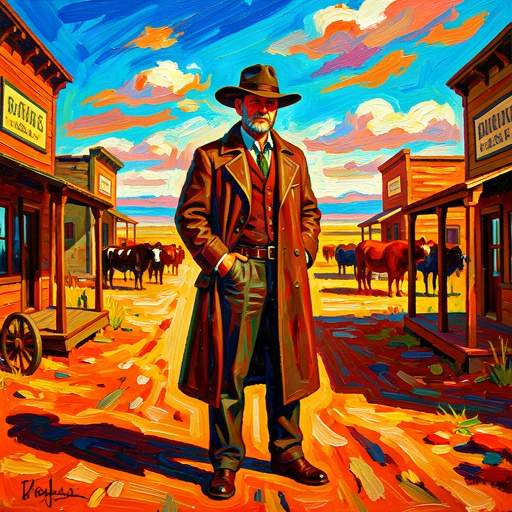
“Cimarron Strip” stood apart from the wave of hour-long Westerns crowding the late-1960s networks. CBS programmed it as a 90-minute series, an unusual choice that gave each episode room to breathe. The show was set in 1880 along a contested stretch of land between Kansas and First Nations territory, the real-life no-man’s-land that would eventually form the Oklahoma Panhandle. For roughly a decade, the region was effectively ungoverned, making it a natural setting for stories of lawlessness and competing interests.
Whitman starred as Marshal Jim Crown, the only federal lawman left on the strip after the army withdrew. His first task was unwelcome news: Washington had revoked the settlers’ land leases, and Crown bore the message. That single narrative decision turned almost every episode into a powder keg, with angry cattlemen, displaced families, and opportunistic newcomers all circling the marshal.
The supporting cast rounded out the frontier tableau:
- Jill Townsend as Dulcie, a young woman who arrives on the strip to find her father dead and inherits a failing inn from his Scottish partner, MacGregor.
- Randy Boone as Francis Wilde, an aspiring journalist and photographer whose ambitions often pulled him into the action.
- A rotating roster of familiar character actors filling the cattlemen, settlers, and travelers passing through Crown’s jurisdiction.
Stuart Whitman’s Relentless Career
Whitman was already a familiar face by the time “Cimarron Strip” premiered. According to IMDb, his career ultimately stretched to 191 credits, a body of work that began with uncredited bit parts in two of the 1950s’ biggest science-fiction releases, “When Worlds Collide” and “The Day the Earth Stood Still.” He quickly moved into the Western circuit, picking up appearances on early TV staples such as “The Roy Rogers Show” and “The Range Rider,” and accumulating background roles across a dozen films before earning steady credited work by the mid-1950s.
By the end of the decade, the volume of offers had grown sharply. He logged 13 episodes of “Highway Patrol” and landed his first leading film role in 1957’s “Johnny Trouble.” From there, the assignments kept coming across both film and television, with Whitman working year after year, often in Westerns and crime dramas, sometimes in genre exercises far outside the typical leading-man lane. There was almost no year in the late 1950s and 1960s in which he wasn’t appearing in something.
The Oscar Nomination That Cemented His Range
Among the flood of credits, one role defined Whitman’s standing with the industry. In 1961, he played the lead in Guy Green’s “The Mark,” a drama about a man with a criminal past trying to rebuild his life. The performance earned Whitman a Best Actor nomination at the Academy Awards, recognition that positioned him for a wider range of starring parts and confirmed his reputation as more than just a reliable presence.
The same period brought him into the sprawling ensemble of “The Longest Day” and a steady stream of lead and supporting roles across screens big and small. Reviewers of the era frequently singled out his hangdog features and quiet, natural confidence, qualities that made him equally believable as a sympathetic everyman or a weathered authority figure. In a 1972 genre exercise, he turned up in “Night of the Lepus,” a horror film about giant rabbits running amok, the kind of offbeat choice that illustrated just how little Whitman was willing to turn down.
Later Roles and a Quiet Retirement
Whitman’s later decades kept him on screen in ways younger audiences may not immediately associate with him. Children of the late 1980s and early 1990s are most likely to know him as Jonathan Kent, the adoptive father of the title character in the “Superboy” TV series. He also turned in guest spots on “Knots Landing” and the pilot for “The Adventures of Brisco County, Jr.,” and lent his voice to Mule Morgan on the Nickelodeon animated series “Aaahh!!! Real Monsters.” A star on the Hollywood Walk of Fame recognizes the cumulative weight of that body of work.
His final credit came in 2000, when he appeared in the Chuck Norris TV movie “The President’s Man.” After that, Whitman stepped away from the camera for the last two decades of his life. He died of skin cancer in 2020 at the age of 92, leaving behind a filmography that critics have pointed to as proof of how much the industry depends on dependable character actors who rarely receive top billing.
Behind the Camera on Cimarron Strip
“Cimarron Strip” also drew in talent that would go on to much larger careers. Veteran television director Vincent McEveety, a familiar name across decades of family-friendly network TV, helmed several episodes. The famously litigious writer Harlan Ellison penned one installment, a story built around the alleged return of Jack the Ripper to the American frontier.
The guest roster across the show’s single season reads like a snapshot of late-1960s Hollywood:
- Joseph Cotten
- Leslie Nielsen
- Robert Duvall
- Michael J. Pollard
- Elisha Cook
- David Carradine
- John Saxon
- Darren McGavin
- Jon Voight
That lineup helps explain why “Cimarron Strip” retains a cult pull among classic-TV enthusiasts, even decades after cancellation.
Where to Watch the Series Today
Streaming options for “Cimarron Strip” remain incomplete. The free, ad-supported service Fawsome currently hosts 16 of the 23 episodes, the largest single collection available online. Viewers looking for the complete run have to track down an out-of-print DVD box set, which has drifted into the second-hand market.
For anyone interested in the show’s lead, Whitman’s filmography is easier to sample. His early science-fiction appearances, his Oscar-nominated turn in “The Mark,” and his later television work including “Superboy” are scattered across multiple platforms, though availability shifts frequently as licensing deals rotate. None of the major subscription services appear to offer the complete series.
A Forgotten Show That Earns a Look Back
“Cimarron Strip” lasted only a single season, but its ambitions were larger than its ratings suggested. A 90-minute format, a setting rooted in a genuinely ungoverned stretch of American history, and a guest roster packed with future stars all made it a quietly significant entry in the late-1960s Western boom. Paired with Whitman’s steady presence, the series offers a snapshot of what a network was willing to gamble on just before the genre began to fade from the airwaves.
For viewers exploring the back catalog of classic Westerns, the show remains a worthwhile detour, especially given how few episodes of late-1960s television still feature this level of behind-the-camera craft and on-screen talent in one place. That “Cimarron Strip” has largely drifted out of circulation makes it exactly the kind of deep-cut discovery that streaming-era Western fans tend to prize.
About What’s After the Movie
What’s After the Movie is an all-around movie destination for film fans, with movie info, box office data, plot summaries, endings explained, spoiler-free recaps, trailers, reviews, and industry news. If you enjoyed this look back at a forgotten Western, you can browse more classic and cult titles in our movies collection, track industry trends on the box office page, or read more long-form features on our blog.