What's After the Blog?
feature • Streaming • analysis
10 Overlooked Sci-Fi TV Shows Deserving Revival Attention
Science fiction television has produced numerous cult classics that have slipped from mainstream conversation despite their innovative storytelling and dedicated fanbases. From space operas like Farscape to time-travel thrillers such as 12 Monkeys, these ten underrated series continue to influence the genre while awaiting potential revival opportunities.
April 28, 2026
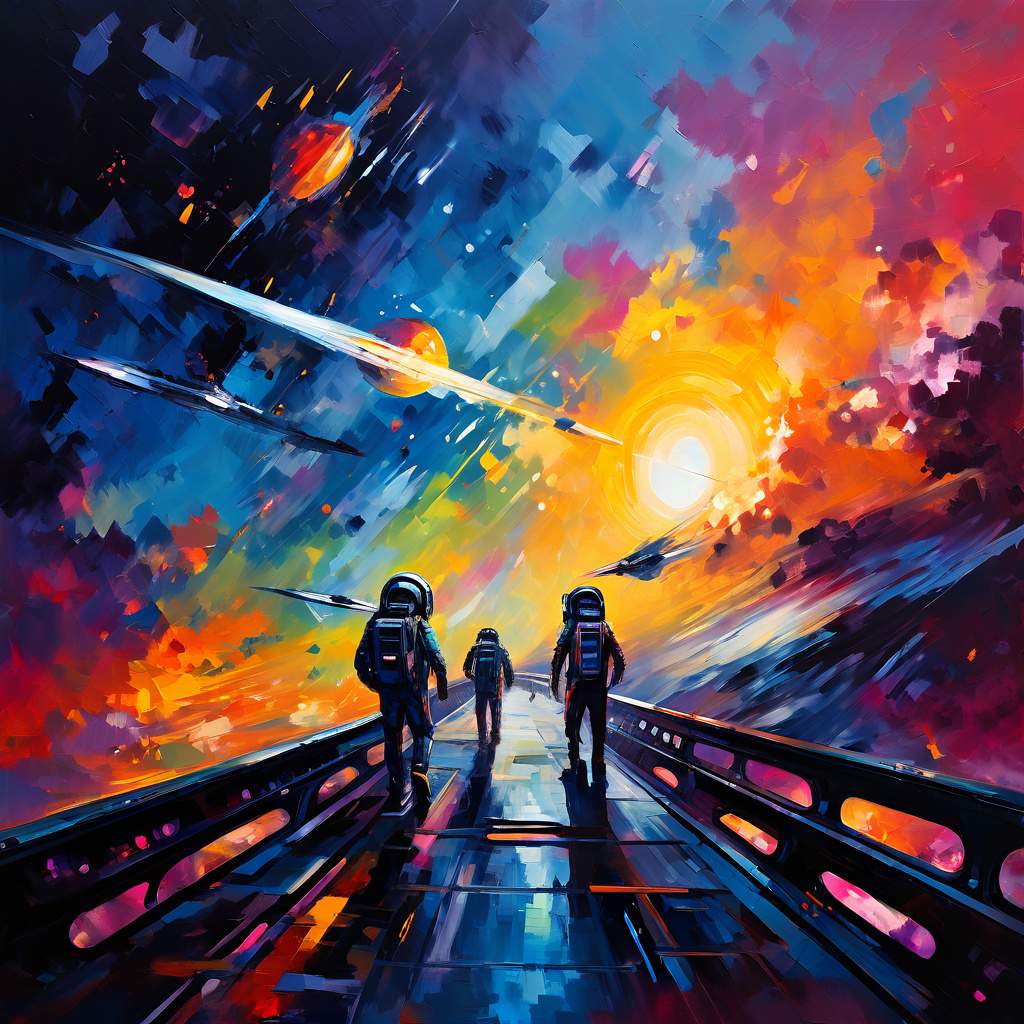
10 Overlooked Sci-Fi TV Shows Deserving Revival Attention
Science fiction television has long served as a proving ground for ambitious storytelling that pushes medium boundaries. While flagship franchises dominate cultural conversation, numerous high-quality series have developed passionate followings only to fade from wider public consciousness after their runs concluded. These cult classics represent significant creative achievements—many running multiple seasons with tight narratives and strong ensemble casts—that deserve reconsideration in the current streaming landscape where revival interest remains high for proven IP with established audiences.
The Anti-Star Trek: Farscape’s Chaotic Brilliance
When Farscape launched in 1999, it deliberately positioned itself against the established conventions of Star Trek. The series followed astronaut John Crichton, portrayed by Ben Browder, who is accidentally transported across the universe through a wormhole during a test flight. Rather than encountering organized Starfleet-style professionals, Crichton finds himself aboard Moya, a living spaceship crewed by escaped prisoners fleeing the totalitarian Peacekeepers.
The series distinguished itself through deliberately messy interpersonal dynamics. Where Trek crews typically maintained professional composure, Farscape embraced distrust, betrayal, and complicated romantic entanglements that kept both characters and audiences uncertain. This approach to space opera would later inspire James Gunn’s Guardians of the Galaxy, with Farscape maintaining a reputation as the perfect counterpoint to more polished sci-fi offerings. Despite concluding in 2003 after its original run, the series remains a prime candidate for revival given its unresolved narrative potential and continued influence on the genre.
Franchise Extensions That Forged Independent Identities
The X-Files universe expanded beyond its central mythology through The Lone Gunmen, a spin-off focusing on conspiracy theorists John Byers, Melvin Frohike, and Ringo Langly. Portrayed by Bruce Harwood, Tom Braidwood, and Dean Haglund respectively, the trio investigated government cover-ups and surveillance state proliferation with a tone that veered into overt comedy and slapstick. Fox cancelled the series after only 13 episodes due to lower viewership, though the show notably served as an early project for Vince Gilligan years before Breaking Bad. Zuleikha Robinson appeared as the enigmatic Yves Adele Harlow, adding noir elements to the proceedings.
Similarly, Torchwood emerged from the Doctor Who universe to explore darker territory. Running four seasons from 2006 to 2011, the series centered on the Torchwood Institute, a clandestine organization monitoring extraterrestrial activity led by John Barrowman’s Jack Harkness. The immortal time traveler, active since Victorian Britain, anchored a show notably more mature and tonally darker than its parent series. Fifteen years after its conclusion, Torchwood remains overlooked by many mainstream audiences despite its significant place in British television franchise expansion.
When Procedural Formats Embraced Complex Mythology
Fox’s Fringe demonstrated how procedural science fiction could evolve into sophisticated serial storytelling. Running 100 episodes across five seasons from 2008 to 2013, the Boston-based series initially operated as a paranormal case-of-the-week investigation unit before gradually revealing an intricate alternate reality conflict overseen by mysterious beings called the Observers. The show benefited from an exceptional ensemble including Anna Torv, John Noble, Joshua Jackson, and the late Lance Reddick, whose performances grounded increasingly reality-bending twists.
Warehouse 13 occupied similar territory with greater emphasis on accessibility. The series ran five seasons from 2009 to 2014, following Secret Service agents Myka Bering and Pete Lattimer—played by Joanne Kelly and Eddie McClintock—as they recovered paranormal objects for a top-secret South Dakota facility. Unlike darker contemporaries, the show maintained a healthy sense of humor about its MacGuffin-driven premise, drawing from historical accounts and urban legends. The series balanced standalone adventures with ongoing mythology, creating a cozy yet engaging entry point for genre newcomers.
Time Travel Narratives That Rewarded Attention
Canadian production Continuum offered a sophisticated exploration of temporal mechanics and political philosophy. Running four seasons until 2015, the series starred Rachel Nichols as Kiera Cameron, a police officer from 2077 who pursues freedom fighters back to 2012 Vancouver. As Cameron integrates with local law enforcement while attempting to prevent her dystopian future, the show examines the consequences of timeline manipulation through a humanist lens, complicating its protagonist’s mission when she recognizes the injustices of her own era’s authoritarian regime.
Similarly ambitious, 12 Monkeys adapted the 1995 film into a complex television narrative that many critics consider among the best time travel shows produced. Running four seasons from 2015, the series followed Aaron Stanford’s James Cole and Amanda Schull’s Cassie Railly as they attempted to prevent a viral apocalypse orchestrated by the mysterious Army of the 12 Monkeys. Showrunners Terry Matalas and Travis Fickett constructed intricate temporal mechanics that fueled plot twists without becoming obtuse, maintaining tight scripting and strong performances throughout its complete story arc.
Modern Streaming Casualties and International Scope
Recent years have seen several ambitious sci-fi projects cancelled despite strong creative foundations. Netflix’s Sense8 premiered in 2015 with a genuinely global scope, filming across international locations to tell the story of eight strangers who develop telepathic connections. The expensive production allowed the ensemble to share emotions, memories, and knowledge across continents, but costs prompted cancellation after two seasons. The series concluded with a feature-length finale released in 2018, wrapping the narrative on its own terms and inadvertently paving the way for larger-scale Netflix science fiction productions.
The British series Humans ran three seasons from 2015 to 2018, exploring artificial intelligence sentience through Gemma Chan’s Anita and five other conscious synths hiding among humanity. The show offered mature meditation on consciousness and identity that has only grown more relevant amid current AI proliferation. More recently, Prime Video’s Night Sky premiered in 2022 starring Sissy Spacek and J.K. Simmons as a retired couple discovering a portal to alien landscapes in their backyard shed. Despite sublime performances from its leads and an eight-episode cosmic mystery narrative, the series was cancelled after just one season, joining the ranks of short-lived but memorable genre experiments.
The Current Revival Landscape
These ten series share common traits that make them attractive for current revival consideration: completed narratives that nonetheless left room for continuation, established fanbases maintaining online presence, and creative teams who have moved on to higher-profile projects while remaining proud of this work. As streaming platforms compete for distinctive content, cult sci-fi properties offer built-in audiences and proven concepts without the development risk of entirely unknown quantities.
The shows also demonstrate the genre’s capacity for tonal diversity—from Farscape’s chaotic space opera to Humans’ philosophical introspection to Warehouse 13’s adventurous humor. This range suggests healthy market positioning for varied revival approaches, whether as limited continuations, full reboots, or film conclusions similar to Sense8’s finale model.
Discover More with What’s After the Movie
If you’re looking to explore these overlooked series or track the latest developments on potential revivals, What’s After the Movie offers comprehensive coverage of the entertainment landscape. As an all-around movie and television resource, the platform provides detailed show information, box office data, spoiler-free summaries, ending explanations, trailers, reviews, and breaking industry news to keep you informed about both classic favorites and emerging releases.
Visit https://www.whatsafterthemovie.com to browse extensive databases of genre content, check https://www.whatsafterthemovie.com/blog for daily entertainment news and analysis, or explore https://www.whatsafterthemovie.com/movies to find your next viewing recommendation across film and television libraries.
Continue reading


What's After the Movie?
Not sure whether to stay after the credits? Find out!
Check out our other apps:

SAT Sphere
Build confidence for the Digital SAT.

Mori Atlas
Discover wild places worth protecting.

Luntero
Search smarter for a home in Amsterdam.

Plot Explained
Unravel movie endings and hidden clues.

Pokechamp
Dive into Pokémon data and battle logic.

Driving Theory
Get ready for your European theory test.

Movie Dust
Plan your next cinema trip with ease.

Musemap
Find art and culture as you travel.

Selkobase
Compare credentials before committing.

Local Manual
Turn an unfamiliar country into practical next steps.

Lernavi
Compare school systems before your next move.

GymRoam
Find a workout stop wherever your plans take you.
Explore Our Movie Platform
New Movie Releases (2026)
Famous Movie Actors
Top Film Production Studios
Movie Plot Summaries & Endings
Major Movie Awards & Winners
Best Concert Films & Music Documentaries
Movie Collections and Curated Lists
© 2026 What's After the Movie. All rights reserved.
Privacy Policy