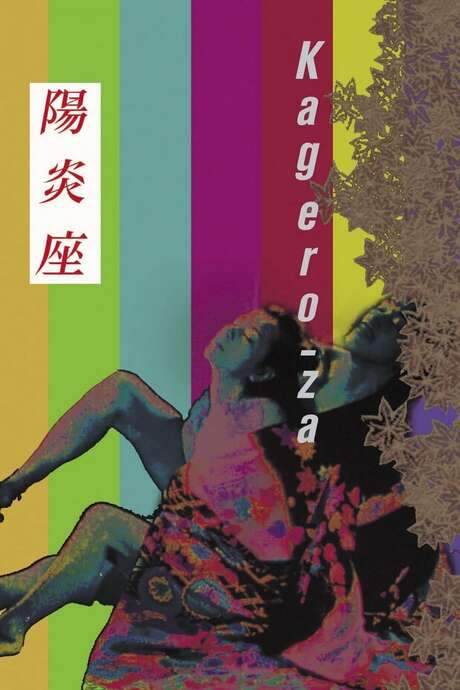
Kagero-za 1981


Directed by

Seijun Suzuki
Made by

Cinema Placet
Where to Watch Kagero-za
See current US streaming, rental, and purchase options for Kagero-za (1981) via JustWatch.



Streaming availability powered by 
Kagero-za Plot Summary
Read the complete plot summary and ending explained for Kagero-za (1981). From turning points to emotional moments, uncover what really happened and why it matters.
In 1926 Tokyo, a Shinpa playwright named Shungo Matsuzaki, Yûsaku Matsuda, meets a beautiful married woman whose name he does not know. After two more chance encounters, the two spend the night together, but Matsuzaki is surprised to find that the room she is staying in belongs to Shinako Michiyo Yasuda, the wife of his patron, Baron Tamawaki Katsuo Nakamura.
Matsuzaki learns that Tamawaki has two wives. His first wife was a German woman named Irene Eriko Kusuta whom he fell in love with while studying abroad. Tamawaki had her dye her blonde hair black and they returned to Japan together as a Japanese woman named Ine. The social tapestry surrounding Tamawaki begins to unfold, revealing how money and status shape his choices and ultimately force a division between private desires and public duties.
Tamawaki later marries Shinako, a count’s daughter whom he won over with the power of money, setting up a complex domestic arrangement that casts a long shadow over all involved. Matsuzaki meets and talks with Ine on the stairs in front of the hospital, but by that time, Ine should have already taken her last breath in her hospital room, leaving behind untold memories and questions about who she really is and what she has endured.
Matsuzaki receives a letter from Shinako saying she will wait for him in Kanazawa, and he hurries to the specified inn, knowing that their fourth rendezvous would be life-risking. Tamawaki also heads to Kanazawa, and continues to urge Matsuzaki to commit suicide with Shinako, a coercive plot that blurs the line between loyalty, desire, and despair.
Matsuzaki escapes and arrives at a strange theater called Kageroza, a venue where performance and reality begin to blur. Shinako and Iwaki follow him, and children are performing on stage in the same venue. The play about monsters on stage suddenly becomes the story of Irene, a woman tormented by a future she never chose and by the limits placed on her life. Shinako also steps onto the stage, voicing her resentment at being forced to become a second wife and recounting an affair with Matsuzaki as revenge against a system that denies women autonomy.
The Kagerouza Theatre collapses, and villagers cry out in excitement that a body has been found in the pond after a double suicide. The victims are Iwaki and Shinako, or so the scene suggests, but Matsuzaki remains uncertain, clinging to a belief that Shinako may not be dead. As festival music reverberates, Matsuzaki discovers Shinako in a mysterious room, bows to his real-world self, and sits back-to-back with Shinako, leaving the ending open to interpretation and inviting reflection on memory, guilt, and the fragility of identity in a world defined by social expectations.
Kagero-za Timeline
Follow the complete movie timeline of Kagero-za (1981) with every major event in chronological order. Great for understanding complex plots and story progression.
Chance encounters and a secret room
In 1926 Tokyo, Matsuzaki, a Shinpa playwright, meets a beautiful married woman. After two more chance encounters, they spend the night together. He is shocked to learn that the room she’s staying in belongs to Shinako, the wife of his patron, Baron Tamawaki.
Revelation of Tamawaki's two wives
Matsuzaki learns that Tamawaki has two wives: Irene, a German woman who was made to dye her hair and become Ine, and Shinako, a count's daughter who was won over with money. The revelation exposes the power dynamics and hidden sacrifices behind Tamawaki's marriages.
Ine on the hospital stairs
Matsuzaki meets Ine on the stairs in front of a hospital and speaks with her. By that time, Ine is near death in her hospital room. The encounter underscores the tragedies surrounding the main characters.
Shinako's Kanazawa letter
Matsuzaki receives a letter from Shinako saying she will wait for him in Kanazawa. He hurries to the specified inn, knowing their fourth rendezvous would be life-risking. Meanwhile, Tamawaki heads to Kanazawa and urges Matsuzaki to commit suicide with Shinako.
Escape to the Kageroza Theatre
Matsuzaki escapes and arrives at the strange theater called Kageroza. Shinako and Iwaki follow him, while villagers prepare for the performance. The theater becomes a place where reality and desire blur.
The monster play mirrors Irene and Shinako's tale
Children perform on the Kagerouza stage as a monster play unfolds. The story begins to mirror Irene’s plight of being forced into the shadows rather than becoming a wife. Shinako steps on stage and confesses her resentment at being a second wife and recounts an affair with Matsuzaki as revenge.
The theatre collapses and a double suicide is revealed
The Kagerouza Theatre collapses, and villagers cry out as a body is found in the pond following a double suicide. The victims are Iwaki and Shinako. Matsuzaki believes Shinako may still be alive, beyond what the crowd can see.
Matsuzaki doubts Shinako's death
Even amid tragedy, Matsuzaki believes Shinako is not dead. The festival music swells as he clings to the belief of finding her again.
A mysterious room and a final bow
Matsuzaki finally finds Shinako in a mysterious room and bows to his real-world self. He sits back-to-back with Shinako, suggesting a fusion of personal truth and stage illusion. The ending leaves a haunting sense of unresolved longing.
Conclusion: desire, power, and illusion
The intertwined stories reveal how wealth, desire, and social roles drive people to conceal the truth and pursue revenge. The narrative blurs the line between theatre and life, leaving Matsuzaki and Shinako to confront what is real.
Kagero-za Characters
Explore all characters from Kagero-za (1981). Get detailed profiles with their roles, arcs, and key relationships explained.
Tamawaki (Baron Tamawaki)
A powerful patron whose wealth and status drive multiple marriages. He wields influence over Matsuzaki’s career and Shinako’s position, creating a web of obligation and ambition. His polygamous arrangement and manipulation reveal the tension between public respectability and private desire.
Shungo Matsuzaki
A Shinpa playwright whose chance encounter with a married woman spirals into a dangerous affair. He is drawn to forbidden love while navigating debt to reputation and art. His actions propel the drama toward its tragic, meta-theatrical finale.
Shinako
Tamawaki’s wife, a Count’s daughter who resents being relegated to a second wife. She uses an affair with Matsuzaki as revenge and participates in the story revealed on stage. Her fate in the final act is tied to the theatre’s collapse and the surrounding mystery.
Ine
Tamawaki’s first wife, originally Irene, a German woman who was made to pass as Japanese. Her life in the shadows of a polygamous marriage becomes the subject of the theater’s tragedy. Her fate, hinted by the hospital setting, haunts the narrative.
Kagero-za Settings
Learn where and when Kagero-za (1981) takes place. Explore the film’s settings, era, and how they shape the narrative.
Time period
1926
The narrative unfolds in the mid-1920s Japan, a period of rapid modernization and social tension. Arranged marriages and wealth-driven alliances highlight gender constraints and class dynamics of the era. The setting blends urban Tokyo’s bustle with more intimate, ritual-like spaces such as the hospital and theatre.
Location
Tokyo, Kanazawa, Kagero-za Theatre
Set in 1926 Tokyo with scenes that move to Kanazawa, the story weaves between urban nightlife and provincial spaces. The Kagero-za Theatre serves as a liminal stage where real life and performance collide. The city’s modernity clashes with tradition as marriages, money, and desire shape the characters’ fates.
Kagero-za Themes
Discover the main themes in Kagero-za (1981). Analyze the deeper meanings, emotional layers, and social commentary behind the film.
🎭
Theatre & Identity
The stage becomes a mirror for the characters’ lives, turning a monster-play into Irene’s life story. Shinako, Matsuzaki, and Tamawaki watch their private truths play out on stage, blurring lines between performance and reality. The theater exposes how art can reveal, mask, or distort personal identities.
💔
Love & Betrayal
A web of forbidden affection drives the plot: Matsuzaki’s affair with Shinako and Shinako’s resentment at being the second wife. The pursuit of passion collides with social reputation and fatal consequences. The narrative treats love as both a creative force and a ruinous betrayal.
💰
Power & Money
Tamawaki’s wealth enables control over marriages and social standing, dictating who can marry whom and under what terms. Money buys appearances while masking hidden loyalties and vulnerabilities. The drama shows how financial power can weaponize desire and shape destinies.

Coming soon on iOS and Android
The Plot Explained Mobile App
From blockbusters to hidden gems — dive into movie stories anytime, anywhere. Save your favorites, discover plots faster, and never miss a twist again.
Sign up to be the first to know when we launch. Your email stays private — always.
Explore the mobile appKagero-za Spoiler-Free Summary
Discover the spoiler-free summary of Kagero-za (1981). Get a concise overview without any spoilers.
In the smoky streets of 1926 Tokyo, the world of shinpa theatre thrums with ambition, tradition, and a restless yearning for something beyond the stage. Within this world moves Shungo Matsuzaki, a talented playwright whose life is as meticulously crafted as the scripts he writes. He carries the weight of his art and the expectations of a society that measures worth by status and connections, yet he remains haunted by an undercurrent of longing that his own creations cannot satisfy.
When Shungo encounters a strikingly beautiful woman whose presence feels both intimate and elusive, the ordinary rhythm of his days is unsettled. Their chance meetings carry an air of quiet mystery, hinting that she may be more than a fleeting lover—perhaps a lingering echo of Baron Tamawaki’s late wife, a figure whose memory still shapes the lives around her. The man’s curiosity mingles with a subtle dread, as the ever-present static of the theatre’s bright lights contrasts with shadows that seem to whisper of past grievances and unspoken desires.
Against the backdrop of a city balancing modernity and age‑old hierarchy, the story weaves a mood of melancholy elegance. Shungo finds himself drawn into a delicate dance of affection, duty, and the fragile boundaries between reality and performance. The lingering presence of Baron Tamawaki and his complex domestic arrangements loom in the periphery, casting a quiet tension over every interaction. As the playwright navigates this entangled world, the line between his own narrative and the lives of those around him begins to blur, inviting contemplation of memory, identity, and the unseen forces that shape our choices.
Movies with Similar Twists and Themes
Uncover films that echo the narrative beats, emotional arcs, or dramatic twists of the one you're exploring. These recommendations are handpicked based on story depth, thematic resonance, and spoiler-worthy moments — perfect for fans who crave more of the same intrigue.
Featured on this page

What's After the Movie?
Not sure whether to stay after the credits? Find out!
Check out our other apps:

SAT Sphere
Build confidence for the Digital SAT.

Mori Atlas
Discover wild places worth protecting.

Luntero
Search smarter for a home in Amsterdam.

Plot Explained
Unravel movie endings and hidden clues.

Pokechamp
Dive into Pokémon data and battle logic.

Driving Theory
Get ready for your European theory test.

Movie Dust
Plan your next cinema trip with ease.

Musemap
Find art and culture as you travel.

Selkobase
Compare credentials before committing.

Local Manual
Turn an unfamiliar country into practical next steps.

Lernavi
Compare school systems before your next move.

GymRoam
Find a workout stop wherever your plans take you.
Explore Our Movie Platform
New Movie Releases (2026)
Famous Movie Actors
Top Film Production Studios
Movie Plot Summaries & Endings
Major Movie Awards & Winners
Best Concert Films & Music Documentaries
Movie Collections and Curated Lists
© 2026 What's After the Movie. All rights reserved.
Privacy Policy