What Is Vincere About?
The premise of Vincere in 299 words, with nothing given away. The full story follows below.
In the turbulent shadows of World War I Italy, a nation teeters between old loyalties and a looming new order. The streets pulse with political fervor, cafés echo with impassioned debates, and the promise of radical change hangs heavy in the air. Against this backdrop, the film paints a world where personal convictions collide with the grinding mechanisms of a society on the brink of transformation, its tone a blend of stark realism and lingering melancholy.
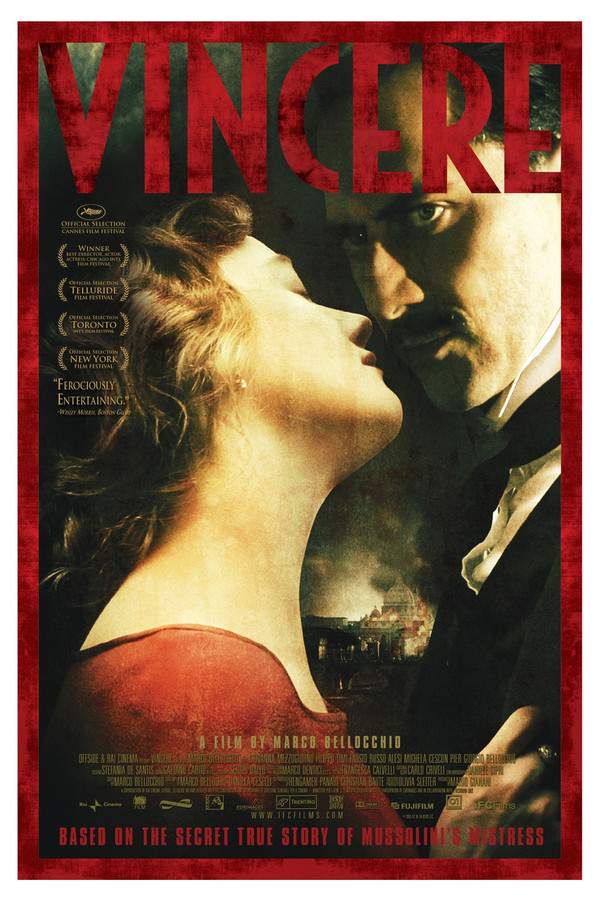
At the heart of the story is Ida Dalser, a determined and idealistic woman whose life is irrevocably altered after hearing a captivating speech. Drawn to the charisma of Benito Mussolini, the charismatic journalist turned political firebrand, she becomes enmeshed in a whirlwind romance that mirrors the chaotic era itself. Their connection is charged with youthful optimism, fierce devotion, and the intoxicating belief that together they might shape a better future.
As Mussolini’s ambitions evolve from socialist rhetoric to a more authoritarian vision, the couple’s relationship tests the limits of love, loyalty, and self‑sacrifice. Ida pours her resources and spirit into supporting his burgeoning newspaper, while Mussolini’s ascent pulls him deeper into the tumultuous currents of power. The intimacy they share is constantly threatened by the widening gulf between personal desire and political destiny, creating a tension that reverberates through every quiet moment and whispered promise.
The narrative hints at an inevitable clash between the private world Ida strives to protect and the encroaching forces of an emerging regime. Their bond, fragile yet resilient, faces the looming specter of institutional control, suggesting a struggle to maintain identity and connection amid an environment that increasingly seeks to silence dissent. The film’s atmosphere remains charged with quiet dread and hopeful yearning, inviting viewers to contemplate how love endures—or unravels—when history itself becomes a relentless opponent.
What Happens in Vincere?
The complete story of Vincere, from the first scene to the last, in 431 words (about 2 minutes). Spoilers throughout. Names in the text link to 1 cast member page.
Spoilers ahead
The narrative unfolds in the year 1907, where we find Ida Dalser captivated by a powerful speech delivered by the youthful journalist and fervent socialist, Benito Mussolini. Their connection ignites a passionate and tumultuous romance that soon engulfs both their lives. Initially, Mussolini is against Italy’s participation in the mounting tensions of the European Great War, but he experiences a dramatic shift in perspective that leads him to embrace a new role in the political landscape. This transition results in his expulsion from the Socialist Party, paving the way for a radical new ideology that will evolve into fascism.
Determined to express his evolving views, Mussolini establishes a newspaper to articulate his convictions. In a selfless act of devotion, Dalser sells off all her possessions to support this venture. As time passes, they welcome a son, Benito, but the war soon claims Mussolini, who goes off to fight, leaving Dalser anxiously awaiting news from him. Eventually, word reaches her, but it brings not solace, but heartbreak; he is recovering in a hospital from his injuries. However, her joy turns to despair when she visits him, discovering that he has taken another wife and has a daughter of his own. Despite her insistence that they are legally married, Mussolini staunchly denies their bond.
From this point onward, Mussolini’s presence is relegated to brief newsreel glimpses, symbolizing the increasing divide between him and Dalser, who is left to navigate her own fate in a tumultuous political climate. As the early 1920s roll around, Mussolini has ascended to become Italy’s leader, engaging in high-stakes negotiations with the Vatican. Meanwhile, Dalser grows more relentless in her quest to validate her marriage and prove that her son, Benito Albino, is a legitimate heir. Unfortunately, her struggles are met with the full force of the fascist regime, culminating in her being committed to an asylum. Persisting in her efforts to be heard even from behind those walls, she writes to newspapers and even the Pope himself, yet her insistence ultimately leads to further tragedies, including the committing of her son to a separate asylum.
As the narrative progresses, Dalser experiences a gradual spiral into madness, ensnared by the oppressive grip of the regime and her haunting memories. The film culminates with a sobering caption detailing the official causes of death: Dalser’s demise in 1937 and her son’s in 1942. However, the closing scenes present a chilling suggestion that the true fate of either—or both—may have involved foul play, shrouded in mysterious circumstances as a final commentary on their harrowing struggle against a formidable and ruthless political system.
Vincere Timeline: Every Key Event in Order
15 key events in the order they happen, from “Ida Dalser's First Encounter” to “Mysterious Deaths”. 4 events name a place, across 2 locations.
- 1
Ida Dalser's First Encounter
In 1907, Ida Dalser witnesses a passionate speech given by Benito Mussolini, a promising young journalist and socialist. Captivated by his charisma and ideas, she immediately feels an intense attraction towards him, which sets the stage for their tumultuous relationship.
When:1907
- 2
The Affair Begins
Following their initial encounter, Ida and Mussolini begin a torrid affair that consumes both of their lives. Their relationship is characterized by intense passion but also foreshadows the political struggles that will follow.
- 3
Mussolini's Shift on War
Mussolini initially opposes Italy's involvement in the ongoing European Great War, reflecting his socialist beliefs. However, as the political climate changes, he alters his stance, which ultimately leads to his expulsion from the Socialist Party for his newfound support of the war.
- 4
The Birth of a Political Philosophy
After his expulsion, Mussolini develops a radical new political ideology that will shape Italy's future: fascism. He soon decides to start a newspaper to promote his views, marking the beginning of his rise to power.
- 5
Ida's Sacrifice
In a show of unwavering support, Ida Dalser sells all her belongings to finance Mussolini's newspaper. Her dedication to Mussolini's political ambitions illustrates the depth of her commitment and love, but also foreshadows her future struggles.
- 6
The Birth of Their Son
Ida and Mussolini welcome the birth of their son, whom they name Benito. This event deepens Ida's emotional ties to Mussolini, as she hopes to build a family and future together.
- 7
Mussolini Goes to War
As Mussolini enlists and goes off to fight in the Great War, Ida is left alone and anxious about his safety. She does not hear from him for an extended period, reflecting the uncertainty and turmoil of a war-torn society.
- 8
A Shocking Reunion
Ida finally receives word of Mussolini after he is injured and recuperating in a hospital. However, when she visits him, she is devastated to discover that he has a new wife and daughter, shattering her hopes and dreams.
Where:Hospital
- 9
Legal Battle for Recognition
Ida asserts that she is Mussolini's legal wife, but he vehemently denies their marriage. This denial sets off a turbulent legal battle, with Ida desperately seeking recognition for herself and their son as members of Mussolini's family.
- 10
Mussolini's Rise to Power
By the early 1920s, Mussolini rises to become the leader of Italy and begins establishing ties with the Vatican. His political ascent comes at the cost of Ida's distress as she fights to validate her own existence and that of her son in the face of formidable opposition.
When:1920s
Show the other 5 events of Vincere Hide the last 5 events
- 11
Ida's Asylum Commitment
Faced with an all-out campaign against her by the fascist state, Ida is committed to an asylum. This drastic measure illustrates the lengths to which Mussolini will go to silence her and protect his burgeoning regime.
Where:Asylum
- 12
Attempt to Expose the Truth
Even from the asylum, Ida continues her fight, writing letters to newspapers and even to the Pope. Her desperate attempts to communicate her truth represent the determination of a woman scorned and oppressed by the political machinery.
- 13
Benito Albino's Fate
In a tragic turn of events, Mussolini’s son, Benito Albino, is also committed to an asylum, separating him from his mother. This highlights the broader theme of familial destruction wrought by Mussolini’s political ambitions.
Where:Asylum
- 14
Ida's Descent into Madness
As years pass and her appeals remain unheard, Ida descends further into madness within the asylum's walls. Her mental decline represents the crushing weight of her isolation and the trauma inflicted by Mussolini's regime.
Where:Asylum
- 15
Mysterious Deaths
The film concludes with a stark mention of the official causes of both Ida and Benito Albino's deaths in the late 1930s and early 1940s. However, the ambiguous final scenes suggest that their demises may have been tied to darker forces, hinting at the pervasive violence of Mussolini's rule.
Who Are the Main Characters in Vincere?
2 characters, among them Ida Dalser and Benito Mussolini: who each one is and the part they play in the story.
- ID
Ida Dalser
Ida Dalser is depicted as a passionate and devoted woman whose life becomes a reflection of her tumultuous relationship with Mussolini. As she dedicates herself to his political aspirations, her strength and resilience are overshadowed by betrayal and eventual madness. Her character embodies the struggles of women during political upheaval and the personal costs of love.
- 👩🦰 Protagonist
- 💔 Love
- ⚖️ Struggle
- BM
Benito Mussolini
Benito Mussolini is portrayed as a charismatic yet ruthless leader whose transformation from a passionate journalist to a fascist dictator profoundly impacts those around him. His character encapsulates ambition and betrayal, showcasing how personal relationships can be sacrificed for political power. Mussolini's journey reflects the darker side of leadership in times of crisis.
- 📰 Journalist
- ⚔️ Ambition
- 👑 Dictator
Where and When Is Vincere Set?
Vincere is set in Italy (1907-1942). Here is why the time and place matter to the story.
When
1907-1942
The narrative spans from 1907 to 1942, a period marked by dramatic social and political shifts in Italy. Beginning with Mussolini's early activism and evolving into the turbulent years of World War I and the rise of fascism in the 1920s, this era saw significant changes that affected the lives of many Italians. By the early 1940s, the disappointments and struggles faced by individuals like Ida Dalser reveal the broader impact of oppressive political regimes.
Where
Italy
The movie primarily takes place in Italy during a period of significant political upheaval. Known for its rich history and cultural heritage, Italy during this time was grappling with the rise of fascism and the impact of world events, like the Great War. The backdrop of cities and rural areas reflects the tension between traditional values and emerging radical ideologies.
- 🇮🇹 Italy
- 📜 Historical
What Are the Themes of Vincere?
3 ideas the story keeps returning to, among them Lost Love, Justice and Madness.
-
01
Lost Love
The theme of lost love is central to the story, as Ida Dalser's deep feelings for Mussolini are met with betrayal and heartbreak. Her unwavering devotion is contrasted with Mussolini's transformation and ultimate rejection of their relationship. This theme emphasizes the emotional toll of political ambition on personal connections.
-
02
Justice
The quest for justice permeates the narrative as Ida Dalser fights to validate her marriage and her son's legitimacy. Despite her relentless efforts against a powerful regime, she is met with rejection and madness. This struggle highlights the difficulties faced by individuals seeking truth in a system that deprives them of their voice.
-
03
Madness
Madness serves as a poignant theme, illustrated through Ida's deteriorating mental state due to the oppressive political climate and personal losses. Her descent into insanity symbolizes the broader impact of fascist tyranny on individuals. The film portrays how the struggle for recognition can lead to tragic outcomes, questioning the price of devotion in the face of adversity.
What Kind of Film Is Vincere?
Bleak in tone, with steady pacing and a moderate story, going by the plot summary.
- Tone
- Bleak
- Pacing
- Steady
- Story
- Moderate
- Intensity
- High
- Ending
- Bleak
A bleak and emotionally devastating historical drama that chronicles a woman's systematic destruction by a fascist regime, creating a heavy, oppressive atmosphere of relentless tragedy and institutional cruelty.
- oppressive
- grim
- melancholic
- desperate
- tragic
- haunting
- political oppression
- dictatorship
- historical tragedy
- mental health crisis
Content notes: political persecution, involuntary institutionalization, child separation, implied murder.
Quiz
How well do you remember Vincere? Test yourself on the story.