Vincere 2010

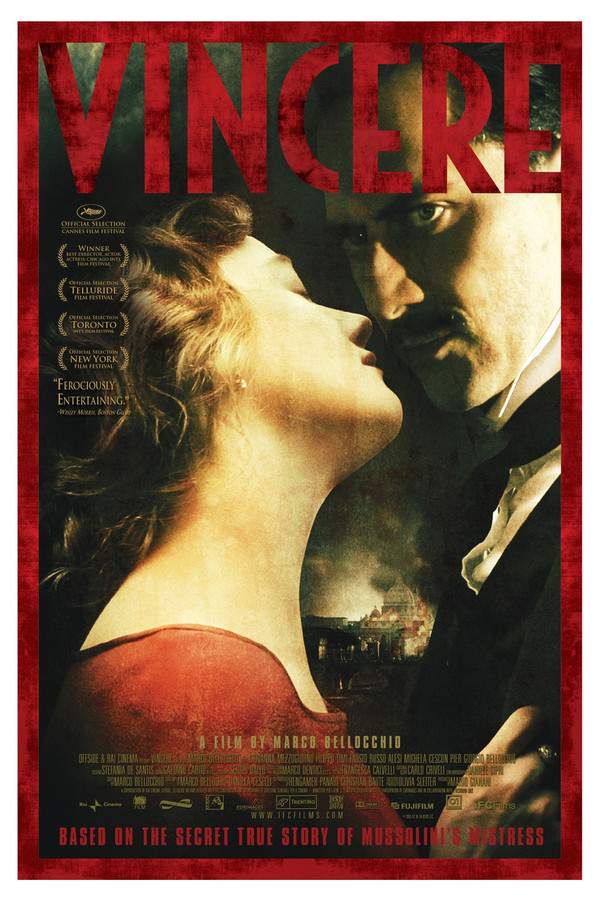
During World War I, Ida Dalser becomes deeply involved with the charismatic and rising political figure Benito Mussolini. Blinded by her admiration for his revolutionary ideas, she fails to recognize his numerous infidelities. Following a painful separation and feeling abandoned, Ida finds comfort in her young son, but their fragile bond is shattered when they are both institutionalized. Stripped of their freedom and facing unpredictable circumstances, they struggle to maintain their connection amidst hardship and loss.


Does Vincere have end credit scenes?
No!
Vincere does not have end credit scenes. You can leave when the credits roll.
Meet the Full Cast and Actors of Vincere
Explore the complete cast of Vincere, including both lead and supporting actors. Learn who plays each character, discover their past roles and achievements, and find out what makes this ensemble cast stand out in the world of film and television.
No actors found
External Links and Streaming Options
Discover where to watch Vincere online, including streaming platforms, rental options, and official sources. Compare reviews, ratings, and in-depth movie information across sites like IMDb, TMDb, Wikipedia or Rotten Tomatoes.









Ratings and Reviews for Vincere
See how Vincere is rated across major platforms like IMDb, Metacritic, and TMDb. Compare audience scores and critic reviews to understand where Vincere stands among top-rated movies in its genre.

85
Metascore
7.1
User Score


91%
TOMATOMETER

68%
User Score

67
%
User Score
Take the Ultimate Vincere Movie Quiz
Challenge your knowledge of Vincere with this fun and interactive movie quiz. Test yourself on key plot points, iconic characters, hidden details, and memorable moments to see how well you really know the film.
Vincere Quiz: Test your knowledge on the film 'Vincere' and its historical context.
In what year does the film 'Vincere' open?
Full Plot Summary and Ending Explained for Vincere
Read the complete plot summary of Vincere, including all major events, twists, and the full ending explained in detail. Explore key characters, themes, hidden meanings, and everything you need to understand the story from beginning to end.
The narrative unfolds in the year 1907, where we find Ida Dalser captivated by a powerful speech delivered by the youthful journalist and fervent socialist, Benito Mussolini. Their connection ignites a passionate and tumultuous romance that soon engulfs both their lives. Initially, Mussolini is against Italy’s participation in the mounting tensions of the European Great War, but he experiences a dramatic shift in perspective that leads him to embrace a new role in the political landscape. This transition results in his expulsion from the Socialist Party, paving the way for a radical new ideology that will evolve into fascism.
Determined to express his evolving views, Mussolini establishes a newspaper to articulate his convictions. In a selfless act of devotion, Dalser sells off all her possessions to support this venture. As time passes, they welcome a son, Benito, but the war soon claims Mussolini, who goes off to fight, leaving Dalser anxiously awaiting news from him. Eventually, word reaches her, but it brings not solace, but heartbreak; he is recovering in a hospital from his injuries. However, her joy turns to despair when she visits him, discovering that he has taken another wife and has a daughter of his own. Despite her insistence that they are legally married, Mussolini staunchly denies their bond.
From this point onward, Mussolini’s presence is relegated to brief newsreel glimpses, symbolizing the increasing divide between him and Dalser, who is left to navigate her own fate in a tumultuous political climate. As the early 1920s roll around, Mussolini has ascended to become Italy’s leader, engaging in high-stakes negotiations with the Vatican. Meanwhile, Dalser grows more relentless in her quest to validate her marriage and prove that her son, Benito Albino, is a legitimate heir. Unfortunately, her struggles are met with the full force of the fascist regime, culminating in her being committed to an asylum. Persisting in her efforts to be heard even from behind those walls, she writes to newspapers and even the Pope himself, yet her insistence ultimately leads to further tragedies, including the committing of her son to a separate asylum.
As the narrative progresses, Dalser experiences a gradual spiral into madness, ensnared by the oppressive grip of the regime and her haunting memories. The film culminates with a sobering caption detailing the official causes of death: Dalser’s demise in 1937 and her son’s in 1942. However, the closing scenes present a chilling suggestion that the true fate of either—or both—may have involved foul play, shrouded in mysterious circumstances as a final commentary on their harrowing struggle against a formidable and ruthless political system.

Coming soon on iOS and Android
The Plot Explained Mobile App
From blockbusters to hidden gems — dive into movie stories anytime, anywhere. Save your favorites, discover plots faster, and never miss a twist again.
Sign up to be the first to know when we launch. Your email stays private — always.
Explore the mobile appWatch Trailers, Clips & Behind-the-Scenes for Vincere
Watch official trailers, exclusive clips, cast interviews, and behind-the-scenes footage from Vincere. Dive deeper into the making of the film, its standout moments, and key production insights.
Vincere Themes and Keywords
Discover the central themes, ideas, and keywords that define the movie’s story, tone, and message. Analyze the film’s deeper meanings, genre influences, and recurring concepts.
Vincere Other Names and Titles
Explore the various alternative titles, translations, and other names used for Vincere across different regions and languages. Understand how the film is marketed and recognized worldwide.
Similar Movies To Vincere You Should Know About
Browse a curated list of movies similar in genre, tone, characters, or story structure. Discover new titles like the one you're watching, perfect for fans of related plots, vibes, or cinematic styles.






Quick Links: Summary, Cast, Ratings, More

What's After the Movie?
Not sure whether to stay after the credits? Find out!
Check out our other apps:

SAT Sphere
Build confidence for the Digital SAT.

Mori Atlas
Discover wild places worth protecting.

Luntero
Search smarter for a home in Amsterdam.

Plot Explained
Unravel movie endings and hidden clues.

Pokechamp
Dive into Pokémon data and battle logic.

Driving Theory
Get ready for your European theory test.

Movie Dust
Plan your next cinema trip with ease.

Musemap
Find art and culture as you travel.

Selkobase
Compare credentials before committing.

Local Manual
Turn an unfamiliar country into practical next steps.

Lernavi
Compare school systems before your next move.

GymRoam
Find a workout stop wherever your plans take you.
Explore Our Movie Platform
New Movie Releases (2026)
Famous Movie Actors
Top Film Production Studios
Movie Plot Summaries & Endings
Major Movie Awards & Winners
Best Concert Films & Music Documentaries
Movie Collections and Curated Lists
© 2026 What's After the Movie. All rights reserved.
Privacy Policy