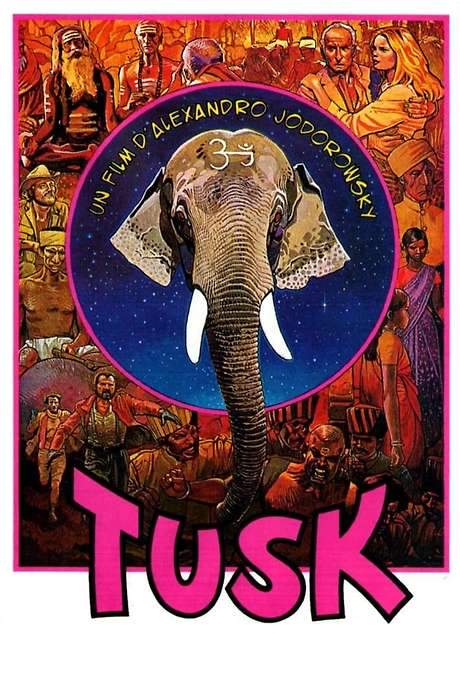
What Is Tusk About?
The premise of Tusk in 278 words, with nothing given away. The full story follows below.
In the sweltering heart of British‑ruled India, the landscape pulses with the clash of empire and ancient tradition. Sun‑baked villages sit beside teak‑framed outposts, while the scent of incense mingles with the distant rumble of railways. This world is both lush and restrained, a place where the rhythm of the land whispers to anyone willing to listen, and where the weight of colonial authority presses against a vibrant, enduring culture.
Elise Morrison grows up straddling two worlds: the privileged enclave of her British father and the soulful pulse of the Indian plains that calls to her from childhood. Her most intimate companion is Tusk, a rescued elephant whose gentle strength becomes a living bridge between her inherited past and the destiny she feels is hers to claim. Elise’s yearning for belonging drives her to adopt the colors and customs of the people she reveres, a bold gesture that marks her as both outsider and insider and sets the tone for the quiet rebellion that hums beneath the surface of daily life.
The arrival of Richard Cairn, a young American hunter with a restless love for the untamed, introduces a fierce yet tender counterpoint to Elise’s inner conflict. Their connection is immediate, bound by a shared reverence for the wild, yet it also threatens the expectations placed upon them by John Morrison, Elise’s colonist father, who envisions a different path rooted in power and prestige. As the simmering tensions between duty, love, and the call of the earth begin to surface, the story hints at a journey that will test loyalties, challenge cultural boundaries, and celebrate the fragile beauty of a world where humans and nature are inexorably intertwined.
What Happens in Tusk?
The complete story of Tusk, from the first scene to the last, in 683 words (about 3 minutes). Spoilers throughout. Names in the text link to 6 cast member pages.
Spoilers ahead
Elise Morrison, Cyrielle Clair, the daughter of a British colonist, grows up in a world that brushes against the Indian soul she feels so deeply connected to. She shelters and befriends Tusk, a loyal elephant she rescued from a brutal fate that would have claimed many of his kind, and this bond becomes a guiding thread through her life. When she returns from England, she unsettles a watching crowd by stepping into Hindu clothing and makeup, a bold, intimate gesture that signals her unwavering devotion to a culture she feels kinship with rather than conquest. This defiant stance irks Lord Spencer, whose intolerance quickly Turns to offense, setting the stage for a collision of worlds that will test every loyalty around her.
Lord Spencer, Tudor Gates, takes offense and openly disrespects Elise, and it is in this charged moment that Richard Cairn, the young American hunter, Christopher Mitchum, steps in with a forceful counter. His protective impulse blossoms into something deeper, and Elise finds herself drawn to a man who shares a hunger for the wild, though their paths soon reveal a more complicated force at work: she has already begun to break away from her father’s guardianship. After a months-long sojourn into the hunt, Richard returns, and the sight of him rekindles a rivalrous edge in their dynamic. Elise’s heart is pulled in two directions—toward the hunter who stirs her passion and toward a life that seems increasingly bound to Tusk and the primal world she cherishes.
As the story intensifies, Morrison, Anton Diffring (John Morrison), proposes a Kedah elephant hunt to push Elise away, trying to redraw the lines that bind her to the elephant and the land. But Elise refuses to retreat; she insists on joining the expedition, not to prove a point to Richard but to protect Tusk, the great prize at the center of the hunt, and to demonstrate that her allegiance lies with a living landmark of India’s natural wonder. Her resolve unsettles Richard, whose jealousy surfaces as the couple’s bond becomes tangled with pride and purpose. Morrison’s proposal opens up a broader conversation about nature, power, and the wisdom that can come from listening to the land itself.
Tusk is captured alongside the other elephants, but through Elise’s unwavering advocacy and Morrison’s gradual awakening to the secrets of the natural world, the great creature finds a path to freedom. The tension peaks when two sinister figures, Shakley and Greyson, seize him, dragging him back into a world of domination and control. Tusk fights back in a surge of fury against the trappings of civilization he encounters, while his mahout works to free him. In the chaos that follows, Shakley takes Elise hostage, forcing Richard to race against time to mount a rescue.
Richard charges forward, driven by a mix of love and loyalty, and the stakes soar as the struggle between hunter and captive, between arrogance and reverence, comes to a head. The rescue, when it comes, is not only a relief but a vindication: Elise and Richard survive, their bond strengthened by danger and trust. Yet the ultimate vindication belongs to Tusk, whose arrival shifts the balance and brings judgment to the “bad guys.” The elephant’s presence punctures the pretensions of civilization, leaving Elise and Richard with a chance to speak honestly about their feelings and futures.
In the aftermath, Morrison experiences a profound spiritual awakening, as the stories of India—its rhythms, its reverence for life, and its ancient wisdom—begin to shape his own worldview. The world comes to recognize Tusk as more than a prize but as a sacred being, a symbol of the people’s reverence for nature. With the elephant declared sacred, Tusk regains his freedom and steps into a mythic stature that transcends captivity. Born into bondage, his journey culminates in a divine status, embodying Ganesh in the hearts and rituals of those who once sought to own him. Through this transformation, Elise and Richard are free to confess their love openly, a quiet but powerful closing note that honors both the human heart and the larger, greener world that forged them.
Tusk Timeline: Every Key Event in Order
13 key events in the order they happen, from “Elise returns from England and provokes the audience” to “Tusk is declared sacred and becomes Ganesh”. 13 events name a place, across 13 locations.
- 1
Elise returns from England and provokes the audience
Elise Morrison returns from studying in England and is eager to connect with Indian culture, even dressing in Hindu clothing and makeup. Her display provokes the noble audience gathered to celebrate her return. The tension foreshadows conflict within her own colonial world.
Where:England / colonial town festival
- 2
Lord Spencer insults Elise; Richard intervenes
During the celebration, Lord Spencer openly insults Elise, provoking a heated confrontation. The young American Richard Cairns steps in and strikes Spencer in defense of her honor. The moment cements a fraught attraction between Elise and Richard.
Where:Celebration site
- 3
Elise aligns with Richard and leaves her father's guardianship
Elise, now enthralled with Richard, breaks away from her father's guardianship. After a few months away, Richard returns, hinting at renewed tension and competition. The dynamic sets the stage for the Kedah hunt as a test of loyalty and love.
Where:Elise's estate / hunting grounds
- 4
Morrison schemes a Kedah elephant hunt to push Elise away
Morrison proposes a Kedah elephant hunt as a means to drive Elise away from her father’s control and away from Richard. Elise insists on joining, driven by more than romance; she wants to save Tusk, the prized elephant. The conflict between human and animal loyalty deepens.
Where:Morrison's estate / Kedah hunting grounds
- 5
Tusk and the elephants are captured
The hunting party captures Tusk and the other elephants, beginning the central crisis of the journey. Elise’s determination to rescue Tusk intensifies as the hunt proceeds. The event marks a shift from sport to a fight for a sentient being’s freedom.
Where:Kedah plains / hunting grounds
- 6
Tusk frees himself and escapes
Through Elise’s and Morrison's exhortations, Tusk seems to free himself from captivity and escapes. His escape disrupts the hunt and signals a turn toward the animal’s own agency. The scene foreshadows further confrontations with civilization.
Where:Captivity site / jungle edge
- 7
Tusk is recaptured by Shakley and Greyson
After his escape, Tusk is captured by Shakley and Greyson, two sinister figures who want to control him. They seek to turn him into a trophy or instrument of fear. Elise and Morrison brace for the consequences of this capture.
Where:Shakley and Greyson's camp
- 8
Tusk is freed by his mahout and wreaks vengeance
Tusk is freed by his mahout, and, enraged, he lashes out against the signs of civilization he encounters. The elephant's rampage heightens the danger for the human characters. Richard, Elise, and Morrison realize the stakes are life and legacies.
Where:Jungle to outskirts of civilization
- 9
Shakley captures Elise
Shakley takes Elise hostage, forcing Richard to race to her rescue. The power dynamic shifts as human greed clashes with a determined rescue mission. The bond between Elise and Richard deepens as they face immense danger.
Where:Shakley's camp
- 10
Richard rescues Elise; Tusk arrives and defeats the antagonists
Richard arrives to save Elise, but the turning point comes when Tusk appears and punishes the villains. The rescue solidifies Elise and Richard's relationship, while the elephant asserts his freedom. The sequence blends romance, action, and the triumph of the natural world.
Where:Jungle/camp
Show the other 3 events of Tusk Hide the last 3 events
- 11
Elise and Richard confess their love
With the danger over, the two youths openly confess their love for each other. The moment seals their bond and signals a new future beyond conflict. Their relationship faces the test of their divergent backgrounds.
Where:Camp clearing
- 12
Morrison experiences the spirit of India
Morrison undergoes a personal transformation, discovering the spirit of India and being initiated into its spiritual dimension. His change reframes his understanding of nature and humanity. The journey marks a bridge between colonial and native wisdom.
Where:Jungle temple / Morrison's camp
- 13
Tusk is declared sacred and becomes Ganesh
The people declare Tusk a sacred elephant, granting him freedom. Born a slave, he is reborn as a revered deity under the name Ganesh. The ritual elevates him from animal to divine status and frees him to roam.
Where:Village / temple ceremony
Who Are the Main Characters in Tusk?
5 characters, among them Elise Morrison (Cyrielle Clair), Richard Cairns (Christopher Mitchum) and Tusk (Ganesh): who each one is and the part they play in the story. 4 of them link to the actor’s page.
- EM
Elise Morrison (Cyrielle Clair)
Played by Cyrielle Clair
Daughter of a British colonist who feels a deep kinship with Indian culture. She defies her father by embracing Indian dress and customs, joins the Kedah elephant hunt to protect Tusk, and undergoes a personal awakening that blends courage with compassion.
- 🧭 Culture
- 🛡️ Bravery
- 💖 Romance
- 🐘 Animal Affinity
- RC
Richard Cairns (Christopher Mitchum)
Played by Christopher Mitchum
An American elephant hunter whose arrival sparks romance and rivalry. Initially aligned with Elise, his jealousy and competitive drive complicate the hunt, but he proves to be a determined ally in protecting Elise and Tusk.
- ⚔️ Rivalry
- 🧭 Ambition
- 💘 Romance
- T(
Tusk (Ganesh)
Rescued by Elise from a fate of slavery, Tusk embodies the struggle between captivity and freedom. He frees himself during the hunt, becomes a symbol of sacred power, and eventually earns a status as Ganesh in the local lore.
- 🐘 Sacred
- 🕊️ Freedom
- 💥 Power
- S
Shakley
Played by Michel Peyrelon
One of the sinister antagonists who helps capture Tusk and threatens Elise. His actions drive the conflict, and his machinations reveal the darker side of the quest for control over the elephants.
- ⚔️ Villainy
- 💰 Greed
- G
Greyson
Played by Serge Merlin
A menacing figure aligned with Shakley who pursues his own interests through manipulation and menace. His presence heightens the danger faced by Elise, Richard, and Tusk.
- ⚔️ Villainy
- 🕵️ Mystery
Where and When Is Tusk Set?
Tusk is set in India and Kedah (Colonial India (British Raj)). Here is why the time and place matter to the story.
When
Colonial India (British Raj)
The narrative takes place during the colonial era when Indian society was under British rule. Social hierarchies and imperial authority frame relationships, while Hindu and Indian cultural motifs anchor the story's spiritual undertones. The period also underlines the tension between modernization and traditional values.
Where
India, Kedah
The story unfolds in colonial India, where British influence intersects with Indian traditions. A central elephant hunt in Kedah highlights the cultural clash between imperial spectacle and local reverence for elephants. The setting blends rural landscapes with colonial authority, framing personal loyalties against wider power dynamics.
- 🇮🇳 Indian Culture
- 🕰️ Colonial Setting
- 🐘 Elephants
What Are the Themes of Tusk?
4 ideas the story keeps returning to, among them Romance & Rivalry, Sacred Elephant and Nature vs Civilization.
-
01
Romance & Rivalry
Romantic attraction collides with competition and jealousy as Elise's affections and loyalties pull in different directions. Richard's presence intensifies the rivalry, and Lord Spencer's snobbery complicates their relationships. Elise's choice between love and loyalty becomes a test of character for everyone involved. The tensions propel the hunt from spectacle to a deeper emotional journey.
-
02
Sacred Elephant
Tusk's journey from enslaved animal to revered being mirrors the film's spiritual arc. His struggles against captivity, his dramatic escape during the hunt, and his eventual acceptance as Ganesh illuminate themes of reverence, power, and transformation. The animal's perspective reframes civilization's prestige against nature's enduring wisdom. His fate ties personal liberty to a larger cultural myth.
-
03
Nature vs Civilization
The forest's laws clash with imperial rationality as nature challenges human control. Tusk embodies the wild's stubborn independence, resisting captivity and calculation. Morrison's experiences in the Indian landscape unlock a spiritual dimension that transcends colonial assumptions. The result is a reconciliation between nature's logic and human emotion, suggesting a broader harmony beyond empire.
-
04
Cultural Fusion
Elise's adoption of Indian attire and customs signals a boundary-crossing transformation. The story traces how cultural exchange reshapes identities, alliances, and loyalties. By year’s end, the sacred bond with Tusk symbolizes a bridge between British and Indian worlds. The conclusion proposes a more inclusive vision where tradition and modernity can coexist.
What Kind of Film Is Tusk?
Hopeful in tone, with steady pacing and a moderate story, going by the plot summary.
- Tone
- Hopeful
- Pacing
- Steady
- Story
- Moderate
- Intensity
- Medium
- Ending
- Happy
An epic and spiritual adventure set in colonial India, following a young woman's deep connection with an elephant, culminating in a triumphant and serene resolution.
- epic
- spiritual
- adventurous
- dramatic
- triumphant
- dreamlike
- colonialism
- human-animal bond
- coming of age
- cultural clash
Content notes: animal captivity, colonial oppression, perilous situations.