What Is Turtles Can Fly About?
The premise of Turtles Can Fly in 293 words, with nothing given away. The full story follows below.
In a dusty Kurdish refugee camp perched on the Iraq–Turkey border, daily life unfolds beneath the uneasy calm that precedes a looming conflict. The makeshift settlement, a patchwork of canvas tents and bartered supplies, echoes with the distant rumble of war while its inhabitants cling to the thin threads of routine that give their world shape. The atmosphere is both harsh and intimate, a place where the harshness of displacement meets the stubborn pulse of community.
At the heart of this fragile enclave is Kak Satellite, a thirteen‑year‑old who has become the unofficial “handyman” for the camp’s children. Known for his uncanny knack for installing satellite dishes and coaxing signals from the sky, he supplies a rare glimpse of the outside world to those who have never left the camp’s perimeter. His quick wit and resourcefulness make him a magnetic, if sometimes mercurial, leader, guiding his peers through the precarious tasks that keep them occupied and safe.
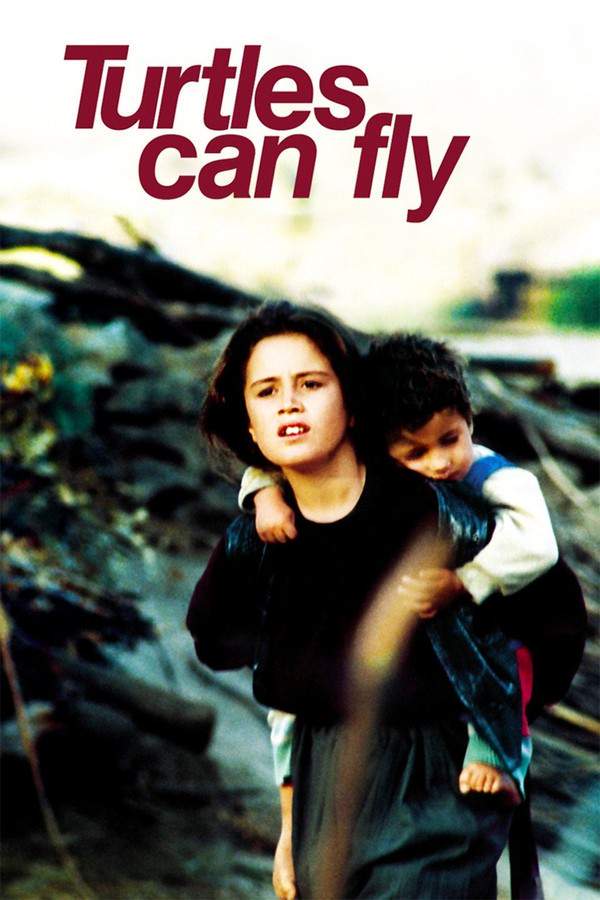
Among the faces that orbit his world is Agrin, a quiet girl who arrives bearing the weight of a painful past and a fierce protective instinct toward her younger brother Hengov and a newborn they call Riga. The trio forms an unlikely family, navigating the camp’s limited comforts while each grapples with their own shadows. Their interactions are tinged with tenderness and unspoken tension, hinting at deeper stories that linger just beneath the surface.
The film’s tone is a blend of stark realism and lyrical melancholy, drawing viewers into a landscape where innocence is constantly tested by forces far beyond the children’s control. It paints a portrait of resilience that glimmers amid the dust, inviting curiosity about how these young lives will respond to the ever‑approaching storm without ever revealing the exact path they will tread.
What Happens in Turtles Can Fly?
The complete story of Turtles Can Fly, from the first scene to the last, in 436 words (about 2 minutes). Spoilers throughout. Names in the text link to 1 cast member page.
Spoilers ahead
The story unfolds in a Kurdish refugee camp located on the Iraq–Turkey border, just before the US invasion of Iraq. At the heart of the narrative is a thirteen-year-old boy, Soran Ebrahim, who is affectionately called Kak Satellite. Known for his skill in installing satellite dishes and antennas for local villages eager for updates about Saddam Hussein, Kak Satellite’s limited grasp of the English language stems from his interactions with the American forces during their invasion. He stands out as a dynamic yet manipulative leader among the children, orchestrating the perilous task of sweeping and clearing minefields. Despite many of these youngsters suffering various injuries, they maintain a spirited chatter as they devote themselves to their work amidst their challenging lives.
Kak Satellite is not just a leader; he is resourceful in trading undetonated mines. His feelings deepen for Agrin, a girl from Halabja who has recently joined the camp and is confronting her own demons. Agrin, often somber and lost in her thoughts, travels with her disabled brother Hengov, who bears the burden of his clairvoyant abilities that have marred his reputation. They care for a blind toddler named Riga, whom they consider their “little brother.” The backstory of Agrin is harrowing; she gave birth to Riga following a tragic incident with Ba’ath soldiers, which involved gang rape and violent attempts to drown her and her brother. Unfortunately, Agrin perpetually sees Riga as a reminder of her trauma, unable to view him without feeling tainted by her brutal past.
In her desperate struggle, Agrin attempts to abandon the child and even contemplates suicide on several occasions, including a failed attempt to burn herself in a nearby lake. Her anguish leads her to tie Riga to a tree to rid herself of the burden. However, the situation worsens when he wanders into a minefield. During a harrowing rescue attempt, Kak Satellite is injured by an explosive. After numerous desperate tries, Agrin ties Riga to a rock and tragically throws him into the lake before choosing to end her own life by jumping off a cliff.
In a heartbreaking twist, Hengov perceives a vision of their loved ones in peril and rushes out of their tent, only to arrive too late to save them. He ultimately discovers his nephew’s body at the lake’s bottom but is powerless to free him due to his disability. In a moment of deep sorrow, Hengov mourns on the cliff where Agrin made her fateful jump. Meanwhile, a severely injured Kak Satellite watches as the American soldiers pass by, their earlier charm and hope has vanished, leaving him disillusioned by the intervention.
Turtles Can Fly Timeline: Every Key Event in Order
15 key events in the order they happen, from “Setting the Scene” to “The Aftermath of War”. 14 events name a place, across 5 locations.
- 1
Setting the Scene
The story begins in a Kurdish refugee camp located on the Iraq–Turkey border, a place bustling with life just before the US invasion of Iraq. This backdrop highlights the tension and uncertainty facing the refugees as they navigate their precarious existence.
When:Just before the US invasion of Iraq Where:Kurdish refugee camp
- 2
Introduction of Kak Satellite
Thirteen-year-old Soran Ebrahim is introduced as Kak Satellite, a nickname earned for his skills in installing satellite dishes. He becomes a central figure in the camp, eagerly connecting local villages to news updates about Saddam Hussein.
Where:Kurdish refugee camp
- 3
Kak Satellite's Leadership
Kak Satellite emerges as a dynamic yet manipulative leader among the local children. His leadership is showcased in their dangerous task of sweeping and clearing minefields, where they remain remarkably spirited amidst the risks.
Where:Kurdish refugee camp
- 4
Introduction of Agrin
Agrin, a girl from Halabja, arrives at the camp and captures Kak Satellite's attention. Her presence brings both hope and emotional turmoil as she grapples with her trauma and responsibilities for her disabled brother, Hengov.
Where:Kurdish refugee camp
- 5
Hengov's Burden
Hengov, Agrin's disabled brother, struggles with his clairvoyant abilities that have caused shame and hardship. Their family life is further complicated by the care of a blind toddler named Riga, whom they consider family despite the painful memories he represents.
Where:Kurdish refugee camp
- 6
Agrin's Past Trauma
Agrin's backstory reveals a haunting past involving a violent encounter with Ba'ath soldiers, resulting in the birth of Riga. This trauma continues to overshadow her existence, as she battles feelings of anger and guilt towards the child.
- 7
Agrin's Struggle with Maternal Instincts
In her desperation, Agrin contemplates abandoning Riga and considers taking her life as a means of escape. Her mental state deteriorates further when she attempts to drown herself in a nearby lake, highlighting her emotional turmoil.
Where:Nearby lake
- 8
Riga's Dangerous Wander
While tied to a tree to alleviate her burden, Riga wanders into a minefield, setting the stage for a dramatic rescue. Kak Satellite bravely ventures to save him but is injured by an explosive during the chaotic attempt.
Where:Minefield
- 9
Agrin's Desperate Act
In a tragic turn of events, Agrin ties Riga to a rock and throws him into the lake as a final act of despair. She then chooses to leap off a cliff, believing it to be the only way to escape her pain.
Where:Cliff
- 10
Hengov's Grief
After perceiving a foreboding vision, Hengov rushes from their tent only to find too late that both Agrin and Riga are gone. His disability renders him unable to retrieve his nephew's body from the lake, deepening his grief.
Where:Lake
Show the other 5 events of Turtles Can Fly Hide the last 5 events
- 11
Hengov's Lament
Hengov mourns on the cliff's edge, where Agrin ended her life. This moment captures the power of unresolved trauma and the weight of familial connections as he grapples with the loss.
Where:Cliff
- 12
Kak Satellite's Disillusionment
With severe injuries and a heart filled with sorrow, Kak Satellite watches the American soldiers pass by. The hope that once accompanied their arrival is replaced by a grim realization of lost innocence and shattered dreams.
Where:Kurdish refugee camp
- 13
The Camp's Ongoing Struggles
Despite the tragedies that unfold, the refugee camp continues to operate under the looming threat of danger. The resilience of the children and their pursuit for communication contrasts sharply with the violent reality surrounding them.
Where:Kurdish refugee camp
- 14
A Glimpse of Hope
As the children of the camp look for ways to connect with the world outside, there remains a flicker of hope for a better future. Their resourcefulness and desire for information symbolize a deeper yearning for freedom and stability.
Where:Kurdish refugee camp
- 15
The Aftermath of War
In the aftermath of the events, the camp is forever changed, with its inhabitants marked by both loss and survival. The story serves as a poignant reminder of the devastating impact of war on innocent lives.
Where:Kurdish refugee camp
Who Are the Main Characters in Turtles Can Fly?
4 characters, among them Kak Satellite (Soran Ebrahim), Agrin and Hengov: who each one is and the part they play in the story. 1 of them link to the actor’s page.
- KS
Kak Satellite (Soran Ebrahim)
Played by Soran Ebrahim
Kak Satellite is a thirteen-year-old boy who exhibits charisma and manipulation skills, leading other children in a hazardous life amidst war. He thrives in his role, installing satellite dishes to gain information about the unfolding conflict. His journey reveals a complex interplay of leadership, resourcefulness, and the heavy burden of witnessing suffering.
- 👦 Youth
- 🌠 Leader
- A
Agrin
Agrin is a deeply troubled girl grappling with the traumatic memories of her past. Tied to her brother's misfortunes, she struggles with guilt and a sense of burden, particularly regarding her care for the blind toddler, Riga. Her character represents the fragile nature of hope and the heartbreaking choices that stem from inner turmoil.
- 👧 Trauma
- 🍼 Motherhood
- H
Hengov
Hengov is Agrin’s disabled brother, burdened by clairvoyance that isolates him from others. His character provides a mirror to the family's struggles, as he faces physical limitations while seeking to protect those he loves. Hengov’s tragic journey culminates in the heartbreaking loss of his family members.
- 👨🦽 Vulnerability
- 💭 Visionary
- R
Riga
Riga is the blind toddler cared for by Agrin and Hengov, representing both innocence and the heavy weight of trauma. His existence is a painful reminder for Agrin, encapsulating the complex dynamics of love, guilt, and hope in the face of despair.
- 👶 Innocence
- 💔 Burden
Where and When Is Turtles Can Fly Set?
Turtles Can Fly is set in Kurdish refugee camp (Pre-US invasion of Iraq). Here is why the time and place matter to the story.
When
Pre-US invasion of Iraq
The film is set just before the US invasion of Iraq, a period marked by political tension and social upheaval. This time frame amplifies the challenges faced by the characters as they cope with war, oppression, and the fragile nature of hope amidst adversity.
Where
Kurdish refugee camp
The story takes place in a Kurdish refugee camp located on the Iraq–Turkey border, characterized by its temporary shelters and a community of displaced individuals. This camp serves as a haven for those fleeing conflict, where inhabitants navigate the daily struggles of survival amidst uncertainty and despair.
- 🏕️ Refugee Camp
- 🌍 Iraq-Turkey Border
What Are the Themes of Turtles Can Fly?
3 ideas the story keeps returning to, among them Trauma, Hope and Despair and Survival.
-
01
Trauma
Trauma permeates the narrative as characters confront the haunting consequences of war and violence. Agrin's backstory illustrates the devastating impact of her experiences, shaping her relationship with her child, Riga. The theme emphasizes the lingering effects of trauma on individuals and their struggle for healing.
-
02
Hope and Despair
Hope and despair coexist profoundly within the refugee camp, shifting with the characters' situations. Kak Satellite embodies a flicker of hope as he gathers children to clear minefields, yet the persistent suffering and loss darken this hope, culminating in tragic consequences that challenge the possibility of a brighter future.
-
03
Survival
Survival is a central theme, manifesting in the resourcefulness of Kak Satellite and the desperate choices made by Agrin. The characters navigate perilous conditions and moral dilemmas, emphasizing the lengths to which they go for their well-being and the safety of their loved ones.
What Kind of Film Is Turtles Can Fly?
Bleak in tone, with steady pacing and a straightforward story, going by the plot summary.
- Tone
- Bleak
- Pacing
- Steady
- Story
- Straightforward
- Intensity
- High
- Ending
- Sad
A devastatingly bleak and emotionally heavy drama that immerses the viewer in the harrowing daily reality of Kurdish refugee children, offering no relief from its oppressive atmosphere of trauma and despair.
- bleak
- despairing
- oppressive
- traumatic
- melancholic
- somber
- war impact on children
- refugee life
- collective trauma
- survival
Content notes: war violence, child death, suicide, gang rape, child born of rape, self harm.
Quiz
How well do you remember Turtles Can Fly? Test yourself on the story.