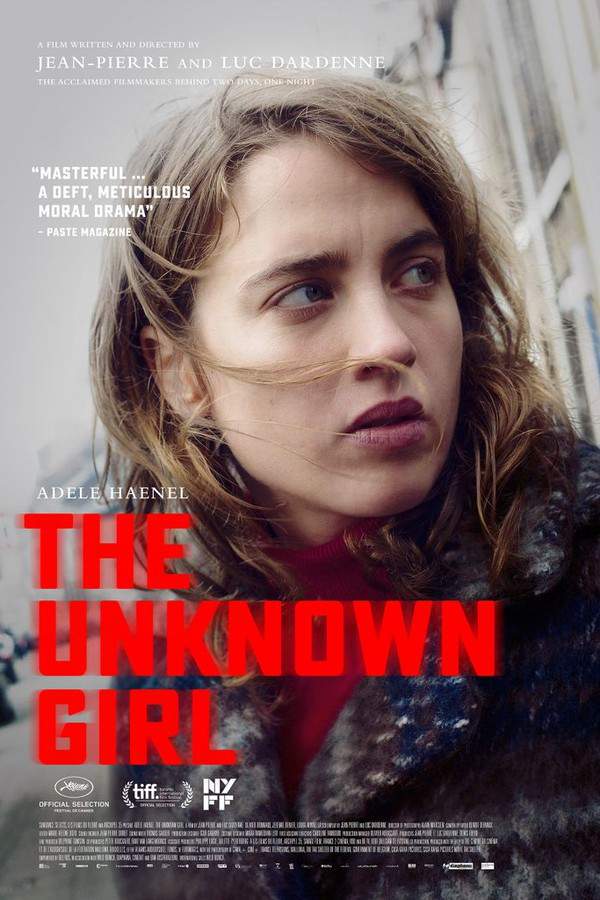
What Is The Unknown Girl About?
The premise of The Unknown Girl in 266 words, with nothing given away. The full story follows below.
In the industrial heart of Seraing, Dr. Jenny Davin navigates the demanding, often chaotic corridors of a free clinic, where the line between professional duty and personal exhaustion is constantly tested. Young and ambitious, she views the clinic as a stepping stone, a temporary post before she moves on to a more prestigious practice. Alongside her quiet intern, Julien, and the aging Dr. Habran, Jenny treats a relentless stream of patients, relying on a veneer of clinical detachment to manage the emotional weight of her work.
The atmosphere is thick with unspoken tension, a pressure cooker of social neglect and medical necessity. Jenny believes in maintaining strict boundaries, instructing her colleagues to preserve their energy and not let patient demands cloud their judgment. This philosophy of detachment guides her daily routine, allowing her to function within a system that offers little respite. However, the careful structure of her life begins to waver when an after-hours disturbance tests the very boundaries she has worked so hard to establish.
A decision made in a moment of weariness—a refusal to answer a late-night buzzer—sparks a chain of events that Jenny could not have anticipated. When tragedy strikes close to the clinic, she finds herself consumed by a gnawing sense of guilt that her professional armor cannot deflect. The discovery of an unidentified woman’s body forces Jenny to confront the human cost of her indifference. Driven by a desperate need for redemption, she abandons her plans for a comfortable exit, plunging herself into a quest to uncover the truth and bring dignity to a stranger whose life ended in silence.
What Happens in The Unknown Girl?
The complete story of The Unknown Girl, from the first scene to the last, in 1,467 words (about 6 minutes). Spoilers throughout. Names in the text link to 3 cast member pages.
Spoilers ahead
Dr. Davin, Adele Haenel, a young white Belgian attending physician, steps in for the aging Dr. Habran Yves Larec at a free clinic in Seraing while she prepares to move on to a larger practice. She is supported by Julien, a taciturn intern Olivier Bonnaud, whose presence is quiet but constant in the busy daily grind. On a blistering Thursday, the clinic answers to a seizure case that arrives in a rush; the patient stabilizes, yet Julien’s contribution feels muted, a half-glimpse of competence rather than a clear breakthrough. The day’s pace tests Davin’s resolve, and the two doctors lean on routine to shield themselves from the emotional weight of the patients crowding the waiting room.
That evening, the clinic’s buzzer rings once after hours, a peripheral annoyance that Davin dismisses as fatigue talking louder than duty. She tells Julien that doctors must not let patients drain their energy or cloud their diagnostic judgment. But the moment carries a sting of unease: Julien slips away without a word, leaving Davin to question whether he will return to the room at all. The silence lingers, and with it a creeping sense that something is amiss in the careful balance they try to maintain.
The following morning, Davin is stopped by the police outside the clinic. A woman has been found dead on a construction site along the riverbank, and the authorities want the clinic’s surveillance footage to understand the chain of events. Davin complies, then returns to the routine of the day, only to discover Julien has vanished—he does not answer calls, does not show up for work, and remains an unexplainable absence. By afternoon, the police have questions about a woman who appeared at the clinic; Davin learns she died from an open skull fracture, and she notices a photo she took of the deceased after watching the surveillance footage. The victim appears to be a young African woman, and Davin recognizes that the clinic, in its scattered records, could be implicated in more ways than one. The police suspect she may have visited the clinic as a patient, but Davin cannot place her among the people she knows.
In a bid to keep moving through the day, Davin visits the construction site where the accident took place, only to learn from workers that the block of concrete connected to the fall has already been removed. That night, she goes to Julien’s home and shows him the photo; he does not recognize the woman either, and he confides that he plans to quit medicine and return to his village, offering no further explanation. The exchange hints at a shared wound—one that extends beyond the clinic’s fluorescent halls and into the lives of those who have weaved themselves into medicine’s fabric to heal personal pain.
At the hospital, Davin confronts Habran, who looks at the image but claims no recognition of the woman. Still, he offers to share the names of the dozens of African families he cares for with the police, a gesture that underscores the clinic’s close ties to a broader, more complex network of care. In a sudden turn of conviction, Davin reveals a new resolve: she decides to leave her current practice and take over Habran’s clinic, a choice that signals a different kind of commitment—one that places the care of the community above personal comfort.
On a house call to Bryan, a young patient, Davin shows the dead woman’s photo. Bryan insists he has never seen her, but Davin detects a sharp spike in his heart rate the moment the image is shown, an anxious physiological reaction that raises more questions than it answers. She leaves and calls a detective, learning with a growing sense of urgency that the woman was buried that very afternoon. Davin returns to Bryan’s house and presses him about the dead woman, but he refuses to acknowledge any connection, suggesting he could have no involvement. She tells him he can come to the clinic if he ever wishes to talk.
Davin moves into the clinic and, in a quiet, solemn act, purchases a plot in the cemetery for the woman. The investigation begins to widen as Bryan arrives at the clinic with digestive problems, and under the questioning, he reveals a troubling confession: he and a friend had witnessed the woman engaging in a sexual act with an older man in a truck on that Thursday evening. The truck owner denies knowledge, becoming hostile when pressed, and Davin is forced to leave. At an assisted-living facility, she finds the owner’s father, who offers a fragment of the woman’s story but maintains he does not know her name. The moment drags Davin into a murkier social sphere, with the older man’s world colliding with the younger woman’s desperate choices.
Seeking further answers, Davin enters an Internet café, where she nerves herself to ask the staff and patrons if they recognize the dead woman. She first reaches out to Julien again by voicemail, asking for permission to visit him in his village, then proceeds to question staff and two patrons who bear no knowledge of the woman. The tension grows as the case threads through the city’s networks, with Davin learning that Bryan’s father had driven the situation to a more dangerous edge—he had observed the woman earlier but chose to deal with the aftermath privately rather than involve the police.
When she finally catches up with Julien, he explains how the seizure patient triggered a personal reckoning: the abuse he suffered at the hands of his father and the neglect he felt from physicians made him realize he pursued medicine to heal himself rather than to help others. This confession deepens the film’s meditation on the costs of care and the personal history that shapes every clinician’s decisions. Reinvigorated by the revelation, Davin returns to Seraing and navigates a tense confrontation with the cybercafé crowd, who warn her to stay in her lane regarding the dead woman. Yet the crowd’s exodus leaves room for Davin to pursue the truth.
Bryan and a friend soon ride a motorcycle to another construction site, where Davin hopes to speak with the friend. Before she can engage him, Bryan pushes her into a hole and places a ladder down, giving the friend a chance to escape. This moment marks a turning point: Davin’s pursuit becomes more dangerous as the ever-narrowing path between patient care and the city’s hidden pressures closes in.
Back at home, Julien calls with the news that he intends to resume his medical career, a restoration of the dream he once carried. Bryan’s parents visit Davin to accuse her of harassing Bryan about the dead woman and causing his indigestion to flare up again; they decide to end their use of Davin’s services and warn her to stay away from Bryan. Yet the mother and father’ s decision paradoxically amplifies the need for Davin’s presence and care, as the family’s problem remains unresolved.
Hours later, Bryan’s father calls Davin for help with back pain, and after she administers morphine, she asks whether he knew about the dead woman. His anger intensifies, and he refuses to entertain the possibility of calling the police for fear of repercussions. While he uses Davin’s bathroom, a loud noise interrupts, and Davin discovers that the man has attempted to strangle himself—a moment that crystallizes the danger surrounding the case. With effort, he finally agrees to use Davin’s phone to contact the authorities.
In the ensuing days, Davin receives a crucial update from the Internet café employee, who reveals Félicie Khoumba’s name and shares sobering details: Félicie had a pimp and was given a fake passport because she was a minor. The employee’s own guilt and fear are palpable as she confesses to having once worked closely with Félicie, and she admits that Félicie’s absence would have left her pimp with a dangerous grip on the future. This revelation, though painful, helps Davin piece together the network of people affected by Félicie’s life and death. The employee’s empathy leads her to agree to coordinate Félicie’s burial with Félicie’s family, while offering Davin a quiet, human moment of connection before returning to the day’s patients.
As Davin turns her attention back to the clinic’s current patients, the story leaves a lingering sense of moral responsibility: the dead woman’s life and the city’s hidden networks have complicated the clinical vocation, and Davin’s decision to remain engaged—despite the fatigue, the danger, and the heartbreak—signals a commitment to serve those who are most vulnerable. The film closes on a note of cautious resolve, with Davin standing at the threshold of a new chapter in her career, carrying the weight of Félicie Khoumba’s memory and the knowledge that medicine, at its core, is a generous, sometimes painful act of bearing witness.
The Unknown Girl Timeline: Every Key Event in Order
12 key events in the order they happen, from “Davin fills in at the Seraing clinic” to “Félicie's backstory comes to light”. 12 events name a place, across 12 locations.
- 1
Davin fills in at the Seraing clinic
Dr. Davin, a young Belgian attending physician, takes over for retiring Dr. Habran at a free clinic in Seraing. Julien, a taciturn intern, assists her as the clinic gears up for a busy day. Davin hopes to prove herself before starting at a larger practice.
When:Morning Where:Seraing clinic
- 2
A busy Thursday and a suspicious buzzer
The clinic handles a patient with a seizure, and the team stabilizes him despite Julien's limited contribution. After-hours, the buzzer rings once more, but Davin dismisses it as a nuisance and warns Julien not to let fatigue interfere with diagnosis. Julien leaves the room silently, raising questions about his state of mind.
When:Evening Where:Clinic
- 3
Morning police visit over a dead woman
The next morning, police stop Davin outside the clinic to request surveillance footage after a woman is found dead on a riverbank construction site near the clinic. Davin tries to maintain normal duties, but Julien still does not appear for work.
When:Morning Where:Clinic vicinity / construction site near clinic
- 4
Davin discovers the victim on the footage
Watching the footage, Davin sees a young African woman who dies from an open skull fracture, but she does not recognize her. She photos the woman to share with the police, hoping to aid the investigation. The police have no identifying documents, complicating identification.
When:Afternoon Where:Clinic / Police
- 5
Clues at the construction site
Davin visits the construction site and learns that the concrete block where the woman fell has been removed. This detail fuels her suspicion that someone is covering up the incident.
When:Afternoon Where:Construction site by river
- 6
Julien's silent decision and night talk
Davin shows the photo to Julien; he does not recognize the woman and reveals he plans to quit medicine and return to his village, offering no clear reason. The exchange weighs on Davin as she commits to pursuing the truth regardless of his choice.
When:Night Where:Julien's home
- 7
Habran's hospital visit and Davin's resolve
Davin visits Habran in hospital; the elderly doctor looks at the photo but does not recognize the woman. He does offer to share the names of many African families he cares for with the police. Davin then discloses her own decision to take over Habran's clinic.
When:Evening Where:Hospital (Habran's ward)
- 8
A pivotal house call and a heartbeat spike
On a house call to Bryan, Davin shows the photo of the woman; Bryan claims he has never seen her. Yet Davin notices a sudden, significant rise in Bryan’s heart rate, hinting at a deeper connection. She resolves to keep pressing for answers.
When:Afternoon Where:Bryan's house
- 9
The investigation widens: Serena Ndong’s line
Davin calls a detective and informs him that showing the photo is complicating police work. They tentatively identify the woman as Serena Ndong from Gabon and work to verify her passport. Davin also buys a cemetery plot for the victim, signaling a personal commitment.
When:Evening Where:Police station / Cemetery
- 10
The prostitution link and the pimp's denials
Davin locates the truck owner, who angrily denies knowledge of the incident and dismisses her. At an assisted living facility, the owner’s father reveals that the woman was a prostitute brought to him by his son, but he insists he does not know her name.
When:Evening Where:Truck owner / Assisted living facility
- 11
Internet cafe inquiries and threats
Davin questions Africans in an Internet café, hoping to recognize the victim; she is warned by bystanders to stay in her lane. The cafe employee later confirms the woman’s name Félicie Khoumba and explains she had a pimp using a fake passport.
When:Night Where:Internet café
- 12
Félicie's backstory comes to light
The Internet café employee explains Félicie Khoumba's life as a minor exploited by a pimp, including fake papers. She offers to take charge of Félicie’s burial in place of her family. Davin processes the new truth while Bryan's father’s involvement pushes the case toward police involvement and a turning point for Davin's career decisions.
When:Later Where:Internet café / Cemetery
Who Are the Main Characters in The Unknown Girl?
11 characters, among them Dr. Davin, L'inspecteur Ben Mahmoud and La mère de Bryan: who each one is and the part they play in the story. 9 of them link to the actor’s page.
- DD
Dr. Davin
Played by Adele Haenel
A young, principled Belgian doctor who steps in at a free clinic. She is compassionate and diligent, yet emotionally tested by the case and the patients she encounters. Her resolve to uncover the truth grows as she navigates fatigue, professional boundaries, and the weight of responsibility to a vulnerable community.
- 👩⚕️ Doctor
- 🧭 Determined
- 🧩 Investigator
- LB
L'inspecteur Ben Mahmoud
Played by Ben Hamidou
A police inspector drawn into the investigation surrounding Félicie’s death and the clinic’s possible connections. He represents the city’s enforcement side, balancing objective inquiry with the pressure of public scrutiny. His presence adds tension as the truth threatens powerful networks.
- 👮 Police
- 🕵️ Investigation
- 🗝️ Pressure
-
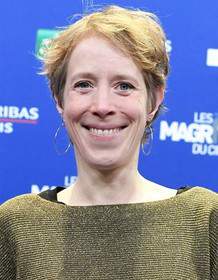
La mère de Bryan
Played by Christelle Cornil
Bryan’s mother is protective and anxious, pressuring Davin and the family’s privacy while seeking relief from her son’s distress. She embodies the pull between filial duty and the complex social forces shaping Bryan’s life.
- 👩 Parent
- 🛡️ Protection
- 🗣️ Family pressure
-
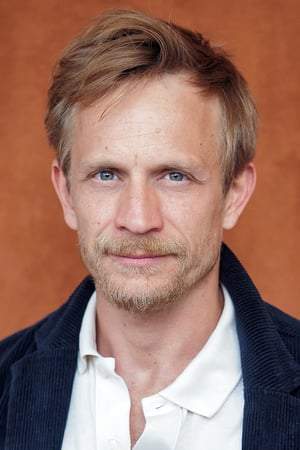
Le père de Bryan
Played by Jérémie Renier
Bryan’s father is controlling and evasive, reluctant to implicate his family or involve authorities. His attitude mirrors a reluctance to confront uncomfortable truths about his son and the surrounding circumstances.
- 👨 Parent
- 🗂️ Secrecy
- 🗣️ Denial
- LD
Le docteur Habran
Played by Yves Larec
The elderly doctor whom Davin temporarily replaces; a figure connected to the broader network of care in the city. His cautious stance toward sharing information reflects both experience and the systems at play within the clinic.
- 👨⚕️ Mentor
- 🗂️ Networked care
- 🧭 Authority
-

Julien
Played by Olivier Bonnaud
A taciturn intern whose quiet presence masks deeper wounds. He contemplates leaving medicine, revealing a personal history of abuse and the ways that trauma can drive professional choices and moral doubt.
- 👨⚕️ Intern
- 🗨️ Reserved
- 🪪 Trauma-informed
- LP
Le père Lambert
Played by Pierre Sumkay
A figure within the community connected to the story’s broader family networks. His role underscores how interconnected lives can complicate the pursuit of truth and care.
- 👨 Community member
- 🧩 Family ties
-
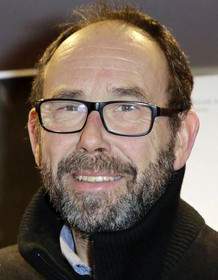
Le fils Lambert
Played by Olivier Gourmet
A young man tied to the Lambert family’s story, illustrating how personal histories intersect with present-day medical and social issues.
- 👦 Patient
- 🧭 Family dynamics
-

La caissière du cybercafé
Played by Nadège Ouedraogo
A worker at the cybercafé who becomes a crucial conduit of information about Félicie’s life and death. Her empathy contrasts with the secrecy surrounding the case.
- 💬 Informant
- 🕸️ Social network
- FK
Félicie Khoumba
The dead young woman whose life and death expose a web of exploitation and secrecy around a pimp and fake passport. Her story anchors the film’s investigation and moral questions.
- 🕊️ Victim
- 💔 Social issue
- 🧭 Political context
- B
Bryan
A young patient whose condition and the dead woman’s photo trigger Davin’s search for truth. He embodies the vulnerability and fear surrounding the cases discussed.
- 🧒 Patient
- 🧠 Health mystery
Where and When Is The Unknown Girl Set?
The Unknown Girl is set in Seraing and Belgium (Contemporary). Here is why the time and place matter to the story.
When
Contemporary
The film unfolds in present-day Belgium, depicting a modern healthcare system and urban life. The pace shifts between the busy clinic, late-night calls, and investigative turns, reflecting current concerns with surveillance, access to care, and the weight of ethical decisions. Its timeframe anchors the story in the still-relevant questions of accountability and community responsibility.
Where
Seraing, Belgium
The story unfolds in Seraing, a working-class city in Belgium along the Meuse river, centered on a free clinic that serves a diverse community. The setting spans the clinic, a nearby construction site, a cybercafé, and private homes, highlighting the dense social fabric and hidden networks of the city. The environment feels clinical yet intimate, exposing both the struggles of frontline care and the wider social issues that touch vulnerable residents.
- 🇧🇪 Belgium setting
- 🏥 Medical drama backdrop
- 🗺️ Urban Belgian cityscape
- 🕊️ Social realism
What Are the Themes of The Unknown Girl?
3 ideas the story keeps returning to, among them Ethics, Memory & Witness and Truth & Inquiry.
-
01
Ethics
The Unknown Girl centers on the moral weight of medical care, as Dr. Davin questions her duties to individual patients and to the broader community. The film probes how far a clinician should go to pursue truth when personal safety and professional boundaries are at stake. It examines the costs of bearing witness and the responsibility to those who are most vulnerable.
-
02
Memory & Witness
A dead young woman becomes the centrepiece of a larger social mystery, forcing Davin to confront memory, guilt, and the limits of medical records. The story suggests that memory is constructed through acts of looking, listening, and following up on elusive clues. It also exposes how communities remember and respond to those marginalized by society.
-
03
Truth & Inquiry
The investigation threads through the clinic’s records, surveillance footage, and a web of personal connections, showing how truth emerges from careful questioning and persistence. The pursuit challenges the characters to balance professional obligations with courage to resist complacency. It emphasizes how truth can reshape a caregiver’s sense of purpose.
What Kind of Film Is The Unknown Girl?
Dark in tone, with slow pacing and a moderate story, going by the plot summary.
- Tone
- Dark
- Pacing
- Slow
- Story
- Moderate
- Intensity
- Medium
- Ending
- Bittersweet
A slow-burning, morally complex drama that follows a doctor's consuming guilt and determined investigation into a stranger's death, creating a somber and reflective atmosphere with moments of tension.
- somber
- guilty
- determined
- reflective
- tense
- meditative
- moral responsibility
- guilt and redemption
- crime investigation
- medical ethics
Content notes: suicide attempt, forced prostitution, death of minor, psychological trauma, exploitation.
Quiz
How well do you remember The Unknown Girl? Test yourself on the story.