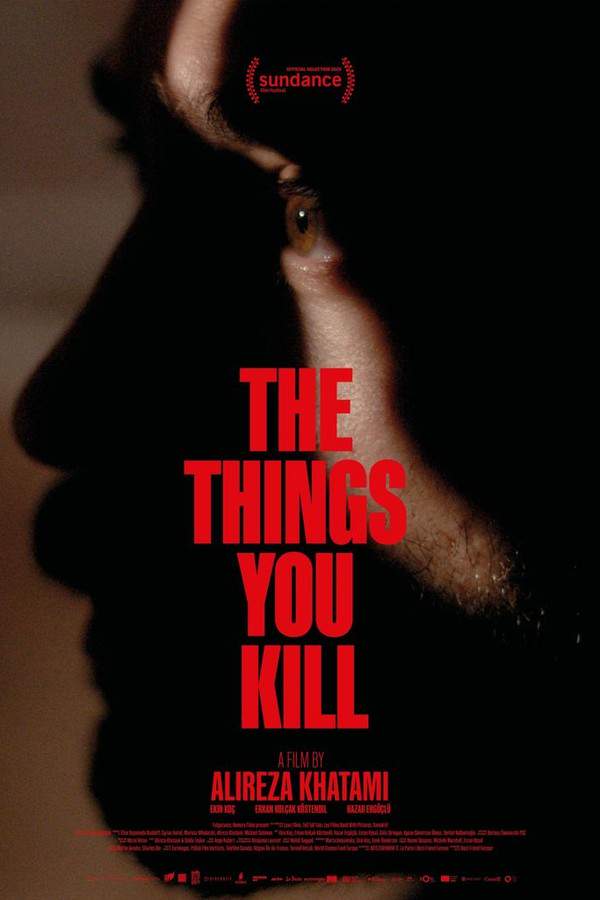
What Is The Things You Kill About?
The premise of The Things You Kill in 279 words, with nothing given away. The full story and the ending follow below.
In the dimly lit streets of a Turkish city, a quiet academic life is shattered when the mother of Ali, a literature professor, dies under mysterious circumstances. The loss pulls him back to a crumbling family home, where memories of a violent father and a lifetime of unspoken shame linger like shadows. As the household falls into disrepair, Ali finds himself caught between the pressure of his career, a fragile marriage, and a growing sense that something far more sinister lies beneath the surface.
Seeking a fresh start, Ali takes charge of a rundown farm on the city’s outskirts, where he hires a solitary gardener, Reza, to tend the land. The two men quickly become entangled in a silent power struggle, each harboring their own secrets and unspoken motives. The isolated setting—an arid field punctuated by an old well and the occasional bark of a missing dog—mirrors the growing tension, casting an atmosphere of dread that seeps into every conversation. Meanwhile, Ali’s wife, Hazar, watches the deterioration of their bond with a mixture of concern and frustration, her own dreams hinting at unresolved family ghosts.
As the police begin to probe the circumstances surrounding the mother’s death, the investigation adds a relentless, watchful presence to an already oppressive environment. Ali’s doubts about his father’s role in the tragedy gnaw at his conscience, while the weight of long‑buried family secrets threatens to collapse the fragile façade of his life. Caught between the desire for revenge and the fear of losing himself, Ali must confront the darkness that has haunted his lineage, a darkness that may finally force him to look into the very soul he has tried to hide from.
What Happens in The Things You Kill?
The complete story of The Things You Kill, from the first scene to the last, in 947 words (about 4 minutes). Spoilers throughout. Names in the text link to 3 cast member pages.
Spoilers ahead
Turkish literature professor Ali Ekin Koç talks to his wife Hazar Ergüçlü about a disturbing dream she describes. In that dream, Ali’s father arrives at their door, insists on coming inside, and then asks for the light to be turned off. The image sticks with him as a hint of the past lingering in their house, and it foreshadows the weight of memory, family pressure, and unanswered questions that will drive Ali toward difficult choices.
Ali visits his mother, who has grown frail since years earlier when his father, Hamit, played by Ercan Kesal, beat her and left scars that never fully healed. The home itself is rundown—the indoor toilet broken, the walls bearing the marks of time and fear. In the course of this visit, Ali uncovers a bag containing a gun in the septic tank, a finding that adds to his sense of encroaching danger and the sense that danger has followed him home. He offers to fix the toilet to ease his ailing mother’s misery, but his offer is met with harsh shaming from Hamit, and Ali is sent away. This moment deepens his sense of shame and worthlessness in a system that already seems to be closing in on him. The struggle to prove himself—whether as a scholar with a future at the university or as a dutiful son—becomes more urgent as he learns about his own infertility, a private burden he keeps hidden from Hazar.
The weight of past violence and the fragility of the present push Ali toward radical steps. His mother dies after being found face-down in her locked home, and Hamit, who discovers the body, delays reporting it to the family. Ali’s anger boils over as he confronts his father in front of relatives, and Hamit’s cutting, public shame only deepens the familial fracture. The sorrow and anger from this moment ripple through Ali’s life and contribute to a growing sense of disillusionment with the life he thought he could rebuild in Turkey after leaving the United States.
On a farm at the city’s edge that Ali is trying to revive, he meets Reza, a cautious and wary man who becomes his gardener. Reza, played by Erkan Kolçak Köstendil, is soon drawn into a web of practical problems and moral compromises. He warns that reviving the farm will require a deep, workable well, machinery, and permission from authorities—costly and complex ventures that threaten to overwhelm Ali’s already fragile sense of control. The farm—and the dream of rejuvenation—becomes a crucible where Ali’s personal anxieties about infertility, his precarious academic position, and his strained relationship with Hazar collide.
Tensions inside the house intensify as Ali and Reza’s partnership deepens. Reza, who now also occupies Ali’s university job, becomes entangled in a dangerous arrangement with a pretty student who offers to trade sex for a higher grade. The ethically loose scenario threatens to contaminate Ali’s career and family life, especially when Reza takes the student back to Ali’s parents’ home and encounters Hamit’s mistress, whom he angrily berates and sends away. The lines between mercy and coercion blur as Reza continues to manipulate events to his own advantage.
As the plot thickens, Reza reports Hamit missing and obtains money through bribery to have the well dug. Ali’s illness of infertility becomes a public matter as his wife, tired of feeling shut out, contemplates leaving him. They eventually discover that Turkey prohibits certain kinds of sperm donors, a revelation that forces them to consider selling Hamit’s home to raise the funds to seek a donor abroad. Ali’s sister, who clings to the hope that Hamit will return, resents this move, highlighting the rifts caused by longing and financial desperation.
Reza visits Ali’s aunt, Hamit’s sister, who lives in fear for her missing brother. She recalls a brutal history of an older generation’s violence and the way a scar on Hamit’s head marks a lifetime of cruelty. The aunt hints that Hamit’s past cannot easily be blamed on one person or one moment, a reminder that families carry multiple layers of guilt and memory that cannot be easily unwound.
When Reza returns to Hamit’s grave, he discovers it empty. Ali pretends to be unconscious, and in a moment of desperation, rises up to strangle Reza to death with a chain. He buries Reza’s body on the farm and slowly resumes life as best as he can, now free to resume his marriage with Hazar. The reversal of power is stark: the man who was once a patient, educated professor becomes the one who enforces his own version of justice, even as the moral lines blur beyond recognition.
Authorities later pull Hamit’s car from a dam, concluding that his body was washed away, and Ali tells Hamit’s mistress that he is dead. At the university, Ali fights for his job, explaining how fear of his father had driven him to flee Turkey, yet asserting that he is no longer afraid. With the police clarifying the mystery of his father’s death, the family home goes up for sale, signaling a final separation from the past.
Late at night, Ali’s life is unsettled once more when a knock comes at the door. His father appears—bleeding from a head wound—and asks to come inside, just as he did in Hazar’s dream. He lies down in the same spot Ali had occupied and asks for the light to be turned off. The dog chorus outside swells, and the knock at the door returns, a haunting reminder that the past, once awakened, cannot be fully silenced. The film closes on this unresolved, unsettling note, inviting viewers to wrestle with questions of memory, guilt, and the inescapable pull of family legacy.
The Things You Kill Timeline: Every Key Event in Order
15 key events in the order they happen, from “Hazar's dream foreshadows a looming intrusion” to “Final door scene: father returns”. 15 events name a place, across 12 locations.
- 1
Hazar's dream foreshadows a looming intrusion
Ali and his wife Hazar discuss her dream, in which Ali's father knocks on the door, demands to come inside, then lies down and asks for the light to be turned off. The dream frames a menacing return of the past into their home. It sets a tone of fear and foreboding that shadows the couple's living situation.
When:Night Where:Home
- 2
Visit to his ailing mother
Ali visits his ailing mother at a dilapidated house where the indoor toilet is broken. He discovers a gun hidden in a bag in the septic tank. He offers to pay for the toilet repair to spare his mother further discomfort, but his father shames him and sends him away.
When:Day Where:Mother's home
- 3
Infertility and career insecurity
Ali confronts personal and professional pressures as he learns about his infertility and fears for his university job. He keeps the infertility secret from Hazar while the prospect of losing his position looms. The double burden deepens his sense of embarrassment and isolation.
When:Day to night Where:Home and university
- 4
Mother's death and public shaming of the father
Ali's mother dies after being found face-down in her locked home; Hamit finds the body but delays calling the family. Ali confronts his father, who shames him in front of their relatives. The event leaves Ali distraught and fuels his decision to remain in Turkey, despite having previously left the US.
When:Night Where:Mother's home
- 5
A farm on the outskirts and a new gardener
At a farm on the city's outskirts that Ali is trying to revive, he meets Reza and hires him as a gardener. Reza is visibly intimidated by Ali's large dog. Reza begins outlining what the farm will need to become productive, starting with a deep well and the machinery and permissions required.
When:Day Where:Farm outside the city
- 6
Deep well and looming plans
As Ali's stress over infertility and job security grows, Reza insists the farm will need a deep well to become fertile, a project that will require machinery and planning permission. The talk of the well becomes a symbol of hope—and an escalating dependency—inside Ali's life. Ali's isolation from Hazar deepens as the project advances.
When:Day Where:Farm
- 7
Investigating his mother's death
Driven by rising pressures, Ali begins to investigate his mother's death. He learns that she was struck with a fatal blow to the back of the head, despite being found face-down. The discovery leads him to suspect his father and fuels his resolve to uncover the truth.
When:Night Where:Home
- 8
Abduction and the shallow grave
Ali and Reza kidnap Hamit and drive him to the desert to dig a shallow grave. Reza beats Hamit unconscious and orders Ali to fill the grave. Ali melts into tears as the moral weight of the act bears down on him, but Reza threatens him to stay compliant.
When:Day Where:Desert
- 9
Reza takes over Ali's life
Reza chains Ali in the farm shelter where the dog once lived, effectively taking over his life while no one notices. Ali's wife leaves, fed up with being shut out. Reza, now working at the university, tries to sleep with a student in exchange for a higher grade, and later confronts his father's mistress at the parents' home.
When:Ongoing Where:Farm and university and parents' home
- 10
Donor plot and financial move
Reza reports Hamit missing and bribes a local official to help dig the well on the farm, keeping Ali chained away from view. They learn that Turkey bans sperm donors, so they decide to sell Hamit's home to raise money to seek a donor abroad, upsetting Ali's sister who still hopes Hamit might return.
When:Day Where:Farm; local government
Show the other 5 events of The Things You Kill Hide the last 5 events
- 11
Aunt's memory and the scar
Reza visits Hamit's sister, their aunt, who fears for her missing brother. She explains how Hamit bore a scar from a scorpion sting when she was a child and that their abusive father caused the injury. Reza learns that Hamit avoided condemning their father, continuing a pattern of silence.
When:Day Where:Aunt's home
- 12
The grave and the killing of Reza
Reza returns to Hamit's grave and finds it empty. Ali pretends to be unconscious, then rises and strangles Reza to death with a chain. He buries Reza's body on the farm and resumes his life, returning home to make love with Hazar.
When:Night Where:Farm
- 13
Hamit's disappearance confirmed by authorities
Hamit's car is pulled out of a dam by authorities who believe his body was washed away. Ali informs Hamit's mistress that he is dead, further severing ties with his past.
When:Day Where:Dam and Hamit's mistress
- 14
At the university and the truth of fear
At the university, Ali argues that his job should be saved, explaining that he fled Turkey because of fear of his father but that he is not afraid anymore. He frames his transformation as a return to control and stability.
When:Day Where:University
- 15
Final door scene: father returns
Police determine the father's death, and the family house goes up for sale. At night, Ali processes the sale and goes to sleep when a knock sounds at the door. His father, bleeding from a head wound, demands to come inside and asks for the light to be turned off. Ali complies as a chorus of dog barks rises outside, and another knock echoes through the night.
When:Night Where:Family home
Who Are the Main Characters in The Things You Kill?
4 characters, among them Ali (Ekin Koç), Hamit (Ercan Kesal) and Reza (Erkan Kolçak Köstendil): who each one is and the part they play in the story. Every profile links to the actor’s page.
- A(
Ali (Ekin Koç)
Played by Ekin Koç
Ali is a Turkish literature professor whose life begins to crumble under his father's abuse, his own infertility, and job insecurity. He hides personal humiliations and attempts to maintain control, but his mounting stress leads him into dangerous actions. The film tracks his emotional isolation as his relationship with his wife Hazar deteriorates and his attempts to reclaim agency collide with brutal consequences.
- 🎭 Complex
- 🧠 Psychological
- 👨🎓 Academic
- H(
Hamit (Ercan Kesal)
Played by Ercan Kesal
Hamit is Ali's father, a controlling patriarch whose violence and cruelty have shaped the family for years. He undermines Ali in private and public moments, maintaining power through fear and manipulation. His actions set in motion the cycle of violence that drives the plot.
- 🎭 Cruelty
- 🏠 Patriarch
- 🗝️ Control
- R(
Reza (Erkan Kolçak Köstendil)
Played by Erkan Kolçak Köstendil
Reza is a hired gardener who becomes Ali's ally but quickly reveals himself as a manipulative force. He drives the plot by suggesting illegal plans and using fear to bend Ali to his will. He seizes control of Ali's life and becomes central to the story's turn toward violence.
- 🎭 Manipulative
- 🧠 Calculating
- 🏚️ Rural
-

Hazar (Hazar Ergüçlü)
Played by Hazar Ergüçlü
Hazar is Ali's wife who becomes estranged as he withdraws into himself. She leaves him, and later returns as the couple navigates their precarious situation and the donor issue, highlighting the emotional costs of the patriarchal pressures on their relationship.
- 🎭 Complex
- 🧠 Psychological
- 👩❤️👨 Partner
Where and When Is The Things You Kill Set?
The Things You Kill is set in Turkey, farm on the city's outskirts and desert. Here is why the place matters to the story.
When
The events unfold in a contemporary Turkish context, with references to university life, professional insecurity, and familial pressures. The story touches on modern social issues such as infertility, donor restrictions, and the legal or ethical implications of medical choices in Turkey.
Where
Turkey, farm on the city's outskirts, desert
Set primarily in a dilapidated family home in Turkey and a farm on the city’s outskirts, the film contrasts cramped indoor spaces with open desert terrain used for concealment. The locale underscores the tension between tradition and modern life, and the frequent moves between domestic interiors and external spaces show the fragility of safety. The story's sense of place is intimate and claustrophobic, highlighting how home becomes a site of coercion and violence.
- 🎭 Drama
- 🏚️ Rural
- 🗺️ Contemporary
What Are the Themes of The Things You Kill?
3 ideas the story keeps returning to, among them Power and Control, Violence and Guilt and Truth and Facade.
-
01
Power and Control
Power and control permeate every relationship in the story: the father Hamit exercises domination over his family, belittling Ali and maintaining authority through fear. Ali's sense of agency shrinks under family pressure, while Reza manipulates circumstances to seize control of Ali’s life. The film examines how power is contested, resisted, and ultimately redirected through violence.
-
02
Violence and Guilt
The plot escalates from domestic abuse to murder, with Ali forced to confront the consequences of his actions and the violence around him. The murder of Reza becomes a catalyst for Ali's self-preservation and survival in a suffocating environment. The story uses physical harm to probe moral compromise and guilt.
-
03
Truth and Facade
Characters wear masks of respectability while harboring secrets; Ali hides infertility and fear of his father, Hamit projects authority, and Reza pretends to be a cooperative ally. The film explores how appearances conceal deeper truths and how longing for control can drive people to extreme actions. The tension between what is shown and what is real drives the story toward its violent climax.
How Does The Things You Kill End?
The last act of The Things You Kill and what it means, in 439 words. The ending lands as ambiguous. Big spoilers: read the plot summary first if you have not seen it.
The final act, in full
Ali, a gentle professor who has spent years caring for his mother and trying to build a quiet life with his wife Hazar, is haunted by the mystery of his mother’s death. After learning that his abusive father may have been involved, the grief and suspicion become a pressure that forces him to act. In a moment of violent resolve he digs a deep hole in his family’s garden and buries his father alive, hoping that this act will finally settle the past.
When the burial is complete a stranger named Reza appears – the very man who had helped him in the garden. Reza embodies everything Ali feels he lacks: confidence, willingness to seize what he wants, and a readiness to confront the violence that has lived inside his family for generations. As soon as the father is interred, the two men swap places: Reza takes Ali’s body and identity, while Ali is left chained in a dog‑cabin, reduced to a powerless figure.
The film then follows Reza‑now‑Ali as he investigates the family’s history, learning that his grandfather also abused his own son. This revelation makes the buried secret feel almost lifted; when he returns to the burial spot the body has vanished. The disappearance of the corpse symbolizes the end of the hidden narrative that has been driving his rage. With this new understanding, the chained Ali manages to overpower Reza, strangling him with the very chain that had bound him, thereby reclaiming his original self.
Immediately after the struggle, Hazar finds him, and the two make love – a quiet, intimate moment that signals a rebirth for Ali, a chance to move beyond the cycle of vengeance. Later, as he prepares to sell his father’s house – the physical reminder of trauma – a knock comes at the door. Opening it, he finds his father, scarred and bleeding, asking to be let in. Ali lets him rest on the floor and turns off the lights, an act that closes the room of his past. In this final tableau the film offers two reconciliations: the merging of Ali’s and Hazar’s dreams of a shared future, and a tentative peace between son and father, acknowledging the inherited violence while finally allowing it to die.
By the end, Ali does not erase the man he once was; he learns to translate that part of himself – to let the old self die so a new, more whole identity can emerge. The closing image of the darkened house suggests that the haunting has been put to rest, leaving Ali poised to become the father he has long wanted to be.
What Kind of Film Is The Things You Kill?
Dark in tone, with steady pacing and a complex story, going by the plot summary.
- Tone
- Dark
- Pacing
- Steady
- Story
- Complex
- Intensity
- High
- Ending
- Ambiguous
A grim and psychologically tense thriller that methodically charts a man's descent into moral ruin, trapping the viewer in a claustrophobic atmosphere of suspicion and unresolved trauma.
- gloomy
- tense
- oppressive
- psychological
- melancholic
- paranoid
- revenge
- family secrets
- inherited trauma
- identity theft
Content notes: domestic abuse, animal death, kidnapping, murder, grief and loss.
Quiz
How well do you remember The Things You Kill? Test yourself on the story.