
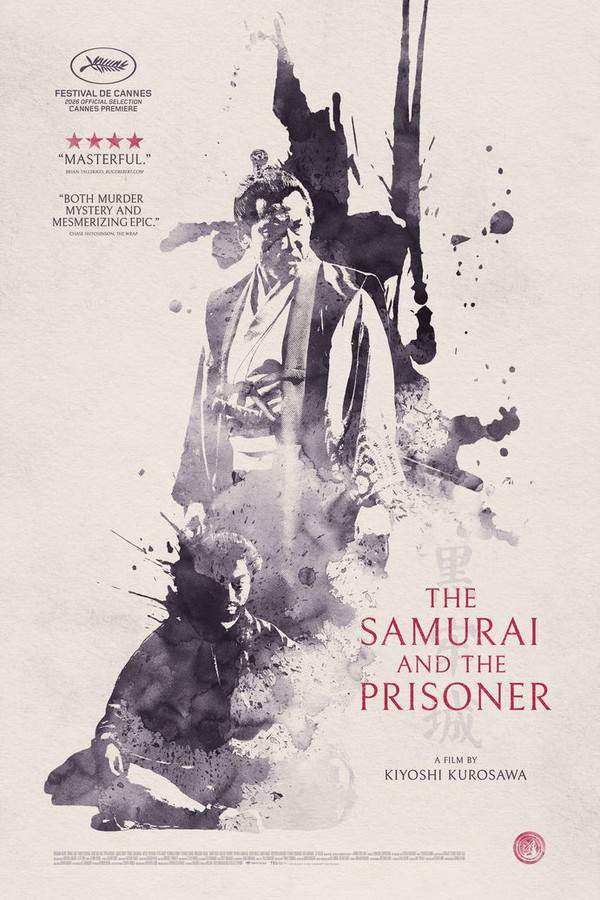
What Is The Samurai and the Prisoner About?
The premise of The Samurai and the Prisoner in 270 words, with nothing given away. The full story follows below.
In the war-torn landscape of feudal Japan in 1578, Lord Murashige Araki, the merciful lord of Settsu, makes the fateful decision to rebel against the brutal warlord Oda Nobunaga. Rather than face Nobunaga’s overwhelming forces on open ground, Murashige barricades himself within the walls of his own castle, transforming his seat of power into both sanctuary and prison. With reinforcements uncertain and enemy forces closing in, the once-thriving court now exists in a state of suspended isolation, every day bringing the weight of an inevitable reckoning.
Within the fortress’s towering walls, a fragile order begins to fracture. A series of inexplicable crimes sends ripples of fear through the retainers and servants, each unexplained incident eroding the trust that holds the community together. Whispers of treachery grow louder as suspicion turns inward, and the presence of a hidden traitor within their own ranks becomes an ever-present dread. The siege outside mirrors the paranoia within, as Murashige must navigate not only the military threat pressing against his walls but also the mysterious forces unraveling the bonds of loyalty inside them.
A man of compassion caught in an unforgiving war, Murashige must summon all his wisdom to uncover the truth behind these unsettling events before his domain collapses from within. The choices he makes — balancing mercy with the harsh necessities of survival — will determine not only his own fate but the lives of those who have placed their faith in his leadership. As autumn approaches and hope for rescue fades, the atmosphere grows heavy with tension, intrigue, and the haunting question of who among his trusted circle can truly be believed.
What Happens in The Samurai and the Prisoner?
The complete story of The Samurai and the Prisoner, from the first scene to the last, in 853 words (about 4 minutes). Spoilers throughout. Names in the text link to 2 cast member pages.
Spoilers ahead
In 1578, Araki Murashige, Masahiro Motoki the merciful lord of Settsu, rebels against the brutal warlord Oda Nobunaga, barricading himself inside Arioka Castle as Nobunaga lays siege. Murashige’s retainers await reinforcements from Mōri Terumoto in Harima Province. Oda sends an envoy in the form of the cunning and intelligent military strategist Kanbei Kuroda, Masaki Suda, who tries to convince Murashige to abandon his unwinnable rebellion; Murashige retaliates by throwing him in the dungeon.
As winter settles, the lord of Ōwada Castle, Abe Jūemon, defects to Nobunaga. His son, Abe Jinen, is kept as a hostage in Arioka Castle, and it is customary for such hostages to be crucified. Jinen, a devout Shinshū Buddhist, pleads to be killed by a sword to earn entry into Paradise, but Murashige instead imprisons him. Some time later, Jinen is found dead, seemingly from an arrow, yet no arrow is found on his body. Murashige gathers testimonies and brings them to Kanbei, who reads an obscure poem in the documents. The poem’s meaning leads Murashige to identify the killer, whom he spares but sends into battle, where the killer is killed. Kanbei, Masaki Suda, helps piece together the truth through careful deduction, revealing how perception and fate intertwine in the siege.
In spring, one of Murashige’s retainers, Ichirōza, discovers an army led by the young commander Ōtsu Nagamasa preparing to attack in an effort to impress Nobunaga. Murashige ambushes the army, aided by the Buddhist Saika Clan under Saika Magoroku and the Christian Takatsuki Clan under Takayama Dario. A barely-clothed swordsman named Hori Yatarō attacks Murashige’s camp, killing Ichirōza before being slain himself. When the heads of the generals are inspected, both the Saika and Takatsuki clans have taken two heads, each including the head of a young commander. Murashige gathers the clan heads to determine who killed Nagamasa. The heads are switched—one of the young commander’s heads is swapped for Hori Yatarō’s—injecting fear into the villagers. The tension between the clans escalates, culminating in the burning of the local Christian church. Murashige seeks guidance again from Kanbei, who hints that Nagamasa’s head was not taken at all; Nagamasa wore a helmet, revealing him as a commander, while Murashige himself killed Nagamasa, resolving the clan dispute.
In summer, Murashige discusses a potential surrender to Nobunaga that would allow him to regroup through a liaison with Nobunaga’s retainer Akechi Mitsuhide. Mitsuhide requests proof of Murashige’s willingness to surrender in the form of the valuable tea urn Tora-saru, which Murashige entrusts to his envoy, the Buddhist priest Muhen. Before leaving Arioka, Muhen is found dead in his lodgings, along with a skilled swordsman, Akioka Sironosuke. A search of the lodgings reveals that the letter to Mitsuhide was discovered but not taken, and Tora-saru has been stolen. Kanbei’s relative, Zensuke, infiltrates Arioka and reveals that Kanbei’s son Shōjumaru has been killed by Oda, who suspects Kanbei of defection. Murashige forgives Kanbei but unshackles him from his chains and offers him a role on the war council, though Kanbei declines, citing that Settsu’s samurai would not accept a Hariman-born leader, and thus remains in the dungeon. Through Kanbei’s deduction, Murashige identifies Notō, a proud retainer, as Muhen’s killer. Notō is chased to the ramparts, where Murashige accuses him of treachery toward Nobunaga; Notō dies in the confrontation, struck by lightning as he attempts to rise again. With Tora-saru recovered, Murashige proclaims that he will stop using worldly treasures as tools of war and will instead treasure them for peace.
In autumn, with faith waning among his vassals and Mōri’s promised help not arriving, Murashige works to uncover the web of plots against him. With Kanbei’s help, he uncovers that his wife, Lady Chiyoho, has orchestrated much of the misfortune: she ordered Jinen’s death, arranged the head-switching plots, and caused Notō’s death to demonstrate that divine punishment could strike anyone. She cites her trauma from the Nagashima siege, where the Ikkō-ikki believed retreat led to damnation and charging into battle led to Paradise, using divine punishment to teach a lesson. Murashige returns to Kanbei in the dungeon and, over a quiet drink, is advised to seek a route to Mōri by sea. Murashige, initially buoyed by the plan, realizes that Kanbei has been orchestrating his downfall for months and fears public disgrace if he abandons Arioka. Nevertheless, Murashige chooses to follow the plan, instructing his followers to surrender peacefully if the castle falls and to claim that he has fled. He sets out on the journey to Harima, with his entourage dwindling; one by one, his companions choose to return to Arioka, pledging loyalty to the castle rather than to their lord. Only Sukesaburo remains steadfast as Murashige’s lone companion on the long, uncertain road.
The final shot carries an epilogue: Nobunaga does capture Arioka Castle while Murashige is away, yet Murashige survives and becomes a renowned tea master. The narration notes that Nobunaga would later fall three years after Arioka’s siege due to a rebellion led by Akechi Mitsuhide, known as the Honnō-ji Incident, while Murashige’s own life takes a divergent path, marked by a lasting legacy in tea culture and restraint.
The Samurai and the Prisoner Timeline: Every Key Event in Order
13 key events in the order they happen, from “Siege of Arioka Castle begins” to “Epilogue: Nobunaga's fate and Murashige's tea master life”. 13 events name a place, across 5 locations.
- 1
Siege of Arioka Castle begins
In 1578, Murashige fortifies Arioka Castle and resists Oda Nobunaga's advance as Nobunaga lays siege. His loyal retainers await reinforcements from Mōri Terumoto, while Murashige debates the wisest course. The siege marks the start of a long, grim confrontation between the loyalists and Nobunaga's forces.
When:Winter 1578 Where:Arioka Castle, Settsu
- 2
Kuroda Kanbei arrives as envoy
Nobunaga sends Kuroda Kanbei as a cunning envoy to demand Murashige's surrender. Kanbei uses his wit to try to persuade the rebellious lord that the odds are unwinnable. Murashige refuses, and Kanbei is imprisoned in the fortress dungeon.
When:Winter 1578 Where:Arioka Castle, Settsu
- 3
The fate of Jinen and the hostage saga
Abe Jinen, a hostage in Arioka Castle, begs for death by sword, but Murashige chooses to imprison him instead. Later, Jinen is found dead with no arrow to account for his injuries, triggering a meticulous investigation. Murashige collects testimonies, and Kanbei reads an obscure poem in the documents, helping Murashige deduce the killer's identity and sparing him, only for the culprit to be sent into battle where he is killed.
When:Winter Where:Arioka Castle, Settsu
- 4
Spring ambush against Nagamasa's army
Murashige executes a bold ambush against the invading army led by Ōtsu Nagamasa, aided by the Saika Clan and the Takatsuki Clan. The trap inflicts heavy losses on the attackers and demonstrates Murashige's tactical prowess. The ambush intensifies the pressure on the besieged castle.
When:Spring Where:Near Arioka Castle, Settsu
- 5
Hori Yatarō attack and the head swap
A barely-clad swordsman named Hori Yatarō attacks Murashige's camp, killing Ichirōza before being slain himself. The heads of the fallen generals from the two allied clans are collected and swapped, sowing confusion among the villagers. The mystery of which commander was killed threatens to fracture the coalition.
When:Spring Where:Arioka Castle environs, Settsu
- 6
The Nagamasa head ruse is revealed
Murashige, guided by Kanbei, discovers that Nagamasa's head was never taken—he was only unhelmeted for reconnaissance. Murashige then pieces together the killer's identity behind the earlier deaths and strengthens the resolve within his castle. The truth steadies some loyalties, though tensions linger.
When:Summer Where:Arioka Castle, Settsu
- 7
Tea urn plan and the disappearances
To secure a possible surrender, Murashige sends Muhen as envoy carrying the tea urn Tora-saru as proof. Before departure, Muhen and swordsman Akioka Sironosuke vanish, and Muhen's lodgings reveal his murder, while the letter to Mitsuhide is left behind and the urn disappears. The missing items deepen the crisis and threaten any apparent truce.
When:Summer Where:Arioka Castle, Settsu
- 8
Notō's guilt and the killer's fate
Zensuke reveals that Kanbei's son Shōjumaru has been killed by Oda's orders, exposing the high cost of loyalties. Murashige suspects Notō, a proud retainer, as the mastermind behind Muhen's death, and Notō is chased to the ramparts. Notō is shot as a lightning strike kills him while he lies injured.
When:Autumn Where:Arioka Castle, Settsu
- 9
Reclaiming Tora-saru and renouncing treasure
Murashige recovers Tora-saru and proclaims that he will no longer use worldly treasures as tools of war. He redefines his leadership, choosing preservation and honor over material leverage. The castle's morale shifts as he commits to a different path.
When:Summer Where:Arioka Castle, Settsu
- 10
Autumn unravels Lady Chiyoho's plots
In autumn, Murashige, with Kanbei's help, uncovers that his wife Lady Chiyoho masterminded multiple schemes to punish him and demonstrate divine punishment. She cites the Nagashima trauma as inspiration and aims to show that the meek can be punished and blessed alike. The revelation shakes the castle's moral balance.
When:Autumn Where:Arioka Castle, Settsu
Show the other 3 events of The Samurai and the Prisoner Hide the last 3 events
- 11
Plan to seek Mōri support via Harima
Kanbei advises Murashige to seek aid from Mōri in Harima via a sea route, a plan that would draw the castle away from its stronghold. Murashige senses Kanbei may have his own designs against him, creating a dangerous political fog. He weighs surrender, exile, and leadership as the castle's fate hangs in the balance.
When:Autumn Where:Arioka Castle, Settsu
- 12
Departure toward Harima and fading loyalties
Murashige begins the journey toward Harima, leaving Arioka behind. Many vassals choose to return to the castle rather than follow, testing Murashige's loyalty and resolve. Only Sukesaburō and a small handful stay with him as the march continues.
When:Autumn Where:From Arioka Castle toward Harima
- 13
Epilogue: Nobunaga's fate and Murashige's tea master life
The epilogue card notes Nobunaga captures Arioka Castle during Murashige's departure, and that Nobunaga himself dies three years later in the Honnō-ji Incident caused by Akechi Mitsuhide. Murashige survives and becomes a renowned tea master, living as a peaceful counterpoint to the wars he once fought.
When:Three years later Where:Japan (epilogue context)
Who Are the Main Characters in The Samurai and the Prisoner?
6 characters, among them Kanbei Kuroda (Masaki Suda), Murashige Araki (Masahiro Motoki) and Abe Jinen: who each one is and the part they play in the story. 2 of them link to the actor’s page.
-

Kanbei Kuroda (Masaki Suda)
Played by Masaki Suda
A brilliant and calculating military strategist who tries to avert a doomed rebellion by diplomacy and wit. He negotiates with Murashige, is imprisoned, and becomes the keeper of crucial clues in the castle's crisis. His loyalty is tested as he refuses to join Harima's power plays, highlighting the fragile balance between duty and self-preservation. His deductions help steer the course of events, even from behind bars.
- 🧠 Strategist
- 🗡️ Loyal
- 🧭 Diplomat
- MA
Murashige Araki (Masahiro Motoki)
Played by Masahiro Motoki
Merciful ruler of Settsu who must navigate siege, betrayal, and the burdens of leadership. He blends mercy with pragmatism, seeking to preserve his domain while weighing the cost of resistance. His plans evolve from defense to negotiation, culminating in a journey toward Harima as a potential path to peace. In the end, he abandons worldly power to become a renowned tea master.
- 🏯 Ruler
- 🧭 Pragmatic
- 🕊️ Merciful
- AJ
Abe Jinen
A hostage in Arioka Castle who, as a follower of Shinshū Buddhism, asks to be killed by a sword to earn entry into Paradise. He is later found dead, seemingly from an arrow, though no arrow is found on his body, symbolizing the murky truth behind the castle's intrigues.
- 🧭 Hostage
- 🗡️ Sacrifice
- HY
Hori Yatarō
A barely-clothed swordsman who appears and attacks Murashige's camp, killing a retainer before being killed himself. His appearance intensifies the fear and chaos that plague the castle's defenses.
- ⚔️ Intruder
- 🗡️ Assassin
- N
Notō
A proud retainer whose actions help drive the plot toward a deadly climax; he is implicated in Muhen's death and is chased to the ramparts, ending in a fatal confrontation. His motives reveal the dangers of pride and loyalty under pressure.
- 🗡️ Betrayal
- 🧭 Loyalty
- LC
Lady Chiyoho
Murashige's wife who orchestrates multiple plots to shape the siege's outcome. Her actions tie personal trauma to wider political machinations, as she seeks to prove that divine punishment can touch even the meek.
- 👑 Noble
- 🗡️ Manipulator
Where and When Is The Samurai and the Prisoner Set?
The Samurai and the Prisoner is set in Arioka Castle, Settsu Province, Ōwada Castle and Harima Province (1578). Here is why the time and place matter to the story.
When
1578
Set in 1578, the late Sengoku period is defined by brutal sieges and volatile alliances. Warlords bargain, betray, and maneuver through diplomacy, while soldiers endure long campaigns. The year unfolds as a sequence of battles, disappearances, and plots that reshape power in western Japan.
Where
Arioka Castle, Settsu Province, Ōwada Castle, Harima Province
Set in western Japan, Arioka Castle sits at the center of Murashige's siege against Oda Nobunaga. The action crosses Settsu and the neighboring Harima Province as alliances shift and reinforcements move to Arioka. Fortresses and banners decorate a landscape defined by war, strategy, and fragile loyalties.
- 🏯 Castle
- ⚔️ Siege
- 🧭 Politics
What Are the Themes of The Samurai and the Prisoner?
3 ideas the story keeps returning to, among them Loyalty & Betrayal, Strategy & Power and Religion & Conflict.
-
01
Loyalty & Betrayal
Loyalty is tested as Murashige's trusted guards and Kanbei's loyalties collide with the political calculations of Nobunaga's realm. Betrayal cuts through family lines and clan loyalties, revealing how quickly promises can crumble in war.
-
02
Strategy & Power
The film centers on tactical minds like Kanbei's as they manipulate information, distrust motives, and orchestrate or unravel plots. Each decision carries the weight of thousands of troops and the fate of castles.
-
03
Religion & Conflict
Religious factions and beliefs influence choices on both sides, from Buddhist monks to Christian clans. The burning of a church and the ritualized acts of death reveal how faith can become a tool in political warfare.
What Kind of Film Is The Samurai and the Prisoner?
Bittersweet in tone, with variable pacing and a very complex story, going by the plot summary.
- Tone
- Bittersweet
- Pacing
- Variable
- Story
- Very complex
- Intensity
- High
- Ending
- Bittersweet
A siege-era mystery unfolds within castle walls as a trapped lord investigates inexplicable deaths while political machinations, betrayal, and a closing noose of enemy forces converge around him.
- tense
- brooding
- claustrophobic
- atmospheric
- somber
- contemplative
- political intrigue
- siege warfare
- murder mystery
- betrayal
Content notes: war violence, murder, crucifixion, suicide, religious persecution, infanticide.
Quiz
How well do you remember The Samurai and the Prisoner? Test yourself on the story.
