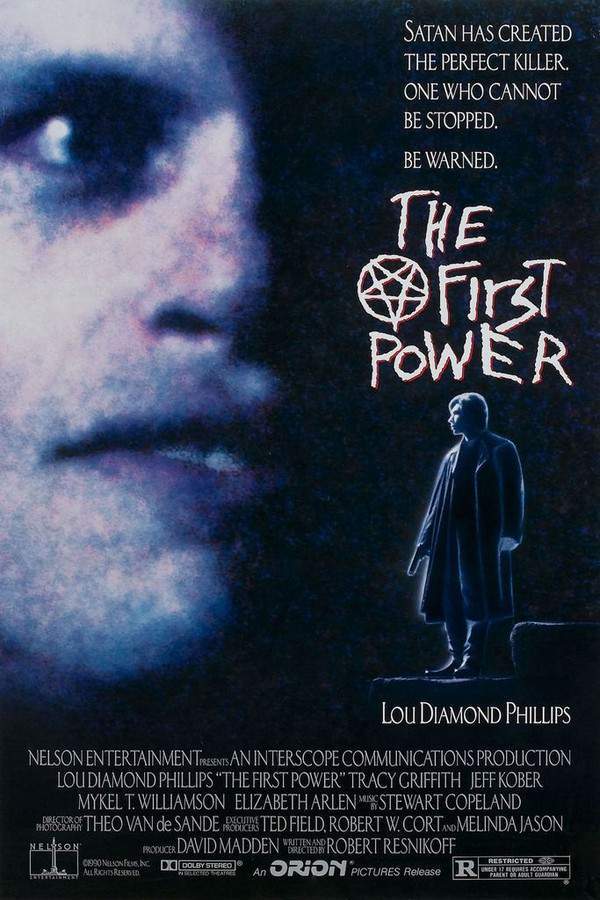
What Is The First Deadly Sin About?
The premise of The First Deadly Sin in 338 words, with nothing given away. The full story follows below.
In the relentless pulse of Manhattan, a city that never quite settles into sleep, a series of unsettling murders threatens to fracture its fragile veneer of order. The killings are marked by a cold, ritualistic rhythm that leaves the police force scrambling for clues while the streets buzz with whispered speculation. The atmosphere is drenched in shadowed alleyways, fluorescent hospital lights, and the hum of a metropolis that feels both intimate and overwhelmingly anonymous, setting a tone that is as much about the weight of unanswered questions as it is about the chase itself.
At the heart of the investigation stands Edward X. Delaney, an NYPD detective whose career is winding down toward retirement. He carries the accumulated grit of countless cases, a stoic dedication that has earned both respect and weariness among his peers. As the pressure mounts, Delaney finds his resolve sharpened not just by professional duty but by a personal battle; his wife Barbara lies in a hospital bed, fighting for her life after a complicated surgery. The strain of her illness sharpens his focus, turning every lead into a matter of both civic responsibility and intimate urgency.
Surrounding Delaney is a tapestry of New York’s diverse undercurrents—a seasoned coroner whose forensic insights hint at deeper patterns, an art historian with a curiosity for ancient weapons, and a host of everyday New Yorkers whose fleeting encounters add texture to the investigation. Their interactions are tinged with the city’s characteristic blend of cynicism and hope, each conversation a piece of a larger, elusive puzzle.
The film unfolds as a meticulous, noir‑inflected portrait of a man on the brink—balancing the looming end of his career, the looming loss of his love, and the inexorable pull of a mystery that threatens to consume both. Through dimly lit precinct hallways, sterile hospital rooms, and the restless streets of Manhattan, the story invites viewers to linger on the tension between duty and destiny, asking what one is willing to risk when the line between order and chaos grows ever thinner.
What Happens in The First Deadly Sin?
The complete story of The First Deadly Sin, from the first scene to the last, in 953 words (about 4 minutes). Spoilers throughout. Names in the text link to 1 cast member page.
Spoilers ahead
Outside Mount Pleasant Baptist Church on West 81st Street in Manhattan, a brutal attack with an ice axe shatters the morning calm, a moment cut with graphic close-ups of a woman in surgery. The NYPD arrives to process the scene, and the coroner, Dr. Sanford Ferguson [James Whitmore], reveals that the fatal wound on the skull came from a spherical impact, not a blade. This grisly opening knot begins to pull the city’s fabric of crime into focus.
Detective Edward X. Delaney [Frank Sinatra] is present at the scene, and the shock of the event drives him to ignore the department’s whistle-blowing about priorities. His wife Barbara Delaney [Faye Dunaway] is in a hospital bed fighting for her life after emergency kidney surgery complications, a medical crisis that slowly gnaws at Delaney’s faith in doctors and systems alike. The film quietly traces how his personal grief sharpens his resolve to chase a killer who seems to be moving through the city with the same cold precision as the surgeons who saved lives moments earlier.
To solve the crime, Delaney dives into the puzzle with a rare blend of stubborn grit and patient curiosity. His first major clue leads him to Christopher Langley, an elderly Arms and Armor curator at the Metropolitan Museum of Art. Langley [Martin Gabel] is thrilled by the chance to work on a murder mystery with a monolithic, almost ceremonial feel. His research focuses on how the weapon’s entry angle and the perfectly spherical wound point to something more than a conventional blade. Langley’s meticulous reasoning narrows the field to a tool—specifically an ice axe—that could produce such a wound. His fascination with the problem becomes a partner to Delaney’s stubborn drive, and together they chase a trail that broadens far beyond a single block.
A hardware store becomes a turning point. Langley questions the shop clerk for the best implement to kill someone, and the clerk, amused but helpful, confirms the likelihood of an ice axe as the killer’s instrument. This moment crystallizes Delaney’s hunch and sets in motion a citywide search that aligns with Langley’s historical insight. The two men discover that a recent attack on West 79th Street mirrors the patterns of the 81st Street case, and they realize these aren’t isolated incidents but a series of linked murders.
Dr. Ferguson’s office becomes a hub of cross-checking as Delaney’s investigation intersects with a broader spectrum of the city’s social strata. The coroner’s observations, combined with Langley’s expertise, lead Delaney to piece together a model of the precise ice axe used in each attack. A sporting goods store furnishes another critical lead when the owner shares addresses collected from customers who bought that same ice axe. This list directs Delaney to a high-rise that towers over the city: the home of Daniel Blank [David Dukes].
Daniel Blank is a figure of wealth and social position, someone who moves in circles that seem to shield him from consequences. He has been present in the background, cleaning up after the killings, a disturbing pattern that Delaney’s persistence finally puts into focus. As Delaney closes in on Blank’s luxury apartment, Blank becomes increasingly reckless, launching one last failed attempt. A victim fights back and survives only to be struck by a passing car, a cruel reminder of how fragile life can be even as justice seems within reach.
Delaney retrieves a World War II-era Luger pistol from a closet in his own home—a weapon that has become a kind of personal relic and a grim reminder of the violence he has seen. He confronts Blank in the opulent security of his apartment, where Blank, with the air of a respectable and influential citizen, concedes nothing. In a tense final exchange, Delaney shoots Blank in the head as the killer speaks on the telephone to an operator. The moment marks a hard-won victory, but the cost is steep.
Back at the precinct, Delaney retires from the force, a quiet end to a career spent chasing shadows. The final scene shifts to the hospital, where Delaney sits by Barbara’s side, reading to her as she grows weak. He holds her hand and, in a moment of quiet despair, allows himself to grieve as she dies, leaving him alone with the weight of his losses and the unanswered questions that linger long after the case is closed.
Across the city’s mosaic of characters, other figures touch the investigation in small but meaningful ways. A brief opening cameo features a diner sequence with a man entering the scene, Bruce Willis, hinting at a larger, almost incidental texture of New York life. The case also brushes against the lives of lawmen and witnesses, such as the persistent Young Policeman [James Hayden], who watches the streets and the pursuit of truth from the margins, and Corelli [Jeffrey DeMunn], whose quiet observations echo Delaney’s methodical approach. Dr. Bernardi [George Coe] and Monica Gilbert [Brenda Vaccaro] enter the story through personal and professional threads that intersect with Delaney’s world as he navigates both the hospital wards and the city’s social strata. Sunny Jordeen [Anna Navarro] and Sports Clerk Girl [Denise Lute] contribute small, human moments that remind the audience that crime is embedded in everyday life.
In the end, the city’s shadows yield a grim, personal closure for Delaney: a retirement from duty, a wife who dies, and a man who has to live with the cost of justice. The film’s quiet, unflinching tone asks viewers to hold onto what is seen and what is lost, to consider the price of a life spent hunting a single, chilling killer, and to reflect on the fragile line between order and chaos that runs through a city that never truly sleeps.
The First Deadly Sin Timeline: Every Key Event in Order
11 key events in the order they happen, from “Murder outside a church begins the case” to “Final vigil: Barbara's death”. 11 events name a place, across 11 locations.
- 1
Murder outside a church begins the case
A man is attacked outside Mount Pleasant Baptist Church on West 81st Street. The wound is unusually spherical, and the coroner confirms it was caused by a round object rather than a blade. The NYPD arrives to process the scene and begin the investigation.
When:Opening scene Where:Mount Pleasant Baptist Church, West 81st Street, Manhattan
- 2
Barbara's emergency surgery and worry
Delaney learns at the scene that his wife Barbara is recovering from emergency surgery. He rushes to the hospital as her surgeon explains that Barbara's kidney was removed due to complications from stones. Barbara's condition worsens, fueling Delaney's suspicions about Dr. Bernardi's competence.
When:Early in investigation Where:Hospital
- 3
Delaney dives into the case at the Met
Despite warnings about police priorities, Delaney throws himself into the case. He visits the Metropolitan Museum of Art to consult Arms and Armor curator Christopher Langley about what weapon could cause such a wound. Langley eagerly devotes time to researching the mystery.
When:Early investigation Where:Metropolitan Museum of Art
- 4
Langley pins down a tool-based killer
Langley concludes the wound is produced by a tool-like implement rather than a conventional weapon. He visits a hardware store and, with the clerk's help, deduces that the weapon was most likely an ice axe. This insight sharpens the lead and points Delaney toward a specific murder tool.
When:Early investigation Where:Hardware store
- 5
Pattern emerges across the city
Delaney discovers a similar attack on West 79th Street and, with Ferguson's help, learns that the wound patterns are nearly identical. The case reveals a city-wide pattern rather than a lone incident, widening the scope of the investigation. This shocks the team and changes their approach.
When:Mid-film Where:West 79th Street; various NYC locations
- 6
Snowballing evidence leads to buyers
Langley uses the new information to locate the exact model of ice axe. A sporting goods shop owner provides the addresses of every customer who bought that model, giving Delaney a concrete trail to follow toward a suspect. The investigation tightens as more names are traced.
When:Mid-film Where:Sporting goods store
- 7
Trail leads to Daniel Blank
The collected addresses point to Daniel Blank, who has been seen intermittently cleaning up after the murders. Delaney closes in on Blank as the suspect, tightening the net around him while Blank continues his pattern of violence.
When:Mid-film Where:Daniel Blank's high-rise
- 8
A final attack and a tragic consequence
As Delaney closes in, Blank makes one last attempt to strike. Although his victim escapes, the person is later hit by a passing car, reinforcing the killer's reach but complicating the case. Delaney remains focused on bringing Blank to justice.
When:Mid-to-late film Where:City streets
- 9
Confrontation and the shooting
Delaney confronts Blank in his luxury apartment. Blank brags about his connections and tries to report Delaney for breaking in, but Delaney shoots Blank in the head with a Luger pistol from his WW2 memorabilia. The violent confrontation marks the climax of the investigation.
When:Climax Where:Blank's luxury apartment
- 10
Retirement and discovery at the precinct
Delaney returns to the police precinct, where he retires from the force. The desk sergeant informs him that Blank's body has been found, and Delaney confirms that he has retired as he walks out of the building. The procedural arc reaches its denouement.
When:Ending Where:Police precinct station house
- 11
Final vigil: Barbara's death
In the hospital, Delaney sits beside his wife, reading to her and holding her hand. He breaks down in tears as she dies, bringing a quiet, personal ending to the case and the film. The emotional resonance lingers after the carnage.
When:Ending Where:Hospital room
Who Are the Main Characters in The First Deadly Sin?
7 characters, among them Edward X. Delaney (Frank Sinatra), Barbara Delaney (Faye Dunaway) and Daniel Blank (David Dukes): who each one is and the part they play in the story. Every profile links to the actor’s page.
-
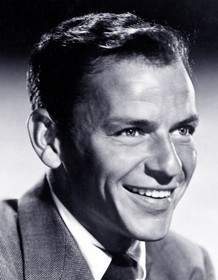
Edward X. Delaney (Frank Sinatra)
Played by Frank Sinatra
A relentless NYPD detective haunted by his wife’s illness, Delaney throws himself into a murderous case despite pressure from peers. He is dogged, skeptical of authority, and capable of making hard, even dangerous, choices in pursuit of truth.
- 🧭 Detective
- 🖤 Grief-driven
- 🧠 Calculated
-

Barbara Delaney (Faye Dunaway)
Played by Faye Dunaway
Delaney’s wife whose kidney surgery and worsening condition become a core motivator for his obsession with justice. She appears as a fragile, caring presence before dying in the hospital.
- ❤️ Wife
- 🏥 Illness
- 🕊️ Loss
- DB
Daniel Blank (David Dukes)
Played by David Dukes
Wealthy, well-connected killer who believes his social status will free him from consequence. Calm, arrogant, and dangerous, he embodies the paradox of respectable respectability masking brutal crime.
- 👔 Elite
- 🧊 Calculated
- 🗝️ Privilege
-
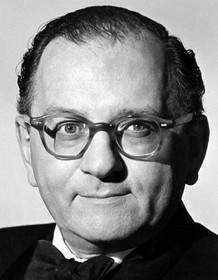
Christopher Langley (Martin Gabel)
Played by Martin Gabel
Arms and Armor curator who becomes a crucial resource for Delaney, applying historical knowledge to deduce the weapon. He combines erudition with a keen enjoyment of solving puzzles.
- 🏛️ Scholar
- 🗡️ Weapon expert
- 🧠 Intellectual
- DB
Dr. Bernardi (George Coe)
Played by George Coe
Barbara’s surgeon whose competence is questioned by Delaney. He represents the tension between medical error and professional pride in high-stakes cases.
- 🩺 Doctor
- 🏥 Medical error
- 👨⚕️ Authority
- DS
Dr. Sanford Ferguson (James Whitmore)
Played by James Whitmore
The harried coroner who confirms murder patterns and aids the early investigative lead. He embodies procedural pragmatism in the NYPD’s cases.
- ⚖️ Coroner
- 🧭 Procedure
- 🕵️♂️ Authority
-
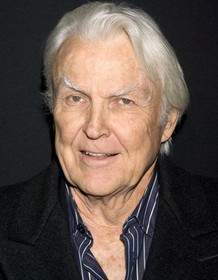
Captain Broughton (Anthony Zerbe)
Played by Anthony Zerbe
A precinct captain whose authority frames the police response and the pressures on Delaney’s investigation. He represents institutional oversight.
- 👔 Authority
- 🗽 Police
- 🧭 Leadership
Where and When Is The First Deadly Sin Set?
The First Deadly Sin is set in Manhattan, New York City, Mount Pleasant Baptist Church (West 81st Street)… (Late 20th century). Here is why the time and place matter to the story.
When
Late 20th century
The story unfolds in a contemporary urban New York setting, reflecting the policing style and social dynamics of a modern city. It follows a personal and procedural crime chase, with a tone typical of late 1970s to early 1980s thrillers. The inclusion of a WWII-related possession (the Luger) anchors a generation-memory from the mid-20th century into the present-day investigation.
Where
Manhattan, New York City, Mount Pleasant Baptist Church (West 81st Street), Metropolitan Museum of Art, 20th Precinct, Daniel Blank's luxury apartment
The action is set in Manhattan, with scenes around Mount Pleasant Baptist Church on West 81st Street and the Metropolitan Museum of Art. The investigation takes the NYPD through a network of locations from the 20th Precinct to luxury high-rises as the killer operates unseen in the city's upper echelons.
- 🗽 New York City
- 🏛️ Museums
- 🔎 Crime Investigation
What Are the Themes of The First Deadly Sin?
3 ideas the story keeps returning to, among them Justice vs Wealth, Loss and Obsession and Unusual Weapon, Cold Logic.
-
01
Justice vs Wealth
A determined detective pursues a brutal series of murders even when higher priorities and social privilege threaten to shield the killer. The chase exposes the friction between procedural duty and the influence of wealth in New York City's power structure. The case tests Delaney's ethics, as personal stakes push him to bend rules in hope of justice. It underscores how justice can be compromised when money and status intervene.
-
02
Loss and Obsession
Delaney’s wife Barbara’s illness and death become a core motivator for his obsession with truth. The pursuit blends grief with professional duty, turning private sorrow into public stakes. The film suggests the personal cost of pursuing justice, as Delaney risks burnout and moral compromise. Barbara's memory haunts the investigation, giving motive to every decision.
-
03
Unusual Weapon, Cold Logic
The killer's methodical, dispassionate approach hinges on a specialized weapon and meticulous attention to detail. The detective's deduction that an ice axe is responsible becomes a pivotal clue that drives the investigation. The cold logic of the crime contrasts with Delaney's emotional burden, highlighting a clash between rational inquiry and personal loss. The film uses this weapon as a motif for the chilling precision of the killer.
What Kind of Film Is The First Deadly Sin?
Dark in tone, with steady pacing and a moderate story, going by the plot summary.
- Tone
- Dark
- Pacing
- Steady
- Story
- Moderate
- Intensity
- High
- Ending
- Sad
A dark and somber police procedural that methodically follows a detective's grim pursuit of a serial killer, set against the bleak backdrop of his wife's terminal illness, creating a heavy and emotionally draining viewing experience.
- gritty
- somber
- methodical
- urgent
- lonely
- oppressive
- crime investigation
- grief and loss
- serial murder
- police procedural
Content notes: serial murder, graphic violence, terminal illness.
Quiz
How well do you remember The First Deadly Sin? Test yourself on the story.