
The Discreet Charm of the Bourgeoisie 1972


Directed by
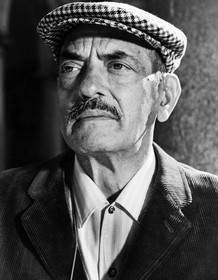
Luis Buñuel
Made by

Greenwich Film Production
Where to Watch The Discreet Charm of the Bourgeoisie
See current US streaming, rental, and purchase options for The Discreet Charm of the Bourgeoisie (1972) via JustWatch.

BFI Player Amazon Channel
HD
Kanopy
HD
Plex
HD
Plex Channel
HD
Tubi TV
SD
Amazon Video
SD
Apple TV Store
HD
Fandango At Home
SD
Google Play Movies
SD
YouTube
SD Streaming availability powered by 
The Discreet Charm of the Bourgeoisie Plot Summary
Read the complete plot summary and ending explained for The Discreet Charm of the Bourgeoisie (1972). From turning points to emotional moments, uncover what really happened and why it matters.
A subtle, morally tangled drama unfolds as a French bourgeois circle drifts through a web of crime, politics, and desire. At the heart of it all is a dinner party turned tableau of paranoia and power. A French bourgeois couple, François Thévenot [Paul Frankeur], and Simone Thévenot [Delphine Seyrig], accompany François’s colleague Don Rafael Acosta [Fernando Rey], the ambassador from Miranda, and Simone’s sister Florence [Bulle Ogier] to the home of the Sénéchals for a gathering that promises polite conversation but hints at dangerous undercurrents. The host Alice Sénéchal is surprised to see them, explaining that she expected them the following evening and has no dinner prepared. The would-be guests invite Alice to join them for dinner at a nearby inn. There, a waitress explains the restaurant is now under new management; the place is empty of diners, and the group departs in a hurry after discovering a vigil for the manager, who had died a few hours earlier in an adjoining room. The mood is odd, the atmosphere tense, and nothing feels quite as it seems.
Two days later, at the Miranda embassy, Acosta, François, and Henri Sénéchal (Alice’s husband) discuss the proceeds of a large cocaine deal. Acosta notices a young woman selling clockwork animal toys outside; he fires a shot at one of the toys and the girl bolts away. He explains that she’s part of a Maoist Mirandan terrorist cell that has been targeting him for months, a revelation that deepens the sense that politics and crime are entangled in every interaction. The sense of looming danger thickens as the group moves through their day, the line between ally and antagonist blurring with every gesture.
A lunch at the Sénéchals’ home soon follows, but the mood has grown uneasy. Henri and Alice slip away to the garden to have sex, rather than join the others at the table, and Acosta quickly deduces that the Sénéchals anticipate police attention and have fled to avoid arrest for drug trafficking. The rest depart in a panic, a microcosm of a society that circulates around rumor, suspicion, and bristling fear.
When the Sénéchals return to a vacant room, they encounter a surprising figure—a bishop who has donned their gardener’s disguise. They initially eject him, yet when he reappears in full bishop robes, they treat him with a deferential courtesy. The bishop asks for work as their gardener and then shares a chilling family memory: as a child, he learned that his parents were poisoned with arsenic and that the culprit was never brought to justice. The moment binds the characters to an eerie sense of historical grievance that haunts every corner of their world. Julien Bertheau is the moment’s solemn hinge, casting a long shadow over the proceedings.
The scene shifts again to a teahouse, where a soldier recounts a childhood story that echoes the earlier themes of danger and succession. After his mother dies, his stern father sends him to military school. The ghost of the soldier’s mother reveals a devastating truth: the man he believes to be his father is in fact the killer of his real father, a revelation that ends in a grim act of vengeance on the supposed culprit. The tale underscores how violence and lineage intertwine within the group’s world, fueling paranoia and moral ambiguity.
Simone, meanwhile, is entangled with Acosta in more personal terms. They meet at Acosta’s apartment for a clandestine affair, but their tryst is interrupted by François, and Simone offers a convenient excuse to leave with him instead. The encounter with the terrorist who has been pursuing Acosta interrupts the moment, and she is forced to confront the consequences of her choices. The terrorist, a figure embodied by Maria Gabriella Maione, arrives with a threat that unsettles the room further and culminates in a sharp, morally ambiguous confrontation. The tension mounts as agents waiting across the street capture her, reinforcing the sense that surveillance and control are constant presences in this world.
The group reconvenes at the Sénéchals’ for dinner, only to be interrupted by the unexpected arrival of an army regiment that joins the dinner before being called away for maneuvers. A colonel—Claude Piéplu—enters the scene and invites them to his house in return, creating a motif of shifting hospitality and shifting loyalties. François dreams a surreal sequence in which the colonel presses Acosta about Miranda’s political situation, culminating in a gunshot that hints at the fragile line between fiction and reality that threads through the tale. The bishop’s absolution role returns as he is summoned to tend to a dying gardener who confesses to poisoning his former employers, only for the gardener to be revealed as the son of those employers. The bishop ends the affair with a fatal shot, a grim act that underscores the moral cost of the living’s complicity in wrongdoing.
As the arrest for drug trafficking looms, the police chief dreams of a haunting vision: the ghost of a former inspector killed for torturing a student protestor; this dream seems to speak from a higher moral order, only to be shattered by the waking reality that the Interior Minister has ordered the traffickers released. Acosta experiences a nightmare in which the group returns to the Sénéchals’ for dinner and is then shot by a rival gang from Marseille, a dream that fades as he returns to the kitchen to eat leftovers from the refrigerator. The film ends, almost hypnotically, with a recurring image of the six walking silently and with purpose along a desolate country road, a stark and unresolved final sequence that lingers long after the screen goes dark. The entire narrative threads together themes of social façade, corruption, betrayal, and the unsettling ways in which power frames every relationship and every decision.
The Discreet Charm of the Bourgeoisie Timeline
Follow the complete movie timeline of The Discreet Charm of the Bourgeoisie (1972) with every major event in chronological order. Great for understanding complex plots and story progression.
Surprise dinner at the Sénéchals' house and invitation to a nearby inn
At the Sénéchals' house, the Thévenots and Acosta attend what should be a dinner with Alice. Alice is surprised to learn there is no dinner prepared and that the hosts expected them the next evening. The group invites Alice to join them for dinner at a nearby inn, which they discover is under new management.
Inn visit reveals no diners and a vigil for the manager
At the inn, the restaurant is under new management and there are no other diners inside. The party learns there is a vigil for the manager who died a few hours earlier, noted in an adjoining room. They depart quickly, preserving the social pretense as the night unsettles them.
Embassy meeting to discuss cocaine deal and the clockwork toy girl
Acosta, François, and Henri meet at the Mirandan embassy to discuss the proceeds of a large cocaine deal. Acosta notices a young woman selling clockwork-animal toys outside and shoots one of the toys with a rifle; he explains she is part of a Maoist Mirandan terrorist group targeting him. The moment hints at the dangerous political backdrop behind their bourgeois gathering.
Two days later lunch at the Sénéchals' and the garden tryst
Two days later the friends arrive at the Sénéchals' for lunch. Henri and Alice escape to the garden to have sex instead of joining the others. Acosta deduces that the Sénéchals know the police are coming and have fled to avoid arrest for their involvement in drug trafficking, prompting the group to leave in a panic.
The bishop arrives as gardener and recounts a poisoning past
The bishop, initially in gardener's clothing, returns in bishop's robes and asks to work for them as their gardener. He shares that when he was a child, his parents were poisoned with arsenic and the culprit was never caught. The revelation deepens the sense of hidden histories within the bourgeois gathering.
Teahouse tale of a soldier and a mother's ghost
The women visit a teahouse where a soldier recounts his upbringing after his mother's death and his cold father's punishment. The ghost of the soldier's mother reveals that the man is not his biological father but his father's killer; she urges him to poison the culprit, and he complies. The vignette adds another layer of transgression to their circle.
Simone's affair with Acosta and her capture
Simone meets Acosta at his apartment, where they resume their affair and briefly retreat to his bedroom. François interrupts and she makes an excuse to leave with him. Acosta is visited by the terrorist who travels to kill him; after he subdues her, she leaves, and agents across the street capture Simone.
Dinner at the Sénéchals' interrupted by an army regiment
The group gathers again at the Sénéchals' for dinner, but a regiment of soldiers arrives and interrupts. The soldiers join the dinner briefly before being called away for alarmingly close maneuvers. The colonel then invites them to his house in return.
Dream of the colonel's dining room and Acosta's shot
François dreams that the colonel's dining room is a theatre stage, with an audience angry at actors for not knowing their lines. In the same sequence, Acosta shoots the colonel, a moment that reflects the film's paranoia about power and violence. The dream blurs reality and fantasy within the dinner party.
The bishop absolves and kills the dying gardener
The bishop leaves gardening duties to give absolution to a dying gardener who confesses to poisoning his former employers. Realizing the employers were his own parents, the bishop finishes the absolution and fatally shoots the gardener with a shotgun. The act underscores themes of guilt and retribution.
Arrest for drug trafficking and a dream of justice
The Sénéchals, the Thévenots, and Acosta are arrested for drug trafficking. The police chief dreams that the ghost of a former inspector, tortured for repressing a student protest, releases the traffickers. He wakes to learn that the Interior Minister has ordered their release.
Release ordered; Acosta's Marseille gang nightmare
The Interior Minister orders their release. Acosta dreams that they return to the Sénéchals' for dinner but are shot by a rival Marseille drug gang; after waking, he goes to the kitchen and sloppily eats leftovers from the refrigerator.
Final sequence: six walk silently on a country road
A recurring scene shows the six protagonists walking silently and purposefully along an isolated country road. The shot lingers on their slow, collective march, leaving their fates deliberately ambiguous. The road sequence bookends the film with a sense of ritual and unresolved tension.
The Discreet Charm of the Bourgeoisie Characters
Explore all characters from The Discreet Charm of the Bourgeoisie (1972). Get detailed profiles with their roles, arcs, and key relationships explained.
Don Rafael Acosta (Fernando Rey)
Ambassador from Miranda, entangled in a large drug deal and targeted by a Maoist terrorist group. He exudes charm and calculated ruthlessness, using wit and danger to influence others. His road map through the dinner-table world blends political pragmatism with personal ambition, revealing a man for whom ethics are negotiable.
Simone Thévenot (Delphine Seyrig)
A sophisticated member of the bourgeois circle who channels desire into social maneuvering. She carries affairs and conspiracies with a cool poise, often guiding or complicating the group’s plans. Her actions reveal a keen intelligence and a willingness to manipulate situations to protect or advance herself and her circle.
François Thévenot (Paul Frankeur)
Simone’s husband and fellow member of the bourgeois circle, he participates in the rituals of dinner and power while harboring his own evasive strategies. He embodies polite hypocrisy and a desire to maintain social status amid surrounding chaos. His presence anchors the group’s conventional façade.
Alice Sénéchal (Stéphane Audran)
Host of the dinner and a central figure in the Sénéchal household, she is thrust into the guests' volatile dynamic and navigates the social terrain with a wary curiosity. Her discomfort and adaptability illustrate the tension between hospitality and suspicion. She becomes a conduit for the group’s intersecting dramas.
Florence Sénéchal (Bulle Ogier)
Simone’s sister, a member of the dinner circle who participates in the unfolding drama and shares in the social rituals of the bourgeois group. Her presence adds another layer to the intricate web of family and social ties that the film critiques. She contributes to the sense of an insular, performative circle.
Henri Sénéchal (Jean-Pierre Cassel)
Alice’s partner and a participant in the group’s escapist fantasies, he feigns normalcy while engaging in the affair that disrupts the dinner dynamics. His actions reflect the sexual and social experiments of the bourgeois milieu. He represents calculated intimacy, used to maintain appearances.
Monsignor Dufour (Julien Bertheau)
A bishop who appears in disguise as a gardener and then reveals a religious identity, offering absolution and moral commentary. His appearances blur roles and question who is truly performing virtue. He embodies the film’s fascination with ritual and hierarchy.
Colonel (Claude Piéplu)
A military figure whose presence emphasizes authority and the state’s reach into private life. He triggers a sequence of political and violent fantasies that puncture the bourgeois dream. His interactions with Acosta and the other guests highlight the fragility of control.
Interior Minister (Michel Piccoli)
A high-ranking government official whose decisions ripple through the narrative, culminating in the controversial order to release the group. His role underscores the tenuous link between law, order, and political expediency. He embodies the political machinery behind the social theatre.
The Discreet Charm of the Bourgeoisie Settings
Learn where and when The Discreet Charm of the Bourgeoisie (1972) takes place. Explore the film’s settings, era, and how they shape the narrative.
Time period
1970s
The story is set in a contemporary, real-world milieu characteristic of early 1970s France, where dinner, social rituals, and political undercurrents intersect. The era’s anxieties about crime, terrorism, and policing frame the characters’ actions. Repeated interruptions and dreamlike sequences create a sense that time is bending around bourgeois concerns. The setting emphasizes a stale, ritualized world that hides instability beneath polish.
Location
Sénéchal residence, Mirandan embassy, local inn, teahouse, bishop's garden, colonel's house
Most of the action unfolds at the Sénéchals' home, a symbol of bourgeois comfort where ritual and appetite collide. The Mirandan embassy provides a backdrop of politics, crime, and international tension. The group also drifts through an inn and a teahouse, where conversations turn to secrets and coercion. Occasionally, spaces like the bishop’s garden, the colonel’s residence, and other locales stage the film’s surreal interruptions.
The Discreet Charm of the Bourgeoisie Themes
Discover the main themes in The Discreet Charm of the Bourgeoisie (1972). Analyze the deeper meanings, emotional layers, and social commentary behind the film.
🎭
Bourgeoisie satire
The film satirizes upper-class pretensions through endless dinners, polite discourse, and performances that mask moral rot. Characters chase status while excuses for their actions crumble under scrutiny. The humor often arises from the gap between appearance and reality, revealing emptiness behind refinement. The satirical lens targets both wealth and social ritual.
💋
Desire and betrayal
Affairs and flirtations puncture the veneer of respectability, exposing how sexual appetite drives decisions. The bourgeoisie’s strategic partnerships are as volatile as any political alliance. Lust and infidelity complicate loyalties, forcing characters to confront their own possessiveness. Desire is depicted as both liberating and corrosive.
🌫️
Dreams vs reality
Recurring dream sequences and theatrical misdirections blur the line between what is real and what is imagined. The narrative often shifts without clear cause, as if the party itself were a stage where fate can be rewritten. These moments destabilize the viewer's sense of consequence. The coexistence of dream and waking life critiques the reliability of social storytelling.
🛡️
Power and control
Diplomats, police, and military figures loom as authority figures whose orders shape events. The group’s manipulation of appearances mirrors how power operates behind closed doors. Arrests, releases, and coercive threats reveal a fragile social order dependent on spectacle. The film interrogates who really holds power and at what cost.

Coming soon on iOS and Android
The Plot Explained Mobile App
From blockbusters to hidden gems — dive into movie stories anytime, anywhere. Save your favorites, discover plots faster, and never miss a twist again.
Sign up to be the first to know when we launch. Your email stays private — always.
Explore the mobile appThe Discreet Charm of the Bourgeoisie Spoiler-Free Summary
Discover the spoiler-free summary of The Discreet Charm of the Bourgeoisie (1972). Get a concise overview without any spoilers.
In post‑war Paris a tight‑knit circle of the upper class repeatedly gathers with a single, polite purpose: to sit down for a formal dinner. What should be a simple soirée becomes a study in endless deferral, as real and imagined disturbances intrude with the relentless cadence of a farcical play. The film’s tone is a deliciously dry satire that watches the rituals of privilege unravel, each interruption a wink at the absurdities hidden beneath genteel manners.
At the heart of the group are François Thévenot and his wife Simone, a married pair whose composure masks a subtle rivalry beneath their courteous smiles. They are joined by Don Rafael Acosta, an ambassador whose easy charm conceals a restless curiosity, and Alice Sénéchal, the gracious host whose domestic authority is continually tested. Alice’s husband, Henri, drifts in and out of the gathering with a detached ease, while Florence, Simone’s sister, adds a touch of youthful skepticism. Together they form a sextet whose interactions sparkle with polite wit, unspoken envy, and the ever‑present anxiety of maintaining social façades.
The world they inhabit is rendered in Buñuel’s signature blend of surrealist mise‑en‑scene and vaudevillian humor. A polite dinner table becomes a stage where the unexpected slips in—an empty restaurant, a sudden vigil, a bewildering mix of authority figures and strangers—all presented with a dead‑pan elegance that highlights the thin line between ceremony and chaos. The cinematography treats each interruption as both a visual gag and a commentary on the precariousness of bourgeois confidence.
Through this looping dance of anticipation and denial, the film invites the audience to linger over the lingering aromas of unserved courses and the awkward silences that follow each thwarted toast. The atmosphere hums with a curious blend of refinement and absurdity, suggesting that the true spectacle lies not in what is served, but in the endless, polite struggle to finally sit down and eat.
Movies with Similar Twists and Themes
Uncover films that echo the narrative beats, emotional arcs, or dramatic twists of the one you're exploring. These recommendations are handpicked based on story depth, thematic resonance, and spoiler-worthy moments — perfect for fans who crave more of the same intrigue.




Featured on this page

What's After the Movie?
Not sure whether to stay after the credits? Find out!
Check out our other apps:

SAT Sphere
Build confidence for the Digital SAT.

Mori Atlas
Discover wild places worth protecting.

Luntero
Search smarter for a home in Amsterdam.

Plot Explained
Unravel movie endings and hidden clues.

Pokechamp
Dive into Pokémon data and battle logic.

Driving Theory
Get ready for your European theory test.

Movie Dust
Plan your next cinema trip with ease.

Musemap
Find art and culture as you travel.

Selkobase
Compare credentials before committing.

Local Manual
Turn an unfamiliar country into practical next steps.

Lernavi
Compare school systems before your next move.

GymRoam
Find a workout stop wherever your plans take you.
Explore Our Movie Platform
New Movie Releases (2026)
Famous Movie Actors
Top Film Production Studios
Movie Plot Summaries & Endings
Major Movie Awards & Winners
Best Concert Films & Music Documentaries
Movie Collections and Curated Lists
© 2026 What's After the Movie. All rights reserved.
Privacy Policy