
The Big Kahuna 1999


Directed by

John Swanbeck
Made by

Franchise Pictures
Where to Watch The Big Kahuna
See current US streaming, rental, and purchase options for The Big Kahuna (1999) via JustWatch.


Streaming availability powered by 
The Big Kahuna Plot Summary
Read the complete plot summary and ending explained for The Big Kahuna (1999). From turning points to emotional moments, uncover what really happened and why it matters.
Larry Mann and Phil Cooper are two seasoned marketing representatives for an industrial lubricants company, heading to a trade convention in the Midwestern city of Wichita, Kansas. They bring along a younger colleague, Bob Walker, a diligent researcher from their department who isn’t quite as worn by the industry’s grind as they are. The trio arrives at the hotel and settles into a hospitality suite, where long years of friendship and shared stories color every exchange. Larry carries the weight of looming financial pressure, a pressure he keeps veiled in casual remarks, while Phil has recently navigated a difficult period in his own life through an alcoholism recovery. Bob, by contrast, speaks with a calm conviction and a sense of purpose grounded in his Baptist faith and his straightforward, earnest outlook.
The central mission they’ve built their evening around is clear but ambitious: to secure a pivotal meeting with Dick Fuller, the CEO of a large corporation who people in their circle refer to as the Big Kahuna. The phrase hints at a coveted prize in the business world, and the men gear up to present their pitch with a blend of grit, humor, and hard-won know-how. As they wait for the downstairs convention buzz to wind down, they lean on each other to develop a sense of character—what to share, what to reveal, and what to listen for—in a setting that until now has rewarded slickness more than honesty. They even assign Bob the task of being the evening’s bartender, a practical exercise in reading rooms and steering conversations. The hotel setting becomes a stage where their past camaraderie, their individual frailties, and their professional ambitions all intersect in real time.
Bob spends the evening stepping into the role of host, moving through a hotel crowd with a polite, unassuming ease. The odds of a straightforward sales pitch begin to look remote, as the conversations drift toward people’s lives, beliefs, and curiosities rather than the company’s lubricants. The more Bob chats, the more he encounters opportunities to relate on a human level rather than to brand a product. He even ends up invited by a guest—an invitation tied to the private party at another hotel—that pulls him deeper into the social fabric of the convention. The Big Kahuna, an emblem of corporate power in this world, appears in the mix as a figure people try to reach and impress, a symbol of the threshold Bob is trying to cross.
Meanwhile, Larry and Phil watch Bob’s approach with a mix of nerves and reluctant admiration. They coach him on how to deliver a pitch that can land a meeting with Fuller, translating complex technical benefits into digestible, human terms. They emphasize the art of listening, the value of making genuine connections, and the importance of trust between people as the true currency of business. Bob, however, returns from his rounds with a startling development: he didn’t lean into the lubricant story at all. Instead, he spent his time talking about religion, faith, and the larger questions of meaning. The moment lands with a shocking impact on Larry, who is blindsided by this turn of events and feels his own sense of purpose tested.
The spark of tension between Bob’s religious focus and the trio’s sales mission leads to a charged confrontation. Larry challenges Bob, and the room fills with a quiet, unsettled tension as the truth of Bob’s choice sinks in. In response, Phil steps in with a grounded, pragmatic perspective that reframes the conflict not as a failure of Bob, but as a lesson about honesty and connection. He explains that proselytizing is, in a sense, another form of selling—one that hinges on trust and on the ability to see the other person as a fellow human being rather than a potential customer. Phil’s insight points to a deeper truth about their work: genuine human-to-human contact requires openness, a willingness to listen, and a real interest in the other person’s life and beliefs.
Phil goes further to articulate why the three of them have stayed friends for so long. The bedrock of their relationship is trust, a trust that allows them to share vulnerabilities, admit mistakes, and grow through them. He tells Bob that meaningful character development will only come when he can recognize what he ought to regret and allow that recognition to guide his future choices. The conversation, frank and sometimes difficult, reframes the evening from a simple sales exercise into a meditation on character, responsibility, and the ways people change when they choose to be more honest with themselves and with others.
The next morning, as they prepare to part ways, Phil packs up his things and Larry checks out. In the lobby, they glimpse Bob again, still engaged with the Big Kahuna, exchanging a knowing smile as it becomes clear that Bob is continuing to pursue his own path—one that foregrounds conviction and a different form of communication. The moment feels like a quiet acknowledgment of growth, even if the outcome of the meeting with Fuller remains uncertain. The film closes on an evocative note, with the credits accompanied by a rendition of the timeless civic essay set to music: Everybody’s Free (to Wear Sunscreen), a reflective piece attributed to Mary Schmich that underscores the film’s themes of life, choices, and the delicate art of navigating human connections.
Notes:
- The cast references used in this summary include linked at first mention to the respective actor pages: Larry Mann, Phil Cooper, Bob Walker, Ron Komora, and Paul Dawson where applicable.
The Big Kahuna Timeline
Follow the complete movie timeline of The Big Kahuna (1999) with every major event in chronological order. Great for understanding complex plots and story progression.
Arrival at Wichita convention
Larry Mann, Phil Cooper, and Bob Walker arrive at a trade convention in Wichita, Kansas. They settle in the hotel’s hospitality suite and outline their single goal: to secure a meeting with Dick Fuller, the Big Kahuna. The trio brings different personal histories that will influence how they navigate business and relationships.
Clarifying goal and backstory
Larry and Phil discuss character and their long friendship, revealing Larry’s financial pressures and Phil’s recovery from alcoholism. They emphasize that their main objective at the convention is to meet the Big Kahuna and pitch their lubricants. Bob listens, setting up his role as a bridge between them and potential clients.
Bob becomes the social connector and bartender
Bob takes on the role of bartender for the evening, chatting with attendees and trying to connect people with potential sales leads. He ambles through conversations, building rapport and collecting small bits of information. His easy manner positions him as the front line for future pitches.
Big Kahuna invites Bob to a private party
The Big Kahuna approaches Bob and invites him to a private party at another hotel, signaling a chance to pitch away from the crowded convention floor. Larry and Phil watch and prepare Bob to present their industrial lubricants succinctly. The invitation heightens the pressure to deliver results.
Bob is coached on the pitch
Larry and Phil coach Bob through a refined pitch and hand him their business cards, coaching him on which information the Big Kahuna can actually absorb. They stress reading the room and tailoring the conversation to secure a future meeting. Bob heads out with a clear but narrow plan to convey value quickly.
Bob reveals his approach to religion vs sales
Bob returns from the private party and drops a bombshell: he spent the time discussing religion rather than pitching lubricants. Larry is stunned and devastated by this misalignment with the plan they laid out. Phil tries to contextualize Bob’s actions as part of personal growth and the risk of misreading a client’s needs.
Phil reframes the moment
Phil explains that proselytizing is just another form of a sales pitch, but true sales require honesty and genuine human contact. He argues that trust is the foundation of their friendship and that growth comes from recognizing what one should regret. The exchange reframes Bob’s actions as a learning moment rather than a total failure.
Larry and Phil reflect on life and trust
As Bob continues his religious approach, Larry and Phil pause to reflect on the nature of human life and the kind of people they want to be. Their conversation anchors the business relationship in deeper values beyond the deal. They consider how trust shapes future interactions with clients.
Morning lobby encounter with the Big Kahuna
The next morning, Bob is seen talking again to the Big Kahuna in the hotel lobby, signaling that he will press his agenda rather than pursue the lubricant pitch. Larry and Phil exchange a knowing smile, recognizing the ongoing tension between Bob’s approach and their sales strategy. The dynamic hints that a successful meeting remains uncertain.
Checkout day and unresolved pursuit
Phil begins packing his things and Larry checks out, with the trip ending without a secured deal. Bob’s ongoing religious pitch continues to color his interactions with the Big Kahuna, underscoring the group’s unresolved objective. The morning concludes with a sense that the Big Kahuna remains unconverted.
Credits and closing soundtrack
As the credits roll, the film features the song Everybody’s Free (to Wear Sunscreen), closing the story with a reflective tone on personal growth, honesty, and human connection. The track echoes the film’s themes of navigating sales, faith, and trust in professional life. It leaves the audience with a contemplative mood about how to approach others.
The Big Kahuna Characters
Explore all characters from The Big Kahuna (1999). Get detailed profiles with their roles, arcs, and key relationships explained.
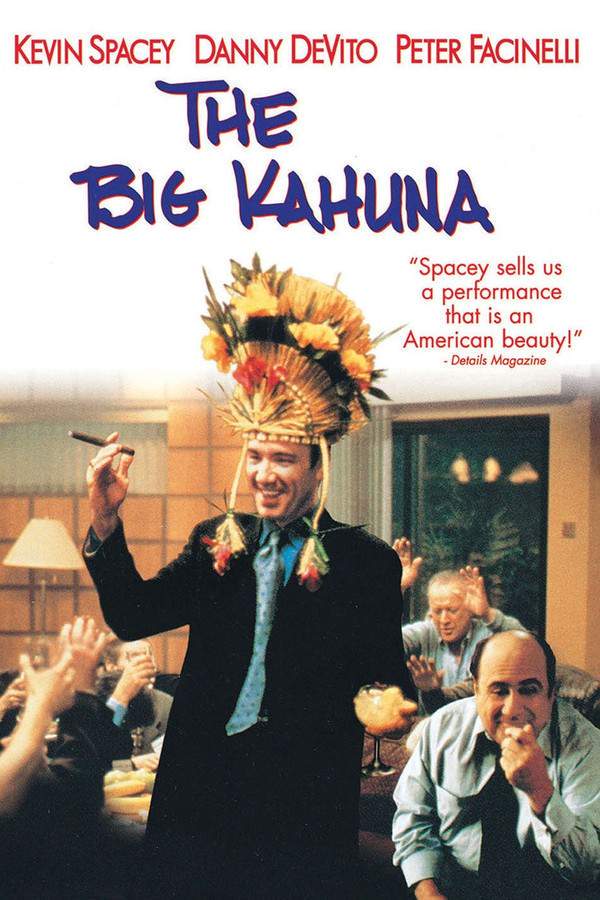
Larry Mann (Kevin Spacey)
A veteran marketing rep under financial pressure, Larry is pragmatic and intensely focused on closing a deal with the Big Kahuna. He values loyalty and long-standing friendship, yet his priorities can clash with ethical considerations when a sale is at stake. His blunt, sometimes defensive demeanor masks a fear of failure and a need to protect his position. He both mentors Bob and feels betrayed when Bob deviates from the plan by preaching instead of pitching.
Phil Cooper (Danny DeVito)
A long-time partner to Larry who has recently overcome alcoholism, Phil acts as the moral touchstone of the duo. He frames sales more as a matter of character than numbers, urging honesty and real connection with others. Phil’s empathy and practical wisdom help Bob see the difference between a genuine relationship and a successful pitch. He believes that trust and growth come through accountable choices.
Bob Walker (Peter Facinelli)
An earnest young researcher and Baptist who carries a sincere desire to do good, Bob is naively optimistic about using religion as a guiding principle in business. He unintentionally interrupts the sales pitch by engaging in religious conversation, revealing a clash between his values and the sales culture. Bob’s actions catalyze the central conflict and force the others to confront what really matters in human interaction. His integrity and faith drive his attempts to steer conversations toward meaning rather than mere product pitching.
The Big Kahuna Settings
Learn where and when The Big Kahuna (1999) takes place. Explore the film’s settings, era, and how they shape the narrative.
Time period
late 1990s
Set in the contemporary late 1990s corporate world, the film showcases a culture of direct, hard-sell tactics and personal networking. The era’s spirit of self-help and business ethics shapes the characters’ decisions and interactions.
Location
Wichita, Kansas
Wichita, Kansas serves as the primary location for the trade convention and the hotel suite where much of the drama unfolds. The city is depicted as a Midwestern hub where industry pitches and personal tension collide. The hospitality suite and convention floors create a confined space that intensifies conversations about money, religion, and loyalty.
The Big Kahuna Themes
Discover the main themes in The Big Kahuna (1999). Analyze the deeper meanings, emotional layers, and social commentary behind the film.
🤝
Trust
The friendship between Larry and Phil rests on trust, and Bob’s conversations test that bond. The film argues that honest, human-to-human exchanges matter more than glossy pitches. Larry and Phil use loyalty to steer each other through tough choices, while Bob’s moral missteps expose the fragility of trust in a sales environment. The resolution hints that true growth comes from honoring commitments and reading people carefully.
⛪️
Conscience
Bob’s earnest faith collides with the pressure to convert prospects into sales, highlighting a tension between personal beliefs and corporate strategy. The characters wrestle with whether preaching can serve as a sales tactic or if authenticity must prevail. The movie uses this clash to question whether success justifies compromising one’s values. It suggests that acknowledging one’s inner ethical compass is crucial for character development.
💬
Dialogue
Conversation drives the narrative: Bob’s small-talk, Larry’s coaching, and Phil’s explanations reveal what each character truly values. The film uses dialogue to unpack motives, regrets, and the cost of success. Honest dialogue becomes a path to growth, while empty talk shows the hollowness of a purely opportunistic approach.

Coming soon on iOS and Android
The Plot Explained Mobile App
From blockbusters to hidden gems — dive into movie stories anytime, anywhere. Save your favorites, discover plots faster, and never miss a twist again.
Sign up to be the first to know when we launch. Your email stays private — always.
Explore the mobile appThe Big Kahuna Spoiler-Free Summary
Discover the spoiler-free summary of The Big Kahuna (1999). Get a concise overview without any spoilers.
In the hum of a Wichita hotel’s hospitality suite, the mundane world of industrial‑lubricant sales takes on an almost surreal gravity. The sleek corridors of a trade convention pulse with chatter and glossy displays, yet the real drama unfolds in a modest lounge where three seasoned representatives await a pivotal encounter. The atmosphere is a mix of weary optimism and low‑key tension, the kind that hangs over any high‑stakes negotiation, amplified by the quiet hum of late‑night coffee and the distant thrum of the convention floor.
Larry Mann carries the weight of a faltering market with a dry, understated humor that hints at deeper anxieties. Beside him, Phil Cooper balances his own recent personal recovery with a cynical charm, offering a steady, if sometimes sardonic, counterpoint. The newest addition, Bob Walker, brings a fresh, earnest perspective anchored in a calm conviction that seems almost out of step with the cut‑throat world they inhabit. Their long‑standing friendship is evident in the easy ribbing and the unspoken trust that allows each to reveal fragments of their lives beneath the professional veneer.
All three are united by a single, looming objective: to secure a meeting with the enigmatic “big kahuna,” Dick Fuller, whose approval could revive their company’s dwindling fortunes. The prospect of this decisive pitch infuses the night with a blend of nervous energy and wry optimism, as the trio rehearses how to translate technical jargon into relatable appeal. Their differing approaches—Larry’s pragmatic urgency, Phil’s seasoned pragmatism, and Bob’s sincere curiosity—create a subtle undercurrent of tension that promises to shape the evening’s conversation.
The film’s tone drifts between dry corporate comedy and thoughtful character study, inviting viewers into a world where salesmanship and personal truth intersect. The waiting room becomes a stage for introspection, where humor softens the stakes and the simple act of waiting for a single decision mirrors larger questions about purpose, trust, and the art of genuine connection.
Movies with Similar Twists and Themes
Uncover films that echo the narrative beats, emotional arcs, or dramatic twists of the one you're exploring. These recommendations are handpicked based on story depth, thematic resonance, and spoiler-worthy moments — perfect for fans who crave more of the same intrigue.



Featured on this page

What's After the Movie?
Not sure whether to stay after the credits? Find out!
Check out our other apps:

SAT Sphere
Build confidence for the Digital SAT.

Mori Atlas
Discover wild places worth protecting.

Luntero
Search smarter for a home in Amsterdam.

Plot Explained
Unravel movie endings and hidden clues.

Pokechamp
Dive into Pokémon data and battle logic.

Driving Theory
Get ready for your European theory test.

Movie Dust
Plan your next cinema trip with ease.

Musemap
Find art and culture as you travel.

Selkobase
Compare credentials before committing.

Local Manual
Turn an unfamiliar country into practical next steps.

Lernavi
Compare school systems before your next move.

GymRoam
Find a workout stop wherever your plans take you.
Explore Our Movie Platform
New Movie Releases (2026)
Famous Movie Actors
Top Film Production Studios
Movie Plot Summaries & Endings
Major Movie Awards & Winners
Best Concert Films & Music Documentaries
Movie Collections and Curated Lists
© 2026 What's After the Movie. All rights reserved.
Privacy Policy