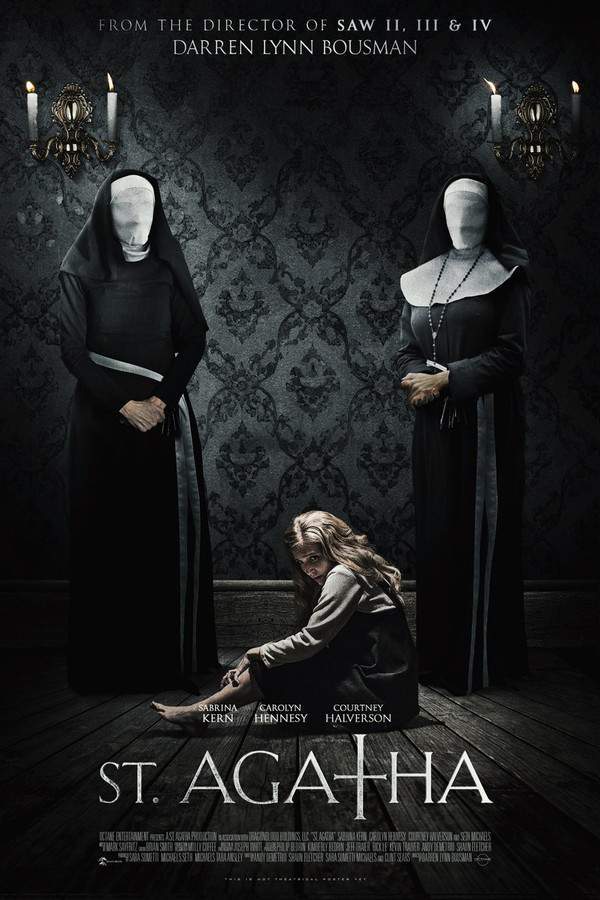
What Is St. Agatha About?
The premise of St. Agatha in 291 words, with nothing given away. The full story follows below.
In the sweltering heat of 1950s Georgia, a desperate young woman on the brink of motherhood flees an abusive past, clutching only the hope of a fresh start. Seeking shelter, she arrives at a remote convent that promises safety and a reprieve from the world outside. The sprawling, stone‑clad haven sits tucked among pine‑lined fields, its quiet façade a stark contrast to the turmoil that drives her forward.
Inside, the convent exudes an austere, almost reverent atmosphere, its corridors lined with simple vows and ritualistic routine. The strict governance of Mother Superior casts a long shadow over the daily life of its residents, where devotion is measured in silence and obedience. Though the building appears serene, an undercurrent of unease ripples through its stone walls, hinting that the peace kept within may be maintained by more than piety alone.
Mary—a resourceful and fiercely protective mother‑to‑be—finds herself caught between the promise of sanctuary and the increasingly palpable sense that something is hidden beneath the convent’s solemn exterior. As she navigates the rigid hierarchy, she encounters other women whose stories echo her own yearning for freedom, forging fragile bonds amid an environment that seems designed to erode individuality. Her determination to safeguard her unborn child becomes a quiet engine driving her through an atmosphere thick with secrecy and control.
The film weaves period detail with a creeping psychological dread, casting the convent as both refuge and prison. Its tone balances the gentle cadence of ritual with a growing tension that suggests every whispered prayer may conceal a deeper, unsettling truth. In this world of muted colors and hushed corridors, the audience is left to wonder just how far one will go to protect what matters most when the walls themselves seem to watch.
What Happens in St. Agatha?
The complete story of St. Agatha, from the first scene to the last, in 566 words (about 2 minutes). Spoilers throughout. Names in the text link to 5 cast member pages.
Spoilers ahead
In 1957, a homeless, pregnant Mary, Sabrina Kern, flees her abusive father, Jayson Warner Smith, after the accidental death of her younger brother, Maximus Murrah, who plays William. With her boyfriend Jimmy on tour, she heads to a soup kitchen where a nun offers refuge in a convent, but the arrangement comes with hard rules enforced by the stern Mother Superior, Carolyn Hennesy.
Inside the convent, Mary is subjected to a tightening system of control. When she attempts to leave, she is drugged and renamed “Agatha,” and she is locked in a coffin that is opened only to be fed and to reinforce the nuns’ brainwashing. The atmosphere is claustrophobic, ritualistic, and designed to strip her autonomy away while presenting a facade of care.
During a donor breakfast, where the convent is judged by its patrons, Mary makes a daring escape and roams the woods until a bear trap injures her arm. The Wrights, a donor couple, retrieve her and bring her back to the house, where Mother Superior orders her wounded arm to be soaked in saltwater as punishment for her “rebellion.”
Jimmy tracks Mary down and visits the convent, but he is warned by Mother Superior that he will be killed if he remains. When Mary insists that she is now “Agatha” and that he is not the father of her unborn child, Jimmy leaves, broken and distraught.
In the same house, Sarah—a fellow resident—tells Mary that she believes the nuns took her healthy baby boy David at birth, lying that he had been stillborn. Mother Superior rebukes Sarah for speaking, then offers a grim path to safety: take a vow of silence and cut out her tongue to stay as a nun. Sarah agrees, sealing her vow.
Doris, another resident, goes into labor. Mary and Doris attempt a forced escape, but the pair are knocked unconscious by Mother Superior. Mary wakes later with unsettling dreams of her younger brother William and finds herself in the attic beside the corpse of her boyfriend, Jimmy. She threatens Mother Superior with a shard of glass to gain access to a telephone to call for help, but when a deputy arrives, the body has vanished.
Catherine, another resident, is killed after giving birth, and her child is handed over to the Wrights to be raised as their own. Mary confronts Mother Superior, who admits she was expelled from the Catholic Church but continues “God’s work” for the donors, profiting from the convent’s operation. Mary is offered a position as a nun, which she pretends to accept, but later returns to Mother Superior’s office to tear out a page of a book that reveals David’s whereabouts, passing it to Sarah.
In a bold move, Mary steals money to bribe three other nuns and the visiting doctor to aid her. The plan succeeds in locking Mother Superior away in a coffin. Sarah uses rat poison to incapacitate the remaining nuns, while Sister Paula, Trin Miller, chases Mary out of the house.
As Mary goes into labor, Sister Paula helps with the birth but then tries to seize the baby. Mary fights back, choking Paula with the umbilical cord and reclaiming her child. The final scene shifts to a sheriff’s operation outside the house, with officers preparing to open Mother Superior’s coffin. After the credits roll, Mother Superior’s voice is heard screaming, “Agatha!” adding a chilling coda to the tale.
St. Agatha Timeline: Every Key Event in Order
14 key events in the order they happen, from “Mary flees her home after William's death” to “Final confrontation: authorities arrive”. 14 events name a place, across 7 locations.
- 1
Mary flees her home after William's death
In 1957, Mary, a homeless pregnant woman, escapes from her abusive father after the accidental death of her younger brother William. She leaves behind her troubled life and searches for safety, hoping to find shelter or support. Her choices are complicated when her boyfriend Jimmy's band goes on tour and he offers a different path that she ultimately rejects.
When:1957 Where:Mary's home town
- 2
Mary chooses soup kitchen over touring with Jimmy
Rather than joining Jimmy on tour, Mary goes to a soup kitchen to survive. There she encounters a nun who offers a more permanent refuge. The decision sets her on a path toward the convent system she will later confront.
When:shortly after leaving home (1957) Where:Soup kitchen
- 3
Refuge at the convent under Mother Superior
A nun offers Mary shelter at a convent, where the Mother Superior imposes strict rules and dutiful obedience. Mary begins to feel imprisoned by the enforced routine and surveillance. The promise of safety comes with a heavy cost.
When:upon arrival (1957) Where:Convent
- 4
Mary is drugged and renamed Agatha
When Mary tries to leave, the nuns drug her and rename her Agatha. She is locked in a coffin and fed through it, with brainwashing and control reinforced by isolation. The confinement marks the start of her struggle to reclaim her identity.
When:early days at the convent Where:Convent
- 5
Donor breakfast escape and bear trap
During a donor breakfast at the convent, Mary escapes into the woods and runs aimlessly until she falls, injuring her arm in a bear trap. The Wrights, a donor couple, bring her back, and Mother Superior punishes her wounded arm by having it placed in saltwater. The incident underscores the sick power dynamics of the place.
When:Donor breakfast time Where:Convent grounds and surrounding woods
- 6
Jimmy confronts the convent; Mary insists she is Agatha
Jimmy tracks Mary to the convent; Mother Superior warns that he will be killed if he stays. Mary asserts her name is Agatha and denies that Jimmy is the baby's father, prompting Jimmy to leave in despair. The lie cements the rift between Mary and her past.
When:after the escape Where:Convent
- 7
Sarah's revelation and vow of silence
Sarah reveals she believes her healthy baby boy David was taken at birth and told to be stillborn. The Mother Superior chastises Sarah and offers a final choice: take a vow of silence and cut out her tongue to stay as a nun, which Sarah accepts. The cruelty deepens the convent's dark routine.
When:following Mary's confrontation Where:Convent
- 8
Doris goes into labor; failed escape
Doris goes into labor and Mary attempts to escape with her, but the two are knocked unconscious by Mother Superior. The failed escape highlights the brutal control the nuns exert over the residents. The ward becomes a site of ongoing danger.
When:labor scene Where:Convent
- 9
Attic scene: Mary with Jimmy's corpse and a threatened phone
Mary dreams of her brother William, then wakes in the attic to find Jimmy's corpse beside her. She threatens Mother Superior with a shard to access a phone and report what happened, but when a deputy arrives, the body has disappeared. The vanish act fuels the sense of a manipulated, hidden murder.
When:after the attic awakening Where:Attic
- 10
Catherine's death and baby's fate
Catherine dies soon after giving birth, and her newborn baby is handed to the Wrights to be raised by their daughter. The donors profit from each child, revealing the convent's grim trade and the commodification of the girls' babies. This dark exchange underscores the system Mary is fighting against.
When:post-delivery Where:Convent
Show the other 4 events of St. Agatha Hide the last 4 events
- 11
Mary's confrontation and the plan to rescue David
Mary confronts Mother Superior, who admits she was expelled from the Catholic church but continues to run the convent with donors' money for profit. Mary tears out a page from Mother's book with information about David's whereabouts and gives it to Sarah, signaling her plan to locate and reclaim him. The confrontation marks a pivot toward active resistance.
When:midpoint confrontation Where:Mother Superior's office
- 12
The mutiny begins: bribes, coffins, and poison
Mary steals money and bribes three nuns and the visiting doctor to aid her cause. The trio lock Mother Superior in a coffin, while Sarah poisons the remaining nuns, leaving Sister Paula to pursue Mary. A mutinous plan unfolds to dismantle the convent's control from within.
When:after confrontation Where:Convent
- 13
Labor, Paula's betrayal, and Mary's baby
Mary goes into labor and, with Sister Paula's help, delivers her baby. Paula attempts to take the baby, but Mary chokes her to death with the umbilical cord and keeps the child. The dramatic birth seals Mary's commitment to safeguarding her child at all costs.
When:labor and delivery Where:Convent
- 14
Final confrontation: authorities arrive
Sheriff's deputies arrive and begin to open the coffin that holds Mother Superior. The scene ends with Mother Superior screaming Agatha, signaling the collapse of her authority and the unresolved fate of Mary and her child. The credits close on this chilling turn of events.
When:end credits Where:Convent basement
Who Are the Main Characters in St. Agatha?
12 characters, among them Mary / Agatha (Sabrina Kern), Mother Superior and Father Andrew: who each one is and the part they play in the story. 10 of them link to the actor’s page.
- M/
Mary / Agatha (Sabrina Kern)
Played by Sabrina Kern
A homeless, pregnant woman who seeks refuge in the convent but is subjected to strict confinement and brainwashing. She demonstrates resilience and a willingness to break the system to protect her unborn child. Her arc centers on reclaiming her identity from the name 'Agatha' imposed by the Mother Superior.
- 🏷️ Woman
- 🧭 Survivor
- 👶 Motherhood
-
Mother Superior
Played by Carolyn Hennesy
The primary antagonist who rules the convent with an iron fist and profits from the girls’ confinement. She justifies her cruelty by claiming a warped sense of divine mission. Her backstory reveals a defection from the Catholic church and a willingness to do whatever it takes to maintain control.
- 🕯️ Authority
- 🧭 Cruelty
- 💰 Manipulation
-

Father Andrew
Played by Seth Michaels
A priest figure in the story who embodies religious authority but is drawn into the conflict surrounding Mary and the convent. He represents the ecclesiastical side of the regime, balancing spiritual language with the grim realities of the nuns’ power.
- ✝️ Authority
- 🤝 Transparency
-

Catherine
Played by Courtney Halverson
One of the girls in the convent who becomes a witness to the cruelty around her. Her interactions with Mary reveal the social dynamics among the housed girls and the way the nuns enforce silence.
- 👧 Peer
- 🗣️ Silence
- D
Doris
Played by Lindsay Seim
Another resident of the convent who endures the confinement and participates in a failed escape attempt. Her presence highlights the shared fear and camaraderie among the girls.
- 👭 Ally
- 🫀 Resilience
- SS
Sister Susan
Played by Marsha Fee Berger
A nun who enforces the rules and participates in the internal power structure of the convent. Her role showcases the internalization of discipline within the community.
- 🙏 Religion
- 🗡️ Discipline
- W
William
Played by Maximus Murrah
Mary’s younger brother who dies, an event that intensifies the stakes and drives Mary’s motivation to escape and expose the truth.
- 👶 Loss
- 🧭 Motivator
-

Mary's Father
Played by Jayson Warner Smith
An abusive father figure whose actions precipitate Mary’s departure from home, setting the entire ordeal in motion.
- 👊 Abuser
- 🧭 Trigger
- SP
Sister Paula
Played by Trin Miller
A nun who aids Mary during labor but also embodies the conflicting loyalties within the convent. She is both an ally and an antagonist in different moments.
- 🤝 Ally
- 🕊️ Mercy
- DE
Deputy Earl
Played by Shaun Fletcher
Law enforcement figure who becomes involved at the end when the authorities prepare to confront the convent.
- 👮 Authority
- 🕯️ Revelation
- J
Jimmy
Mary’s former boyfriend; his pursuit to locate Mary drives action and complications within the story.
- 💔 Love
- 🚶 Pursuit
- S
Sarah
A fellow resident who hints at the loss of her own child and the brutal treatment by the nuns; she serves as a quiet counterpoint to Mary’s rebellion.
- 👩👧 Sorrow
- 🗣️ Silence
Where and When Is St. Agatha Set?
St. Agatha is set in Convent, Woods, Wrights' House, Soup Kitchen and Donor Breakfast (1957). Here is why the time and place matter to the story.
When
1957
Set in 1957, the story sits in a mid-20th-century rural/small-town American milieu. The period is characterized by strict religious authority, gendered expectations, and social surveillance, which shape Mary’s limited options. The convent's authority and donor influence reflect the era's institutional power dynamics.
Where
Convent, Woods, Wrights' House, Soup Kitchen, Donor Breakfast
The events unfold primarily at a Catholic convent in 1950s America, with scenes also taking place in the surrounding woods and in the Wrights' donor house. The convent is depicted as a tightly controlled space where discipline and obedience are enforced. The woods serve as a liminal area for escape and pursuit, while the donor breakfasts show the era's social rituals.
- 🏰 Convent
- 🌲 Woods
- 🏠 Wrights' House
- 🍽️ Soup Kitchen
- 🗳️ Donor Breakfast
What Are the Themes of St. Agatha?
3 ideas the story keeps returning to, among them Control, Motherhood and Religion & Exploitation.
-
01
Control
The Mother Superior exercises rigid control over the girls, enforcing obedience and punishing rebellion. The confinement of Mary in the coffin and the brainwashing illustrate how institutions can shape identity and limit freedom. The film uses control as a driving force that motivates Mary’s desperate attempts to escape and reclaim autonomy.
-
02
Motherhood
Mary’s pregnancy becomes a battleground where maternal instincts clash with the convent's coercive rule. Her determination to protect her child drives her to plot escapes and dangerous actions. The film frames motherhood as both a source of vulnerability and a source of power in reclaiming her life.
-
03
Religion & Exploitation
The donors and Mother Superior manipulate faith for profit, calling their actions “God’s work” while profiting from the girls’ confinement. Religious imagery and ritual are used as tools of control rather than salvation. The story critiques how institutions can exploit belief to maintain authority.
What Kind of Film Is St. Agatha?
Dark in tone, with steady pacing and a straightforward story, going by the plot summary.
- Tone
- Dark
- Pacing
- Steady
- Story
- Straightforward
- Intensity
- High
- Ending
- Bittersweet
An oppressive and claustrophobic horror film that subjects its protagonist to relentless psychological and physical torment within a deceptive convent, creating a feeling of constant dread and desperation as she fights for survival.
- claustrophobic
- oppressive
- brutal
- suspenseful
- bleak
- horrifying
- religious horror
- survival
- abuse of power
- convent abuse
Content notes: torture, confinement, child endangerment, dead body, forced mutilation, psychological abuse.
Quiz
How well do you remember St. Agatha? Test yourself on the story.