
Satan’s Brew 1976

Directed by
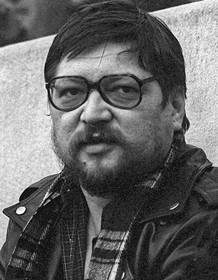
Rainer Werner Fassbinder
Made by

Trio Film
Satan’s Brew Plot Summary
Read the complete plot summary and ending explained for Satan’s Brew (1976). From turning points to emotional moments, uncover what really happened and why it matters.
Walter Kranz, Volker Spengler, a once-prominent poet of the revolution, and his wife Luise, Helen Vita, live with Walter’s brother Ernst, Volker Spengler, who is mentally disabled. They face severe money problems: the once celebrated poet’s bank account is overdrawn, his publisher refuses to grant an advance, and debts pile up with friends Lisa and Rolf. One of Walter’s mistresses, Irmgard von Witzleben, Katherina Buchhammer, even writes him a check, but he shoots her while roleplaying with a gun.
Walter hatches the idea to write about a prostitute and begins to interview Lana von Meyerbeer, Y Sa Lo, yet the encounter quickly turns physical as he has sex with her. Luise watches and lights up with a sharp reminder that he has not slept with her in seventeen days. Meanwhile, Ernst increases his odd collection, gathering dead flies. A policeman arrives to ask for Walter’s alibi regarding Irmgard’s alleged murder, while movers come to repossess his furniture. Walter then visits his lover Lisa, whose husband seems untroubled by the arrangement, and Lisa agrees to provide an alibi.
In a bid to secure funds, Walter summons his admirer Andrée, Margit Carstensen, who has been writing to him for years. She moves in with Walter, Luise, and Ernst, and willingly places all her savings at his disposal. Andrée remains devoted to Walter and endures repeated humiliations; she even endures a coerced act in the coal cellar when Ernst acts on Walter’s suggestion. Walter writes a new poem, prompting Luise to realize that he has plagiarized from Stefan George. With Andrée’s money, he buys a tailored suit, dons a wig, and begins to read his works to a small, enthusiastic circle of followers.
When Andrée’s funds dry up, the audience disperses as well, because Walter had been paying them to attend his readings. Excluding Andrée, his only remaining disciple is Urs, Vitus Zeplichal, who promises to bring his brother. Luise points out that Stefan George was homosexual, and Walter impulsively goes cruising in a men’s toilet. He encounters a gigolo but cannot go through with sex, and the prostitute cannot assist with his readings either. Walter eventually declares Stefan George dead.
The lack of money drives him to visit his aging parents, whom he cons out of their meager funeral savings. Andrée, who follows him closely, is stunned to learn that his parents are not as wealthy or cultured as he pretended.
Soon, Walter’s creative crisis subsides: he begins writing again and reads to Andrée and his two remaining disciples. Yet money remains tight, and he heads to Lana’s apartment again, only to discover she is married. He employs blackmail to squeeze her savings from her. Lana’s protectors later beat him in front of Andrée, who interprets his smile as weakness and renounces her belief in him.
Walter finishes his book No Celebration for the Führer’s Dead Dog, and the publisher approves, calling it “no more cramped left kitsch,” but acknowledging its power and size. He returns home to find Luise hospitalized; throughout this, he has not heeded her concerns about her health. He arrives at the hospital with the two surviving disciples, only to learn Luise has died. He collapses theatrically, disappointing the followers who depend on his strength.
He tells the doctor that everything is acting. The doctor, hearing about Walter’s new work, calls him lucky. Walter then phones the police and accuses Ernst of Irmgard’s murder; Ernst overhears and shoots Walter with a real gun. Walter collapses to the floor. The policeman arrives with Irmgard, who had only pretended to be dead. The gun turns out to shoot blanks. Irmgard douses Walter with a bucket of water and helps him stand. Confused, Walter asks, “Is this paradise?” The policeman and Irmgard laugh, and Walter joins in once the joke lands.
Satan’s Brew Timeline
Follow the complete movie timeline of Satan’s Brew (1976) with every major event in chronological order. Great for understanding complex plots and story progression.
Financial downward spiral begins
Walter Kranz, once hailed as a revolutionary poet, struggles with debt and writer's block. His bank account is overdrawn, his publisher refuses an advance, and creditors loom. The pressure of money pushes the story into motion.
Irmgard's fatal roleplay
Irmgard von Witzleben writes him a check, but during a dark roleplay with a gun Walter shoots her. The act shatters the illusion of romance and triggers a police inquiry. The incident marks the onset of Walter's moral decline.
Idea for a prostitute tale
Walter decides to write about a prostitute and interviews Lana von Meyerbeer. The interview becomes intimate as he yields to temptation. Luise complains that Walter has not slept with her in seventeen days, highlighting their strained marriage.
Alibi inquiry and repossession
A policeman asks for Walter's alibi regarding Irmgard's supposed murder, casting suspicion on him. Meanwhile movers arrive to repossess their furniture, underscoring their rapid financial collapse. The couple confronts a future defined by debt and deception.
Lisa provides an alibi
Walter visits his mistress Lisa, whose husband is indifferent to the affair. Lisa agrees to supply an alibi, helping Walter evade police scrutiny. The encounter deepens the web of complicating relationships surrounding him.
Andrée enters the household
Andrée, who has long written to Walter, moves in with him, Luise and Ernst. She offers her savings and unwavering devotion, becoming a focus of Walter's new social scheme. Ernst rapes Andrée in the coal cellar at Walter's suggestion, exposing the group's cruelty.
Walter plagiarizes and reads to followers
Walter writes a poem and plagiarizes from Stefan George. He uses Andrée's money to tailor a suit and wear a wig, presenting himself as a serious artist. The readings turn into a cult of personality around his inflated self.
Audience vanishes; Urs and disciple remain
Andrée's savings run out, and Walter's audience stops returning since he is paying them to attend. Only Andrée remains loyal, joined by a young man named Urs who promises to bring his brother. The fragile artistic enterprise teeters on collapse.
Cruising and disillusionment
Desperate for inspiration and money, Walter goes cruising in a public toilet and meets a gigolo. He cannot go through with sex, and the gigolo cannot help with his readings. Walter declares Stefan George dead as his grip on reality falters.
Visit to aging parents and revelation
Walter visits his aging parents to extract their meager funeral savings. Andrée discovers that their wealth and education were only a pretence. The revelation shocks Andrée and deepens her disillusionment with Walter.
Creative revival and Lana confrontation
With the crisis easing, Walter resumes writing and reads to Andrée and Urs. Money remains a problem, so he confronts Lana again to extract savings through coercion. Lana's protectors beat him in front of Andrée, shattering her faith in him.
Publication and Luise's hospitalization
Walter finishes his book No Celebration for the Führer's Dead Dog and the publisher approves, praising its power and size. He returns home to find Luise hospitalized, and he has neglected her health. When he arrives with the two remaining disciples, Luise has already died.
The confrontation and shooting
Walter calls the policeman to accuse Ernst of Irmgard's murder. Ernst overhears and shoots Walter with a real gun; Walter collapses. The policeman arrives with Irmgard, who pretends to be dead, and the gun turns out to be blanks.
The final twist and laughter
Irmgard pours a bucket of water on Walter and helps him stand. Walter asks if this is paradise, and the policeman and Irmgard laugh as they realize the prank. Walter joins in the laughter, ending the scene with a strange sense of release.
Satan’s Brew Characters
Explore all characters from Satan’s Brew (1976). Get detailed profiles with their roles, arcs, and key relationships explained.
Walter Kranz (Kurt Raab)
A once-celebrated 'poet of the revolution' who has not written in two years and is drowning in debt. Charismatic yet self-deluded, he uses others to sustain his artistic ego and social standing. He plagiarizes Stefan George, fabricates audience loyalty, and leans on Andrée’s savings to fund his literary pretensions.
Luise Kranz (Helen Vita)
Walter’s wife, increasingly frustrated by his infidelity and artistic stagnation. She notices the dwindling personal intimacy and the erosion of their shared life, yet remains emotionally bound to him until her health and patience deteriorate. Her presence anchors the household’s moral center as the crisis deepens.
Ernst Kranz (Volker Spengler)
Walter’s mentally disabled brother who amasses dead flies and becomes a volatile, disturbing influence within the family dynamic. He is manipulated and ultimately becomes entangled in the violence that erupts, highlighting themes of exploitation and vulnerability. His actions escalate the film’s tension and doom.
Andrée (Margit Carstensen)
Walter’s devoted admirer who moves in with the couple, drains her savings to support him, and endures humiliation as part of her loyalty. She embodies the paradox of self-sacrificing devotion that fuels Walter’s ego while exposing the cost of his obsession.
Lana von Meyerbeer (Y Sa Lo)
A married prostitute who becomes a target of Walter’s blackmail for funds. Her presence introduces a brutal realism to the film’s financial calculus, and she, along with her protectors, ultimately disrupts Walter’s fragile realm of control.
Lisa (Ingrid Caven)
Walter’s lover whose husband accepts the arrangement and who agrees to provide an alibi. She embodies a pragmatic complicity in Walter’s schemes, offering a practical counterpoint to his theatrical self-importance.
Urs (Vitus Zeplichal)
A young, hopeful follower who promises to bring his brother and remains a rare, naive beacon of faith in Walter’s work. He represents a younger generation drawn into the charisma and danger of the poet’s world.
Publisher (Alexander Allerson)
The gatekeeper of Walter’s literary fortunes, represented by a practical, money-minded publisher who demands results and cherishes scale and impact over leftist kitsch. He ultimately endorses a larger, stylized version of Walter’s work.
Rolf (Marquard Bohm)
Lilly’s husband, referenced as part of the broader social circle that intersects with Walter’s world. He functions as a conduit to the couple’s wider network rather than as a central figure.
Walter's mother (Brigitte Mira)
An aging parent figure whose modest funeral savings are exploited by Walter in his schemes. She embodies the quiet vulnerability of those who are used by others’ ambitions.
Satan’s Brew Settings
Learn where and when Satan’s Brew (1976) takes place. Explore the film’s settings, era, and how they shape the narrative.
Time period
Mid-1970s
Set in the mid-1970s West Germany, the film captures a moment of cultural experimentation and economic strain. The protagonist's artistic pretensions collide with debt, failed publishing deals, and a rapidly changing social landscape. The era's mood of disillusionment and performance serves as a backdrop for Walter's personal crisis.
Location
West Germany
Primarily set in a claustrophobic bourgeois urban milieu of West Germany, the story unfolds inside the couple's apartment, their aging parents' home, and the surrounding urban spaces. The interiors emphasize money, status, and artistic vanity that shape the characters' choices. The setting mirrors the social dynamics Fassbinder often explored: the fragility of art under capitalist pressures.
Satan’s Brew Themes
Discover the main themes in Satan’s Brew (1976). Analyze the deeper meanings, emotional layers, and social commentary behind the film.
🎨
Art vs Money
Walter’s artistic pretensions collide with financial desperation as he realizes money is needed to sustain his ‘revolutionary’ image. The saga shows how art becomes a commodity, with Andrée’s savings and paid audiences funding his readings. The publisher’s expectations and the cheap theatrics of his performances reveal a hollowed, performative culture. The tension between genuine creative impulse and monetary survival runs through the entire story.
💪
Power & Control
Walter wields control through manipulation, coercion, and a crafted public persona. Andrée’s devotion places her under his dominance, while Ernst’s unpredictable violence serves as a volatile instrument of power. The dynamic within the family and with the followers reveals how authority is sustained through fear, dependency, and the illusion of significance. The film scrutinizes who really holds power and at what cost.
🎭
Performance & Illusion
Much of the narrative unfolds as a ritual of performance, where Walter stages lectures, recites poetry, and theatrically confronts his audience. The ‘no celebration’ of the Führer’s dead dog becomes a satirical backdrop for the theater of everyday life. Andrée’s submission and the followers’ presence blur the line between art and life. The entire affair exposes the fragile boundary between creator and performance.
💔
Decline & Despair
The pursuit of prestige accelerates Walter’s downfall as debts mount and genuine affection erodes. Luise’s mounting concern and the eventual death she endures underscore the personal costs of his obsession. The culminating violence—premeditated or not—shines a grim light on the emptiness of Walter’s world. The final revelation is a sobering meditation on despair beneath the surface of artistic bravado.

Coming soon on iOS and Android
The Plot Explained Mobile App
From blockbusters to hidden gems — dive into movie stories anytime, anywhere. Save your favorites, discover plots faster, and never miss a twist again.
Sign up to be the first to know when we launch. Your email stays private — always.
Explore the mobile appSatan’s Brew Spoiler-Free Summary
Discover the spoiler-free summary of Satan’s Brew (1976). Get a concise overview without any spoilers.
In a cramped, dimly lit apartment that feels more like a stage than a home, Walter Kranz—once the brilliant voice of a revolutionary literary movement—finds himself locked in a two‑year creative drought. The pressure of past acclaim hangs over him like a ghost, and the words that finally surface bear an unsettling resemblance to the poetry of Stefan George, a fact that begins to gnaw at his sense of originality. The film opens with Walter’s restless pursuit of inspiration, setting a tone that mixes bleak introspection with a darkly comic absurdity.
Living with his patient but mentally‑disabled brother Ernst, Walter’s domestic world is a tangled web of strained relationships and financial desperation. His wife Luise watches the decline of the man she once adored, while a revolving door of lovers—such as the enigmatic Irmgard and the seductive Lana—adds both distraction and chaos to his already fragile existence. The household is further unsettled by mounting debts, a publisher who has lost faith, and the constant hum of a looming police inquiry that threatens to uncover more than just artistic plagiarism. These pressures force Walter to juggle the demands of his crumbling personal life with the desperate need to resurrect his battered reputation.
The atmosphere is saturated with a satirical, almost surreal edge; every conversation drips with irony, and the line between performance and reality blurs at a relentless pace. As Walter teeters between genuine anguish and farcical antics, the audience is drawn into a world where art, ego, and survival intersect in unpredictable ways. The film promises a compelling exploration of a once‑celebrated poet confronting the origins of his work while the chaos of his surroundings threatens to consume him entirely.
Movies with Similar Twists and Themes
Uncover films that echo the narrative beats, emotional arcs, or dramatic twists of the one you're exploring. These recommendations are handpicked based on story depth, thematic resonance, and spoiler-worthy moments — perfect for fans who crave more of the same intrigue.



Featured on this page

What's After the Movie?
Not sure whether to stay after the credits? Find out!
Check out our other apps:

SAT Sphere
Build confidence for the Digital SAT.

Mori Atlas
Discover wild places worth protecting.

Luntero
Search smarter for a home in Amsterdam.

Plot Explained
Unravel movie endings and hidden clues.

Pokechamp
Dive into Pokémon data and battle logic.

Driving Theory
Get ready for your European theory test.

Movie Dust
Plan your next cinema trip with ease.

Musemap
Find art and culture as you travel.

Selkobase
Compare credentials before committing.

Local Manual
Turn an unfamiliar country into practical next steps.

Lernavi
Compare school systems before your next move.

GymRoam
Find a workout stop wherever your plans take you.
Explore Our Movie Platform
New Movie Releases (2026)
Famous Movie Actors
Top Film Production Studios
Movie Plot Summaries & Endings
Major Movie Awards & Winners
Best Concert Films & Music Documentaries
Movie Collections and Curated Lists
© 2026 What's After the Movie. All rights reserved.
Privacy Policy