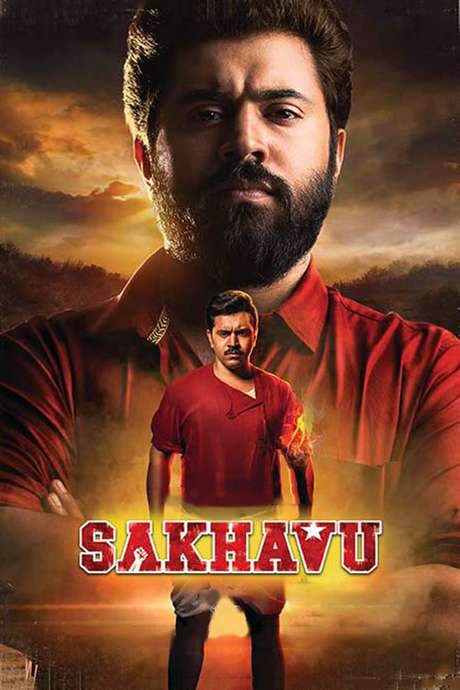
What Is Sakhavu About?
The premise of Sakhavu in 256 words, with nothing given away. The full story follows below.
In the heat‑laden districts of Kerala, the world of party politics pulses like a restless river, its currents shaped by youthful ambition and the weight of legacy. Krishna Kumar, a sharp‑tongued organizer known as Kichu, navigates this arena with a singular drive: to climb the ladder of influence no matter the cost. Surrounded by a cadre of eager comrades, he radiates the confidence of a rising star, yet his hunger for power constantly tests the unwritten code of loyalty that underpins the movement.
A chance summons drags Kichu into a hospital corridor where the abstract notion of “comrade” takes on a tangible, almost ritualistic form. There, the presence of a seasoned veteran—Krishnan, a figure whose own life has been forged in labor strikes and grassroots battles—offers a stark contrast to Kichu’s cut‑throat tactics. The atmosphere hums with a blend of reverence and rivalry, hinting at an underlying tension between the raw drive of the new generation and the seasoned principles of an older guard.
The film’s tone is a gritty, introspective drama that sketches the moral landscape of political ascent. Its visual palette captures the starkness of dusty tea estates, the claustrophobic intensity of party offices, and the sterile corridors of institutional power, all underscored by a sense of simmering conflict. As Kichu inches closer to the seasoned elder’s world, the story teases a subtle reckoning—an invitation to question what true comradeship means when ambition collides with principle, and whether the path to influence can ever be walked without sacrificing a part of one’s own integrity.
What Happens in Sakhavu?
The complete story of Sakhavu, from the first scene to the last, in 756 words (about 3 minutes). Spoilers throughout. Names in the text link to 5 cast member pages.
Spoilers ahead
Krishnakumar, known as Kichu, is a ruthless youth wing leader at the district level within his political party. He schemes to climb the ladder by destroying rivals, orchestrating violence against a colleague who is also a close friend, just to clear his path in the game of power. This ambition sets the tone for a story where loyalty is fluid and success can demand brutal choices.
A summons from Kuriachan, a senior party figure, pulls him toward a hospital with a mission that feels almost ceremonial: donate blood for a comrade who carries the rare O negative blood type. Kichu is reluctantly pulled into the hospital drama, and he makes a bold, reckless show of force, telling his friend Mahesh that he won’t waste a single second of his time. The scene he stirs up is less about charity and more about signalling power, a pattern that follows him even as he tries to slip away from the practical demands of this act.
In the hospital corridor, an unexpected detail jolts him: the recipient is being visited by the chief minister. This revelation fuels Kichu’s curiosity about the so‑called comrade, and he presses for answers. The clue comes through Prabhakaran, an acquaintance of the comrade, who begins to unfold a deeper, longer story about Krishnan—the man at the center of this medical mystery.
Krishnan, a committed party member, is sent to Peerumedu to extend the party’s influence. He becomes a frontline leader in a labor dispute, guiding tea estate workers to demand fair wages. When the factory manager resists, Krishnan’s movement grows bolder, and pressure mounts until wages are raised. This episode cements his reputation as a fearless organizer who can mobilize workers and stand up to those who profit from low pay.
The narrative then brings Krishnan into direct conflict with a Brahmin landowner who exploits Tamil laborers with meager wages. Krishnan and the party push back, refusing negotiation on terms that would perpetuate inequality. When talks stall, the workers physically cultivate the land themselves and secure a harvest that proves their point: fair wages lead to better yields. The outcome is not just economic but symbolic, underscoring the link between dignity at work and the power of collective action.
Krishnan’s personal life intersects with his political saga when he promises to marry Janaki. Their marriage binds personal loyalty to public life, a union that testifies to how political work reverberates through families. As years pass, Krishnan suffers a stroke and becomes partially paralyzed, a turning point that exposes the fragility of a life built on relentless public service. He learns that the old factory where the initial strike began has closed, leaving workers in deeper poverty and prompting questions about what his legacy really means in the face of hardship.
Seeking a way forward, Krishnan meets a wealthy benefactor who has reaped benefits from his earlier efforts. The deal proposed is pragmatic: the man will buy the estate and restart the factory, but Krishnan would need to sit on the governing body. The arrangement reveals the compromises that power often demands, and it places Krishnan at a crossroads between idealism and realpolitik.
Into this evolving landscape steps Tony, a young rival who has already seized some land on the estate. Tony’s ambitions push him to violent extremes, culminating in a nighttime stabbing of Krishnan as a blunt, brutal warning to others who might challenge his grip on the resort and its resources. The blow lands hard, and the thread of Krishnan’s story becomes a catalyst for Kichu’s own awakening.
Back in the hospital, the truth begins to crystallize for Kichu: the path he has been pursuing—ambition, control, and political leverage—may not align with what a true comrade stands for. The recovery scene becomes a reflective space where the battle for moral integrity takes center stage. As Krishnan’s condition improves and the hospital hums with the routines of healing, Kichu steels himself for a reckoning with the costs of power and credibility.
In a final, decisive turn, Kichu gathers his youth wing comrades and travels to Peerumedu. They confront Tony’s forceful hold on the estate, delivering a decisive message that Krishnan’s legacy should endure through their actions rather than through empty slogans or ruthless suppression. The story closes on a note of resilient resolve: Krishnan’s life, shaped by struggle and sacrifice, lives on in the choices and commitments of the next generation, who pledge to honor the old comrade’s memory by building something better, even in a world where power often demands a steep price.
Sakhavu Timeline: Every Key Event in Order
13 key events in the order they happen, from “Kichu's plan to rise by crushing rivals” to “Kichu and youth wing seek Krishnan's legacy in Peerumedu”. 13 events name a place, across 9 locations.
- 1
Kichu's plan to rise by crushing rivals
Kichu is a ruthless youth wing leader aiming to reach a higher position in the SFK by destroying competitors within his party. He schemes to arrange beatings for his rival, even if the rival is a close friend. This shows his willingness to use violence and manipulation to win power.
Where:district level
- 2
Hospital summons: blood donation and forced visit
Kuriachan calls Kichu to donate his rare blood type O negative for a comrade. Kichu tries to escape, telling his friend Mahesh he'll get the hell out, but he ends up going. In the hospital, he creates a scene and has an acquaintance fetch him food.
Where:hospital
- 3
The chief minister visits the wounded comrade
The recipient attracts the attention of the chief minister, surprising Kichu who expected a lesser comrade. He learns of the comrade's importance and asks Prabhakaran about him. This moment deepens Kichu's curiosity about Krishnan.
Where:hospital
- 4
Prabhakaran reveals Krishnan's backstory
Prabhakaran starts telling the story of comrade Krishnan to Kichu, revealing a life of struggle and sacrifice. The tale spans Krishnan's work in Peerumedu, wage battles, and land clashes. The narrative challenges Kichu to reconsider his own path.
Where:hospital
- 5
Krishnan is sent to Peerumedu to boost party influence
Krishnan is dispatched to Peerumedu by the district committee to expand the party's reach. He mobilizes workers who push for fair wages at the tea estate. This assignment marks the start of his public resistance against exploitation.
Where:Peerumedu
- 6
Krishnan leads a wage strike at the tea estate
Krishnan organizes a strike to demand fair wages for the tea workers. The workers win a wage increase after the protest. The move cements Krishnan's reputation as a fighter for workers' rights.
Where:tea estate
- 7
Krishnan confronts the landlord and expands the struggle
Krishnan and his party confront a Brahmin landlord who pays Tamil workers low wages. When negotiations fail, Krishnan's followers and the local workers cultivate on the landlord's land to press their demands. The effort yields a strong show of solidarity and a higher yield.
Where:landlord's land
- 8
Krishnan marries comrade Janaki
Krishnan promises to marry Janaki and they wed after a sequence of events. The marriage strengthens his standing within the party and his personal life. The marriage marks a personal milestone in his political journey.
Where:not specified
- 9
Krishnan suffers a stroke and becomes partially paralyzed
Years later Krishnan suffers a stroke that leaves him partially paralyzed. His health challenges threaten the movement around him, while memories of his earlier victories haunt the community. The factory's fate hangs on his recovery and leadership.
Where:not specified
- 10
Krishnan seeks to revive the estate with a rich man
Krishnan visits a wealthy man who had benefited from his support in the past. The man agrees to help buy the estate and place Krishnan on the governing body, in exchange for political backing. Tony has already captured some land and Krishnan vows to secure control.
Where:wealthy man's residence
Show the other 3 events of Sakhavu Hide the last 3 events
- 11
Tony captures land; Krishnan orders the resort closed
A young man named Tony has taken control of part of the estate's land. Krishnan orders the rival resort closed as a display of authority and to protect his new arrangement. The confrontation foreshadows the looming conflict.
Where:estate
- 12
Tony stabs Krishnan; Krishnan's surgery and Kichu's awakening
Tony stabs Krishnan at night, attempting to consolidate his hold on the estate. Krishnan's surgery is successful and he begins to recover. Kichu, moved by Krishnan's life, hesitates to see him but starts to rethink his own path.
Where:estate/hospital
- 13
Kichu and youth wing seek Krishnan's legacy in Peerumedu
Kichu travels to Peerumedu with his youth wing comrades to beat Tony and assert control. He proclaims that Krishnan's legacy will be continued through their actions. The ending signals a new generation ready to carry forward Krishnan's ideals.
Where:Peerumedu
Who Are the Main Characters in Sakhavu?
8 characters, among them Krishnakumar / Comrade Krisnan (Nivin Pauly), Janaki and Krishnan: who each one is and the part they play in the story. 7 of them link to the actor’s page.
- K/
Krishnakumar / Comrade Krisnan (Nivin Pauly)
Played by Nivin Pauly
Krishnakumar, aka Kichu, is a ruthless youth-wing leader who seeks higher political standing by destroying rivals, even at the cost of friendships. He orchestrates violence to consolidate power within his party and tests loyalties to the limit. A hospital visit introduces him to a broader story about Krishnan and the era’s legacy, prompting self-reflection. His arc culminates in a return to the field to defend a controversial lineage of leadership.
- 🎯 Ambitious
- 🗺️ Strategic
- 🗡️ Ruthless
- J
Janaki
Played by Aishwarya Rajesh
Janaki is Krishnan's wife, depicted as a steady voice amid political upheaval. Her relationship anchors the human cost of activism and highlights personal sacrifice, resilience, and loyalty within a tumultuous political world.
- 💞 Partner
- 🧭 Loyal
- 👩❤️👨 Wife
- K
Krishnan
Krishnan is a principled party member who leads a strike at a tea estate to demand fair wages. His courage to challenge a landlord sparks mobilization among workers and reshapes local power dynamics. His later illness and family life emphasize the personal toll of political commitment. His legacy becomes a touchstone for the next generation.
- 💪 Labor hero
- 🕊️ Idealist
- 🏛️ Activist
- T
Tony
Played by Nishanth Sagar
Tony is a land grabber who confronts Krishnan's movement and threatens workers' livelihoods. His stabbing of Krishnan marks a brutal clash of interests and a turning point for the unfolding political drama. He embodies opportunism and personal ambition that threaten the wider cause.
- 🗡️ Antagonist
- 💼 Capitalist
- 🤝 Rival
- K
Kuriyachan
Played by Renji Panicker
Kuriyachan is a party leader who operates from behind the scenes, steering key decisions and shaping the movement's direction. His influence illustrates how leadership dynamics drive the plot and influence outcomes.
- 🎩 Leader
- 🗺️ Strategist
- 🧭 Influencer
- P
Prabhakaran
Played by Binu Pappu
Prabhakaran is an acquaintance of the comrade who helps connect Krishnan's past with the present, serving as a bridge between generations of the party's ideology.
- 🧭 Connector
- 🗣️ Informant
- 🗃️ Historian
- D(
Doctor (Sreenivasan)
Played by Sreenivasan
The doctor who treats Krishnan after his stroke frames the human impact of political violence and illness. Medical scenes provide a grounded contrast to the heated political rhetoric.
- 👨⚕️ Healer
- 🧪 Scientist
- 🕯️ Witness
- JF
Janaki's Father
Played by V. Suresh Thampanoor
Janaki's father appears as a family elder, representing traditional values within a landscape of ideological conflict. He anchors the personal side of events and the community's social fabric.
- 👨👩👧👦 Elder
- 🗣️ Social anchor
- 🧭 Advisor
Where and When Is Sakhavu Set?
Sakhavu is set in Peerumedu and tea estate (Contemporary). Here is why the time and place matter to the story.
When
Contemporary
The events unfold in a present-day political landscape, characterized by youth wings, labor disputes, and public demonstrations. The narrative blends modern party politics with regional realities, illustrating current tensions between workers, landlords, and politicians. The setting combines rural life with urban-influenced political maneuvering, anchoring the drama in a recognizable present-day context.
Where
Peerumedu, tea estate
Peerumedu is depicted as a verdant hill town dominated by tea estates and tight-knit communities. A hospital sequence shows how political drama spills into everyday life, affecting patients and families alike. The rural setting reinforces themes of solidarity and collective struggle within the movement.
- 🌄 Hills
- 🍃 Tea estate
- 🏥 Hospital
What Are the Themes of Sakhavu?
3 ideas the story keeps returning to, among them Power Politics, Labor Rights and Legacy.
-
01
Power Politics
Power and influence drive the plot as Kichu maneuvers to climb the party ladder. Personal loyalties are strained as ambition often overrides ethics. Public moments—rallies, intraparty maneuvering, and hospital scenes—reveal how political power touches ordinary lives. The arc culminates in a confrontation that tests the costs of ruthless ascent.
-
02
Labor Rights
Krishnan's activism centers on workers' wages and dignity, igniting strikes at a tea estate. The workers win concessions, but at social and personal costs that ripple through the community. The narrative links individual courage with collective action, showing both the potential and price of reform. The legacy of these struggles informs the next generation.
-
03
Legacy
Krishnan's legacy casts a long shadow over Kichu's choices, framing the path of activism as a continuum rather than a moment. The story questions whether true comrade-ship requires sacrifice, humility, and responsibility. Hospital and battlefield moments underscore how legacies live on through those who inherit them. The ending presents the future as a direct continuation of a hard-won tradition.
What Kind of Film Is Sakhavu?
Tense in tone, with steady pacing and a moderate story, going by the plot summary.
- Tone
- Tense
- Pacing
- Steady
- Story
- Moderate
- Intensity
- High
- Ending
- Happy
A tense and politically charged drama that explores the heavy moral cost of ambition, leading to a reflective and ultimately hopeful journey of personal transformation and reclaimed idealism.
- tense
- thought-provoking
- hopeful
- moody
- confrontational
- reflective
- political ambition
- idealism vs pragmatism
- legacy
- class struggle
Content notes: political violence, stabbing, exploitation of laborers.
Quiz
How well do you remember Sakhavu? Test yourself on the story.