Sakhavu 2017

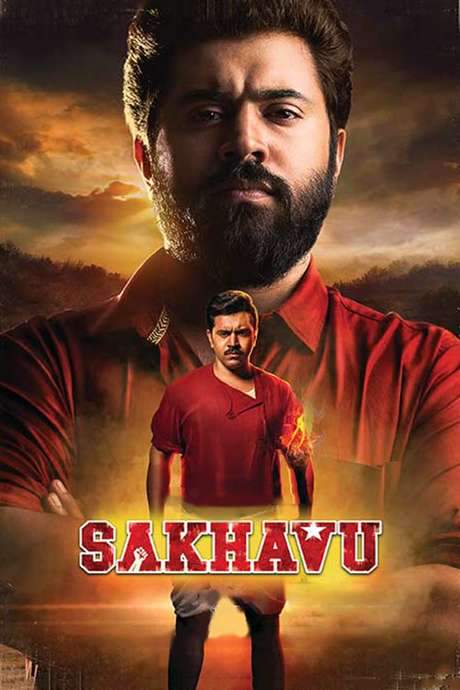
Krishna Kumar aspires to climb the political ladder, but finds himself lacking the principles expected of a true comrade. Driven and ambitious, he's willing to eliminate anyone who stands in his path, even close friends. His journey takes an unexpected turn when he encounters veteran comrade Krishnan, and the film explores the impact of this influential figure on Krishna Kumar's life and political ambitions.


Does Sakhavu have end credit scenes?
No!
Sakhavu does not have end credit scenes. You can leave when the credits roll.
Meet the Full Cast and Actors of Sakhavu
Explore the complete cast of Sakhavu, including both lead and supporting actors. Learn who plays each character, discover their past roles and achievements, and find out what makes this ensemble cast stand out in the world of film and television.

Tony Luke
Company Manager
Aishwarya Rajesh
Janaki
Maniyanpilla Raju
Labour Officer
Chali Pala
S I
Sudheesh
Daasan
Baiju Santhosh
Garuda Kankaani
Muhammad Musthafa
Basheer
Sreenivasan
Doctor
Seema G Nair
Janaki's Mother
Nishanth Sagar
Tony
Resmi Boban
Headmistress
Baiju V.K.
Special Police Officer
Nivin Pauly
Krishnakumar / Comrade Krisnan
Anjali Aneesh Upasana
Suja
Sidhartha Siva
P Balachandran
Kavalam Pattar
Prem Kumar
Party Secretary
Kalabhavan Rahman
Santhosh Keezhattoor
Senthil
Aliyar
Comrade Bhaskaran
Krishna Prasad
Lawyer
Shelly Kishore
Maya
Aparna Gopinath
Neethi
Renji Panicker
Kuriyachan
Appunni Sasi
Hotel supplier
Sreelakshmi
Krishnakumar's Mother
Gayathri Suresh
Aishwarya
Binu Pappu
Prabhakaran Eerali
Althaf Salim
Mahesh
Rakendhu Kumar
Sakhavu Eldho
Sooraj S. Kurup
Rajeev
V. Suresh Thampanoor
Janaki's Father
Perunna Madhu
Thattu
External Links and Streaming Options
Discover where to watch Sakhavu online, including streaming platforms, rental options, and official sources. Compare reviews, ratings, and in-depth movie information across sites like IMDb, TMDb, Wikipedia or Rotten Tomatoes.






Take the Ultimate Sakhavu Movie Quiz
Challenge your knowledge of Sakhavu with this fun and interactive movie quiz. Test yourself on key plot points, iconic characters, hidden details, and memorable moments to see how well you really know the film.
Sakhavu (2017) Quiz: Test your knowledge of the 2017 Malayalam film Sakhavu with these 10 questions ranging from easy to difficult.
What is Kichu's blood group?
Full Plot Summary and Ending Explained for Sakhavu
Read the complete plot summary of Sakhavu, including all major events, twists, and the full ending explained in detail. Explore key characters, themes, hidden meanings, and everything you need to understand the story from beginning to end.
Krishnakumar, known as Kichu, is a ruthless youth wing leader at the district level within his political party. He schemes to climb the ladder by destroying rivals, orchestrating violence against a colleague who is also a close friend, just to clear his path in the game of power. This ambition sets the tone for a story where loyalty is fluid and success can demand brutal choices.
A summons from Kuriachan, a senior party figure, pulls him toward a hospital with a mission that feels almost ceremonial: donate blood for a comrade who carries the rare O negative blood type. Kichu is reluctantly pulled into the hospital drama, and he makes a bold, reckless show of force, telling his friend Mahesh that he won’t waste a single second of his time. The scene he stirs up is less about charity and more about signalling power, a pattern that follows him even as he tries to slip away from the practical demands of this act.
In the hospital corridor, an unexpected detail jolts him: the recipient is being visited by the chief minister. This revelation fuels Kichu’s curiosity about the so‑called comrade, and he presses for answers. The clue comes through Prabhakaran, an acquaintance of the comrade, who begins to unfold a deeper, longer story about Krishnan—the man at the center of this medical mystery.
Krishnan, a committed party member, is sent to Peerumedu to extend the party’s influence. He becomes a frontline leader in a labor dispute, guiding tea estate workers to demand fair wages. When the factory manager resists, Krishnan’s movement grows bolder, and pressure mounts until wages are raised. This episode cements his reputation as a fearless organizer who can mobilize workers and stand up to those who profit from low pay.
The narrative then brings Krishnan into direct conflict with a Brahmin landowner who exploits Tamil laborers with meager wages. Krishnan and the party push back, refusing negotiation on terms that would perpetuate inequality. When talks stall, the workers physically cultivate the land themselves and secure a harvest that proves their point: fair wages lead to better yields. The outcome is not just economic but symbolic, underscoring the link between dignity at work and the power of collective action.
Krishnan’s personal life intersects with his political saga when he promises to marry Janaki. Their marriage binds personal loyalty to public life, a union that testifies to how political work reverberates through families. As years pass, Krishnan suffers a stroke and becomes partially paralyzed, a turning point that exposes the fragility of a life built on relentless public service. He learns that the old factory where the initial strike began has closed, leaving workers in deeper poverty and prompting questions about what his legacy really means in the face of hardship.
Seeking a way forward, Krishnan meets a wealthy benefactor who has reaped benefits from his earlier efforts. The deal proposed is pragmatic: the man will buy the estate and restart the factory, but Krishnan would need to sit on the governing body. The arrangement reveals the compromises that power often demands, and it places Krishnan at a crossroads between idealism and realpolitik.
Into this evolving landscape steps Tony, a young rival who has already seized some land on the estate. Tony’s ambitions push him to violent extremes, culminating in a nighttime stabbing of Krishnan as a blunt, brutal warning to others who might challenge his grip on the resort and its resources. The blow lands hard, and the thread of Krishnan’s story becomes a catalyst for Kichu’s own awakening.
Back in the hospital, the truth begins to crystallize for Kichu: the path he has been pursuing—ambition, control, and political leverage—may not align with what a true comrade stands for. The recovery scene becomes a reflective space where the battle for moral integrity takes center stage. As Krishnan’s condition improves and the hospital hums with the routines of healing, Kichu steels himself for a reckoning with the costs of power and credibility.
In a final, decisive turn, Kichu gathers his youth wing comrades and travels to Peerumedu. They confront Tony’s forceful hold on the estate, delivering a decisive message that Krishnan’s legacy should endure through their actions rather than through empty slogans or ruthless suppression. The story closes on a note of resilient resolve: Krishnan’s life, shaped by struggle and sacrifice, lives on in the choices and commitments of the next generation, who pledge to honor the old comrade’s memory by building something better, even in a world where power often demands a steep price.

Coming soon on iOS and Android
The Plot Explained Mobile App
From blockbusters to hidden gems — dive into movie stories anytime, anywhere. Save your favorites, discover plots faster, and never miss a twist again.
Sign up to be the first to know when we launch. Your email stays private — always.
Explore the mobile appDiscover Film Music Concerts Near You – Live Orchestras Performing Iconic Movie Soundtracks
Immerse yourself in the magic of cinema with live orchestral performances of your favorite film scores. From sweeping Hollywood blockbusters and animated classics to epic fantasy soundtracks, our curated listings connect you to upcoming film music events worldwide.
Explore concert film screenings paired with full orchestra concerts, read detailed event information, and secure your tickets for unforgettable evenings celebrating legendary composers like John Williams, Hans Zimmer, and more.


Sakhavu Themes and Keywords
Discover the central themes, ideas, and keywords that define the movie’s story, tone, and message. Analyze the film’s deeper meanings, genre influences, and recurring concepts.
Sakhavu Other Names and Titles
Explore the various alternative titles, translations, and other names used for Sakhavu across different regions and languages. Understand how the film is marketed and recognized worldwide.
Similar Movies To Sakhavu You Should Know About
Browse a curated list of movies similar in genre, tone, characters, or story structure. Discover new titles like the one you're watching, perfect for fans of related plots, vibes, or cinematic styles.








Quick Links: Summary, Cast, Ratings, More

What's After the Movie?
Not sure whether to stay after the credits? Find out!
Check out our other apps:

SAT Sphere
Build confidence for the Digital SAT.

Mori Atlas
Discover wild places worth protecting.

Luntero
Search smarter for a home in Amsterdam.

Plot Explained
Unravel movie endings and hidden clues.

Pokechamp
Dive into Pokémon data and battle logic.

Driving Theory
Get ready for your European theory test.

Movie Dust
Plan your next cinema trip with ease.

Musemap
Find art and culture as you travel.

Selkobase
Compare credentials before committing.

Local Manual
Turn an unfamiliar country into practical next steps.

Lernavi
Compare school systems before your next move.

GymRoam
Find a workout stop wherever your plans take you.
Explore Our Movie Platform
New Movie Releases (2026)
Famous Movie Actors
Top Film Production Studios
Movie Plot Summaries & Endings
Major Movie Awards & Winners
Best Concert Films & Music Documentaries
Movie Collections and Curated Lists
© 2026 What's After the Movie. All rights reserved.
Privacy Policy