What Is Ruma Maida About?
The premise of Ruma Maida in 297 words, with nothing given away. The full story follows below.
In bustling Jakarta, a modest house cradles a free school where street children gather each day, their laughter echoing through narrow alleys. Maida, a young history student and devout Christian, has turned this modest refuge into her classroom, teaching with a quiet determination that belies the city’s relentless pace. The house is more than a shelter; it is a living archive, its walls humming with the stories of a bygone era that Maida hopes to capture for her undergraduate thesis.
The building’s lineage stretches back to the mid‑twentieth century, when it was home to a celebrated Indo‑Christian composer‑pilot and his Muslim wife. Their partnership produced a song that would later echo in the corridors of national power, linking the modest home to the broader sweep of Indonesia’s post‑colonial identity. This layered history—of music, aviation, and interfaith love—infuses the present with a sense of purpose, inviting Maida to explore how personal narratives intersect with the nation’s collective memory.
Across the street, a developer eyes the property for demolition, seeing only the value of the land. He sends his ambitious young architect, Sakera, to oversee the eviction, thrusting him into a clash of ideals. As Sakera confronts the reality of the school and Maida’s resolve, a subtle tension builds between professional duty and an emerging respect for the house’s cultural weight. Their interactions hint at a partnership that could bridge the gap between preservation and progress, while also reflecting Jakarta’s own negotiation between tradition and modernization.
The film moves through the city’s vibrant streets and quiet interiors, balancing scholarly curiosity with the immediacy of social responsibility. Its tone is both contemplative and urgent, inviting viewers to feel the pulse of a community rallying around a place that embodies the fragile yet resilient spirit of a nation’s past and future.
What Happens in Ruma Maida?
The complete story of Ruma Maida, from the first scene to the last, in 402 words (about 2 minutes). Spoilers throughout.
Spoilers ahead
Maida [Atiqah Hasiholan] is a young history student and a Christian who runs a free school for street children out of a Jakarta house. That house once belonged to Ishak Pahing [Nino Fernandez], a Christian Indo composer and pilot, and his Muslim wife Nani Kuddus [Imelda Soraya]; Pulau Tenggara (“The South-Eastern Island”)—a song Pahing wrote—helped inspire President Sukarno to support the formation of the Non-Aligned Movement, all while they lived there. As Maida learns more about Pahing, she decides to write her undergraduate thesis about his life.
One day her class is interrupted by Sakera [Yama Carlos], a young Muslim architect who has been told to evict Maida’s school by his employer, the developer Dasaad Muchlisin [Frans Tumbuan]. As Maida and Sakera argue in the streets, rioting breaks out around them. Sakera protects the half-Chinese Maida, and then vows to help her keep the house, even though it is scheduled for demolition within a week.
After attempts to persuade Muchlisin to keep the original design fail, Sakera overhears that the house sits on disputed land. Maida uses this information, along with feedback from a traditional musical group distantly related to Pahing, to discover that the house hides a secret underground bunker, where she and Sakera—with whom she has begun to fall in love—uncover documents that reveal the history of the house. With the help of her mother’s former lover Kuan [Henky Solaiman], she learns the true ownership of the building.
Pahing, who grew up within the nascent independence movement and interacted with several historical figures, was arrested for being half-Dutch by the Japanese spy Maruyama [Verdi Solaiman]—a man who coveted Pahing’s wife. After torture, Pahing is released to learn that his wife had been raped and killed; their newborn son Fajar had been kidnapped. Pahing later dies on a flight carrying medical supplies over Yogyakarta when the plane is shot down. Meanwhile, his son is raised by Maruyama and given a new name, Dasaad Muchlisin [Frans Tumbuan].
Armed with this knowledge, Maida, Sakera, and Kuan confront Muchlisin and show him how the house figures into his history. After a tense moment, Muchlisin tells them to leave. Several months later, on Maida and Sakera’s wedding day—celebrated at both a mosque and a church—Muchlisin arrives at the church and reveals that he has abandoned his plans to demolish the house. Instead, he renovates the building and dedicates it as a school for street children.
Ruma Maida Timeline: Every Key Event in Order
12 key events in the order they happen, from “Maida runs a free school in a historic Jakarta house” to “The house endures as a school and symbol of reconciliation”. 12 events name a place, across 12 locations.
- 1
Maida runs a free school in a historic Jakarta house
Maida, a young history student, runs a free school for street children in Jakarta from a house that once belonged to Ishak Pahing. The house's long history inspires her to consider writing her undergraduate thesis about Pahing's life. Her day-to-day work with the children anchors the story and motivates her investigation.
When:present day Where:Jakarta, Indonesia
- 2
Ishak Pahing's legacy and the house
Ishak Pahing was a Christian Indo composer and pilot who lived in the house. He wrote the song 'Pulau Tenggara,' which inspired Sukarno to support the Non-Aligned Movement. The house becomes a symbol of national history and cultural heritage.
When:mid-20th century Where:the house in Jakarta
- 3
Developers move to evict the school
Sakera, a young Muslim architect, is ordered to evict Maida's school by his employer, the developer Dasaad Muchlisin. The confrontation triggers rioting in the streets of Jakarta as tensions rise. Sakera vows to help Maida keep the house, even though demolition is scheduled within a week.
When:present day Where:Jakarta streets
- 4
Disputed land surfaces and the bunker
Maida learns the house sits on disputed land and teams up with a traditional musical group linked to Pahing. They uncover a hidden underground bunker beneath the building and discover documents revealing the house's history. The newly found records point to a rightful ownership that challenges the developers' claim.
When:present day Where:beneath the house, Jakarta
- 5
Kuan helps verify ownership
Maida enlists her mother's former lover Kuan to help verify the ownership documents. They piece together archival evidence that ties the house to its historical owners, strengthening their case against Muchlisin. The revelation heightens the stakes for preserving the house.
When:present day Where:the house and its archives
- 6
Pahing's wartime arrest and the tragedy within his family
Pahing is arrested by the Japanese spy Maruyama for being half-Dutch, a charge rooted in occupation-era prejudice. He is tortured, then released to discover his wife has been raped and killed and their newborn son kidnapped. The personal tragedy fuels Pahing's later actions and the family’s fate.
When:World War II era Where:Japanese-occupied Indonesia
- 7
Pahing's death over Yogyakarta
Pahing later dies on a flight carrying medical supplies over Yogyakarta when the plane is shot down. The loss leaves his family with unresolved grief and a legacy of resilience. His death also cements the emotional weight behind Maida's research.
When:WWII, late war Where:over Yogyakarta
- 8
Maruyama raises Pahing's son as his own
Maruyama raises the kidnapped son after the war and renames him Dasaad Muchlisin to hide his identity. The son grows up unaware of his true lineage, yet the history of the house quietly shapes his present actions.
When:postwar period Where:Maruyama's circle
- 9
Confrontation about the house's history
Maida, Sakera, and Kuan confront Muchlisin with the house's hidden past and its rightful ownership. Muchlisin remains silent for a moment before telling them to leave, signaling a temporary stalemate in the struggle to preserve the house.
When:present day Where:the house
- 10
Maida and Sakera marry
Several months pass, and Maida and Sakera marry in a ceremony that unites both mosque and church. The wedding underscores the community's acceptance of the couple and their shared commitment to the house's future.
When:months later Where:mosque and church, Jakarta
- 11
Muchlisin abandons demolition and renovates the building
On the wedding day, Muchlisin appears at the church and reveals he has abandoned the plan to demolish the house. He renovates the building and dedicates it as a school for street children, aligning with the house's legacy of education and care.
When:on the wedding day Where:the church and renovated house
- 12
The house endures as a school and symbol of reconciliation
The story ends with the house preserved as a school for street children, honoring Pahing's memory and Maida's research. Communities celebrate the resolution and the unity forged around preserving cultural and historical heritage. The house stands as a living monument to history, culture, and the spirit of the Non-Aligned Movement.
When:after wedding Where:Jakarta
Who Are the Main Characters in Ruma Maida?
9 characters, among them Maida (Atiqah Hasiholan), Sakera (Yama Carlos) and Ishak Pahing (Nino Fernandez): who each one is and the part they play in the story. Every profile links to the actor’s page.
- M(
Maida (Atiqah Hasiholan)
Played by Atiqah Hasiholan
A young history student who runs a free school for street children in Jakarta. As a Christian, she pursues an undergraduate thesis about Ishak Pahing’s life, driven by curiosity and compassion. Her determination anchors the search for the house’s buried history, and her growing bond with Sakera guides the effort to preserve it.
- 🎓 History student
- 🕊️ Compassionate
- 🧭 Curious
- S(
Sakera (Yama Carlos)
Played by Yama Carlos
A young Muslim architect assigned to evict the school, who protects Maida during riots and ultimately joins her in the effort to save the house. His practical skills and evolving conscience push him to uncover the truth behind the property’s ownership. Over time, his alliance with Maida deepens into romance.
- 🧱 Architect
- 🤝 Loyal
- ❤️ Hopeful
- IP
Ishak Pahing (Nino Fernandez)
Played by Nino Fernandez
A Christian Indo composer and pilot whose life and work inspired early Indonesian leaders. He endured persecution during the war, and his wife’s murder and his son’s kidnapping became pivotal traumas in his story. Pahing’s legacy surfaces through documents found in the bunker, linking personal history to national memory.
- 🎼 Composer
- 🇮🇩 Nationalist
- 🛩️ Flight victim
- NK
Nani Kuddus (Imelda Soraya)
Played by Imelda Soraya
Pahing’s wife, whose fate—rape and murder during the war—haunts the family history and motivates Maida’s investigation. Her story embodies the personal cost of the era’s upheavals and underscores the stakes of preserving the house’s memory.
- 👩 Wife
- 🕊️ Victim of tragedy
- 💔 Historical figure
-
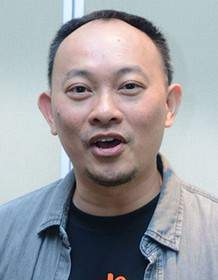
Maruyama (Verdi Solaiman)
Played by Verdi Solaiman
A Japanese spy who tortures Pahing, coveted his wife, and abducted their son. His shadow from the WWII era looms over the present-day effort to own and interpret the house’s history. He represents the personal violence of occupation that shaped generations.
- 🕵️♂️ Spy
- 🚫 Villain
- 🔒 Secretive
- DM
Dasaad Muchlisin (Frans Tumbuan)
Played by Frans Tumbuan
A developer pressuring to demolish the house for new construction. His modern interests collide with heritage, prompting the search for rightful ownership and historical value. Ultimately, he abandons demolition and renovates the building as a school.
- 🏗️ Developer
- 💼 Investor
- 🛑 Opposition to heritage
- K(
Kuan (Henky Solaiman)
Played by Henky Solaiman
The mother’s former lover who assists Maida with research and uncovers long-buried family ties. His knowledge helps unlock the truth about ownership and the house’s historical significance.
- 🤝 Ally
- 🗝️ Link to past
- 🔦 Guide
- BK
Bung Karno (Imam Wibowo)
Played by Imam Wibowo
Indonesia’s founding-era leader referenced through Pahing’s connections to the independence movement. His legacy frames the house’s history within the nation’s broader awakening.
- 🕊️ Leader
- 🇮🇩 National figure
- ⏳ Historical figure
- BH
Bung Hatta (Rizal Edwin Manangsang)
Played by Rizal Edwin Manangsang
Co-founder of Indonesian independence, tied to the era and to the house’s significance in the struggle for nationhood. The story places his influence in the historical backdrop that informs Maida’s discovery.
- 📜 Statesman
- 🕊️ Historical figure
- 🇮🇩 National identity
Where and When Is Ruma Maida Set?
Ruma Maida is set in Jakarta, Indonesia, Yogyakarta and Indonesia (Present day, with flashbacks to the 1940s). Here is why the time and place matter to the story.
When
Present day, with flashbacks to the 1940s
The film moves between Maida's contemporary life in Jakarta and the 1940s wartime period surrounding Ishak Pahing. The 1940s scenes depict Japanese occupation, the struggle for independence, and personal tragedies within Pahing's circle. These historical threads inform the modern effort to save the house and its legacy. The resolution occurs in the present, culminating in a wedding that embodies past and future unity.
Where
Jakarta, Indonesia, Yogyakarta, Indonesia
The action centers on a house in Jakarta that doubles as a free school for street children, anchoring the story in an dense urban setting. Its historical layers are revealed through a secret underground bunker and documents that connect the present to Indonesia’s past. The narrative also touches on Yogyakarta, marked by a wartime flight that shapes the family saga and national memory. The surrounding neighborhood experiences rioting and tensions between development and heritage preservation.
- 🏙️ Urban
- 🗺️ Historical
- 🎨 Cultural
What Are the Themes of Ruma Maida?
4 ideas the story keeps returning to, among them Memory & History, Love & Unity and Heritage Preservation.
-
01
Memory & History
Memory acts as a bridge between private lives and national narrative. Maida’s research uses Pahing’s story to recover forgotten voices and connect personal loss to collective memory. The underground bunker and archival clues show how a home can preserve a nation’s past. The film argues that understanding yesterday is essential to safeguarding heritage today.
-
02
Love & Unity
Maida and Sakera’s romance crosses religious and social boundaries, illustrating how affection can unite communities divided by history. Their bond becomes a catalyst for collaboration with allies across past and present divides. Love motivates defiance against demolition and inspires trust in unlikely partners. The wedding scene, blending mosque and church, symbolizes communal harmony.
-
03
Heritage Preservation
Historic houses are vessels of memory and culture, not just architecture. The developer’s demolition plans highlight the tension between modernization and preserving history. Uncovering ownership and historical significance becomes a collective responsibility. The film’s arc ends with the house being renovated as a school, validating its social value.
-
04
Independence & Identity
The house and its inhabitants are tied to Indonesia’s journey toward independence and the broader national narrative. Figures like Sukarno are invoked to frame personal histories within the nation’s awakening. The past, including wartime trauma and resistance, informs the characters’ sense of identity. The story emphasizes that individual histories contribute to the country’s evolving memory.
What Kind of Film Is Ruma Maida?
Hopeful in tone, with steady pacing and a moderate story, going by the plot summary.
- Tone
- Hopeful
- Pacing
- Steady
- Story
- Moderate
- Intensity
- Medium
- Ending
- Happy
A steadily paced and hopeful drama that blends a modern romance with a historical mystery, creating a reflective and uplifting journey about uncovering the past to build a better future.
- hopeful
- historical
- reflective
- uplifting
- romantic
- educational
- historical research
- interfaith romance
- social justice
- education
Content notes: torture, sexual assault, murder, kidnapping, wartime violence.
Quiz
How well do you remember Ruma Maida? Test yourself on the story.