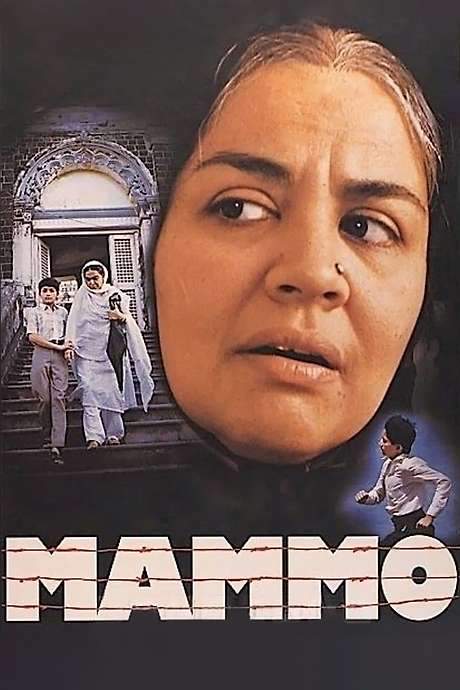
Mammo 1994


Mammo Plot Summary
Read the complete plot summary and ending explained for Mammo (1994). From turning points to emotional moments, uncover what really happened and why it matters.
In a quiet, intimate drama set against the bustle of Bombay, Riyaz, a 13-year-old boy, grows up in a cramped, loving but often tense world. He shares his life with his grandmother Fayyazi and her sister, Mammo, a bold, outspoken figure who fiercely guards the little sanctuary they’ve built amid the city’s chaos. Riyaz’s circle is small, and he moves through daily life with a rollercoaster of frustrations and small joys, his sense of belonging tempered by his father’s abandonment and his one true friend, Rohan, who stands by him through the ordinary ups and downs of childhood.
A spark of resentment flares when Mammo arranges a surprise birthday party that Riyaz initially perceives as a joke at his expense. The moment exposes the fragility of their fragile household: Fayyuzi and Riyaz argue with Mammo, and Mammo steps out, only to return after they apologize. This tangle sets the stage for a larger backstory that shapes the entire film. Mammo’s history is a tapestry of displacement and endurance. Born in Panipat during the British Raj, she and her husband eventually become Pakistani citizens after Partition. The couple, childless but deeply connected, share a loving partnership until his death, after which her relatives push her out over property disputes.
With nowhere to go, Mammo travels to Bombay to stay with her widowed sister on a temporary visa. Her daily reality becomes a routine of visiting the police station each month to renew her status, a slow grind that finally leads to a harsh breakthrough: she pays Rs.4800 as a bribe to secure a permanent visa. The fragile thread of security she has woven begins to pull when Inspector Apte declines to protect her status. After Apte is transferred, a new police inspector takes over, misreads her papers as proof of illegal immigration, and orchestrates a brutal deportation. At Bombay Central Railway Station, Mammo is forced onto the Frontier Mail, destined to be sent back to Pakistan.
What follows is a spare, moving chase through memory and longing. Riyaz and Fayyuzi throw themselves into tracing Mammo, to little avail, as borders and bureaucratic coldness stand in their way. Two decades slip by, and Riyaz has grown into a young man who writes a book about Mammo in the hope that, somewhere, somehow, she might be found and a reunion could occur. The film uses these seasons—childhood pain, the aching ache of separation, and quiet acts of perseverance—to explore emotional life in everyday terms, showing how political decisions can overshadow humanitarian needs.
As the narrative unfolds, the movie paints a portrait of resilience: the everyday acts of care that bind family even when the world seems to push them apart. It is a story about longing, memory, and the stubborn hope that family ties can endure, even across borders. The tension between policy and people remains at the heart of the drama, a reminder that human warmth often travels the long road between two distant places.
Despite the forces that push Mammo away, the film doesn’t leave her out in the cold. In a carefully staged arc of reconciliation, Mammo returns to the city where her sister and Riyaz live. The emotional payoff is vetted with restraint, culminating in a delicate resolution where Mammo’s presence rekindles the sense of family that once anchored Riyaz’s world. To preserve the quiet dignity of the ending, the story reveals that Mammo chooses to continue staying in India, even pretending to be dead at one point, allowing her to remain near those she loves.
Throughout, the cast threads through the emotional fabric with warmth and nuance. The story is grounded by the intimate performances of the family and the officials who intersect their lives, including Riyaz’s father and Riyaz’s mother, whose perspectives cast additional light on the choices that shape Riyaz’s adolescence. The police arc is carried by Inspector Apte and Inspector Sapre, whose interactions with Mammo illuminate the peril and power of state authority. The film also rests on the quiet strength of Mammo’s sister, who has stood by her through the years, and the broader ensemble that brings to life the small, human moments that define a life lived between two nations.
The ending lands with a restrained, hopeful gentleness: Mammo returns to the fold, not as a perfect reunion of past wounds, but as a healing presence that allows Riyaz to complete the arc of his memory and his book. It leaves viewers with a sense that love, memory, and a stubborn will to belong can outlive even the most rigid lines drawn by politics. The film invites reflection on what it means to belong, who gets to stay, and how families survive when the world seems designed to pull them apart.
Mammo Timeline
Follow the complete movie timeline of Mammo (1994) with every major event in chronological order. Great for understanding complex plots and story progression.
Riyaz's life in Bombay with Mammo and Fayyuzi
Thirteen-year-old Riyaz lives a poor life in Bombay with his grandmother Fayyuzi and his aunt Mammo. He carries the sting of a father who abandoned him and keeps to a small circle, with Rohan as his only friend. The family dynamic centers on Mammo's attempts to keep everyone together despite hardship.
Birthday plan sparks a rift
Mammo schemes to throw a surprise birthday party for Riyaz, hoping to lift his spirits. Riyaz fears his friends will mock his lifestyle and speaks up, offending Mammo. A heated argument follows and Mammo leaves for the mosque at Haji Ali, aiming to cool the tempers.
Mammo's Partition-era origins
The movie reveals Mammo's backstory: born in Panipat during the British Raj, she and her husband flee to Pakistan after Partition and become Pakistani citizens. Their marriage is happy until her husband's death, after which relatives dispute property and push her out. This history explains why Mammo ends up living as an outsider in Bombay decades later.
Mammo moves to Bombay on a temporary visa
Having nowhere else to go, Mammo moves in with her widowed sister in Bombay on a temporary visa. Each month she walks to the police station to renew her extension, clinging to a fragile lifeline. The precarious arrangement anchors her life in Bombay for years.
Bribe secures a permanent visa
To stabilize her stay, Mammo pays Rs. 4800 as a bribe to Inspector Apte. The payment buys a permanent visa on paper, giving her a false sense of security. This act foreshadows how fragile her status really is.
A new officer, a tragic deportation
When Inspector Apte is transferred, a new police officer reviews Mammo's papers and suspects she is an illegal immigrant. He arrests her, has her escorted to Bombay Central Railway Station, and forces her onto the Frontier Mail back to Pakistan. The abrupt deportation shatters her life and casts a long shadow over Riyaz's future.
Search for Mammo ends in vain
Riyaz and Fayyuzi make every possible attempt to trace Mammo across India, hiring leads and following rumors. Their efforts prove futile as the system and distance keep Mammo out of reach. The ache of separation lingers, shaping Riyaz's later years.
Twenty years later: Riyaz grows up and writes
Two decades pass and Riyaz grows into a man who writes a book about Mammo, hoping that someday she will find it and be reunited with the family. The act becomes a bridge between memory and possible future contact. The book stands as a testament to enduring love and unresolved longing.
Politics vs humanity: Mammo's deportation
The film underscores how political priorities can override humanitarian concerns, leaving families separated by borders and bureaucratic rules. Mammo's absence is framed as a casualty of impersonal policy rather than a personal failure. The story uses this tension to critique systemic indifference.
A hopeful ending: Mammo returns
In a hopeful turn, Mammo comes to Riyaz and her sister at the end, suggesting a form of reconciliation. She pretends to be dead so that she can stay in India thereafter, a ruse that allows her to rejoin the family without triggering further political consequences. The moment closes the long arc with a sense of belonging restored.
Renewed ties with Mammo's sister
The family welcomes Mammo back, sharing relief and renewed connection after years of separation. The sisters and Riyaz navigate their rekindled bond, balancing joy with the scars of the past. The reunion emphasizes the resilience of family ties.
Riyaz's lasting hope
Despite the years of absence, Riyaz's belief in reunion persists, mirrored by the continued existence of his book about Mammo. The story leaves space for future possibilities, inviting viewers to imagine a continued dialogue across borders. The final note is one of hopeful persistence rather than definitive closure.
Mammo Characters
Explore all characters from Mammo (1994). Get detailed profiles with their roles, arcs, and key relationships explained.
Riyaz (younger) – Amit Phalke
A 13-year-old boy living in poverty with his grandmother Fayyuzi and Mammo. He is outspoken and wary after his father abandoned him, forming a tight but guarded circle with a few friends like Rohan. He grows up with an urgent resolve to record Mammo's story, hoping for their eventual reunion.
Riyaz (older) – Rajit Kapoor
Now grown, Riyaz channels his memories into a book about Mammo, showing his ongoing longing to reconnect with her. He embodies the effects of a lifetime of displacement and the emotional weight of family history.
Mammo – Farida Jalal
A resilient woman who leaves for Pakistan after Partition and ends up living in Bombay on a temporary visa. Her deportation catalyzes the central conflict, and her ongoing bond with Riyaz demonstrates maternal warmth and endurance in the face of bureaucratic ruin.
Fayyazi – Surekha Sikri
Riyaz's grandmother, protective and outspoken, keeping the family together amid poverty and hardship. Her wisdom guides Riyaz and Mammo, reinforcing the instinct to safeguard loved ones.
Inspector Apte – Sandeep Kulkarni
A police official who handles Mammo's visa extensions. His role shifts from bureaucratic gatekeeper to the figure whose decisions accelerate Mammo's deportation, illustrating the capriciousness of law enforcement.
Riyaz's mother – Rajeshwari Sachdev
A key maternal figure in Riyaz's life, providing emotional support in the absence of the father. Her presence anchors the family's pursuit of stability.
Riyaz's father – Lalit Tiwari
Absent from Riyaz's life, his departure is a source of anger and longing for the boy. The narrative treats his absence as a driving force behind Riyaz's attachment to Mammo.
Mammo Settings
Learn where and when Mammo (1994) takes place. Explore the film’s settings, era, and how they shape the narrative.
Time period
The timeline stretches from Mammo's Partition-era origins in the late 1940s to decades later when Riyaz is grown and documents Mammo's story. It juxtaposes colonial-era displacement with post-independence urban life, showing how time stamps people's identities and legal status.
Location
Bombay (Mumbai), Panipat, Pakistan
The story unfolds in Bombay, a densely populated coastal city where Riyaz and Mammo navigate poverty, dense streets, and a bureaucratic system. The urban setting highlights daily struggles, from visiting police stations for visa extensions to the pull of family ties that keep Mammo and her sister connected. Panipat is recalled as Mammo's birthplace during the British Raj, underscoring the long arc of Partition and migration between India and Pakistan. The cross-border movement between Bombay and Pakistan drives the emotional core of the tale.
Mammo Themes
Discover the main themes in Mammo (1994). Analyze the deeper meanings, emotional layers, and social commentary behind the film.
🧭
Migration
The film centers on displacement and the search for belonging across borders. Mammo's forced move to Pakistan and Riyaz's longing to reunite with her reveal how migration reshapes family bonds. The journey also exposes bureaucratic obstacles that test personal resilience.
🏛️
Bureaucracy vs Humanity
The visa process and deportation scenes highlight how institutions often prioritize paperwork over people. Mammo's struggle with extensions, bribes, and official orders shows the gap between policy and compassion. The film contrasts cold procedures with moments of care from family members.
👪
Family Bonds
Riyaz's protective loyalty to Mammo and his grandmother Fayyazi anchors the story. The intergenerational relationship reveals love, stubborn pride, and sacrifices made for a family member who is physically distant but emotionally close. The search for Mammo becomes a test of family commitment.
🕰️
Memory and Reunion
Memory threads connect the Partition era to present-day Bombay, shaping Riyaz's desire to find Mammo. The film uses memory as a vehicle for hope, letting Riyaz imagine a future reunion while confronting the pain of separation. The ending offers a symbolic, bittersweet reconciliation.

Coming soon on iOS and Android
The Plot Explained Mobile App
From blockbusters to hidden gems — dive into movie stories anytime, anywhere. Save your favorites, discover plots faster, and never miss a twist again.
Sign up to be the first to know when we launch. Your email stays private — always.
Explore the mobile appMammo Spoiler-Free Summary
Discover the spoiler-free summary of Mammo (1994). Get a concise overview without any spoilers.
In the bustling yet intimate streets of Bombay, a quiet domestic world unfolds around Riyaz, a thoughtful thirteen‑year‑old navigating the tangled rhythms of adolescence. He lives with his steadfast grandmother, Fayyazi, whose gentle authority shapes the small, cramped apartment that serves as both sanctuary and pressure cooker. Their routine is simple—school, chores, and the occasional clash of expectations—yet it crackles with the unspoken worries of a family that has learned to survive on love and resilience alone.
The arrival of Mammo, the spirited aunt whose presence is as bold as the city’s traffic, tilts the household into a new orbit. Her outspoken nature and fierce protectiveness contrast sharply with Fayyazi’s measured calm, setting up a generational dialogue that feels both familiar and uniquely Indian. Mammo’s visit brings a mix of excitement and tension, prompting Riyaz to confront the subtle power dynamics that have always lingered beneath the surface of his daily life.
Against a backdrop of honking horns, market chatter, and the ever‑present hum of the metropolis, the film captures the delicate balance between tradition and change. The tone is lyrical and restrained, inviting viewers to linger on quiet moments—a shared meal, a lingering glance, a whispered story—that reveal the depth of the family’s bond. While the city’s chaos swirls outside, the interior world of Riyaz, Fayyazi, and Mammo remains a tender microcosm where hopes, frustrations, and the yearning for belonging intertwine.
Through understated performances and a reverent visual palette, the story paints a portrait of a family whose connections endure despite the inevitable friction of differing ages and aspirations. It is a meditation on the quiet strength found in everyday rituals, the inevitable clashes that shape growth, and the subtle, lingering hope that love can bridge even the most stubborn of divides.
Movies with Similar Twists and Themes
Uncover films that echo the narrative beats, emotional arcs, or dramatic twists of the one you're exploring. These recommendations are handpicked based on story depth, thematic resonance, and spoiler-worthy moments — perfect for fans who crave more of the same intrigue.





Featured on this page

What's After the Movie?
Not sure whether to stay after the credits? Find out!
Check out our other apps:

SAT Sphere
Build confidence for the Digital SAT.

Mori Atlas
Discover wild places worth protecting.

Luntero
Search smarter for a home in Amsterdam.

Plot Explained
Unravel movie endings and hidden clues.

Pokechamp
Dive into Pokémon data and battle logic.

Driving Theory
Get ready for your European theory test.

Movie Dust
Plan your next cinema trip with ease.

Musemap
Find art and culture as you travel.

Selkobase
Compare credentials before committing.

Local Manual
Turn an unfamiliar country into practical next steps.

Lernavi
Compare school systems before your next move.

GymRoam
Find a workout stop wherever your plans take you.
Explore Our Movie Platform
New Movie Releases (2026)
Famous Movie Actors
Top Film Production Studios
Movie Plot Summaries & Endings
Major Movie Awards & Winners
Best Concert Films & Music Documentaries
Movie Collections and Curated Lists
© 2026 What's After the Movie. All rights reserved.
Privacy Policy