What Is Real Life About?
The premise of Real Life in 289 words, with nothing given away. The full story follows below.
In the sweltering sprawl of Phoenix, a filmmaker sets out to turn an ordinary household into a living tableau of contemporary America. He arrives with an army of cameras—wall‑mounted lenses, mobile rigs, and a crew that shadows every step—determined to capture the rhythm of daily life from sunrise to midnight. The project is presented as a bold experiment in transparency, a belief that unfiltered observation can reveal something essential about the way families exist under the quiet pressure of modern expectations.
Albert Brooks takes the role of both observer and participant, slipping into the intimate spaces of the Yeager home with a blend of curiosity and artistic ambition. The parents, Warren and Jeanette, initially treat the intrusion as a novelty, negotiating new boundaries as the lenses become permanent fixtures in their kitchen, living room, and even the yard. Their children, too, become unwitting actors in a performance that blurs the line between private moments and public exhibition.
The tone of the film is deliberately restrained, letting the hum of the cameras and the subtle shifts in conversation speak louder than any overt drama. A quiet tension builds as the presence of the crew begins to shape the family’s own behavior, prompting questions about consent, manipulation, and the ethics of turning lived experience into art. The atmosphere is both intimate and unsettling, inviting viewers to wonder how much of what we see is genuine and how much is coaxed by the very act of watching.
As the experiment unfolds, the dynamic between Albert Brooks and the Yeagers becomes a delicate dance of trust and provocation. The project’s promise of authenticity clashes with the inevitable influence of constant surveillance, leaving the audience to contemplate the fragile balance between observation and intrusion.
What Happens in Real Life?
The complete story of Real Life, from the first scene to the last, in 915 words (about 4 minutes). Spoilers throughout.
Spoilers ahead
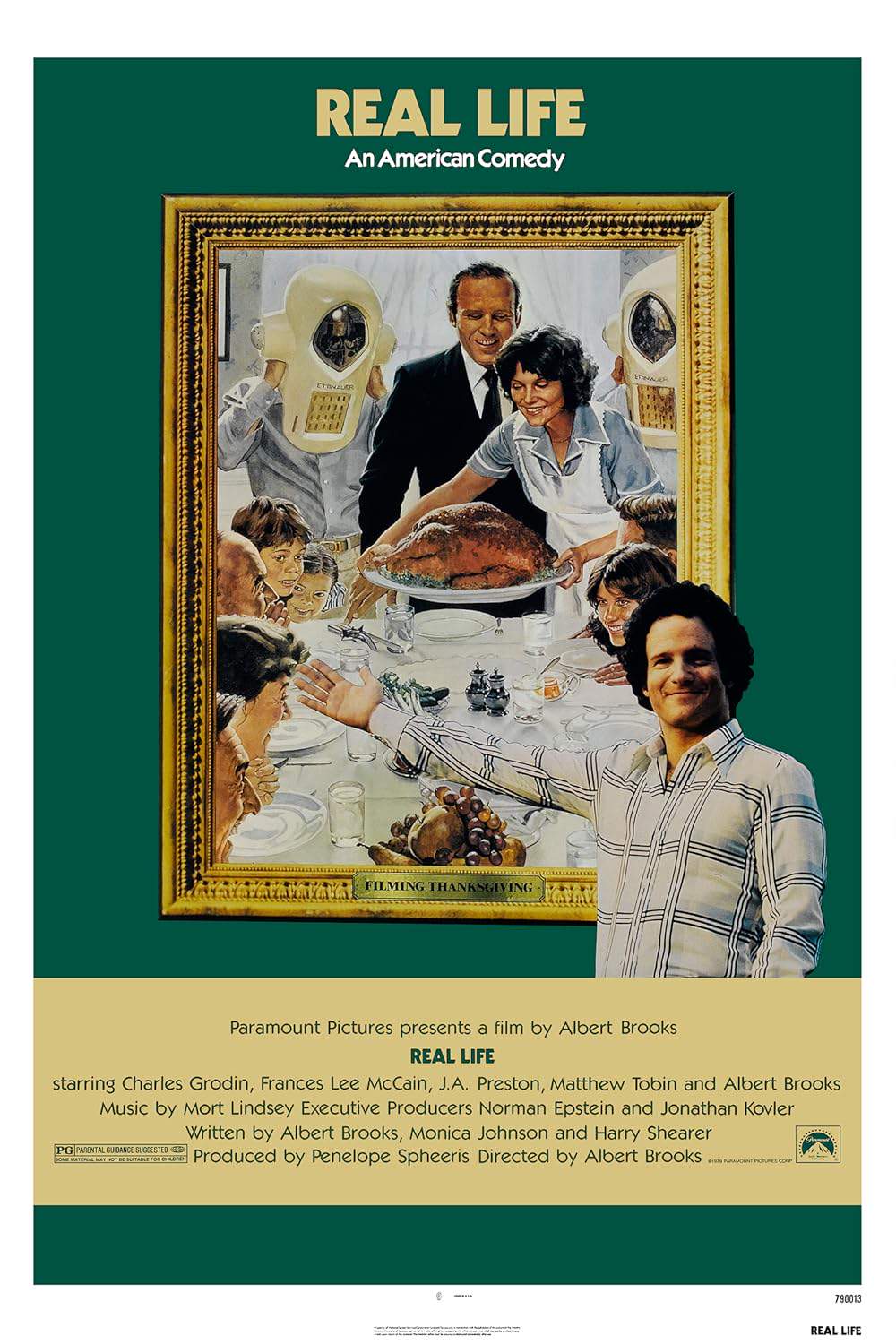
A documentary project led by filmmaker Albert Brooks follows a bold, intimate experiment: capture the ordinary joys, sorrows, and private moments of a real American family, the Yeagers, by filming them around the clock for an entire year. The operation relies on a large suite of cameras, some mounted on walls inside the house and a crew wearing four helmet-like rigs that trail Brooks and the Yeagers as they move between home and neighborhood. The aim is to illuminate how life feels when everyday routines, conversations, and emotions are constantly on camera, blurring the line between private life and public performance.
The project kicks off on a tense note: the Yeagers return from a family vacation, and filming begins immediately at the airport. Nervous energy threads through the household as Brooks steps away briefly to chase antiquities, while the family gathers for pizza and hammer out rules around their new, ever-present observers. The father, Warren, tends to speak in blunt, unsympathetic tones and ends up eating alone, the quiet consequence of a camera-touched world that makes ordinary dinners feel exposed and scrutinized.
Two doctors, Howard Hill and Ted Cleary, are on hand to monitor the project’s integrity and the real-feel authenticity of the family’s life. Cleary, in particular, worries about the constant intrusiveness—the cameras, the constant filming—that might gnaw away at the Yeagers’ grip on reality. The tension between curiosity and protection proves to be a central thread, as the family’s private moments begin to tilt toward spectacle.
Jeanette, the mother, sometimes seeks respite by stepping away from cameras, only to reconnect with Brooks later in a moment that becomes complicated. She invites him to a gynecologist appointment as a gesture of casual gratitude, but their encounter takes an unexpected turn when she kisses him, revealing a fragile attraction that neither Brooks nor the family anticipated. Brooks, uncomfortable with the shift, bluntly reminds her that his appeal isn’t a guarantee of depth, and he mutters a pointed line about his own charisma.
doesn’t run deep
The gynecologist refuses to be filmed, citing a long-ago, damning news story. Brooks offers him money to participate, but the man recognizes a past reputation and declines the deal. The scene underscores a growing theme: some lines between private life and public recording should remain uncrossed, and not every professional wants to be part of a spectacle.
Meanwhile, Warren allows the crew into his world as a veterinarian, hoping to demonstrate a day at work. The cameras amplify his nerves, and during a crucial moment in a horse surgery, he accidentally administers an anesthetic twice, causing the animal’s death. He asks Brooks not to include the footage, but Brooks refuses, highlighting the ethical and emotional minefield as life-and-death events collide with documentary ambitions.
Tragedy strikes when Jeanette’s grandmother passes away, and the family sinks into a heavy, palpable grief. Brooks attempts to lift the mood by inviting Jeanette to a dinner date, but she declines, having reassessed her feelings about him. In an effort to bring cheer to the children, Brooks appears at the house dressed in a clown costume, though the kids are at school. Even in disguise, the moment becomes a convergence of the family’s sorrow and the camera’s unflinching gaze. While still in the costume, Brooks sits with Warren and Jeanette, where Warren opens up about fearing a potential nervous breakdown. Brooks minimizes the confession, suggesting that it’s natural to feel sadness or confusion as long as someone doesn’t “clam up.”
As the project progresses, a pivotal meeting brings together doctors, researchers from the institute, and a film producer eager to involve movie stars. Dr. Cleary exits the project, opposing the way the family has been treated and the broader approach of the production. The Yeagers gradually return to a more harmonious life, though the shadow of exposure lingers. The publication of Cleary’s book about the project intensifies scrutiny, labeling the endeavor as mind-control and psychological rape, igniting headlines that irritate Brooks and discomfort the Yeagers.
Pressure mounts from the project’s supporters to terminate early. Dr. Hill, the institute, and the film producer push for ending the experiment, and Brooks brings the Yeagers to the decision-making table. To his surprise and theirs, the Yeagers decide they want out, standing by their choice to reclaim their privacy even as Brooks tries to plead and threaten to keep them under his lens. The producer, seeking a clean exit, insists they be paid in full to apologize for the stresses endured.
In a bid to craft a lasting ending, Brooks dresses again in the clown getup for a benefit at a children’s hospital and searches for a cinematic finale. He draws inspiration from famous endings and ends up copying Gone with the Wind, burning down the Yeagers’ house in a dramatic, symbolic gesture. The blaze is contained—no one is harmed—but the act seals the project’s controversial nature and its messy clash between art, ethics, and personal boundaries.
An epilogue presents the factual afterword: the Yeagers’ house is rebuilt, with a tennis court added for “appreciation.” Dr. Cleary’s book reportedly sells poorly, and he is described as ill. The narrative invites real-life historians to seek documentation on the project, offering a toll-free number for those who want to learn more: 1-800-555-3824. The final frame underscores the film’s central tension: a well-meaning, ambitious attempt to document life can become an examination of power, consent, and the fragility of ordinary existence when spectatorship becomes the primary lens through which a family is seen.
Real Life Timeline: Every Key Event in Order
12 key events in the order they happen, from “Filming begins at the airport” to “Epilogue and aftermath”. 12 events name a place, across 11 locations.
- 1
Filming begins at the airport
Albert Brooks begins filming the Yeagers as they return from vacation, with cameras mounted around their house and on helmets worn by the crew. The project aims to capture a full year of ordinary life, joys and sorrows alike. The family is visibly nervous under the constant gaze of the cameras.
When:Day 1 Where:Airport / Yeager home
- 2
Dinner rules and a tense meal
Back at home, Brooks takes an hour off to browse antiques while the family sits down for pizza and argues about strict filming rules. Tensions surface at the dinner table as the camera's presence replaces normal privacy. Warren's harsh remarks cause him to eat alone, highlighting the strain the project places on familial bonds.
When:Evening of Day 1 Where:Yeager home, dinner table
- 3
Observers arrive and raise concerns
Doctors Howard Hill and Ted Cleary arrive to monitor the project’s integrity and progress. Cleary voices worry that constant filming could erode the family’s sense of reality and autonomy. Their involvement introduces a professional counterpoint to Brooks’ improvisational approach.
When:Early phase Where:Institute / filming site
- 4
Jeannette seeks relief and crosses a line
Jeanette leaves the house without cameras to decompress, seeking relief from the invasive setup. She later invites Brooks to a gynecologist appointment, initially flattering him but turning awkward when she kisses him. Brooks, unsettled, warns that his charisma isn't deep and that he is not the answer to their problems.
When:Later Day 1 Where:Yeager home; Brooks' office
- 5
The camera-friendly doctor refuses
The gynecologist balks at appearing on camera, citing a damning past news story. Brooks tries to buy his cooperation with $500, only to recognize him as the infamous baby broker from the report, and the man refuses.
When:Midday Where:Gynecologist’s office
- 6
A veterinary tragedy on camera
Warren brings the crew to witness a day at his veterinary practice. The stress of cameras makes him jittery, and during a routine horse surgery he accidentally orders an anesthetic twice, killing the animal. Warren pleads with Brooks not to show the footage, but Brooks refuses, citing the need to reveal reality as it occurs.
When:Daytime Where:Veterinary clinic
- 7
Clown visit reveals Warren's fear
Brooks, still in clown costume, visits the Yeager home to cheer the kids. In a private moment with Warren and Jeannette, Warren confesses he fears he's on the edge of a nervous breakdown. Brooks dismisses the gravity but tries to offer comfort and practical perspective.
When:Later Day 1 Where:Yeager home
- 8
Cleary departs and ethics emerge
After a meeting with doctors, scientists from the institute, and a film producer, Dr. Cleary leaves the project, criticizing how the family has been treated. The departure signals growing ethical concerns about the limits of the documentary experiment. Brooks must navigate a shifting moral landscape as the project evolves.
When:Post-clown incident Where:Institute / meeting room
- 9
Public spotlight and the project’s shadow
Cleary’s book about the project is published, sensationalizing it as mind-control and psychological rape. Newscasters descend on the Yeagers, bringing intense scrutiny and discomfort to the family. Brooks and the institute worry about the lasting impact of the public attention.
When:After book publication Where:Yeager home and media outlets
- 10
Calls for termination and a difficult choice
Hill, the institute, and the film producer press for early termination of the project. Brooks brings the Yeagers to a final meeting where they express a clear desire to end their participation. They refuse to stay, and the producer pays them in full to apologize for the stress endured.
When:Endgame phase Where:Institute meeting
- 11
A dramatic ending in search of closure
Desperate to find a definitive ending, Brooks copies endings from classic cinema and adopts a Gone with the Wind-inspired finale. He burns down the Yeagers’ house in a symbolic climax, though no one is harmed by the blaze. The act forces everyone to confront the consequences of a year-long intimate experiment.
When:Climactic finale Where:Yeager home
- 12
Epilogue and aftermath
An epilogue text reveals the house has been rebuilt and a tennis court added for appreciation. It notes that Cleary’s book sold poorly and that he is now ill. The film closes by inviting real-life historians to call a number for documentation of the project.
When:After events Where:Text epilogue
Who Are the Main Characters in Real Life?
7 characters, among them Brooks (Albert Brooks), Warren Yeager and Jeanette Yeager: who each one is and the part they play in the story.
- B(
Brooks (Albert Brooks)
A documentary filmmaker who leads the project to film a regular American family for a year. He relentlessly pursues authentic moments through wall cameras and helmet cams, testing the boundaries of privacy. He is charismatic but ethically conflicted, ultimately copying a famous film ending to produce closure, which culminates in burning the house.
- 🎬 Filmmaker
- 🧠 Obsessive
- 🧭 Ethics
- WY
Warren Yeager
The father and veterinarian who grows nervous under constant filming. He accidentally administers an anesthetic twice, killing a horse, and begs Brooks not to show the footage. His fear of a nervous breakdown grows as the project continues to intrude on his work and family life.
- 🐴 Veterinarian
- 💔 Frustration
- 👪 Family
- JY
Jeanette Yeager
The mother who seeks small escapes from the cameras but becomes entangled with Brooks’s charisma. She invites him to a gynecologist appointment, then kisses him and later reconsiders her attraction. The strain of watching her family under surveillance pushes her toward a quieter, more private resolve.
- 👩👧👦 Mother
- 🧠 Inner conflict
- 💔 Strain
- HH
Howard Hill
A doctor at the overseeing institute who observes the project’s integrity. He approaches the work with professional concern and helps measure its impact, while clashing with other stakeholders over the ethics of filming a family. He remains focused on the science and warns of the project’s potential harm.
- 🧪 Scientist
- ⚖️ Ethics
- 🏥 Medical
- DT
Dr. Ted Cleary
A doctor and observer who opposes the intrusive filming. He leaves the project and later writes a book criticizing it as mind-control and psychological rape, attracting media attention. His departure marks a turning point as the family seeks to end their participation.
- 📝 Critic
- ⚖️ Ethics
- 🗣️ Whistleblower
- GY
Grandmother Yeager
Jeanette’s grandmother who dies mid-project, plunging the family into deep depression. Her loss destabilizes the household and forces the Yeagers to confront their pain outside of the cameras. The event underscores how personal tragedy can be eclipsed, even temporarily, by ongoing observation.
- 👵 Elder
- 💔 Loss
- 👪 Family
- G
Gynecologist
The gynecologist refuses to be filmed due to a past scandal and is offered money to participate, which he declines. His stance highlights the tension between transparency and privacy in the project. His decision becomes a small but telling counterpoint to Brooks’s intrusive approach.
- 👨⚕️ Doctor
- 🚫 On-camera
- 💰 Ethics
Where and When Is Real Life Set?
Real Life is set in Yeager family home and neighborhood, airport, gynecologist's office, veterinary…. Here is why the place matters to the story.
Where
Yeager family home and neighborhood, airport, gynecologist's office, veterinary clinic, hospital, research institute
Primarily set in a suburban Yeager home and its surrounding neighborhood, with key scenes in a veterinarian clinic, a gynecologist's office, and a hospital. The project also expands into professional settings at the research institute and public spaces like the airport, where the family’s life becomes a stage for filming. The settings underscore the intrusion of cameras into everyday life and how space changes when it’s being recorded.
- 🏡 Domestic setting
- 🎥 Documentary style
- 🏥 Medical/Institutional
- ✈️ Public spaces
What Are the Themes of Real Life?
3 ideas the story keeps returning to, among them Surveillance, Reality and Family.
-
01
Surveillance
The film centers on constant surveillance, showing how unblinking cameras reshape daily moments into documentary material. It explores the ethical line between observing life and controlling it, as privacy erodes under the gaze of a professional crew. The Yeagers’ reactions reveal how people adapt, resist, or perform under scrutiny.
-
02
Reality
Reality is treated as a moving target, filtered through a filmmaker’s lens and the promise of authentic emotion. The line between genuine feeling and crafted moments blurs as the crew and doctors weigh the impact of their presence. The project’s arc questions whether truth can survive when life is a public performance, and how endings alter perception of events.
-
03
Family
The Yeager family becomes both subject and filter for the project, illustrating how external observation strains trust and intimacy. The parents’ tension, the grandmother’s death, and the kids’ reactions reveal how family bonds bend under pressure. The pursuit of a tidy ending clashes with real grief and resilience, forcing difficult choices about consent and participation.
What Kind of Film Is Real Life?
Dark in tone, with steady pacing and a moderate story, going by the plot summary.
- Tone
- Dark
- Pacing
- Steady
- Story
- Moderate
- Intensity
- Medium
- Ending
- Bittersweet
A steadily paced, dark satire that creates an increasingly uncomfortable and claustrophobic atmosphere as it explores the ethical decay of a filmmaker who intrudes upon a family's life, blurring the lines between documentary and exploitation.
- cynical
- uncomfortable
- satirical
- anxious
- claustrophobic
- thought-provoking
- ethics of filmmaking
- privacy invasion
- media manipulation
- family under pressure
Content notes: animal death, psychological manipulation, exploitation of grief.
Quiz
How well do you remember Real Life? Test yourself on the story.