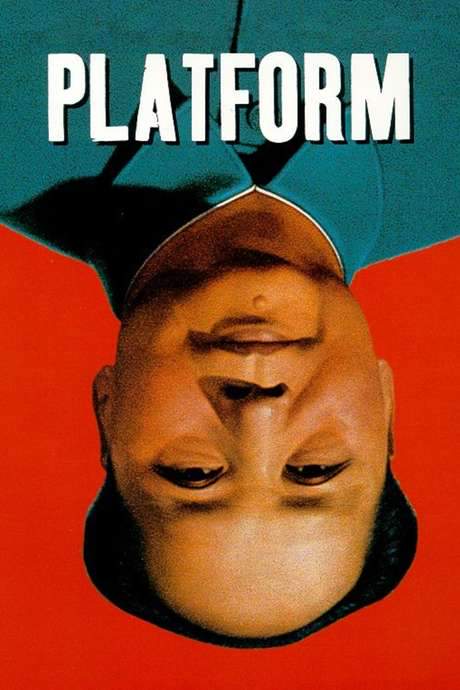
What Is Platform About?
The premise of Platform in 336 words, with nothing given away. The full story follows below.
In the waning days of the Cultural Revolution, a modest performance troupe sets out from the remote town of Fenyang, carrying the state‑approved scripts that have defined their art for years. The film opens to a China that is beginning to loosen its grip, where new electrical lines snake across villages and the distant rumble of a train hints at a world moving faster than its people can follow. Against this backdrop of cautious optimism and lingering duty, the troupe’s rehearsals become a subtle stage for the country’s own uneasy transformation, blending a quiet humor with an undercurrent of restless change.
The heart of the story beats in the lives of its four core members. Cui Minliang, a young man torn between familial expectations and a yearning for something beyond his provincial roots, finds his ambitions tangled with a tender, yet hesitant, affection for Yin Ruijuan, whose father’s strict military discipline casts a shadow over her own desires. Chang Jun carries the allure of the newly reachable cities, his occasional trips to Guangzhou offering a glimpse of consumer goods and a taste of the West that both excites and unsettles his companions. Zhong Pin, more liberal in spirit, pushes against traditional boundaries, influencing those around her with a quiet, persuasive confidence. Their interactions form a delicate dance of longing, duty, and the quiet hope of a future that seems both promising and uncertain.
Beyond the stage, the film gently explores the widening gap between rural hardship and urban possibility. A distant cousin, Sanming, embodies the strain of a peasant family striving for education and stability amid the tides of progress, while the troupe’s journeys along mud‑splattered roads and onto the edges of burgeoning highways echo the nation’s relentless push forward. Through its atmospheric cinematography and a meditative tone, the story invites the viewer to linger on the ordinary moments that reveal deeper questions about love, ambition, and the price of modernization—leaving the characters poised on the cusp of change, their true paths still waiting to unfold.
What Happens in Platform?
The complete story of Platform, from the first scene to the last, in 731 words (about 3 minutes). Spoilers throughout. Names in the text link to 4 cast member pages.
Spoilers ahead
Set in 1979, just after the Cultural Revolution, a young performance troupe in Fenyang performs state-approved material as China begins to loosen its hold on everyday life. The group introduces four members in the opening arc: Cui Minliang, Wang Hongwei as Cui; Yin Ruijuan, Zhao Tao as Yin; Chang Jun, Liang Jingdong as Chang Jun; and Zhong Pin, Yang Lina as Zhong Pin. The mood is a mix of duty and curiosity, with Cui’s restless streak clashing with family expectations and elders, while he covets the worldliness he associates with Chang Jun’s trips to Guangzhou, where consumer goods become more accessible in a rapidly liberalizing economy. Cui’s pursuit of Yin Ruijuan is complicated by her father’s rigid military discipline, and Zhong Pin’s more liberal influence on her companion only fuels their tensions. In a pivotal turn, Chang Jun’s accidental pregnancy of Zhong Pin and the pressure to terminate tests the loyalties within the troupe and lays bare the fractures beneath the troupe’s glossy surface.
As the troupe begins to bend to Western influences and, ultimately, to privatization, Cui remains a creature of longing and disquiet, his heart fixed on Yin Ruijuan even as life pulls them in different directions. The others—Chang Jun and Zhong Pin—also navigate shifting loyalties and changing ambitions, while Yin quietly watches as the social landscape around them shifts with electricity spreading to rural villages and new forms of entertainment entering the mainstream. The journey brings them to Sanming, Cui’s uneducated peasant cousin, whose sister Wenying stays with Cui’s family, illustrating the widening gap between urban opportunities and rural realities. Sanming’s desperation leads him to take a low-paying job in an unregulated coal mine to help fund Wenying’s university dreams, a decision that underscores the stark costs of ambition in this era. Before the troupe departs, Sanming gives Cui five yuan to pass to Wenying, with a stern warning to tell her never to return, a moment that casts a long shadow over the family’s prospects and foreshadows the tragic ironies of progress. On the road, a muddy truck and the sight of a train roaring past for the first time become potent symbols of a country moving forward faster than its people can adapt.
Back on the road, Chang Jun and Zhong Pin’s relationship endures, while Cui continues to yearn for Yin Ruijuan, who remains emotionally cautious and often noncommittal. The troupe’s illicit, out-of-wedlock entanglements come under scrutiny, and after investigations, they return to Fenyang. Cui’s generosity toward Wenying—ten yuan this time—uncovers the limits of opportunity for a family in a period of transition; Wenying, disappointed by her brother’s prospects, questions the path laid out for her. Zhong Pin, meanwhile, severs contact with Zhang and the rest of the troupe, signaling a broader retreat from old ties as the group rebrands itself as a Shenzhen-based rock ensemble and resumes touring, albeit under precarious new management and with limited permissions. The road now takes them to the highway edges and even as far as Inner Mongolia, where performances are squeezed into roadside spaces and the troupe must improvise to stay afloat.
As the cycle of travel, reform, and hardship continues, Cui, Zhang Jun—whose role grows more complicated with the shifting politics of the era—and Yao Eryong, another troupe member, leave the old troupe and venture into a business dealing in construction materials. A chance encounter brings them face to face with Yin Ruijuan again, now working as a tax collector, her memories of the troupe’s glory days still vivid and poignant. The reunion is both a balm and a reminder of the fractures that time hasn’t fully healed. Cui, still bearing the weight of past rejections, makes a quiet, renewed effort to reconnect with Yin Ruijuan, a gesture that rekindles a fragile bond. The film culminates in a quietly hopeful turn: Cui and Yin Ruijuan are married, their son in tow, and as a train whistle signals closure over the credits, the pair looks toward a future built from the ruins and triumphs of the era they endured together.
In this sweeping, humane portrait, the story travels from post-Revolutionary investments in state art to the messy, intimate economics of family, desire, and belonging. It is a meditation on how a country’s rapid modernization intersects with personal dreams, how friendships bend under pressure, and how love can persist—sometimes quietly, sometimes stubbornly—amid the constant push-pull of a society in flux.
Platform Timeline: Every Key Event in Order
15 key events in the order they happen, from “Troupe formed in 1979 in Fenyang” to “Reunion, marriage, and a son”. 15 events name a place, across 8 locations.
- 1
Troupe formed in 1979 in Fenyang
In 1979, the film opens with a state-approved troupe performing in Fenyang as China begins to ease Cultural Revolution constraints. Four members are introduced: Cui Mingliang, Yin Ruijuan, Zhang Jun, and Zhong Ping. Their beginnings are marked by discipline, ambition, and the tension between old loyalties and new possibilities.
When:1979 Where:Fenyang
- 2
Cui clashes with family; Zhang visits Guangzhou for goods
Cui clashes with his family and elders about life and ambition. Zhang visits his aunt in Guangzhou, using the new openness to obtain consumer goods for the troupe.
When:1980 Where:Fenyang and Guangzhou
- 3
Yin's disapproval and Cui's pursuit
Yin's military father disapproves of Cui, creating a barrier between them. Cui continues to pursue Yin, but his advances are met with noncommittal responses.
When:1980 Where:Fenyang
- 4
Zhang presses Zhong; Yin resists fashion
Zhang pressures Zhong to perm her hair, signaling a shift toward personal expression. Zhong also tries to interest Yin in the latest fashion, but Yin resists.
When:1980 Where:Fenyang
- 5
Abortion and relationship strain
Zhang accidentally gets Zhong pregnant and forces her to have an abortion, straining their relationship. The emotional toll echoes across the troupe as loyalties are tested.
When:1980 Where:Fenyang
- 6
Yin rejects Cui; a quiet impasse
Cui continues to pursue Yin, but Yin ultimately rejects him, leaving them at an impasse.
When:1980 Where:Fenyang
- 7
Privatization and a touring future
The troupe begins to bend to Western influences and is privatized; Cui remains with the group as they tour under new management, while Yin stays behind.
When:early 1980s Where:Fenyang and touring circuit
- 8
Electricity reaches a village; Sanming and Wenying enter the story
They witness electricity arriving in a rural village and encounter Sanming and his sister Wenying. Sanming takes a low-paid job in an unregulated coal mine to finance Wenying's university, giving Cui five yuan to hand to Wenying and telling her never to return.
When:early 1980s Where:rural village
- 9
Road journey and a first train
On the road, the troupe's truck gets stuck in mud, and they glimpse a train passing by for the first time, a symbol of changing times.
When:early 1980s Where:On the road between towns
- 10
Affair exposed; authorities intervene
Zhang and Zhong's illegal out-of-wedlock relationship is discovered by the authorities, forcing them to return to Fenyang.
When:1980s Where:Road to Fenyang; Fenyang
Show the other 5 events of Platform Hide the last 5 events
- 11
Ten yuan to Wenying; Zhong withdraws
Cui hands ten yuan to Wenying, who is upset about her brother's prospects. Zhong cuts off contact with Zhang and the rest of the troupe.
When:1980s Where:Wenying's home; Fenyang
- 12
Rock rebrand and arduous touring
The troupe rebrands as a rock group from Shenzhen and resumes touring, struggling to obtain permits and performing on highways, sometimes reaching Inner Mongolia.
When:mid-1980s Where:Shenzhen and Inner Mongolia
- 13
Family fractures at home
Cui's parents' marriage collapses; his father remarries and opens a shop, reflecting the shifting family dynamics amid reform.
When:late 1980s Where:Fenyang
- 14
Troupe members leave; Yin reappears as tax collector
Cui, Zhang, and Yao Eryong exit the troupe to pursue construction materials business; they meet Yin again, who is now a tax collector but still longs for her performing days.
When:late 1980s Where:Fenyang
- 15
Reunion, marriage, and a son
Cui visits Yin and they reconnect, eventually marrying and having a son. The film ends with a train whistle as credits roll.
When:end of film Where:Fenyang
Who Are the Main Characters in Platform?
7 characters, among them Yin Ruijuan (Zhao Tao), Zhang Jun (Liang Jingdong) and Zhong Pin (Yang Lina): who each one is and the part they play in the story. 6 of them link to the actor’s page.
- YR
Yin Ruijuan (Zhao Tao)
Played by Zhao Tao
A principled troupe member who resists Cui’s advances and the allure of Western fashion. She comes from a family with a military official father who disapproves of Cui, shaping her cautious approach to romance. Though she rejects Cui early on, she later reconnects with him as the story unfolds and eventually becomes a tax collector, reuniting with Cui to start a family.
- 🎭
- 🧭
- 💼
- ZJ
Zhang Jun (Liang Jingdong)
Played by Liang Jingdong
A confident, ambitious troupe member who uses his connections to obtain consumer goods. He pressures Zhong Pin to conform to newer fashions and plays a pivotal role in the couple’s complicated on-road relationship. His liaison with Zhong eventually leads to trouble under authorities, and he drifts apart from the group as the troupe reorganizes.
- 🎭
- 🧭
- 🪧
- ZP
Zhong Pin (Yang Lina)
Played by Yang Lina
A pragmatic, fashion-conscious member who pursues modernization and personal relationship with Zhang Jun. Her decision to become involved with Zhang, and the pregnancy that follows, catalyzes conflict and reflects the tension between private desires and the strict social order. After their exposure, she distances herself from Zhang and the troupe while continuing to navigate the evolving landscape.
- 🎭
- 💔
- 👗
- CM
Cui Mingliang (Wang Hongwei)
Played by Wang Hongwei
A rebellious, longing youth who pursues Yin and later pivots to business and collaboration within the troupe. His shifting loyalties—romantic and entrepreneurial—drive much of the narrative’s momentum. He starts a new relationship within the troupe and anchors a later plan to move into construction materials with his friends.
- 🪙
- 💔
- 🧭
- YE
Yao Eryong (Wang Bo)
Played by Wang Bo
A fellow troupe member who becomes a practical ally and partner in later ventures. He stays with Cui through changing circumstances and eventual business efforts in construction materials, aiding the troupe’s survival on the road and in shared livelihoods.
- 🤝
- 🧭
- 🧱
- S(
Sanming (Han Sanming)
Played by Han Sanming
Cui’s uneducated peasant cousin, outwardly simple but morally complex. He takes a poorly paid job at an unregulated coal mine to fund his sister Wenying’s education, illustrating the harsh realities of reform-era labor. In desperation, he entrusts Cui with a sum of money for Wenying, instructing him to tell her never to return.
- 🪨
- 🧭
- 🧰
- W
Wenying
Sanming’s sister whose education symbolizes the personal costs and hopes riding on the reform era. She remains emotionally connected to Cui and his family, representing the human stakes behind economic and social changes.
- 🎓
- 💡
- 🧒
Where and When Is Platform Set?
Platform is set in Fenyang, Guangzhou, Shenzhen and Inner Mongolia (Late 1970s to the 1980s). Here is why the time and place matter to the story.
When
Late 1970s to the 1980s
The film opens in 1979, just after the Cultural Revolution. It follows the early wave of economic liberalization and privatization that allows Western influences and consumer goods to seep into daily life. The troupe’s shift toward private management tracks the broader social and cultural changes of the era. Through years of touring, the characters witness the pace of modernization accelerate across urban and rural spaces.
Where
Fenyang, Guangzhou, Shenzhen, Inner Mongolia
The story centers on Fenyang in Shanxi, a town at the edge of China's reform era. As the troupe travels, it reaches larger cities like Guangzhou and Shenzhen and even distant regions such as Inner Mongolia, highlighting the geographic spread of modernization. Rural pockets near Fenyang contrast with bright stage lights, new highways, and evolving job landscapes. The setting mirrors a country in transition from collective control to market-oriented opportunity.
- 🏙️ Urbanizing
- 🚂 Travel
- 🏭 Industrialization
What Are the Themes of Platform?
3 ideas the story keeps returning to, among them Rapid Change, Rural-Urban Gap and Relationships.
-
01
Rapid Change
The film maps how state-controlled art evolves into privatized entertainment under reform. It shows how new management, tours, and Western-inflected tastes transform what people watch and how performers live. Personal desires constantly collide with bureaucratic rules and the incentives of a market-driven culture. The cadence of life shifts quickly as electricity, transport, and new venues reshape everyday experiences.
-
02
Rural-Urban Gap
The narrative juxtaposes rural life with the lure and fragility of urban opportunity. Electric lights in a countryside village, a cousin taking a low-paid coal job, and the push for education reveal the widening social divide. The contrast between the troupe’s road-worn stages and the polished urban scenes underscores how reform favors mobility and consumer access. Family economics and local hardship are weighed against personal ambition and spectacle.
-
03
Relationships
Love, longing, and how intimate choices contend with social pressure are central to the story. Cui’s pursuit of Yin, Zhong’s pregnancy and abortion, and the strain of clandestine relations reveal how devotion can collide with family expectations and state scrutiny. The characters’ bonds are tested by distance, opportunity, and shifting loyalties. The ending offers a glimmer of renewal rather than a tidy closure, emphasizing the resilience of relationships amid change.
What Kind of Film Is Platform?
Melancholic in tone, with slow pacing and a complex story, going by the plot summary.
- Tone
- Melancholic
- Pacing
- Slow
- Story
- Complex
- Intensity
- Medium
- Ending
- Bittersweet
A slow-burning and melancholic epic that follows the quiet lives of performers over a decade, capturing the emotional weight of personal dreams and relationships strained by China's rapid and impersonal modernization.
- nostalgic
- contemplative
- melancholic
- longing
- hopeful
- oppressive
- social change
- personal dreams
- unrequited love
- friendship under pressure
Content notes: unplanned pregnancy, abortion, dangerous working conditions.
Quiz
How well do you remember Platform? Test yourself on the story.