What Is Life Upside Down About?
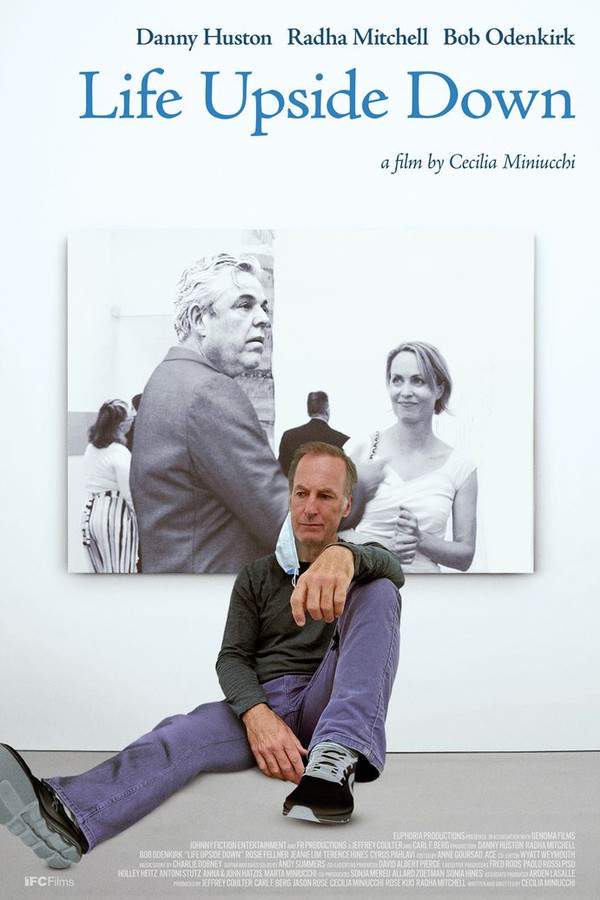
The premise of Life Upside Down in 240 words, with nothing given away. The full story and the ending follow below.
In the spring of 2020, the glossy world of Los Angeles galleries is buzzing with the opening of a much‑anticipated exhibition hosted by art dealer Jonathan Wigglesworth. The event, alive with bright personalities and polished ambition, introduces a cast whose personal lives are as layered as the canvases they sell. Clarissa Cranes, an articulate lecturer with a penchant for intellectual flirtation, crosses paths with Jonathan, while the charismatic couple Paul and Rita Hasselberg mingle nearby, each projecting a picture of cultured ease.
When the sudden onset of a global lockdown presses the city into quiet, the characters find their carefully curated routines upended. Confined to their homes, they must navigate the delicate balance between professional pressures and intimate entanglements that have long simmered beneath the surface. Jonathan’s marriage, his tenuous affair, and the Hasselbergs’ seemingly harmonious partnership all come under an unanticipated microscope, prompting a mix of awkward humor and earnest reflection as they confront what it means to be together—and alone—when the world outside has paused.
The film moves with a light‑hearted, almost conversational tone, allowing moments of genuine emotion to surface amid witty banter. It sketches a portrait of adult life in a chaotic era, where the search for equilibrium feels both urgent and absurd. As the story drifts across continents and cultures, the characters’ journeys hint at deeper self‑discovery, inviting viewers to wonder how humor can coexist with the quiet yearning for balance in an unpredictable world.
What Happens in Life Upside Down?
The complete story of Life Upside Down, from the first scene to the last, in 514 words (about 2 minutes). Spoilers throughout. Names in the text link to 3 cast member pages.
Spoilers ahead
In early 2020, an exhibition opening for artist and art dealer Jonathan Wigglesworth, Bob Odenkirk, in Los Angeles draws a lively crowd, and he attends without his wife, Mrs Wigglesworth, Jeanie Lim, while also meeting his lover, Clarissa Cranes, Radha Mitchell, and their friends, the Hasselberg couple. The atmosphere is vibrant and optimistic, with plenty of conversation about art, taste, and shared memories, and the attendees revel in the warmth of familiar faces amid the city’s creative scene.
On March 16, 2020, the COVID-19 pandemic triggers a national lockdown in the United States, forcing the participants—the people connected to the opening—into near-total isolation: Jonathan Wigglesworth, his wife, and his lover Clarissa Cranes, as well as the Hasselbergs, must navigate the sudden separation and the new limits on daily life. Despite the enforced physical distance, Jonathan continues to feel drawn to Clarissa, sustaining a long-distance emotional connection through social media and lingering conversations that echo the strain of old loyalties in a new, restricted world. Clarissa, meanwhile, channels her energy into online lectures and remote teaching, trying to maintain professional momentum even as personal distance grows.
During this confined period, the artist Jonathan gradually drifts away from his relationship with Clarissa and finds himself turning back toward his wife, seeking a form of reconciliation or at least a more grounded connection. Clarissa, in contrast, grows more distant and begins to respond to a different, shy appeal that offers a sense of gentler companionship outside the orbit of their affair. The Hasselbergs experience a contrasting dynamic: Paul appears intellectually confident and reassuring, yet the illusion of a perfectly balanced couple lingers as his wife’s absence of interest in his conversations becomes increasingly noticeable, hinting at trouble beneath the surface.
Paul Hasselberg comes to a stark realization: the secure, illusion-free façade he trusted may be a mirage, and he discovers that his wife is having an affair despite the isolation. The tension reaches a quiet point as the group contends with uncertainty about how long the lockdown will last and how deeply it will reshape their relationships. The mood shifts as Clarissa, typically cautious, throws a small party with the messenger she has started to find attractive, dancing with him and signaling that she might be ready to step away from Jonathan. This act marks a turning point, a moment of letting go that contrasts with the earnest attempts at staying connected that defined the earlier days of isolation.
In the closing arc, Jonathan reconnects with his wife, seeking the warmth of a renewed closeness even as the Hasselbergs confront their own issues with honesty and direct conversation. The group faces the reality that time spent apart has altered expectations and desires, and they are compelled to address their relationship problems openly rather than letting fear or silence govern their decisions. The story ends on a note of tempered hope: despite the lingering questions about safety, time, and fidelity, the characters begin to recognize that honesty and willingness to communicate may be the first steps toward rebuilding trust and reshaping their lives in the aftermath of upheaval.
Life Upside Down Timeline: Every Key Event in Order
12 key events in the order they happen, from “Opening night of the exhibition in Los Angeles” to “Hasselbergs confront their relationship”. 12 events name a place, across 8 locations.
- 1
Opening night of the exhibition in Los Angeles
In early 2020, an exhibition opening for artist Jonathan Wigglesworth unfolds in Los Angeles. He attends without his wife and meets his lover Clarissa Cranes, along with the Hasselbergs. The event is well-attended and lively, but underlying tensions hint at life-changing shifts to come.
When:early 2020 Where:Los Angeles
- 2
Mood of the opening night
The opening night feels buoyant as guests mingle, and the mood remains upbeat. Yet the relationships among Wigglesworth, Clarissa, and the Hasselbergs carry unspoken strain beneath the surface.
When:early 2020 Where:Los Angeles
- 3
Nationwide lockdown begins
On March 16, 2020, the pandemic triggers a nationwide lockdown, forcing the main characters into near-total isolation. Wigglesworth, his wife, Clarissa, and the Hasselbergs retreat to their separate spaces, cutting back on direct contact. The abrupt confinement sets the stage for rapid emotional shifts.
When:March 16, 2020 Where:United States
- 4
Close-quarters confinement and uncertainty
The lockdown strands the group in close quarters, forcing them to redefine intimacy and boundaries. Wigglesworth and Clarissa continue their fragile connection while the Hasselbergs navigate a new routine at home. They are unsure how long the restrictions will last.
When:March 2020 Where:Home/Apartment
- 5
Jonathan maintains an emotional affair online
Despite physical separation, Jonathan continues his affair with Clarissa emotionally via social media and gravitates toward her. He relies on digital contact to maintain the connection that the lockdown has intensified. The dynamic becomes more complex as distance blurs into longing.
When:March–April 2020 Where:Home
- 6
Clarissa adapts to online teaching
Clarissa shifts to online teaching, delivering lectures from home and adapting to remote work. She manages the workload with professional steadiness, masking personal tensions. Her online presence contrasts with the fragility of her real-life relationships.
When:March–April 2020 Where:Home/Online
- 7
Jonathan struggles to sell his artwork
During isolation, Jonathan struggles to sell his artwork, highlighting financial strain and creative frustration. His studio sessions feel both productive and stagnant as market conditions worsen. The pressure amplifies the emotional stakes of his relationship with Clarissa.
When:March–April 2020 Where:Studio
- 8
Paul and Rita's surface harmony
Paul Hasselberg is portrayed as the intellectually superior partner, and Rita seems largely unconcerned by the waning attention. The couple looks harmonious on the surface, masking deeper dissatisfaction. The isolation makes these underlying issues harder to ignore.
When:March–April 2020 Where:Hasselberg Home
- 9
Jonathan drifts from Clarissa, reconnects with his wife
Towards the end of the isolation period, Jonathan becomes estranged from Clarissa and begins to reconnect with his wife. The emotional balance shifts back toward the marriage as the gap between him and Clarissa widens. The evolving loyalties set the stage for a potential reconciliation.
When:Late isolation period Where:Home
- 10
Clarissa flirts with a shy messenger and hosts a party
Clarissa distances herself further from Jonathan and finds a shy messenger she finds attractive. She throws a small party, disregards the rules of isolation, dances with him, and appears ready to let go of Jonathan.
When:Late isolation Where:Clarissa's home
- 11
Jonathan reunites with his wife
Jonathan reconnects with his wife, closing the loop of the affair and redrawing the center of his life. The couple begins to address their marital dynamics more openly.
When:End of isolation Where:Home
- 12
Hasselbergs confront their relationship
The Hasselbergs realize they need to address their relationship problems openly, choosing honesty over comfort. They start to communicate more directly about their needs and boundaries.
When:End of isolation Where:Hasselberg Home
Who Are the Main Characters in Life Upside Down?
8 characters, among them Paul Hasselberg, Jonathan Wigglesworth and Clarissa Cranes: who each one is and the part they play in the story. 7 of them link to the actor’s page.
-

Paul Hasselberg
Played by Danny Huston
A married man whose relationship with his wife appears harmonious but is tested when he learns she is having an affair. He is portrayed as intelligent and introspective, navigating the shock of betrayal while seeking stability amid upheaval. His arc centers on reevaluating trust and commitment under pressure.
- 🧠 Intellectual
- 💔 Betrayal
-

Jonathan Wigglesworth
Played by Bob Odenkirk
An artist and art dealer who hosts the exhibition opening. He secretly maintains an affair with Clarissa and finds it hard to sell his work during lockdown. His emotional journey moves from secrecy to estrangement and finally toward possible reconciliation with his wife.
- 🎨 Artist
- 💔 Affair
-

Clarissa Cranes
Played by Radha Mitchell
A lecturer who becomes the lover of Jonathan. She adapts to online teaching during isolation, yet grows lonelier as the days pass. Her distance from Jonathan grows over time, and she becomes drawn to a shy admirer, signaling a shift in her needs and attachments.
- 💬 Online Teaching
- 💔 Loneliness
- MW
Mrs Wigglesworth
Played by Jeanie Lim
Wife to Jonathan Wigglesworth, living in close quarters during lockdown. Her perspective frames the couple’s dynamic and highlights how separation within a shared space can paradoxically bring people closer or push them apart.
- 💑 Wife
- 🕊️ Strained marriage
- D
Darius
Played by Cyrus Pahlavi
A gallery figure associated with the exhibition; his presence underscores the art world’s pull amid the crisis. He interacts with the gallery ecosystem, illustrating how cultural institutions navigate uncertainty.
- 🏛️ Gallery
- 💼 Collector
- T
Tony
A member of the gallery staff, contributing to the exhibition’s operations. He represents the routine functions of an art venue during a period of upheaval, providing a practical counterpoint to the characters’ emotional dramas.
- 🏢 Gallery Staff
- 💼 Operations
- GE
Gallery Employee (Carl Alacchi)
Played by Carl Alacchi
A staff member at the gallery, interacting with visitors and contributing to the atmosphere of the exhibition during the lockdown era.
- 🏛️ Gallery
- 🗨️ Interaction
- GE
Gallery Employee (Sonia Iris Lozada)
Played by Sonia Iris Lozada
Another gallery staff member involved in the exhibition’s day-to-day operations and in managing the flow of visitors under restrictions.
- 🏛️ Gallery
- 💬 Interaction
Where and When Is Life Upside Down Set?
Life Upside Down is set in Los Angeles and United States (Early 2020 (March 2020)). Here is why the time and place matter to the story.
When
Early 2020 (March 2020)
The narrative situates itself at the onset of the COVID-19 pandemic in the United States, with a national lockdown beginning on March 16, 2020. Daily life shifts to online interactions, virtual lectures, and closed galleries. The period of uncertainty forces relationships to confront honesty, trust, and adaptation to a suddenly altered routine.
Where
Los Angeles, United States
The story unfolds in Los Angeles, providing a glamorous yet isolating backdrop for an exhibition and a sudden lockdown. The city’s art scene and shared apartments become the coordinates where personal loyalties are tested. As night-life hushes and doors close, the urban environment amplifies the characters’ emotional distance and redefined connections.
- 🌆 Urban setting
- 🎨 Art world
- 🧭 Isolation
What Are the Themes of Life Upside Down?
4 ideas the story keeps returning to, among them Infidelity, Isolation and Art World.
-
01
Infidelity
Jonathan’s affair with Clarissa unsettles the semblance of fidelity that once defined their circle. The lockdown magnifies secrecy as digital communication replaces in-person contact. Each revelation about loyalty and desire pushes the characters to reassess what they truly want. The theme shows how proximity and secrecy can rupture long-held bonds.
-
02
Isolation
The enforced confinement reshapes daily life, with online teaching, shared apartments, and limited social contact redefining intimacy. Characters cope with loneliness in different ways, exposing vulnerabilities and coping mechanisms. The film uses isolation to explore whether closeness can persist without physical proximity.
-
03
Art World
The pandemic exposes the fragility of the art market as Jonathan struggles to sell his work. The exhibition that opened before lockdown becomes a focal point for examining status, ambition, and economic pressure in times of crisis. Online shifts and altered gallery dynamics reveal how art and commerce adapt under stress.
-
04
Reconciliation
Toward the end, Jonathan reconnects with his wife while Clarissa distances herself, signaling a potential shift in loyalties. The Hasselbergs confront their relationship openly, recognizing the need for honest dialogue. The film closes on a note of tentative reconciliation, tempered by the lessons learned during confinement.
How Does Life Upside Down End?
The last act of Life Upside Down and what it means, in 468 words. The ending lands as happy. Big spoilers: read the plot summary first if you have not seen it.
The final act, in full
When the film concludes, the tangled relationships of the characters reach their breaking points. Jonathan, still caught in his selfish ways, is exposed for having been unfaithful to his wife Sue, as he accidentally leaves a Zoom call running while he is in bed with his mistress Clarissa. This revelation devastates Clarissa, who finally sees the truth about Jonathan’s lies and manipulations. Meanwhile, Paul and Rita’s relationship also crumbles when Paul catches Rita having an affair with their neighbor, exposing the superficiality of his marriage based on intellectual posturing and social appearances. Both Clarissa and Rita face harsh truths about their relationships, prompting a realization that they deserve better and should seek genuine self-worth.
As the story progresses, Jonathan’s marriage with Sue begins to mend, showing that his unsolicited honesty and acknowledgement of his flaws allow them to reconnect, especially with Sue’s unwavering support for her family. Clarissa, having recognized her own value and found affection elsewhere, begins a new chapter of love and self-respect. Similarly, Paul finally confronts his own shortcomings, opening a dialogue with Rita that allows for honesty and understanding, marking a turning point in their relationship. In the end, the characters have learned difficult lessons about self-awareness and authenticity, and while their lives continue on, the pandemic’s chaos is left behind, leaving each to forge ahead with newfound clarity and hope. The world may have gone on unaffected by their personal upheavals, but each of these characters has taken vital steps toward genuine change and self-acceptance as life resumes normally.**
At the end of the film, all the characters face stark realizations about their relationships and themselves. Jonathan’s infidelity is exposed when he accidentally leaves a Zoom call running while in bed with Clarissa, revealing to her that the lies he told about his marriage were false. This devastating moment makes Clarissa see the truth about his selfishness and manipulation. Meanwhile, Paul’s relationship with Rita also falls apart when he catches her having an affair, exposing the superficial nature of their marriage based on appearances and intellectual posturing. Both Clarissa and Rita come to understand that they deserve genuine love and self-respect, prompting them to seek something more meaningful.
As a result, Jonathan, despite his flaws, begins to repair his marriage with Sue, recognizing her unwavering support and the importance of honesty. Clarissa, having gained clarity about her worth, finds love and self-empowerment elsewhere. Similarly, Paul finally confronts his own shortcomings, opening up a genuine conversation with Rita and fostering understanding. These revelations force them to reevaluate their lives, learn lessons about authenticity, and embrace change. Ultimately, life goes on — the pandemic recedes, and although things return to normal on the surface, each character is left with a new sense of self-awareness and hope, having taken important steps toward genuine happiness and self-acceptance.
What Kind of Film Is Life Upside Down?
Bittersweet in tone, with steady pacing and a moderate story, going by the plot summary.
- Tone
- Bittersweet
- Pacing
- Steady
- Story
- Moderate
- Intensity
- Medium
- Ending
- Happy
A reflective and bittersweet exploration of relationships strained by pandemic isolation, balancing moments of humor with the melancholy of confronting infidelity, ultimately finding tempered hope in renewed communication.
- reflective
- isolated
- introspective
- hopeful
- contemplative
- melancholic
- marital infidelity
- covid-19 pandemic
- self-discovery
- relationship struggles
Content notes: marital infidelity.
Quiz
How well do you remember Life Upside Down? Test yourself on the story.