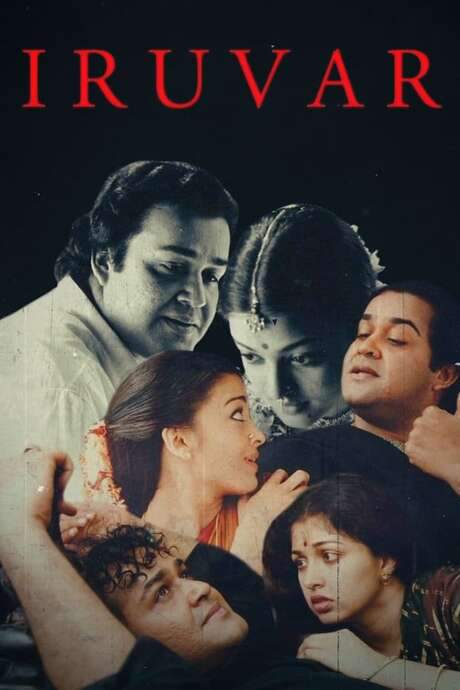
Iruvar 1997

Directed by
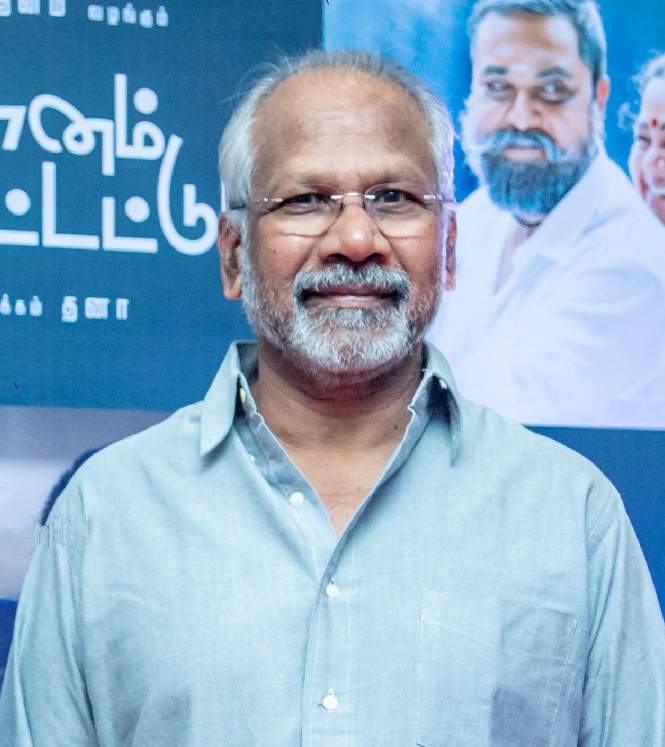
Mani Ratnam
Made by

Madras Talkies
Where to Watch Iruvar
See current US streaming, rental, and purchase options for Iruvar (1997) via JustWatch.

Amazon Video
SD
Google Play Movies
SD
YouTube
SD Streaming availability powered by 
Iruvar Plot Summary
Read the complete plot summary and ending explained for Iruvar (1997). From turning points to emotional moments, uncover what really happened and why it matters.
In the late 1940s, Anandan, an aspiring actor, roams the bustling studios of Madras in search of a break, his eyes bright with ambition and a hunger to perform. He crosses paths with Tamizhselvan, a rationalist writer whose Dravidian ideas he deeply respects. Through Tamizhselvan’s eloquent prose and Anandan’s impassioned delivery, he lands the title roles in a series of films, setting the stage for a rise that blends cinema with politics.
Tamizhselvan introduces him to Ayya Veluthambi, the charismatic leader of a Dravidian political party, and Anandan finds himself drawn to the movement’s causes. He marries Pushpavalli, while Tamizhselvan marries Marathagam. When the pair return to Madras, Anandan’s film is cancelled due to financial troubles, and Tamizhselvan’s party swiftly becomes the main opposition. Anandan’s fortunes dip as he is reduced to minor roles, and he sends Pushpavalli back to their village, even considering enlisting in the army. A short time later, Pushpavalli succumbs to illness, and Tamizhselvan consoles a despondent Anandan, smoothing over the personal loss as public life beckons.
Weeks pass, and Anandan’s luck reverses as he is offered the lead in a new project. He convinces the director to hire Tamizhselvan as the screenwriter, and the film’s release proves a tremendous success, catapulting Anandan into Tamil cinema stardom within a few years. As his fame grows, Tamizhselvan urges him to use his popularity to bolster their political cause. Anandan then marries Ramani, a fellow actress who has endured hardship at the hands of her family, deepening his ties to both the industry and the movement.
Five years later, Veluthambi asks Anandan to contest the elections, although Tamizhselvan believes other devoted workers deserve the chance. A filming accident briefly tests him when a prop gun shoots near his neck, but the party wins decisively, taking 152 seats out of 234. Veluthambi refuses to become chief minister, instead asking Anandan and Madhivannan to decide who should hold the post. Tamizhselvan feels sidelined by the decision, yet he is chosen as chief minister with Anandan’s full support. Anandan later requests to become health minister, but Tamizhselvan refuses, arguing that an executive committee rule bars ministers from continuing to act on screen while in office. He offers Anandan any portfolio if he suspends his acting career, but Anandan declines.
Senthamarai, who had once admired Tamizhselvan’s daring protests, moves in with him after a poetic letter and the couple’s daughter together. Anandan’s next film co-stars Kalpana, who resembles his late wife; though initially distant, Kalpana’s lively nature draws him closer, even as he remains married to Ramani. Kalpana’s playful candor unsettles him, and she ultimately leaves when his hesitation to take another wife festers into tension.
At a memorial function for Veluthambi’s death, Anandan publicly accuses the party of corruption, triggering a split in the movement and the formation of a new faction under Anandan’s leadership. For the next four years, Anandan uses his films to expose governance corruption, riding a wave of public support to win the next election with 145 of 234 seats. Yet the new government mirrors the old in many ways, and Tamizhselvan’s furious denunciations spark protests that Anandan answers with arrests, even as he searches for Kalpana at a disaster-relief site. A car bringing Kalpana to safety is involved in an accident, and she dies, deepening Anandan’s grief.
In the aftermath, at Veluthambi’s granddaughter’s wedding, a visibly ailing Anandan meets Tamizhselvan. They exchange a silent handshake but scarcely speak, a poignant moment of shared history. The following morning, Ramani discovers Anandan dead in his bed, and Tamizhselvan, in a final, mournful monologue set in the place where they once envisioned ruling Tamil Nadu, recites poetry that mourns his death.
Iruvar Timeline
Follow the complete movie timeline of Iruvar (1997) with every major event in chronological order. Great for understanding complex plots and story progression.
Anandan begins pursuing acting in Madras
In the late 1940s, Anandan roams studios in Madras in search of opportunities. He encounters Tamizhselvan, a rationalist writer whose Dravidian ideas impress him. Their conversations spark Anandan's resolve to land film roles.
Tamizhselvan introduces Anandan to Ayya Veluthambi
Tamizhselvan broadens Anandan's horizons by introducing him to Ayya Veluthambi and the Dravidian political movement he leads. Anandan is drawn to the party's ideas and the sense that art can influence society. The meeting ties cinema to politics in a way that will shape his career.
Anandan marries Pushpavalli
Anandan marries Pushpavalli, while Tamizhselvan weds Maragatham from his village. The unions bind two creative minds to two political families as they begin to balance personal happiness with looming public life. The couples are setting the stage for the intertwined paths ahead.
Tamizhselvan marries Maragatham
Tamizhselvan marries Maragatham from his village, cementing a personal alliance that mirrors the growing ties between their political circles. The ceremonies take place in their home villages as both men prepare for Madras-bound careers. Soon after, they return to Madras to pursue their respective ambitions.
Return to Madras; film canceled due to finances
Returning to Madras, Anandan's film project is canceled because of financial difficulties. The setback dents his early momentum and highlights the precarious nature of cinema funding. He must navigate a new reality where opportunities are scarce.
Dravidian party rises; Anandan relegated to minor roles
Tamizhselvan's party grows into the main opposition while Anandan is reduced to minor roles in films. His stardom wanes as political currents reshape the industry. The two strands of his life drift further apart.
Pushpavalli dies; Tamizhselvan consoles Anandan
Pushpavalli dies from illness, leaving Anandan devastated. Tamizhselvan consoles him and suggests he might consider joining the army to cope with the loss. The personal tragedy deepens his existential doubts about fame and purpose.
Fortunes revive: lead role offered and collaboration with Tamizhselvan
Weeks after Pushpavalli's death, Anandan's fortunes rebound when he is offered the lead role again. He persuades the director to hire Tamizhselvan as screenwriter, and the film receives an extraordinary response. Anandan becomes a cinema star and a household name in Tamil cinema within years.
Anandan marries Ramani amid political shifts
As the next elections loom, Tamizhselvan urges Anandan to use his popularity to support the party. Around this time, Anandan marries Ramani, a fellow actress whose life had been troubled by her family. Their union reflects the intertwining of personal life and public ambition.
Five years later: Veluthambi asks Anandan to contest
Five years pass before Ayya Veluthambi asks Anandan to contest the upcoming elections, while Tamizhselvan believes other devoted workers deserve candidacy. The disagreement foreshadows strains within the party and sets the stage for a political feud. Anandan's star power becomes a tool for campaigning.
On-set shooting and electoral victory
During a film shoot, Anandan is shot in the neck by a prop gun. The party sweeps the elections with 152 of 234 seats, but Veluthambi refuses to become chief minister and leaves the decision to Anandan and Madhivannan. Tamizhselvan is ultimately chosen as chief minister with Anandan's wholehearted support; Anandan declines the health minister post to avoid clashing with his acting career.
Senthamarai and Kalpana enter the orbit of the leadership
Senthamarai moves in with Tamizhselvan and has a daughter, expanding the inner circle around him. Anandan's new film co-star Kalpana, who resembles his late wife, grows close to him, but his indecision about remarriage drives a wedge between them. Kalpana ultimately leaves him.
Veluthambi's memorial; corruption accusation and party split
At Veluthambi's memorial, Anandan accuses governance of corruption as a cause of his mentor's death. Tamizhselvan expels him from the party, triggering a split and the formation of a new faction led by Anandan. The political landscape of Tamil Nadu begins to shift as the rival camps mobilize.
Anandan returns to power atop a reformist platform
Using his films as a megaphone, Anandan leads his new party to power in the next elections with 145 of 234 seats, but governance mirrors the old system. Tamizhselvan's eloquent diatribes spark protests, and Anandan orders arrests in a bid to maintain control. Kalpana dies in a car crash at a disaster-relief site, leaving him shattered.
Final meeting and Anandan's death
At Ayya Veluthambi's granddaughter's wedding, Anandan and Tamizhselvan share a tense handshake and a few words. The next morning, Ramani finds Anandan dead in his bed, and Tamizhselvan recites a moving monologue mourning his former ally and rival, closing a chapter in Tamil politics and cinema.
Iruvar Characters
Explore all characters from Iruvar (1997). Get detailed profiles with their roles, arcs, and key relationships explained.
Anandan (Mohanlal)
An aspiring actor who rises to stardom and leverages his fame to influence politics. He becomes a celebrity-turned-politician, navigating loyalty, ambition, and ethical compromises as he climbs the power ladder.
Tamizhselvan (Tamil Selvam)
A rationalist writer and Dravidian ideologue who mentors Anandan and orchestrates political strategy. His influence over the party and his complex relationship with Anandan shape Tamil Nadu politics and the film’s trajectory.
Pushpavalli / Kalpana (Aishwarya Rai Bachchan)
A film star whose resemblance and dynamic with Anandan drive key plot turns. Her presence destabilizes personal loyalties and highlights the fusion of art, identity, and public life. Kalpana's arc ends tragically, marking a turning point for Anandan.
Ramani (Gautami Tadimalla)
Anandan's wife, an actress who endures personal strain and family pressure. She provides domestic stability and loyalty as Anandan's political and cinematic careers intensify.
Ayya Veluthambi (Nassar)
A Dravidian party leader who mentors and pressures Anandan. His influence and political maneuvers drive election strategies and intraparty dynamics, culminating in a clash of ambitions with Tamizhselvan.
Madhivanan (Rajesh)
A fellow party leader whose role in the leadership struggle and the party's split tests alliances and reveals the pragmatic, often cutthroat nature of political ambition.
Iruvar Settings
Learn where and when Iruvar (1997) takes place. Explore the film’s settings, era, and how they shape the narrative.
Time period
Late 1940s – 1960s
The story begins in the late 1940s, in the post-independence era when cinema and politics intertwine. Over the ensuing years, Anandan's stardom propels him into political life, while Tamizhselvan's influence grows. The period features shifting party fortunes, electoral battles, and the moral ambiguities of governance.
Location
Madras (Chennai), Tamil Nadu, India
Madras, now known as Chennai, is the hub of Tamil cinema where Anandan's career unfolds through studios and film shoots. The city provides the backdrop for the industry’s rise and the parallel currents of Dravidian politics that drive the plot. Its studios and theatres become arenas for fame, ambition, and power plays.
Iruvar Themes
Discover the main themes in Iruvar (1997). Analyze the deeper meanings, emotional layers, and social commentary behind the film.
🗳️
Power
The film centers on how charisma, media visibility, and party machinery translate into political power. It traces the rising fortunes of a film star who becomes a political figure and the costs of wielding influence.
❤️
Love
Romantic entanglements drive much of the drama: Anandan's marriages and affairs, Kalpana's and Pushpavalli's influence on his life, and how personal relationships intersect with public duties.
🎭
Art & Politics
The narrative explores the tension between acting and public service, showing how artistic fame can distort or empower political ambition and how ideology shapes creative choices.
💸
Corruption
The plot examines the murky line between governance and manipulation, highlighting how power can lead to corruption or its exposure, and how public trust is tested by personal and political agendas.

Coming soon on iOS and Android
The Plot Explained Mobile App
From blockbusters to hidden gems — dive into movie stories anytime, anywhere. Save your favorites, discover plots faster, and never miss a twist again.
Sign up to be the first to know when we launch. Your email stays private — always.
Explore the mobile appIruvar Spoiler-Free Summary
Discover the spoiler-free summary of Iruvar (1997). Get a concise overview without any spoilers.
In the bustling studios of mid‑century Madras, the glitter of celluloid meets the fervor of a burgeoning political movement. The film paints a world where cinema is not merely entertainment but a conduit for ideas that will reshape a state, capturing the pulse of a society caught between tradition and a restless drive for change. The atmosphere is charged with ambition, the streets humming with debates on language, identity, and power, while the silver screen offers both an escape and a platform for persuasion.
At the heart of this tableau is Anandan, an eager dreamer whose talent for performance draws him into the orbit of a charismatic writer, Tamizhselvan. Their partnership blends passionate oratory with dramatic flair, forging a bond that blurs the line between art and activism. Introducing them to the wider stage is Ayya Veluthambi, the magnetic leader of a Dravidian political party whose vision for the people mirrors the revolutionary spirit of their scripts. Personal lives intertwine with public aims: Anandan marries Pushpavalli, while Tamizhselvan finds companionship in Marathagam, each partnership reflecting the era’s complex social fabric.
As Anandan’s star begins to rise, the lure of political influence grows stronger, prompting a delicate dance between the glamour of film sets and the gritty realities of grassroots organizing. The narrative explores how fame can be harnessed as a tool for advocacy, while also examining the subtle tensions that surface when artistic integrity meets the pragmatic demands of governance. The tone is both lyrical and urgent, echoing the cadence of protest songs and the dramatic arcs of cinema.
Through its rich portrayal of ambition, friendship, and the intertwining of two powerful arenas, the story invites viewers to contemplate how personal aspirations can echo across a whole state, leaving an indelible mark on both its cultural legacy and its political destiny.
Movies with Similar Twists and Themes
Uncover films that echo the narrative beats, emotional arcs, or dramatic twists of the one you're exploring. These recommendations are handpicked based on story depth, thematic resonance, and spoiler-worthy moments — perfect for fans who crave more of the same intrigue.



Featured on this page

What's After the Movie?
Not sure whether to stay after the credits? Find out!
Check out our other apps:

SAT Sphere
Build confidence for the Digital SAT.

Mori Atlas
Discover wild places worth protecting.

Luntero
Search smarter for a home in Amsterdam.

Plot Explained
Unravel movie endings and hidden clues.

Pokechamp
Dive into Pokémon data and battle logic.

Driving Theory
Get ready for your European theory test.

Movie Dust
Plan your next cinema trip with ease.

Musemap
Find art and culture as you travel.

Selkobase
Compare credentials before committing.

Local Manual
Turn an unfamiliar country into practical next steps.

Lernavi
Compare school systems before your next move.

GymRoam
Find a workout stop wherever your plans take you.
Explore Our Movie Platform
New Movie Releases (2026)
Famous Movie Actors
Top Film Production Studios
Movie Plot Summaries & Endings
Major Movie Awards & Winners
Best Concert Films & Music Documentaries
Movie Collections and Curated Lists
© 2026 What's After the Movie. All rights reserved.
Privacy Policy