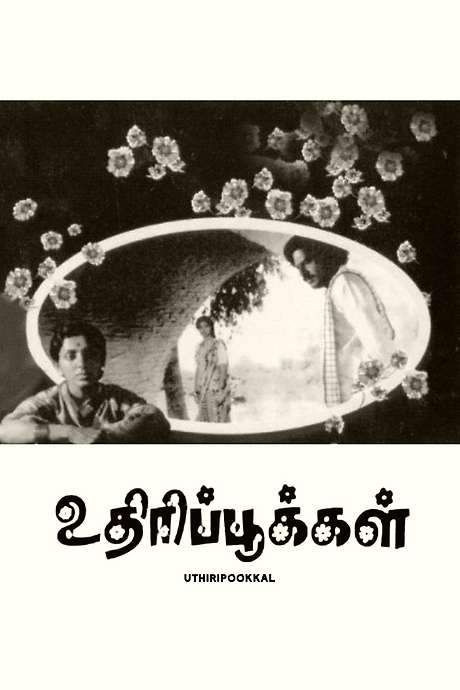


Uthiripookkal Plot Summary
Read the complete plot summary and ending explained for Uthiripookkal (1979). From turning points to emotional moments, uncover what really happened and why it matters.
Sundaravadivelu [Vijayan] is a wealthy but cruel villager who runs the local school with an iron grip, siphoning its funds for his own desires. He lives with his chronically ill wife Lakshmi [Ashwini] and their two children: son Raja [Khaja Sharif] and daughter Bhavani [Anju Prabhakar]. Lakshmi’s father Thambusamy [Charu Haasan], a pensioner, also resides in the same village and has loaned Sundaravadivelu money, a debt that is kept active by constant pressure for repayment and a string of insults. Shenbagam [Madhu Malini], Thambusamy’s daughter, falls in love with Prakash [Sundar Raj], a new teacher at the school. Sundaravadivelu does not approve of the match, wanting Shenbagam for himself and even offers to write off the debt if Thambusamy agrees. Thambusamy refuses, and Sundaravadivelu vents his anger on Lakshmi. Thambusamy [Charu Haasan] insists on standing by Shenbagam’s choice, further fueling the tensions in the village.
Bhavani falls sick, and Lakshmi takes her to the recently appointed village health inspector [Sarath Babu]. There, they discover they were neighbors years ago and that he had once sought Lakshmi’s hand in marriage. The health inspector genuinely wants to help, and when Thambusamy contemplates leaving the village because of Sundaravadivelu’s harassment, he offers money to settle the loan. Sundaravadivelu retaliates by accusing Lakshmi of an extramarital affair, and with the backing of the village panchayat, he drives Lakshmi out of the family home, keeping the children with him. The health inspector leaves to avoid further trouble, while Lakshmi seeks shelter with her father. Unable to endure life apart from her children, she dies.
Sundaravadivelu remarries and continues to neglect his kids, who still visit Shenbagam for food and care. Prakash [Sundar Raj] informs Thambusamy that the school management has learned of Sundaravadivelu’s mismanagement and is prepared to act. Shenbagam goes to Sundaravadivelu to request custody so she can care for the children, but he becomes enraged when she rejects his possessive claim and forcibly undresses her, boasting that he is the first to see her nude. His wife witnesses the humiliation and disowns him, and the villagers learn of the act. They corner Sundaravadivelu by the river and demand that he choose his own fate. In a final moment of remorse, he shares a tender moment with his children, then drowns himself in the river.
Uthiripookkal Timeline
Follow the complete movie timeline of Uthiripookkal (1979) with every major event in chronological order. Great for understanding complex plots and story progression.
Introduction of Sundaravadivelu's tyrannical rule
Sundaravadivelu is introduced as a wealthy yet cruel village figure who runs the local school with ruthless authority. He siphons funds for personal use and dismisses any challenge to his control. His actions set the tone for the community's tensions.
Debt and harassment of Thambusamy
He lends money to Thambusamy and constantly demands repayment, exploiting the pensioner's weakness. The harassment strains Thambusamy's dignity and pushes him toward despair. Sundaravadivelu's arrogance worsens as he shows no mercy.
Shenbagam's love and Sundaravadivelu's opposition
Shenbagam falls in love with Prakash, the new teacher. Sundaravadivelu openly opposes their relationship, citing Lakshmi's illness as a reason to arrange Shenbagam's marriage to him. He negotiates with Thambusamy, offering to cancel the debt if Thambusamy agrees.
Bhavani's illness and village health inspector
Bhavani falls sick and Lakshmi takes her to the village health inspector who has been recently appointed. They realize they had known each other as neighbors long ago, when Lakshmi's hand in marriage had been sought by him. The memory softens the inspector, who tries to help.
Debt pressure and false accusation
To ease the debt, Thambusamy considers leaving the village, prompting the health inspector to offer money to settle the loan. Sundaravadivelu learns of this and accuses Lakshmi of an affair with the inspector. The atmosphere grows toxic as gossip and fear spread.
Lakshmi's exile and death
The health inspector leaves the village to avoid causing further trouble in Lakshmi's life. Lakshmi, torn from her children, seeks refuge at her father's house. Unable to endure the separation, she dies.
Sundaravadivelu remarries and neglects his children
After remarrying, Sundaravadivelu neglects his children. They continue to visit Shenbagam for food and care, underscoring the family's fractured ties.
Prakash proposes to Shenbagam; marriage fixed
Prakash meets Thambusamy and proposes to marry Shenbagam; Thambusamy agrees and the marriage is fixed. Prakash explains his intentions and the hope of a stable life for Shenbagam, while Thambusamy endorses the match in recognition of Shenbagam's past sacrifices.
School mismanagement leads to action
Prakash informs Sundaravadivelu that the school's management has learned of his mismanagement and intends to take action. Sundaravadivelu realizes his position is precarious and begins to fear consequences.
Custody dispute and humiliation
Shenbagam visits Sundaravadivelu to seek custody of his children so she can care for them. Sundaravadivelu, enraged and jealous, forcibly undresses her and taunts that he was the first to see her nude. His wife witnesses and disowns him.
Village mob confronts Sundaravadivelu
News of his atrocity spreads through the village and the residents converge on him. They corner him at the river and demand that he choose his method of death.
Remorse and suicide
Remorseful, Sundaravadivelu shares a tender moment with his children before the villagers push him toward the river. He drowns himself, ending his tyranny and leaving the village to reckon with the damage he caused.
Uthiripookkal Characters
Explore all characters from Uthiripookkal (1979). Get detailed profiles with their roles, arcs, and key relationships explained.
Sundaravadivelu - Vijayan
An affluent but cruel villager who runs the local school with an iron fist. He siphons school funds for his own needs and disrespects family, neighbors, and in-laws. He seeks to marry Shenbagam and uses debt and manipulation to pressure Thambusamy. His arrogance escalates to public humiliation when he forcibly exposes Shenbagam, provoking the village's wrath. Toward the end, he is remorseful for turning the village peaceful into a mob, shares a tender moment with his children, and drowns himself.
Lakshmi - Ashwini
Sundaravadivelu's chronically ill wife living in a brittle household. She endures his controlling behavior and the social stigma of debt and illness. When tensions peak, she seeks help from others but is driven to separate from her children. Unable to withstand abandonment, she dies, highlighting the human cost of patriarchal oppression.
Shenbagam - Madhu Malini
Thambusamy's daughter who falls in love with Prakash. She faces Sundaravadivelu's disapproval and pressure to marry within his terms. Shenbagam seeks custody of the children to care for them, challenging the patriarchal order. She is publicly humiliated by Sundaravadivelu, which galvanizes the villagers to confront him.
Prakash - Sundar Raj
A new teacher who falls for Shenbagam. He proposes to Shenbagam and is accepted by Thambusamy. Prakash informs Sundaravadivelu that the school’s management plans to take action against mismanagement. He represents a moral counterpoint to Sundaravadivelu’s tyranny and supports Shenbagam’s agency.
Thambusamy - Charu Haasan
Lakshmi's father and Shenbagam's father, a pensioner who endures Sundaravadivelu's debt harassment. He opposes the marriage plans against his daughter due to the abusive power dynamics. Unable to tolerate the harassment, he considers leaving the village to protect his family.
Bhavani - Anju Prabhakar
Sundaravadivelu's second wife who becomes ill and is neglected in the escalating domestic turmoil. Her condition adds another layer to the family’s strain and highlights the consequences of Sundaravadivelu’s authority being exercised at home.
Health Inspector - Sarath Babu
The recently appointed village health inspector who interacts with Lakshmi and is drawn into the debt dispute. He offers money to settle the loan, signaling a possible help, but also becomes entangled in the village’s moral complexities. He ultimately leaves the village to avoid further conflict in Lakshmi's life.
Uthiripookkal Settings
Learn where and when Uthiripookkal (1979) takes place. Explore the film’s settings, era, and how they shape the narrative.
Location
Rural Tamil Nadu village
Uthiripookkal is set in a close-knit rural village in Tamil Nadu. It centers on a powerful local school manager whose autocratic rule shapes every household in the community. The village acts as a microcosm where debt, marriage, and social expectations drive conflict and tragedy. The quiet, insular setting amplifies the impact of the characters' actions.
Uthiripookkal Themes
Discover the main themes in Uthiripookkal (1979). Analyze the deeper meanings, emotional layers, and social commentary behind the film.
👑
Power and Tyranny
Sundaravadivelu wields unchecked authority over the village and its school, siphoning funds and enforcing obedience. His control corrupts personal relationships and erodes trust among neighbors. The narrative shows how power legitimizes cruelty and silences dissent until moral reckoning arrives. The consequences ripple through family and community, culminating in tragedy.
💔
Domestic Oppression
Lakshmi endures neglect and humiliation within her marriage, compounded by her illness and the stigma of debt. The story exposes the gendered double standards that allow a husband to mistreat a wife while preserving appearance. Her withdrawal and eventual death highlight the human cost of patriarchal exploitation. The film uses her fate to critique social norms that punish vulnerability rather than wrongdoing.
🕊️
Redemption & Community Justice
When the village turns against the abusive patriarch, communal outrage seeks closure through public accountability. Sundaravadivelu faces consequences driven by the collective conscience, not just individual vengeance. The ending juxtaposes remorse with the freedom of his children, suggesting reconciliation comes only after reckoning. The mob’s pressure exposes both the best and worst of village solidarity.

Coming soon on iOS and Android
The Plot Explained Mobile App
From blockbusters to hidden gems — dive into movie stories anytime, anywhere. Save your favorites, discover plots faster, and never miss a twist again.
Sign up to be the first to know when we launch. Your email stays private — always.
Explore the mobile appUthiripookkal Spoiler-Free Summary
Discover the spoiler-free summary of Uthiripookkal (1979). Get a concise overview without any spoilers.
In a sun‑baked village where tradition holds as tightly as the soil, a single household dominates the rhythm of daily life. Sundaravadivelu commands the local school and the livelihoods that orbit it, his wealth a visible banner of authority that colors every transaction. The village itself breathes with the hum of modest fields, narrow lanes, and a community that quietly watches the balance of power shift with each of his decisions.
Within the walls of his home, Lakshmi endures the quiet strain of chronic illness while nurturing two children, Raja and Bhavani. Their existence is a study in contrast: the children’s youthful optimism set against a backdrop of suffocating control. Adding to the tension, Thambusamy, Lakshmi’s aging father, lives nearby, his modest pension and lingering debts serving as a constant reminder of the fragile economy that the patriarch’s greed can easily upend.
Outside the immediate family, the village’s social fabric weaves new threads of desire and resistance. Shenbagam, Thambusamy’s daughter, finds herself drawn to Prakash, a newly appointed teacher whose fresh ideas stir the stagnant air of the school. At the same time, the recently assigned village health inspector arrives, his past connection to Lakshmi hinting at a tangled history that could unsettle the already uneasy equilibrium. These relationships pulse with unspoken hopes and veiled confrontations, each a potential spark in an environment already thick with unvoiced discord.
The tone of the story is one of simmering unease, a portrait of a community caught between reverence for authority and the yearning for dignity. As power flexes and personal aspirations brush against rigid expectations, the village stands on the edge of an uncharted change, inviting curiosity about which forces will ultimately reshape its quiet, oppressive landscape.
Movies with Similar Twists and Themes
Uncover films that echo the narrative beats, emotional arcs, or dramatic twists of the one you're exploring. These recommendations are handpicked based on story depth, thematic resonance, and spoiler-worthy moments — perfect for fans who crave more of the same intrigue.



Featured on this page

What's After the Movie?
Not sure whether to stay after the credits? Find out!
Check out our other apps:

SAT Sphere
Build confidence for the Digital SAT.

Mori Atlas
Discover wild places worth protecting.

Luntero
Search smarter for a home in Amsterdam.

Plot Explained
Unravel movie endings and hidden clues.

Pokechamp
Dive into Pokémon data and battle logic.

Driving Theory
Get ready for your European theory test.

Movie Dust
Plan your next cinema trip with ease.

Musemap
Find art and culture as you travel.

Selkobase
Compare credentials before committing.

Local Manual
Turn an unfamiliar country into practical next steps.

Lernavi
Compare school systems before your next move.

GymRoam
Find a workout stop wherever your plans take you.
Explore Our Movie Platform
New Movie Releases (2026)
Famous Movie Actors
Top Film Production Studios
Movie Plot Summaries & Endings
Major Movie Awards & Winners
Best Concert Films & Music Documentaries
Movie Collections and Curated Lists
© 2026 What's After the Movie. All rights reserved.
Privacy Policy