What Is Incitement About?
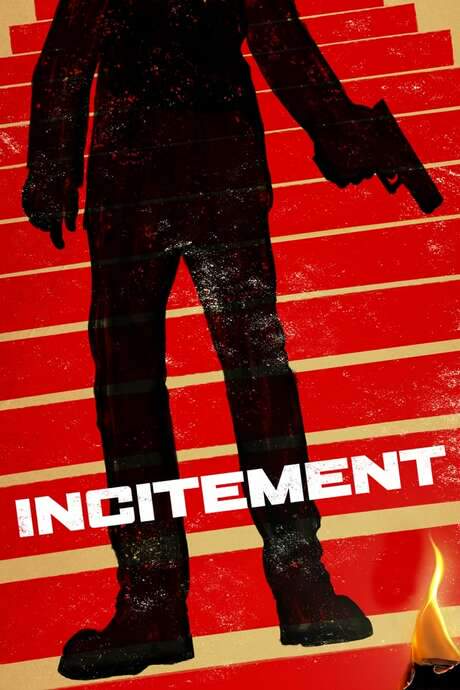
The premise of Incitement in 282 words, with nothing given away. The full story follows below.
In the charged political landscape of 1990s Israel, Yigal Amir (Yehuda Nahari) emerges as a young law student whose convictions set him on an increasingly rigid path. A student at Bar-Ilan University, he channels his energy into organizing tours of Israeli settlements, framing his efforts as acts of devotion and national duty. The atmosphere surrounding him is thick with unrest, as violence continues to ripple through communities near Hebron and political rhetoric grows ever more inflammatory, with secular leaders publicly denouncing Prime Minister Yitzhak Rabin as a traitor.
The film immerses viewers in the moral and ideological currents shaping Yigal’s worldview. Following landmark peace agreements, debates among religious authorities grow increasingly pointed, and Yigal begins consulting various rabbis, searching for spiritual validation in a climate where suggestive rhetoric hints at darker possibilities without ever crossing into explicit calls to action. The title itself reflects this slow, insidious build of inflammatory language and dangerous ideas taking root in a society already primed for division.
Within his personal life, Yigal navigates a complicated world of family expectations and social hierarchies. His father, portrayed with warmth and intellectual depth, holds humanistic views that stand in quiet contrast to his son’s growing militancy. Yigal also pursues Nava (Daniela Kertesz), an Ashkenazi student whose family embodies the subtle but entrenched prejudices of their community, revealing fault lines even among those who share ideological ground.
Tense, atmospheric, and meticulously observed, the film traces the psychological architecture of radicalization with unsettling precision. It invites viewers to sit inside the mind of a young man shaped by grief, ideology, and a sense of divine purpose, capturing the quiet, chilling steps that lead a nation toward one of its darkest hours.
What Happens in Incitement?
The complete story of Incitement, from the first scene to the last, in 500 words (about 2 minutes). Spoilers throughout. Names in the text link to 4 cast member pages.
Spoilers ahead
The narrative unfolds over the course of a single year in the life of Yigal Amir, portrayed by Yehuda Nahari Halevi, culminating in the historical assassination of Prime Minister Yitzhak Rabin. The story begins with Amir attending a night funeral in Kiryat Arba, located near Hebron, for Baruch Goldstein. In Amir’s eyes, Goldstein was not a criminal but a man who had successfully carried out the will of God following a brutal massacre at a mosque.
Following the signing of the Oslo Accords in 1993 between Rabin and Yasser Arafat, the region is plagued by continued violence and terrorist attacks in Hebron and Kiryat Arba, which lead to numerous deaths. During this volatile period, secular leaders of the right-wing opposition, such as Ariel Sharon and Benjamin Netanyahu, publicly label Rabin as a “traitor.” This climate of hostility is further fueled by religious authorities; some rabbis engage in intense debates over whether Rabin fits the definition of a rodef—a “persecutor.” While these religious leaders stop short of explicitly ordering a murder, they leave a dangerous trail of breadcrumbs with suggestive remarks, stating:
“Those who understand will understand.”
The film, titled Incitement, places a heavy focus on the psychological and ideological journey of Amir, Yehuda Nahari Halevi, as he frequently visits various rabbis, desperately seeking a religious justification or official approval to kill the Prime Minister.
Parallel to his political radicalization, Amir is a student at Bar-Ilan University, where he spends his time organizing free Saturday tours of Israeli settlements for his peers. He lives in a household where he clashes ideologically with his father, played by Amitay Yaish Ben Ousilio. His father is depicted as one of the most intelligent and sympathetic figures in the film, possessing deeply humanistic views. Despite his father’s efforts and moral standing, he is unable to sway his son’s hardening beliefs.
Another significant subplot involves Nava, played by Daniella Kertesz, an Ashkenazi student residing in the settlement of Psagot. Amir attempts to court her, but their relationship highlights the social frictions of the time. Through Nava’s storyline, the film reveals the polite yet condescending prejudice her family holds toward Yemeni Jews. Ultimately, Nava rejects Amir and chooses to marry his best friend, who hails from a privileged Ashkenazi background.
Crucially, the film clarifies that this personal rejection by Daniella Kertesz is not the primary catalyst for the assassination. Even before the heartbreak, Amir had already been plotting to form a militia to fight against Palestinians. His descent into violence is driven by a potent mixture of political rage and dangerous, ingrained racist ideologies.
As the plan nears fruition, Amir consults his brother, a plumber played by Yoav Levi. His brother suggests a technical approach, proposing the use of water pressure to propel explosives directly into Rabin’s private apartment. However, Amir ultimately dismisses the complex plan in favor of something far more direct and terrifying. He decides that the most effective method is to carry out the assassination himself, leading to the tragic conclusion of the year.
Incitement Timeline: Every Key Event in Order
14 key events in the order they happen, from “The Oslo Accords Are Signed” to “The Assassination of Yitzhak Rabin”. 6 events name a place, across 6 locations.
- 1
The Oslo Accords Are Signed
Israeli Prime Minister Yitzhak Rabin and Yasser Arafat sign the Oslo Accords, a landmark peace agreement between Israel and the Palestinians. The deal ignites fury among right-wing Israelis, including Yigal Amir, who sees it as a betrayal. This political turmoil sets the stage for everything that follows in the film.
When:1993 Where:Washington, D.C.
- 2
Night Funeral of Baruch Goldstein
Amir attends the night funeral of Baruch Goldstein in Kiryat Arba, near Hebron. Goldstein, responsible for the massacre at a mosque, is regarded by Amir as someone who carried out God's will. The event reveals the depth of Amir's admiration for religiously motivated violence and offers an early glimpse of his extremist mindset.
When:February 1994 (night) Where:Kiryat Arba, near Hebron
- 3
Violence Continues After the Accords
Despite the peace process, violence and terrorist attacks continue in Hebron and Kiryat Arba, resulting in deaths. The ongoing bloodshed strengthens Amir's conviction that the Oslo Accords have failed and that Rabin's government endangers Jewish lives. Each attack feeds the anger that pushes him further toward radical action.
Where:Hebron and Kiryat Arba
- 4
Right-Wing Leaders Call Rabin a Traitor
Secular leaders of the right-wing opposition, including Ariel Sharon and Benjamin Netanyahu, publicly describe Rabin as a "traitor". The inflammatory rhetoric from senior political figures normalizes hatred toward the prime minister. It helps create a climate in which violence against Rabin begins to seem conceivable.
- 5
Rabbis Debate the 'Rodef' Question
Religious authorities debate whether Rabin can be considered a rodef, a "persecutor" under Jewish law. They stop short of directly calling for his assassination but make suggestive statements such as, "Those who understand will understand." The ambiguous halachic discussion leaves dangerous room for interpretation by extremists.
- 6
Amir Seeks Religious Approval for Murder
As the film's title suggests, Amir repeatedly visits various rabbis in search of religious approval for killing Rabin. Each visit brings him closer to convincing himself that assassination is a righteous act. These encounters show how incitement dressed in religious language can enable violence.
- 7
Settlement Tours for Fellow Students
Amir, a student at Bar-Ilan University, organizes free Saturday tours of Israeli settlements for his fellow students. The trips serve as a tool for ideological persuasion, drawing young people into the settler cause. They also help Amir surround himself with like-minded peers who share his hardline views.
Where:Bar-Ilan University and Israeli settlements
- 8
His Father's Humanism Fails to Reach Him
Amir's father, portrayed as one of the film's most sympathetic and intelligent characters, holds humanistic views. He tries to reason with his son, but his arguments fail to change Amir's beliefs. The failed intervention shows how far Amir has drifted from his own family's values.
- 9
Amir Courts Nava in Psagot
Amir courts Nava, an Ashkenazi student who lives in the settlement of Psagot. Their interaction exposes the polite but condescending attitude of her family toward Yemeni Jews. The subtle prejudice deepens Amir's sense of social exclusion within the very circles he wants to belong to.
Where:Psagot settlement
- 10
Amir Plans a Militia Against Palestinians
Even before his romantic rejection, Amir has already planned to form a militia against Palestinians. His intentions are driven by political anger combined with dangerous racist beliefs. The film makes clear that his violent trajectory does not depend on personal disappointment.
Show the other 4 events of Incitement Hide the last 4 events
- 11
Nava Rejects Amir and Marries Another
Nava rejects Amir's advances and soon marries his best friend, who comes from a privileged Ashkenazi family. The rejection adds a personal sting to Amir's sense of marginalization as a Yemeni Jew. However, the film insists that this is not the main reason for his decision to become an assassin.
- 12
His Brother Proposes an Explosives Scheme
Amir's brother, a plumber, suggests an unconventional plan to use water pressure to propel explosives into Rabin's apartment. The idea reflects the family's practical resourcefulness but proves overly complicated. Amir weighs the elaborate scheme as he edges closer to action against the prime minister.
- 13
Amir Chooses the Simplest Plan
Ultimately, Amir discards the explosive scheme in favor of the simplest, most frightening, and most effective plan: to assassinate Rabin himself. The decision marks his final transformation from agitator to killer. Alone and resolute, he commits to pulling the trigger with his own hands.
- 14
The Assassination of Yitzhak Rabin
The yearlong descent fueled by hateful rhetoric and religious justification culminates in Amir's assassination of Prime Minister Yitzhak Rabin. The murder stuns the nation and closes the film's account of a fatal year in Amir's life. It stands as the chilling conclusion of the climate of incitement the movie documents.
When:November 4, 1995 Where:Tel Aviv, Israel
What Kind of Film Is Incitement?
Dark in tone, with steady pacing and a complex story, going by the plot summary.
- Tone
- Dark
- Pacing
- Steady
- Story
- Complex
- Intensity
- High
- Ending
- Bleak
An oppressive and foreboding political thriller that meticulously tracks a young man's ideological descent into religious extremism and political violence, building inescapable dread toward an inevitable, devastating climax.
- oppressive
- slow burn
- unsettling
- psychological
- foreboding
- ideological
- political assassination
- religious extremism
- radicalization
- historical drama
Content notes: political violence, assassination, religious extremism, racism, terrorist attacks, massacre reference.
Quiz
How well do you remember Incitement? Test yourself on the story.